
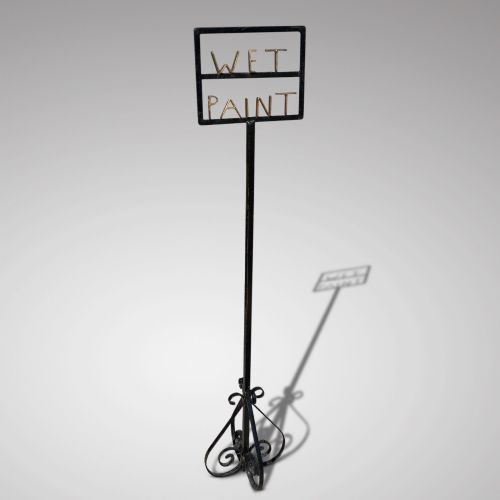


Edwardian Letter Stand
An edwardian letter stand organises your desk with period craftsmanship, bringing practical stationery storage and period charm to any study.
Edwardian Letter Stand
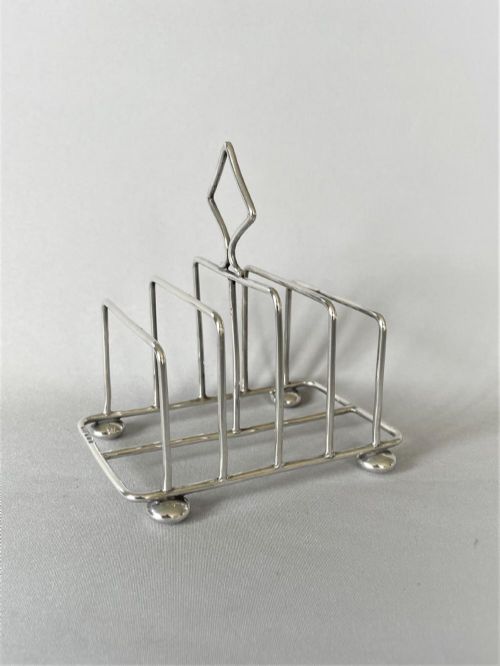
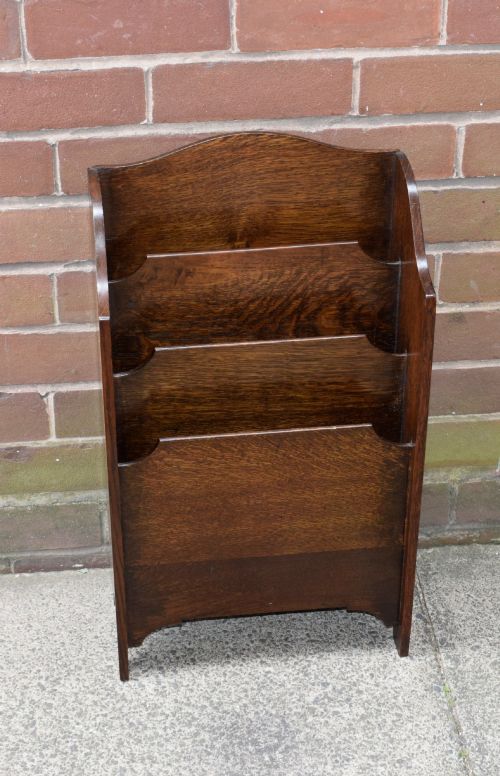
An edwardian letter stand is a desk accessory designed to hold correspondence, envelopes, and paper neatly upright. These pieces range from simple wooden slots to elaborate combinations incorporating inkwells, pen trays, and bookends.
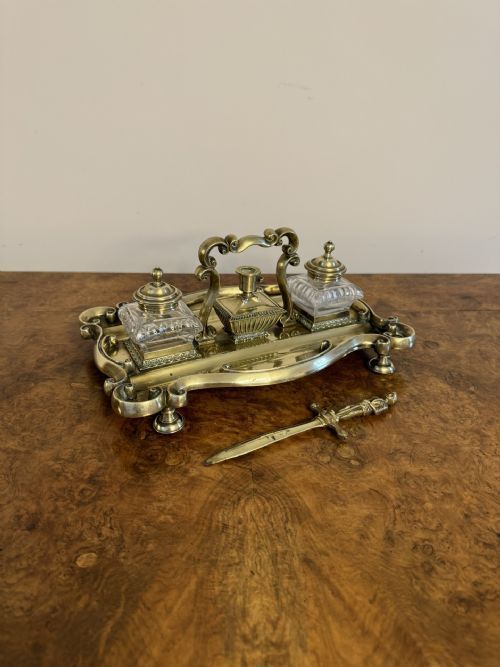
The versions you encounter most frequently on this page date from the Edwardian period and neighbouring decades, constructed primarily in oak, mahogany, and brass. Alongside dedicated letter racks, the selection includes desk tidies and multi-purpose desk sets that served similar clerical functions.
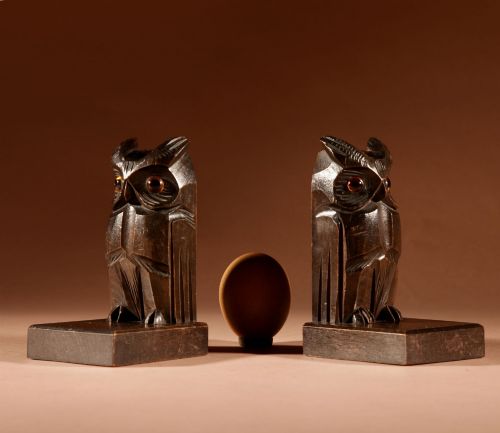
Makers of the era also produced novelty variants, such as Black Forest carved animal designs or cricket-themed pieces, alongside utilitarian oak and wrought iron items. Each piece reflects the functional requirements of early twentieth-century correspondence before digital communication altered office habits.
How they were made
Makers utilised solid timbers such as oak and mahogany for the main bodies of these stands, often employing carved, pierced, or polished finishes. Woodwork was frequently combined with mounted brass rails, clips, or gilt metal dividers to separate the paper compartments.
Alternative materials included cast brass and wrought iron, particularly in heavy desk sets and utilitarian stands. Glass components appeared in integrated inkwells, while carved linden wood defined the figurative Black Forest pieces.
Listings feature items spanning the Edwardian period, Victorian era, and the 1920s to 1930s, constructed in oak, mahogany, brass, and wrought iron.
What varies in quality
The distinction between standard production and superior quality rests on the selection of materials and the crispness of the hand-finishing. Finely carved mahogany, substantial gauge brass, and integrated fittings mark out the more ambitious pieces.
Simpler utilitarian items rely on plain oak boards and basic metal clips, whereas high-end examples feature detailed pierced woodwork, novelty subjects, or complete desk set assemblies with matching inkwells.
The Edwardian Letter Stand Glossary
- Edwardian
- Dating from the reign of King Edward VII, spanning the years from 1901 to 1910. Pieces from this era often favour lighter timbers and refined proportions compared to earlier Victorian designs.
- Desk Tidy
- A compartmented desktop organizer used for holding letters, pens, and small stationery items. These items keep workspace clutter contained within fixed wooden or metal dividers.
- Black Forest
- A style of wood carving originating in the Swiss and German border regions during the nineteenth and early twentieth centuries. It is characterised by highly detailed naturalistic figures, particularly animals such as bears and owls.
- Arts and Crafts
- A design movement valuing traditional craftsmanship, simple forms, and visible construction methods. Oak is frequently left in its natural grain to highlight the material.
- Inkstand
- A desktop stand holding one or more inkwells along with pen rests and occasionally letter slots. These complete writing sets sat centrally on nineteenth and early twentieth-century desks.
Edwardian Letter Stand: Frequently Asked Questions
What is an edwardian letter stand used for?
These stands were designed to hold incoming and outgoing mail, stationery, and envelopes upright on a desk or hall table. They kept paper sorted and accessible before the widespread adoption of modern filing cabinets.
Today, they serve the exact same organisational purpose while adding period character to home offices, studies, or living room side tables.
How do I date an edwardian letter stand?
Dating relies on observing the materials, construction methods, and stylistic cues present in the piece. Edwardian examples often feature lighter oak or mahogany woods, sometimes paired with brass mounts or pierced woodwork.
Comparing the form against documented pieces from the early twentieth century helps narrow down the decade of manufacture, distinguishing them from heavier late Victorian items.
Are these stands suitable for modern envelopes?
Most standard letter stands feature dividers spaced adequately to hold modern correspondence, cards, and notepads. However, very compact antique slots may suit smaller notes better than oversized modern envelopes.
Checking the internal width of the compartments ensures your specific mail will fit comfortably upright without bending.
What materials are most common?
Oak and mahogany form the structural body for the majority of wooden letter stands and desk tidies. Brass is frequently incorporated as divider rails, clips, or hinges, while some pieces utilise cast iron or carved linden wood.
Glass occasionally appears in fitted inkwells that accompany larger desk sets and stationary stands.