



Brown Oak Desk Accessory
These brown oak desk accessory pieces bring tactile warmth to a workspace through richly figured timber and enduring craftsmanship.
Brown Oak Desk Accessory
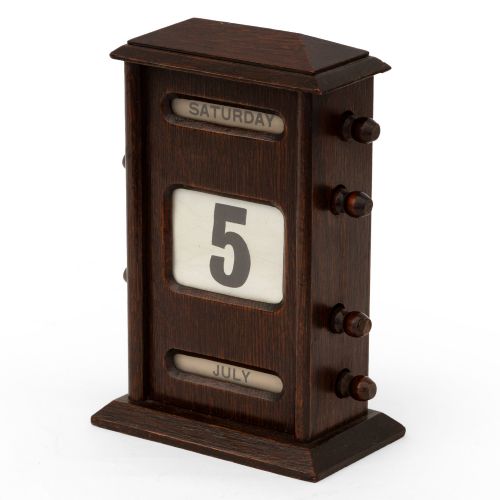
A brown oak desk accessory encompasses functional workspace items fashioned predominantly from oak, spanning periods from the nineteenth century through to the early twentieth century. When searching for a brown oak desk accessory, a buyer encounters desk sets, inkstands, letter racks, bookends, and perpetual calendars originating in Victorian and Edwardian workshops.
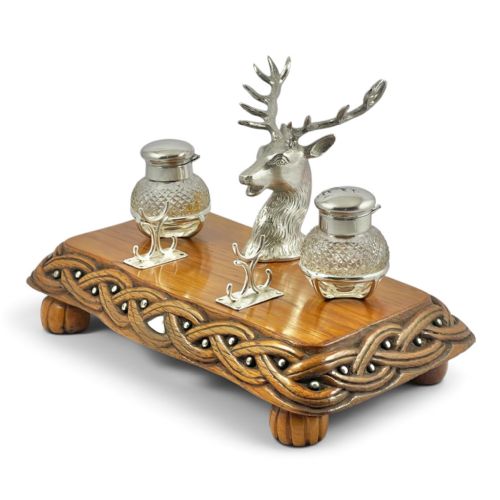
The objects appearing on this page range from solid oak ink stands and stationery boxes to carved Black Forest items and extending book slides. These pieces reflect the functional requirements of historical writing desks, executed in styles including Arts and Crafts, Gothic Revival, and Celtic Revival.
How they were made
Maker workshops utilised solid oak alongside contrasting materials such as brass, silver, glass, and linden wood to construct these desk accessories. Metal components provided structural support and mechanical function, while cut glass formed the internal wells for inkstands.
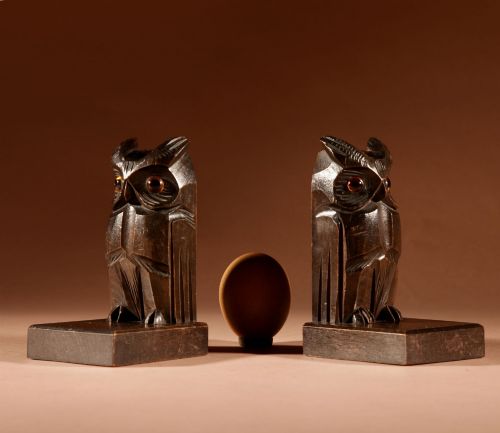
Carving and joinery defined the production, particularly seen in figural animal sculptures of owls and dogs, alongside precision-slotted letter racks and extending book slides. Artisans combined turned timber with fitted metal hinges, locks, and handles to create durable items for daily administrative use.
Brown Oak Desk Accessory Retail Price Guide 2026
Typical asking prices for brown oak desk accessory among the pieces listed under this phrase on Sellingantiques today, from the lower quarter to the upper quarter. They describe what is for sale here now, not the wider market.
Listings feature items spanning the Victorian, Edwardian, and 1920s eras, incorporating oak alongside brass, silver, glass, and linden wood.
What varies in quality
Quality in these desk accessories rests upon the depth of the timber's grain, the crispness of any hand-carved detail, and the integrity of the original fittings. Pieces featuring figural carvings or precious metal mounts demonstrate a higher standard of workshop execution than plain utilitarian items.
The preservation of original glass inserts, functioning mechanical calendars, and intact hinges distinguishes superior examples. Maker attribution, such as pieces associated with specific houses, also elevates the standing of an individual item within its period.
The Brown Oak Desk Accessory Glossary
- Inkstand
- A fitted tray or stand designed to hold inkwells, pens, and sometimes sanders or wafers for writing desks. They are frequently cast in brass or carved from solid oak.
- Book slide
- An adjustable rack with expanding sections to hold a varying number of books upright on a desktop. These often feature decorative wooden ends.
- Stationery box
- A desktop cabinet with tiered compartments specifically built to store writing paper and envelopes. They often incorporate sloping lids and lockable doors.
- Perpetual calendar
- A desk device with rotatable drums or movable cards to display the date continuously. These rely on mechanical setups housed within timber frames.
- Black Forest carving
- A style of highly detailed woodwork originating from Central Europe, renowned for realistic animal sculptures. Pieces frequently depict owls, dogs, and bears integrated into functional objects.
Brown Oak Desk Accessory: Frequently Asked Questions
What are brown oak desk accessories?
These items are functional nineteenth and early twentieth-century desk pieces fashioned from oak, ranging from inkstands and letter racks to bookends and perpetual calendars.
They served as practical desktop equipment in historical studies and offices, combining utility with decorative cabinet-making.
How were antique inkstands used?
Antique inkstands held glass inkwells alongside pen trays and sometimes stamp boxes to provide a complete writing station on a desk.
Users dipped their pens into the central inkwell while writing correspondence, keeping the workspace organised and protected from spills.
How do I date an oak desk piece?
Dating relies on stylistic markers such as Victorian Gothic revival motifs, Arts and Crafts simplicity, or Edwardian manufacturing techniques.
Material combinations, including specific brass hardware and cut glass inserts, further help narrow the period of manufacture.
How do I care for antique oak?
Maintain antique oak by keeping the wood away from direct heat sources and sudden humidity changes to prevent timber splitting.
Occasional light dusting with a dry cloth preserves the finish without requiring heavy polishing or chemical treatments.