


Victorian Carved Chaise Longue
A victorian carved chaise longue brings nineteenth-century drawing-room elegance and reclining comfort into a modern interior.
Victorian Carved Chaise Longue
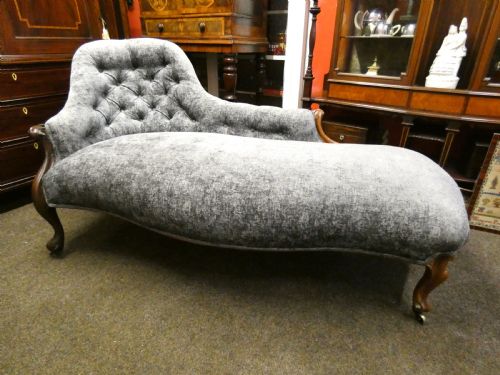
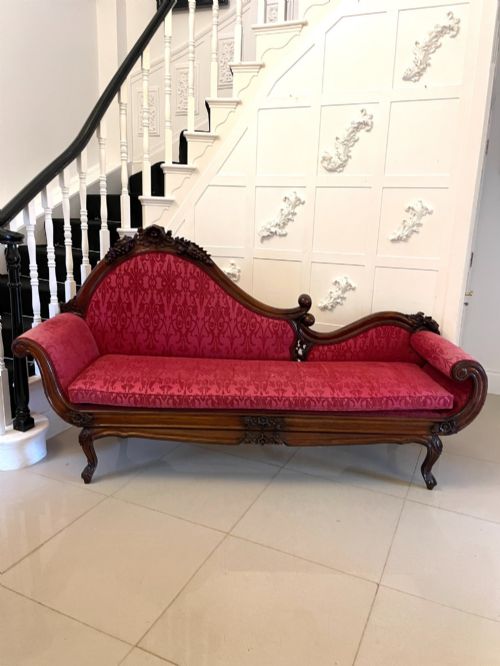
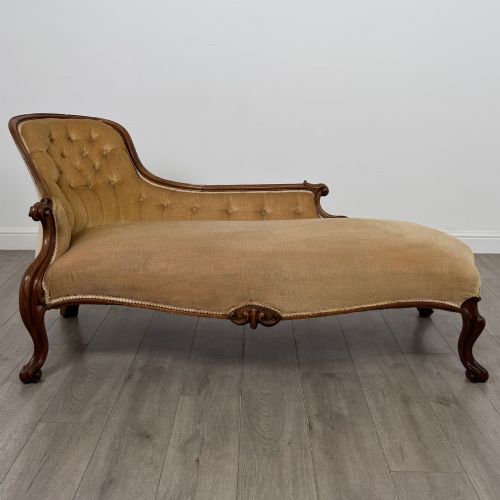
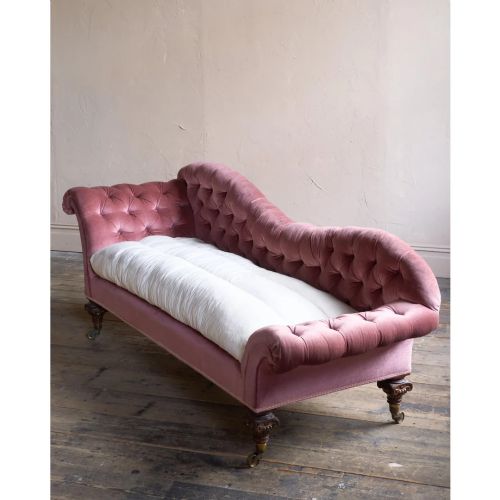
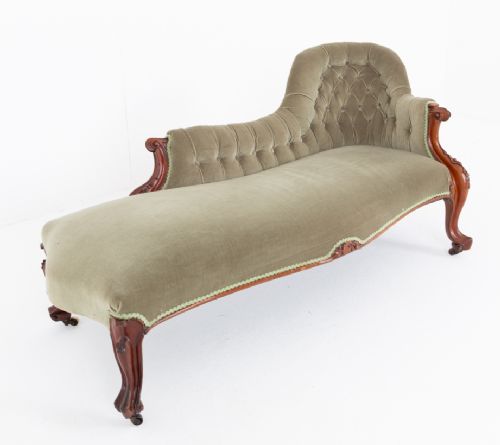
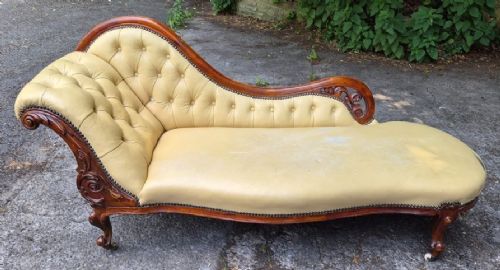
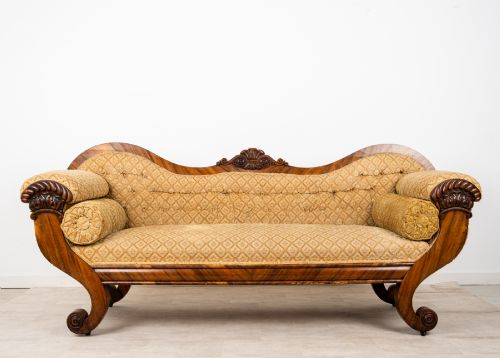
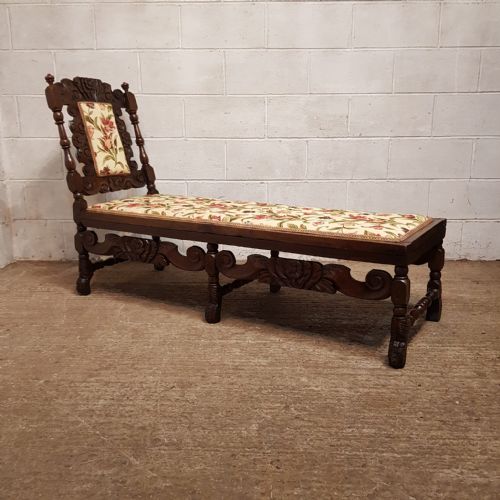
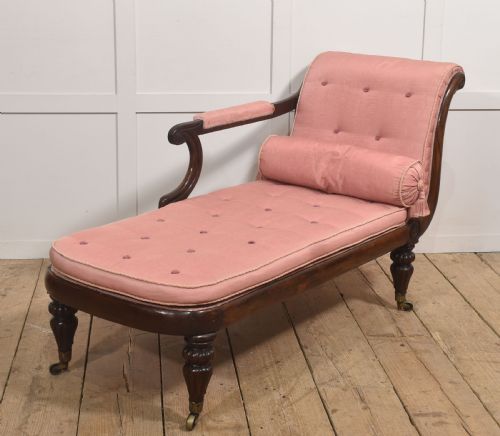
A victorian carved chaise longue is a nineteenth-century daybed or recamier designed for semi-recumbent repose, combining a raised single backrest with an extended seat. The pieces on this page span the Victorian period alongside related nineteenth-century forms such as William IV and Regency daybeds and settees.
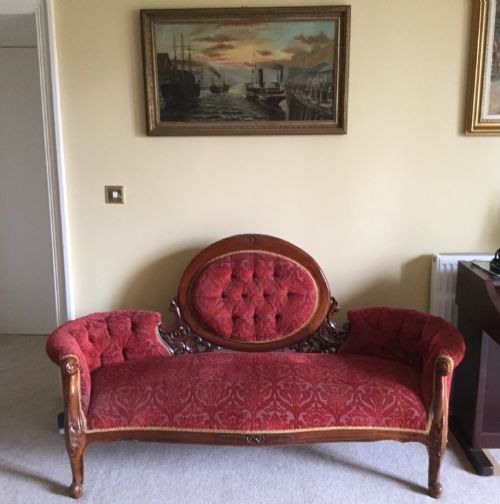
Most examples you encounter follow the standard single-ended scroll design, though double-ended versions and spoon-back variants also appear across walnut, mahogany, and rosewood timbers. They function primarily as statement seating for drawing rooms, libraries, and large bedrooms.
The form developed through various revivals, encompassing Rococo Revival curves and classical details like ionic column legs and barley twist frames. These daybeds offer a distinct silhouette that bridges formal sofa design and relaxed lounging furniture.
Materials and construction methods
Makers built these frames from dense hardwoods, predominantly rich mahogany, figured walnut, and warm rosewood, selected for their ability to hold deep hand-carved scrollwork and structural weight. Oak and ebonised woods appear less frequently in specific regional or miniature pieces.
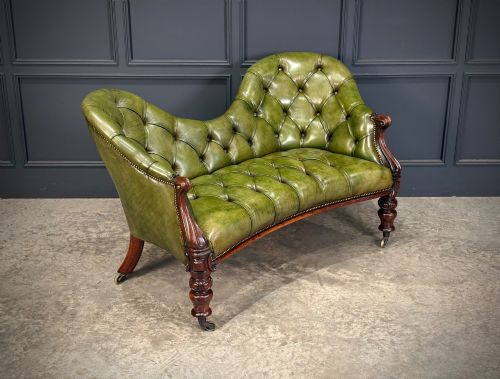
Upholstery techniques relied on sprung seat bases covered in traditional materials including velvet, brocade, leather, and various contemporary upholstery fabrics, often secured with deep buttoning or braided trim. Frames were assembled with robust joinery to support the continuous weight of a reclining user along the elongated chassis.
Listings feature mahogany, rosewood, and walnut frames upholstered in velvet, leather, and brocade across the Victorian period.
Assessing quality in nineteenth-century daybeds
Quality rests heavily on the depth and crispness of the timber carving, where master carvers produced fluid acanthus leaves, scroll ends, and defined spoon-backs without soft edges or mechanical shortcuts. Superior framing uses heavy timber sections that prevent movement and joint separation over decades of use.
The sophistication of the internal springing and the grade of the textile upholstery contribute to the overall integrity of the piece. Well-balanced proportions between the raised backrest and the horizontal deck separate provincial workshop output from high-end metropolitan cabinet work.
H. Goodall & Sons of Newcastle
The Victorian Carved Chaise Longue Glossary
- Chaise Longue
- A long reclining chair or daybed designed for one person to sit with their legs extended. The term translates from French as long chair.
- Scroll End
- A wooden terminal shaped into a tight spiral or scroll, commonly found on the headrest or arms of nineteenth-century seating. This detail anchors the visual weight of the frame.
- Double Ended
- A sofa or daybed configuration featuring raised backrests or scroll terminals at both ends rather than a single direction. This symmetry allows the user to recline facing either direction.
- Spoon Back
- An upholstered chair or sofa back hollowed out in the shape of an egg or spoon to fit the human spine. It is a signature hallmark of mid-nineteenth-century Victorian seating.
- Showwood
- Exposed wooden framing around an upholstered piece where the polished timber grain forms part of the visual design. Cabinet makers used this technique to display fine mahogany or walnut.
Victorian Carved Chaise Longue: Frequently Asked Questions
How were these daybeds originally used?
Victorian households utilised these pieces in drawing rooms and dressing rooms for daytime resting, reading, and receiving close visitors without retiring to a bedroom.
They allowed ladies wearing restrictive corsets to recline comfortably in a semi-upright position while maintaining formal decorum.
Where should I place a chaise longue in my home?
These pieces suit large reception rooms, bedrooms, and wide hallways where the single-ended silhouette can sit against a clear wall without obstructing walkways.
They work well angled in a bay window or acting as a divider between different zones of an open living space.
How do I distinguish between early and late Victorian pieces?
Early Victorian examples often display heavier mahogany construction influenced by late Regency and William IV styles, featuring robust scroll arms and simpler structural lines.
Late Victorian versions frequently employ walnut with more exuberant carving, button upholstery, and delicate showwood frames characteristic of the 1880s and 1890s.
What is the difference between a chaise longue and a daybed?
A chaise longue typically incorporates an asymmetrical design with one raised backrest and a partial armrest, intended primarily for reclining with legs supported horizontally.
A daybed can feature symmetrical ends or a flat mattress platform suited for sleeping as well as daytime lounging.