


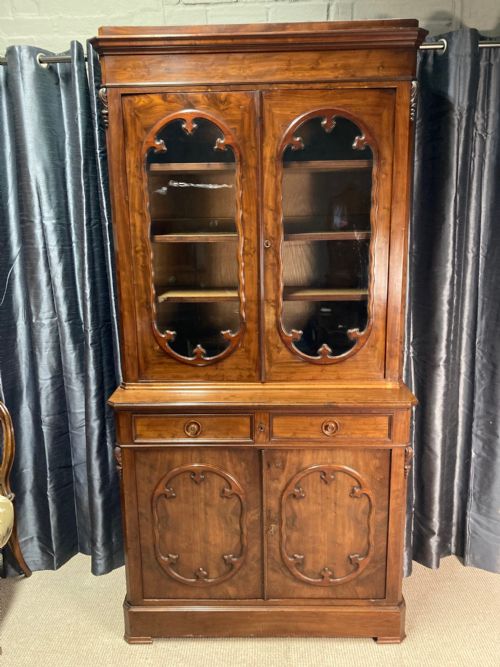

Victorian Carved Bookcase Drawers
Victorian carved bookcase drawers combine practical storage with ornate nineteenth-century craftsmanship, offering sturdy timber housing and carved detail for your books and papers.
Victorian Carved Bookcase Drawers
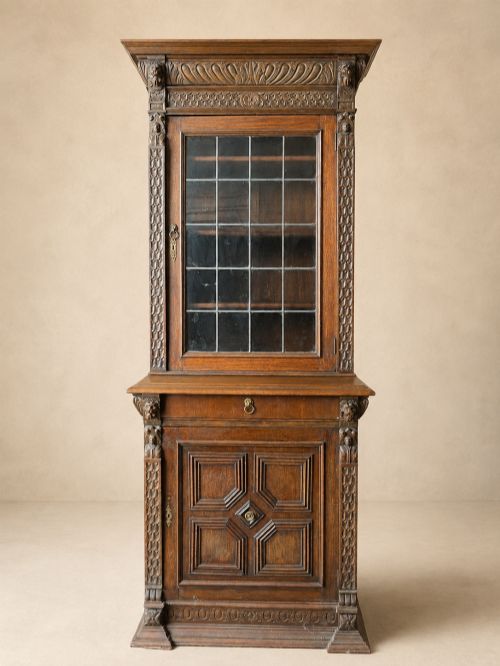
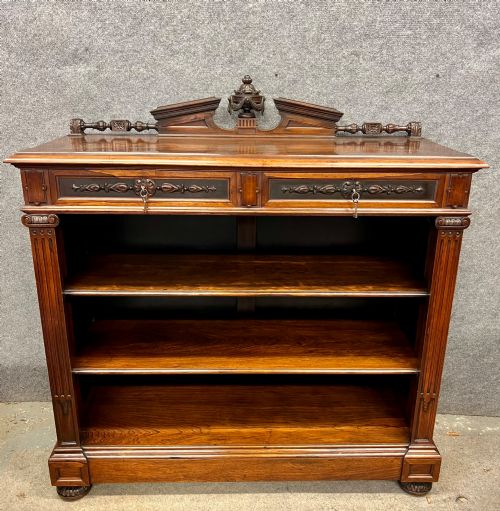
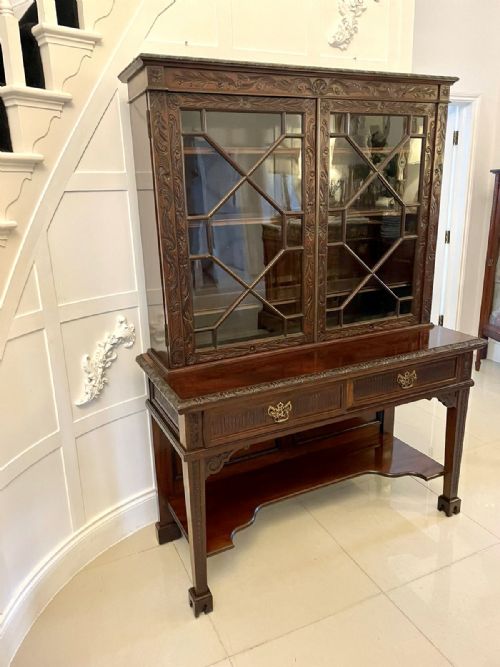
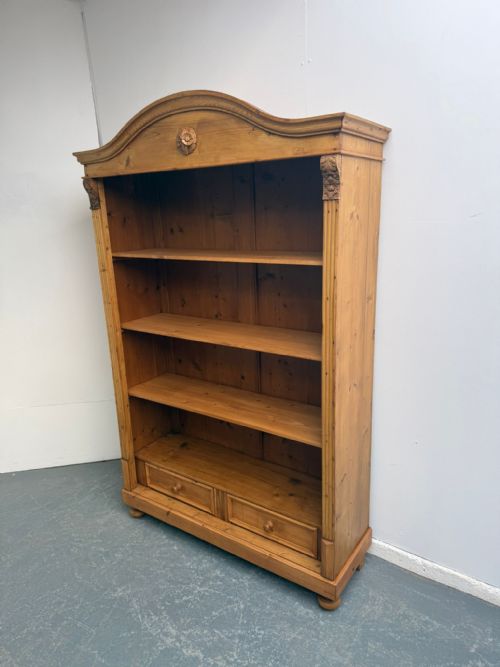
When you search for Victorian carved bookcase drawers, you are looking at nineteenth-century furniture that integrates shelving with integrated base or frieze storage. These items range from open oak adjustable shelving units to tall glazed cabinets featuring lower drawers.
You are most likely to meet mahogany or oak pieces from the nineteenth century on this page, often incorporating glazed upper doors or secretaire drop fronts alongside fitted lower drawers. The forms span from compact two-drawer display cabinets to large breakfront configurations.
The selection includes regional pieces and urban workshop productions, bringing together various revival aesthetics from the Victorian period. Each example demonstrates the combination of bookshelf storage and compartmented drawer space typical of the era.
Materials and construction
Cabinet makers utilised dense hardwoods such as mahogany, oak, walnut, and rosewood, alongside pine for secondary framing and internal elements. Timber selection dictated the structural stability and the depth of carving achievable on the mouldings and friezes.
Construction involved traditional joinery methods, incorporating adjustable shelf mechanisms, dovetailed drawer boxes, and applied carved decorations. Glazed doors used timber muntins to hold individual glass panes, while brass hardware fitted the doors and drawers.
Listings feature woods including oak, mahogany, walnut, rosewood, and pine, alongside brass and glass elements.
Assessing quality
The standard of timber selection and the crispness of the hand-carved ornamentation separate workshop-produced pieces from standard production items. Grain matching across drawer fronts and doors indicates a higher tier of cabinet making.
Integration of secondary woods, the smoothness of drawer operation, and the retention of original brass fittings and glass influence the integrity of the piece. The depth and precision of the carved detailing on columns and plinths also mark the distinction between grades.
James Winter and Sons
The Victorian Carved Bookcase Drawers Glossary
- Secretaire
- A cabinet or bookcase featuring a pull-down writing drawer that conceals smaller compartments and pigeonholes. This hybrid form provides both desk space and enclosed storage.
- Frieze
- The flat or decorated horizontal band situated immediately beneath the cornice of a bookcase. Carved details often appear in this upper section.
- Breakfront
- A large cabinet design where the central section projects forward from the flanking wings. This architectural arrangement creates depth across the front facade.
- Glazed
- Fitted with glass panels in the doors to display the contents of the shelves while protecting them from dust. The glass is held securely by timber framing.
- Plinth
- The heavy solid base upon which the bookcase or cabinet stands, elevating the main body off the floor. It provides a stable foundation for tall structures.
Victorian Carved Bookcase Drawers: Frequently Asked Questions
What is a secretaire bookcase?
A secretaire bookcase combines standard book storage with a fitted drop-front writing drawer. The pull-down flap reveals internal pigeonholes and small drawers for correspondence.
This form allows a piece of furniture to serve both as a library cabinet and a writing desk without taking up extra floor space.
How do I adjust the shelves?
Many nineteenth-century bookcases feature side pilasters with vertical rows of peg holes or rack strips. Wooden pegs or metal supports fit into these slots to hold the timber shelves at your preferred height.
This adjustable system accommodates books of varying heights, a design improvement over fixed shelving.
How should I clean the carved wood?
Dust the carved surfaces regularly with a soft, dry lint-free cloth to prevent grime accumulation in the recesses. Avoid modern silicone sprays that can build up on the timber.
Apply traditional beeswax periodically to nourish the grain and protect the original polished finish of the hardwood.
Are the glass doors original?
Original nineteenth-century glass often exhibits slight surface imperfections, minor bubbles, or uneven thickness from historic manufacturing methods. Examining the putty or wooden glazing beads can also reveal signs of later replacement.
Uniform, perfectly clear glass without surface ripples typically indicates modern reglazing.