
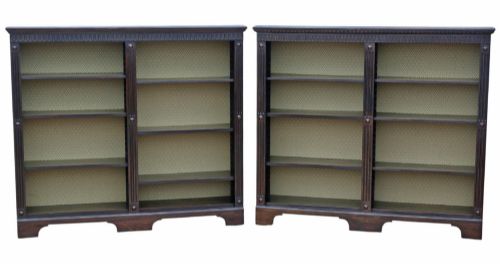
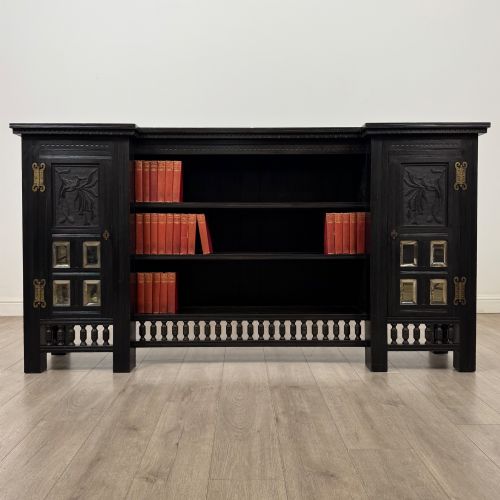
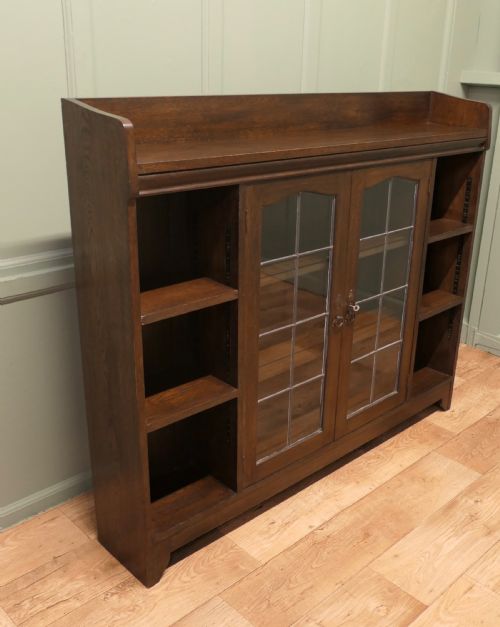
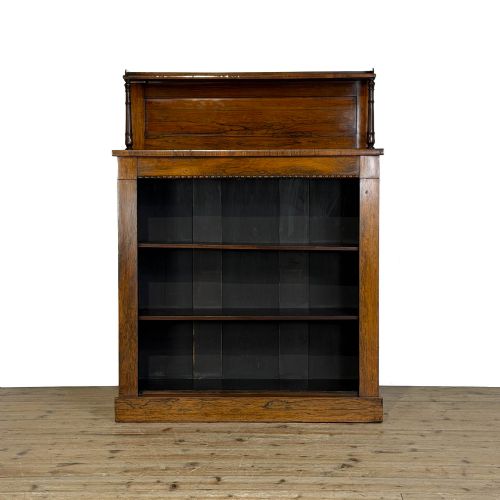
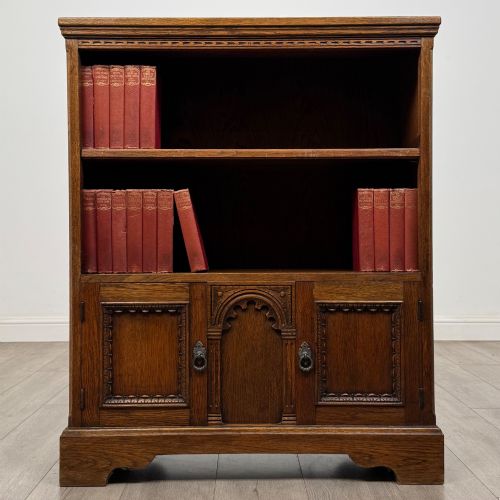
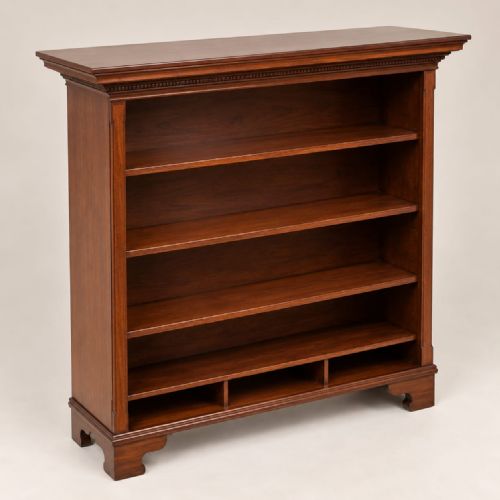
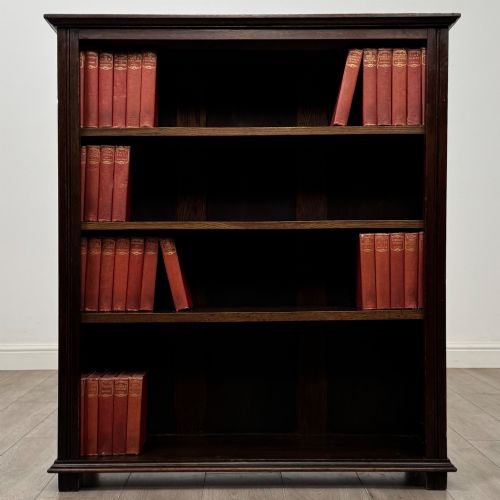
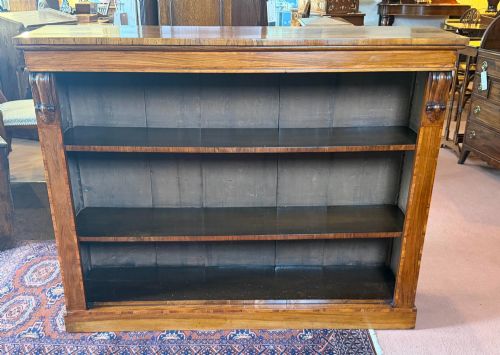
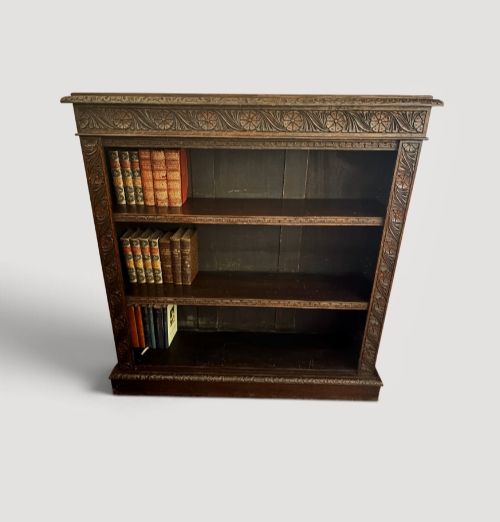
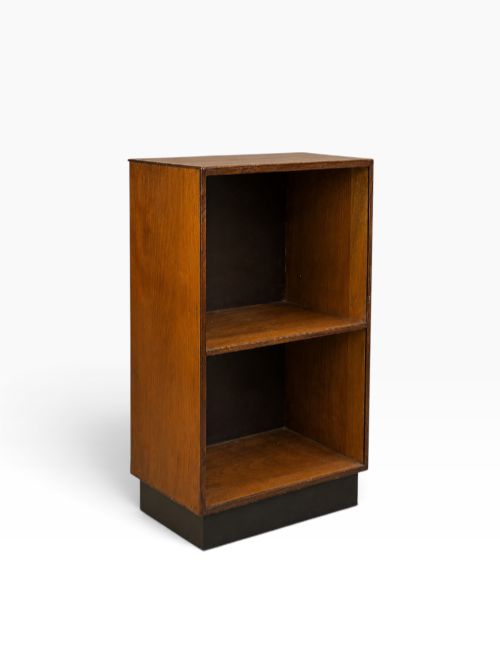
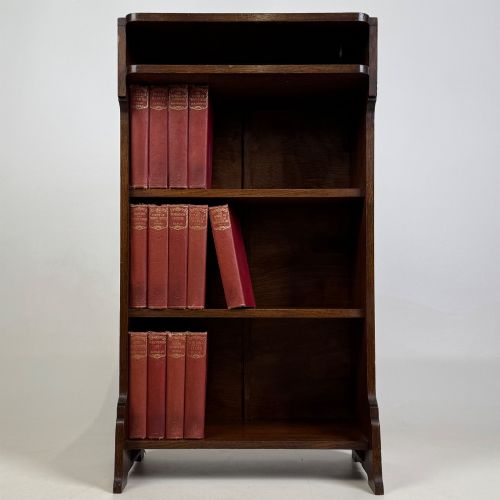
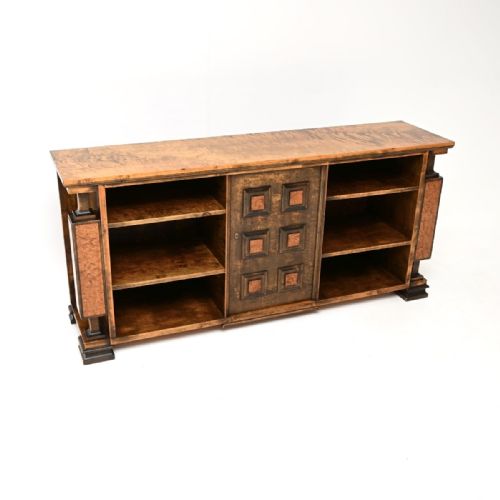
Low Open Display Cabinet
A low open display cabinet offers accessible storage and surface space, bringing warmth to a room through traditional timbers.
Low Open Display Cabinet
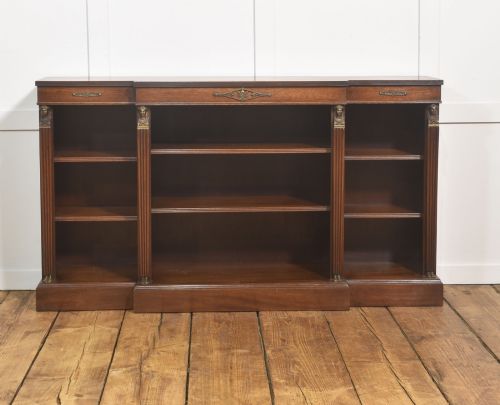
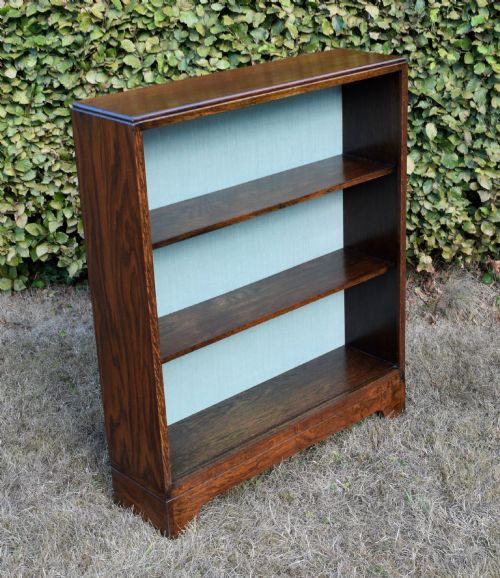
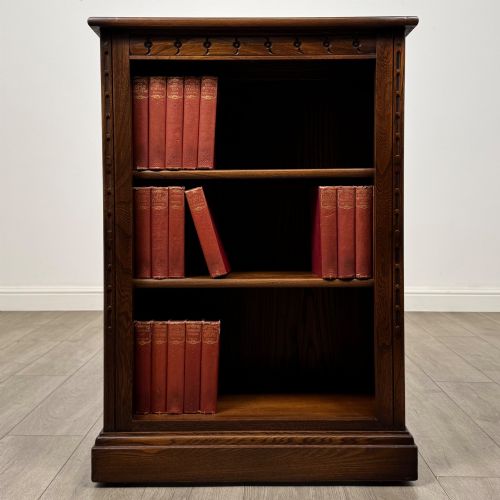
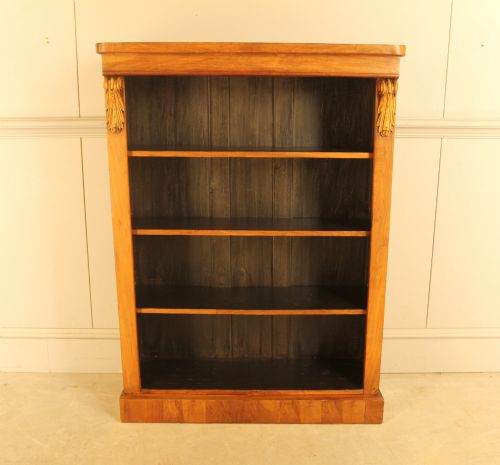
A low open display cabinet bridges the gap between a bookcase and a side table, providing waist-high shelving for books and decorative objects. These items appear across the nineteenth and twentieth centuries in forms such as waterfall bookcases, breakfront units, and dwarf cabinets.
The Victorian and Edwardian periods supply the majority of these pieces, alongside Regency examples and later Art Deco designs. Common proportions feature open shelving flanked or topped by restrained mouldings, brass castors, or leather tops.
Makers utilised woods suited to domestic interiors, creating sturdy storage options designed to sit beneath window heights or against panelled walls. Pieces span straightforward utility forms and ornate variations decorated with brass inlay or carved motifs.
How they were made
Carpenters constructed these cabinets using solid hardwoods like mahogany, oak, walnut, and rosewood, often applying rich veneers over secondary timbers. Surface enrichment relied on brass galleries, inlay, or ormolu mounts rather than heavy carving, though carved oak and teak examples appear.
Construction techniques prioritised stability for holding heavy volumes, employing adjustable shelving supported by wooden ratchets or brass shelf studs. Timber selection dictated the character of the piece, from figured satin birch to the dark grain of Victorian walnut.
Periods represented include the Regency era, Victorian decades, Edwardian years, and 1930s Art Deco.
What varies in quality
Distinctions in quality rest upon the selection of timber figures and the precision of cabinetmaking joints. Superior examples feature well-matched grain patterns, finely cut dovetails, and substantial brass hardware rather than stamped substitutes.
Proportion and decorative restraint dictate the standing of a piece within its period. Refined execution shows in crisp mouldings, straight uprights, and balanced heights that maintain structural integrity across decades of use.
Maurice Adams
The Low Open Display Cabinet Glossary
- Breakfront
- A cabinet design where the central section projects forward from the flanking wings. This architectural layout creates visual depth in larger rooms.
- Waterfall bookcase
- A set of open shelves stepped back in a tier from bottom to top. The profile resembles cascading water.
- Ormolu
- Gilded bronze mounts applied to furniture for decorative contrast. This technique highlights corners and friezes on formal pieces.
- Brass castor
- A small swivelling wheel fitted to the base of furniture legs to ease movement. They appear in brass on nineteenth-century library pieces.
- Chiffonier
- A low sideboard or cabinet featuring shelves or a drawer, developed during the Regency period. They often combine display space with enclosed storage.
Low Open Display Cabinet: Frequently Asked Questions
Where should I place a low open display cabinet?
These cabinets suit living rooms, hallways, and studies where height restrictions prevent taller bookcases. Their low profile allows placement beneath windows or against shorter wall spaces without dominating the room.
The open format keeps everyday reading material and display items within reach. They function effectively as room dividers or low console units behind seating arrangements.
How do I identify a Victorian piece from an Edwardian one?
Victorian examples generally feature denser timbers like mahogany or rosewood, often with heavier mouldings, deeper polish, and rich grain patterns. They frequently incorporate hand-carved details or brass inlay.
Edwardian pieces tend toward lighter oak constructions with simpler lines, reflecting a shift towards airier domestic interiors. Shelf adjustments in Edwardian pieces often utilise simpler internal mechanics.
Are the shelves adjustable on these cabinets?
Many nineteenth and twentieth-century variants include height-adjustable shelving to accommodate different book sizes. Early examples rely on wooden sawtooth supports or brass pins.
Fixed shelves also appear, particularly in smaller utilitarian formats. Checking the interior uprights reveals the presence of shelf support tracks.
What is the difference between a bookcase and a cabinet?
A bookcase consists primarily of open or glazed shelving designed for holding books. A cabinet typically incorporates enclosed storage behind doors, though low open display cabinets combine both formats.
Open display versions prioritise immediate visibility for collections. Some variants include small cupboard bases beneath open upper tiers.