

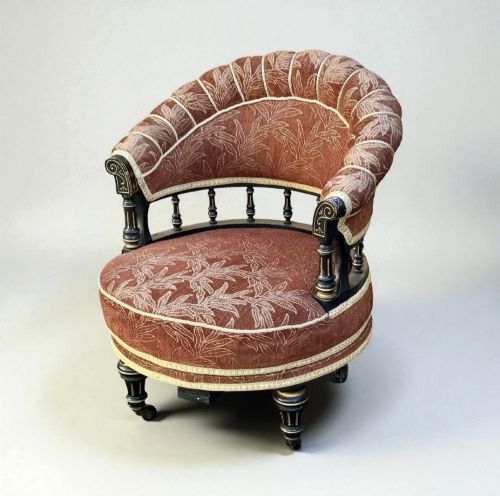
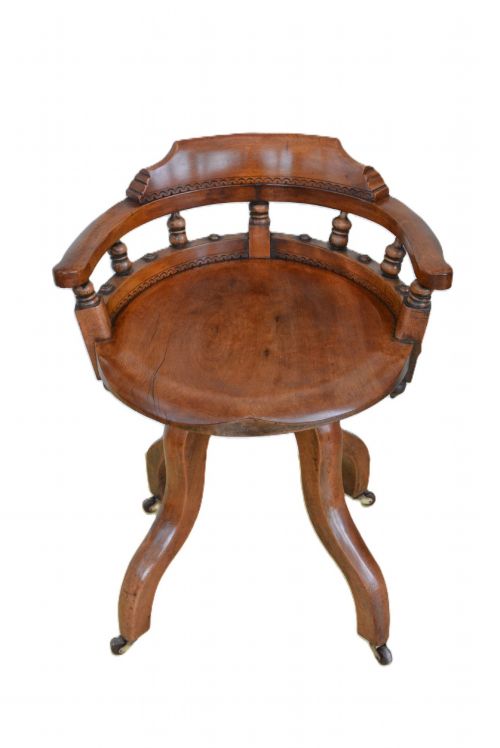
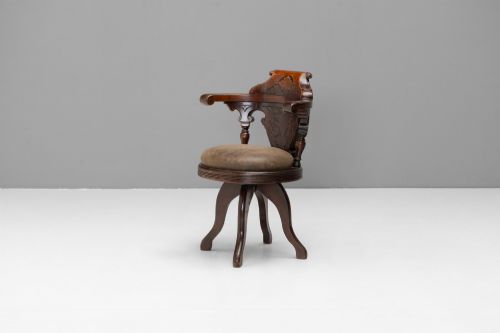
Victorian Captain Swivel Chair
A victorian captain swivel chair combines sturdy nineteenth-century timber frames with clever rotating mechanisms designed for long hours at a working desk.
Victorian Captain Swivel Chair
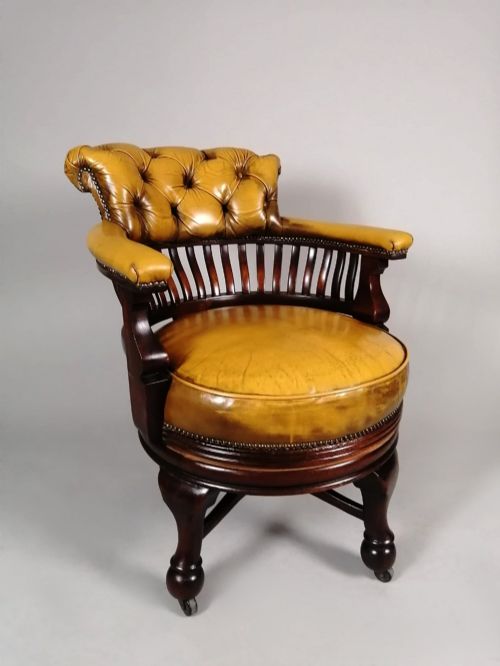
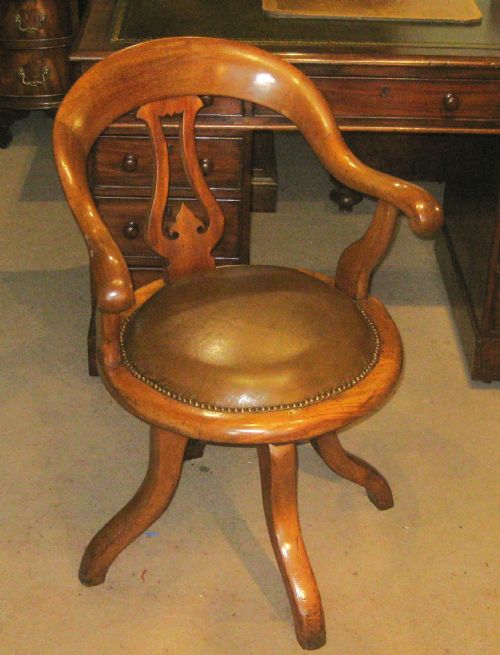
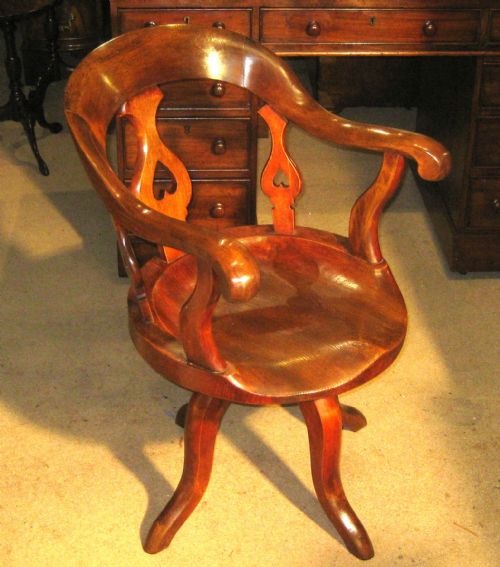
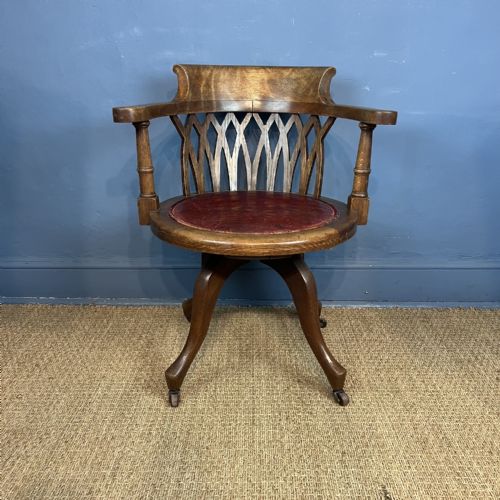
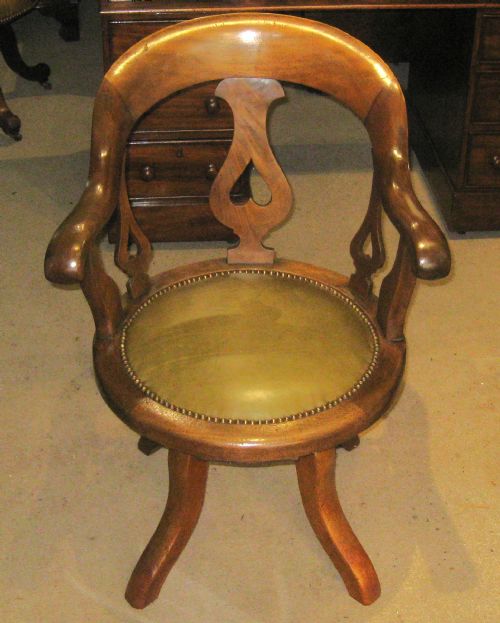
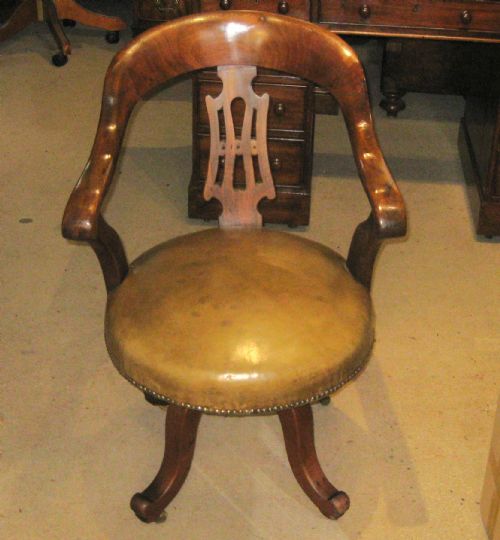
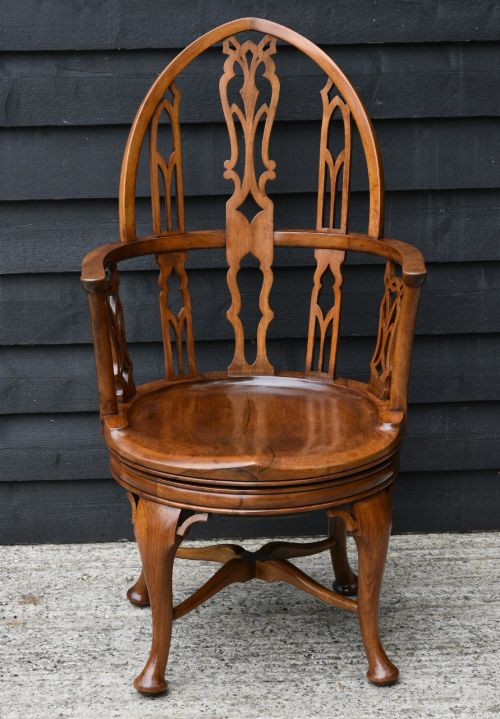
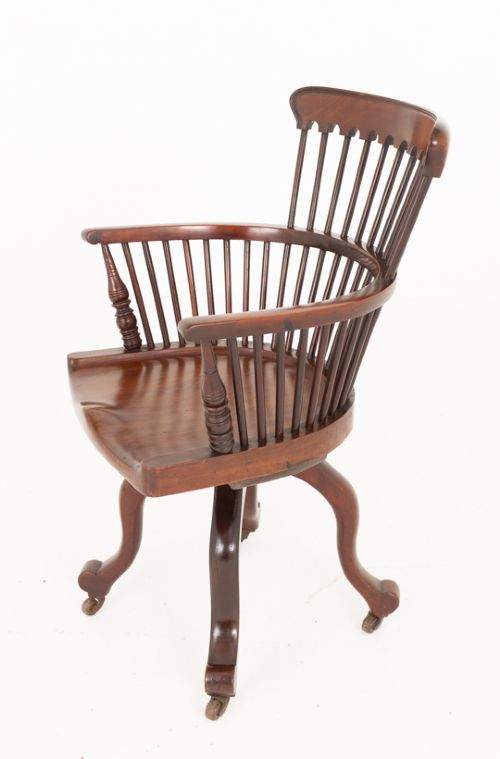
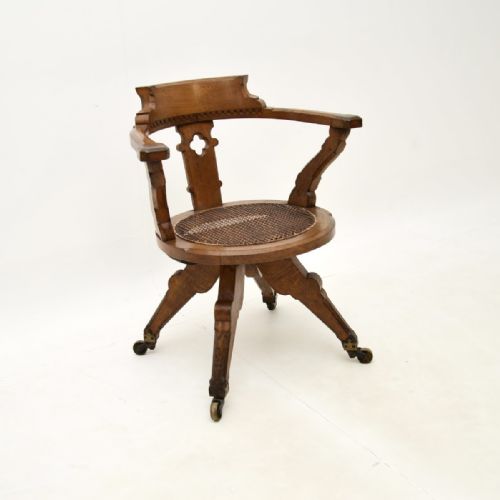
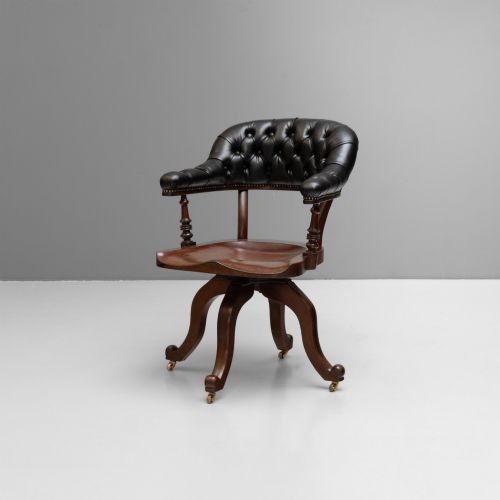
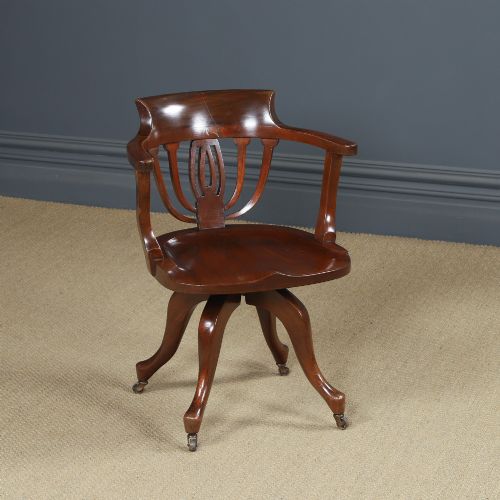
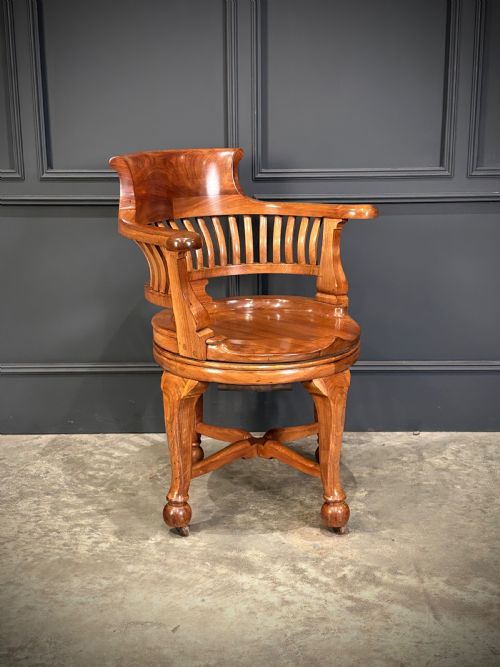
A victorian captain swivel chair serves as a robust seating option for offices, libraries, and ship cabins, typically combining a low backrest with supportive armrests. When exploring this selection, buyers frequently encounter mahogany, walnut, and oak frames mounted on pivoting mechanisms.
The pieces span the nineteenth century into the Edwardian era, incorporating styles such as Gothic Revival, Aesthetic Movement, and Arts and Crafts. Office chairs, desk chairs, and ship chairs dominate the forms available in this category.
Materials and Construction
Makers utilised dense hardwoods including mahogany, oak, walnut, and satinwood to construct frames capable of withstanding constant movement. Many examples integrate cast iron and brass components within the swivel mechanism to permit smooth rotation.
Upholstery relies predominantly on leather inserts or full leather coverings secured to the seat, while bentwood and carved detailing define the decorative vocabulary of specific styles.
Listings feature woods spanning mahogany, walnut, oak, satinwood, and ebonised timber, paired with brass, iron, and leather.
Craftsmanship and Proportion
Superior examples demonstrate meticulous timber selection, such as golden mahogany or figured walnut, paired with deeply carved ornamentation that remains crisp and defined. The integration of the swivel mechanism determines functional excellence, where heavier cast iron assemblies provide greater stability than lighter alternatives.
Proportion and comfort elevate certain forms, distinguishing standard utility seating from masterworks bearing intricate inlays or attribution to known cabinet makers.
S&H Jewell·Shoolbred·Edward William Godwin
The Victorian Captain Swivel Chair Glossary
- Revolving
- The ability of the chair to turn full circle on its central vertical axis. This mechanism relies on a concealed iron screw and spider mount beneath the seat.
- Gothic Revival
- A nineteenth-century design style drawing inspiration from medieval architecture. Pieces display pointed arches, heavy moulding, and robust carved motifs.
- Aesthetic Movement
- A late nineteenth-century design approach emphasising visual beauty over narrative meaning. Furniture from this period often exhibits clean lines and refined artistic detailing.
- Bentwood
- Wood softened through steaming or boiling to bend it into curved shapes. This technique creates resilient structural elements without heavy joints.
Victorian Captain Swivel Chair: Frequently Asked Questions
What defines a captain swivel chair?
These seating pieces feature a low, rounded backrest supported by spindles that connect directly to the armrests and seat base. They are engineered to swivel and tilt to accommodate active working environments.
Originally designed for ship cabins, libraries, and offices, the form prioritises functional movement alongside sturdy timber construction.
How do I care for the leather seat?
Leather surfaces benefit from periodic cleaning with a damp cloth followed by the application of neutral wax or leather conditioner. Avoid placing the timber and leather near direct heat sources to prevent cracking.
Gentle maintenance preserves the natural patina accumulated over the nineteenth and early twentieth centuries.
Are these chairs comfortable for daily work?
The supportive armrests and ergonomic curved backs make them well-suited for modern desk use. Many examples incorporate padded leather inserts to enhance seating comfort.
Testing the swivel mechanism and height adjustment ensures smooth operation for contemporary workspaces.
How can I tell the period?
Dating relies on timber choices, such as golden mahogany in the mid-nineteenth century compared to darker oak in Arts and Crafts iterations. Fasteners, metal types, and carving styles also indicate whether a piece originates from the Victorian era or later.
Design influences like Gothic Revival or the Aesthetic Movement help narrow down the decade of manufacture.