



Victorian Canine Portrait Art
Victorian canine portrait art captures individual dogs in oils, watercolours and drawings from the nineteenth and early twentieth centuries.
Victorian Canine Portrait Art
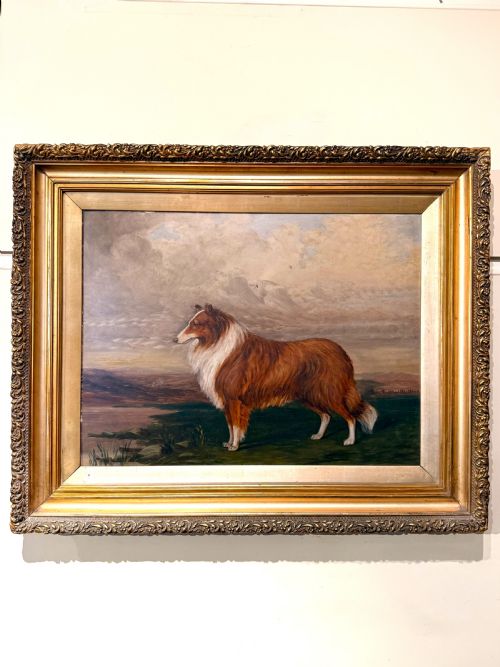
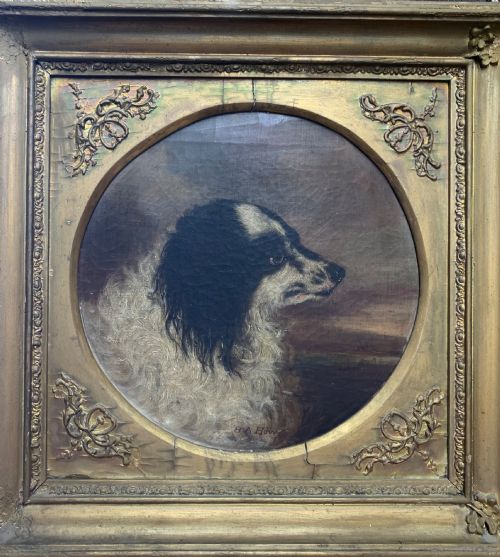
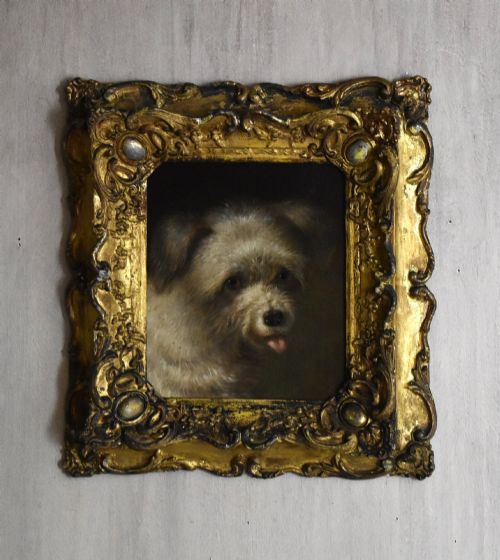
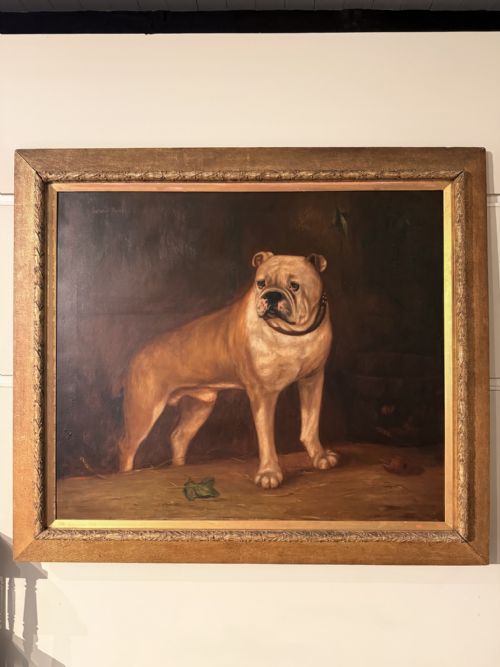
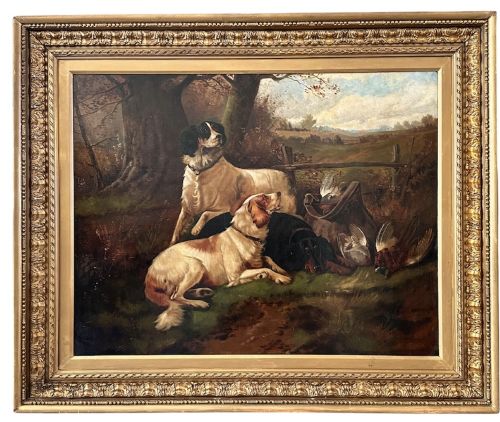
Victorian canine portrait art comprises oil paintings, watercolours, sketches and drypoint etchings depicting specific hounds, terriers, spaniels and working dogs. Buyers find spaniels, collies, setters and terriers rendered alone or within landscape settings.
The works span the nineteenth century into the Edwardian era, reflecting both academic sporting traditions and naive approaches. Canvases and panels frequently show dogs in landscapes, farmyards or domestic interiors.
Most examples originate from British hands, capturing named champions, family pets or hunting packs with distinct personality. These pieces record the close relationships between owners and their animals during the period.
Materials and methods
Painters applied oil paint to stretched canvas, wooden panels or artist palettes, building depth through layered glazes. Watercolours and charcoal on paper capture finer linear details in drawings and sketches.
Frames rely on wood, often finished with gilt or gold leaf to complement the painted compositions. Etchings utilise paper to record inked metal plates, preserving delicate line work.
Artists combined traditional brushwork with careful observation of animal anatomy, texture and expression. Canvases are frequently housed in antique giltwood frames that match the period of the artwork.
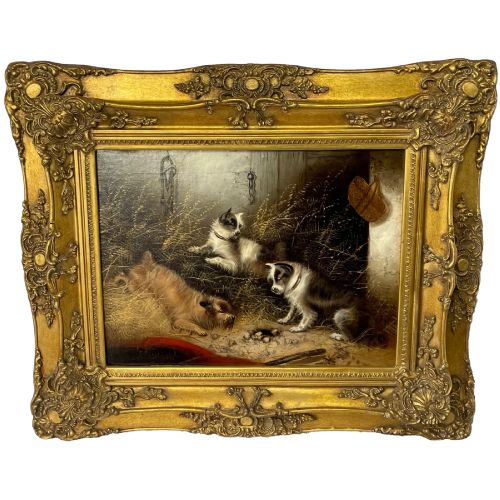
Several canvases capture dogs actively interrupting farmyard productivity by chasing rats and guarding the day's hunting bag.
Judging quality
Quality rests upon the artist's command of canine anatomy, bone structure and coat texture. Superior hands capture the intelligent gaze and individual temperament of the animal rather than relying on generic formulas.
Compositional balance separates standard decorative works from accomplished pieces. A well-placed subject integrated naturally into a landscape or interior creates a coherent visual narrative.
The handling of light and shadow defines the depth of the painting. Finer works display subtle tonal gradations in fur and foliage, whereas lesser examples remain flat and uniform.
Valentine T. Garland·Martin Theodore Ward·John Sargent Noble·John Emms·John Frederick Herring Senior·Arthur Wardle·William Barraud·Augustin Edouart·Sir Edwin Landseer·Colin Graeme Roe·John Trivett Nettleship·Philip Eustace Stretton·George Earl
The Victorian Canine Portrait Art Glossary
- Oil on Canvas
- Pigment suspended in drying oil applied to a woven fabric support stretched over a wooden frame. This medium allowed artists to achieve rich colour saturation and subtle blending.
- Giltwood
- Wood carved and coated with gold leaf or metallic paint to create a decorative frame. These surrounds were designed to enhance the visual weight of the painting.
- Drypoint Etching
- A printmaking technique where an artist scratches a design directly onto a metal plate with a sharp needle. The resulting burr holds ink to produce velvety lines.
- Sporting Art
- Depictions of rural pursuits, hunting dogs, horses and game associated with field sports. This genre commanded a significant following throughout the nineteenth century.
- Naive School
- Art produced by painters with little or no formal academic training, often characterised by flat perspectives and direct charm. These works offer an honest view of domestic and working animals.
Victorian Canine Portrait Art: Frequently Asked Questions
What subjects appear most often in these dog portraits?
Painters concentrated heavily on working breeds, gundogs, terriers and lapdogs owned by prominent families or sportsmen. Spaniels, setters, collies and hounds frequently dominate the compositions.
Animals appear individually as named champions or in groups guarding farmyards and participating in hunts. Landscapes and domestic interiors provide the background context for these subjects.
How do I identify the date of a canine painting?
Dates rely upon artist signatures, exhibition records, costume details of any human figures present and stylistic markers of the frame. Victorian works typically show distinct stretcher construction and canvas stamps.
Clothing styles, painting techniques and handwritten inscriptions on the reverse provide further chronological clues. Examining the backing materials helps confirm the age of the piece.
Where should I hang a Victorian dog portrait?
These works suit traditional living spaces, libraries and hallways where smaller paintings create focal points. Proper placement avoids direct sunlight to protect sensitive oil pigments and paper works.
Pairing framed canvases with wood furniture enhances the nineteenth-century aesthetic. Ensuring adequate wall space allows the gilt frames to frame the artwork effectively.
What is the difference between academic and naive dog art?
Academic paintings demonstrate precise knowledge of animal anatomy, perspective and sophisticated tonal blending. Artists trained in formal institutions produced highly realistic portrayals of dogs.
Naive works approach the subject with simpler perspective and direct charm. These pieces often reflect regional traditions rather than strict academic rules.