
English Victorian Oil Painting
An english victorian oil painting captures the distinct light, pastoral calm, and domestic seriousness of nineteenth-century life on canvas.
English Victorian Oil Painting
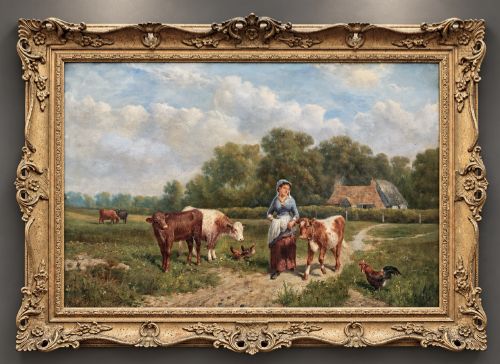
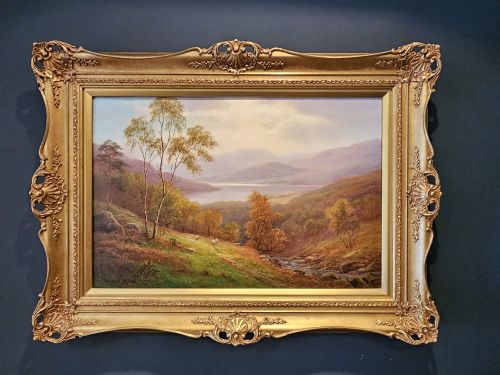
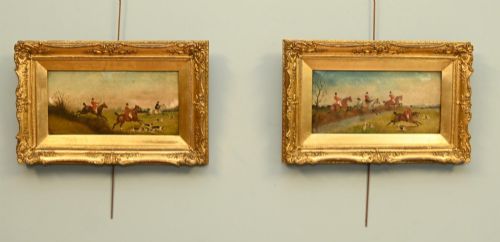
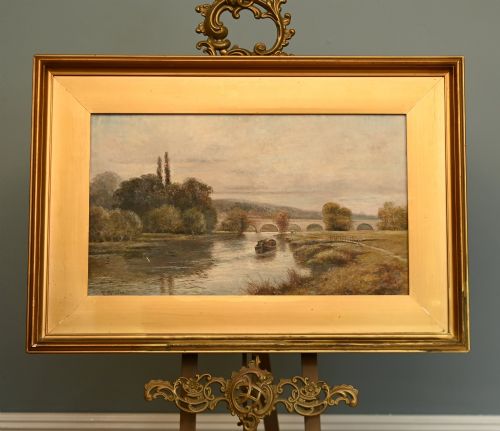
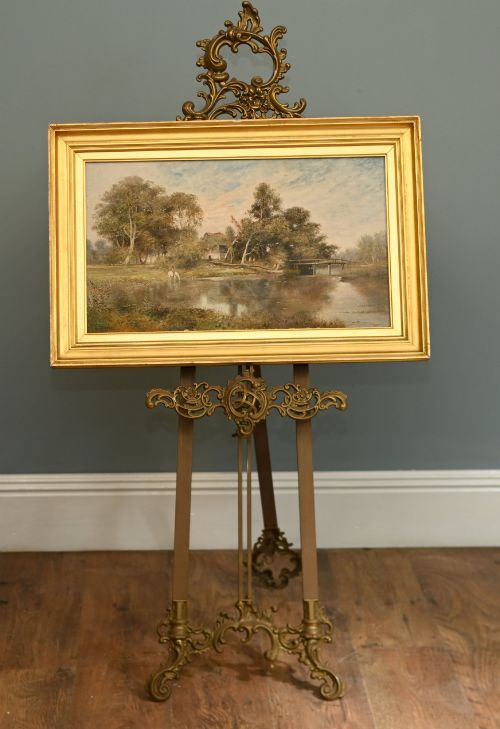
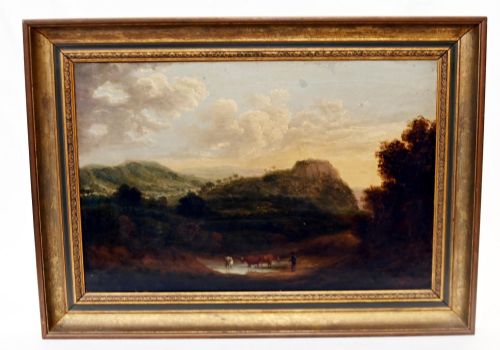
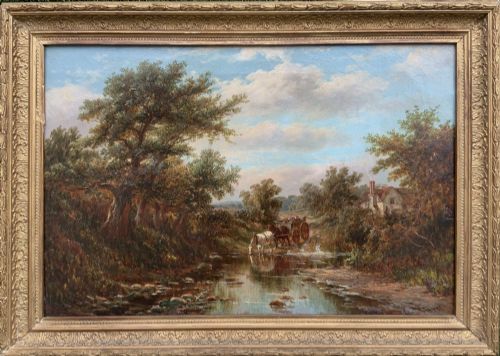
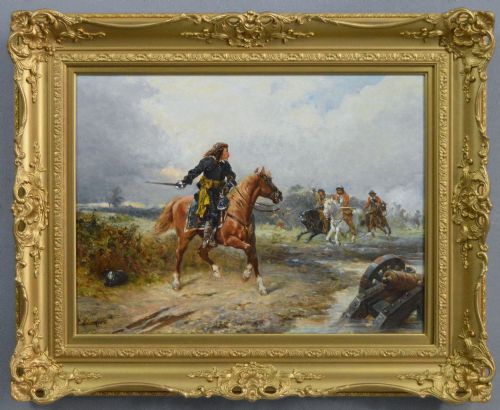
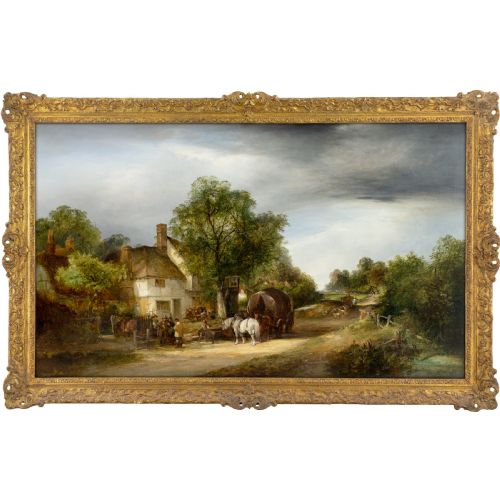
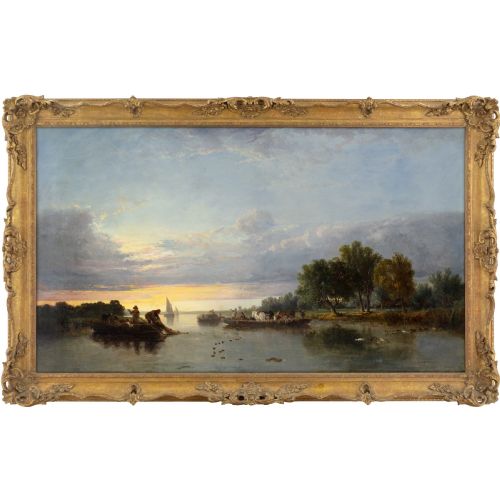
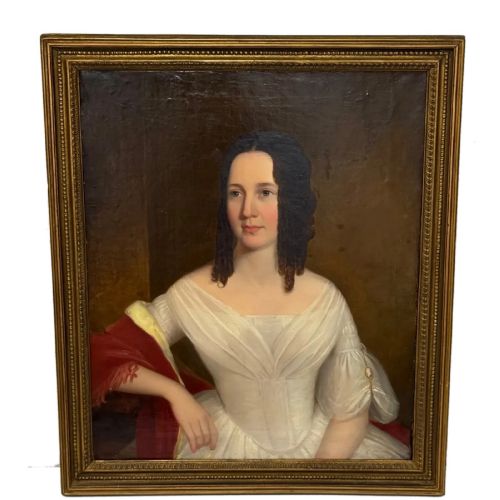
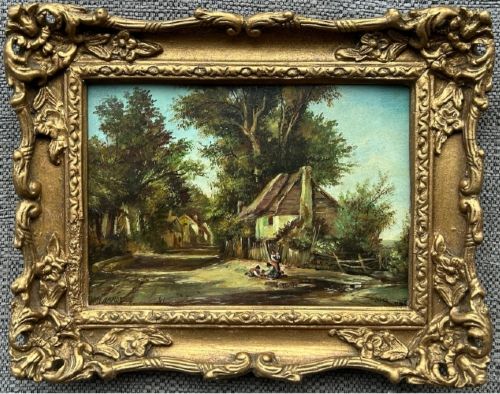
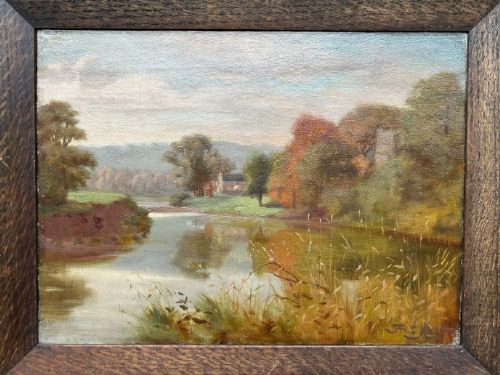
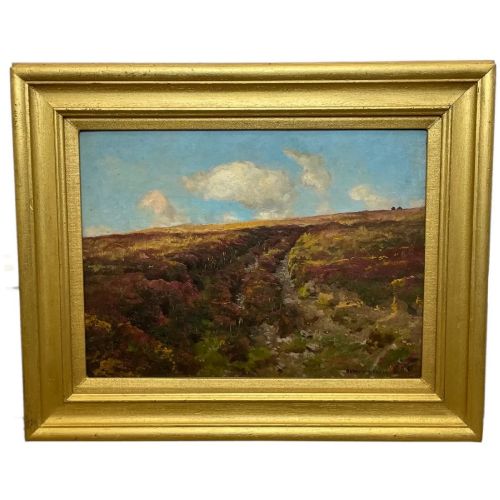
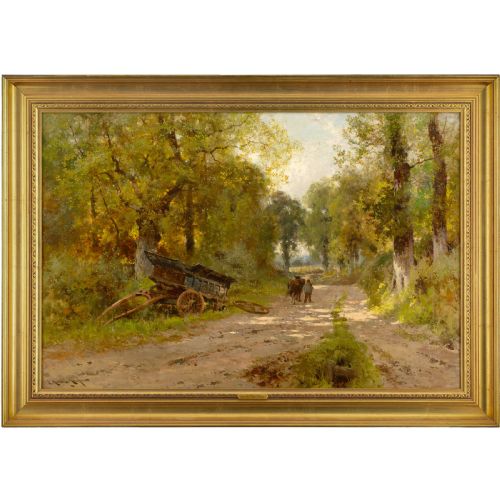
An english victorian oil painting spans a rich variety of subjects, including rural landscapes, maritime views, sporting scenes, and formal portraits. These works record the changing tastes of nineteenth-century patrons, moving from academic realism to intimate pastoral idylls.
Landscapes and river views dominate the surviving output, often depicting familiar English scenery from Berkshire, Yorkshire, or the Sussex coast. Figurative genre scenes and still life compositions involving game or fruit also appear frequently across the period.
Works on this page date from the mid-nineteenth century up to nineteen hundred, encompassing decades of distinct artistic production. Canvas and wood panel serve as the primary supports for these framed works of art.
How They Were Made
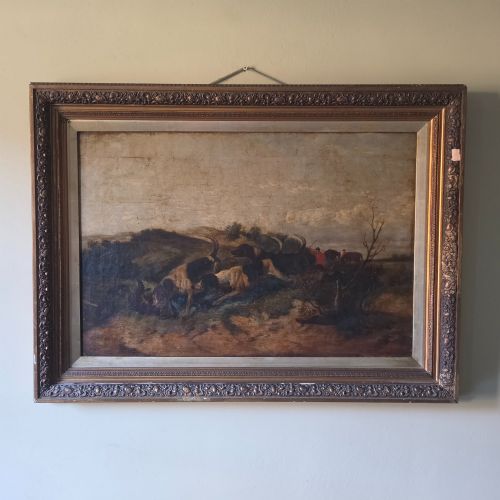
Painters applied oil paint to stretched canvas or prepared wood panels, building up layers of pigment to achieve depth and texture. Canvas supports frequently display fine craquelure and the structural weave characteristic of nineteenth-century manufacture.
Frames formed an integral part of the presentation, utilising carved wood, plaster, and gold leaf or giltwood finishes. Ornate gilt frames complemented the rich tonal palettes favoured by artists of the British school.
Listings feature canvases dated across the nineteenth century, including specific years like eighteen forty-seven and eighteen ninety.
What Varies in Quality
Handling of light and atmospheric perspective distinguishes accomplished studio work from simpler provincial output. Superior brushwork captures tactile details in fabrics, foliage, and animal forms with convincing precision.
Condition of the pigment layer and the originality of the mounting frame influence the overall integrity of a piece. Retained signatures, exhibition provenance, and documented artist attributions elevate the standing of individual works.
William Howard Hardy·Frederick Marriott·Arthur Wardle·John Horace Hooper·David Bates·Vincent Clare·Walter Heath Williams·Albert Clark·Edward Ladell·George Augustus Holmes·Thomas Sidney Cooper·Frederick Walker·William Blake Richmond·Richard Redgrave·Charles Hunt·Henry Yeen King·C R Breytle·William Greaves·Henry H Parker·Thomas Walker Bretland·Sydney Yates Johnson·John Frederick Herring Senior·Benjamin Blake·William Arthur Breakspeare·William Edward Webb
The English Victorian Oil Painting Glossary
- Canvas
- A heavy woven fabric stretched across a wooden stretcher frame to serve as a support for oil painting. It provides a flexible yet durable surface that responds to atmospheric changes.
- Giltwood
- Wood carved and coated with gold leaf or metallic powder to create a bright, reflective surface. This finish defined the opulent frames popular in the Victorian era.
- Genre Painting
- Artwork depicting scenes from everyday life, ordinary people, and domestic interiors rather than grand historical or mythological subjects. These compositions offer insight into nineteenth-century social habits.
- British School
- A loose collective term for artists trained or working within Britain during a shared period. It groups together diverse talents who shared academic conventions and regional subjects.
- Craquelure
- A fine network of minute cracks appearing across the surface of old oil paint as it ages and hardens. This natural occurrence indicates the genuine age of a canvas.
English Victorian Oil Painting: Frequently Asked Questions
Where were these paintings displayed originally?
Victorian households hung these artworks primarily in parlours, dining rooms, and libraries to project status, cultural literacy, and refined taste. Large country houses and urban townhouses alike accommodated framed landscapes and portraits.
Purchasers often matched the scale of the canvas to the architectural proportions of specific rooms, pairing ornate gilt frames with heavy interior furnishings.
How do I identify a Victorian landscape?
Victorian landscapes frequently depict recognisable English countryside, rivers, or coastal regions with naturalistic lighting and detailed foliage. Artists of this era emphasised atmospheric weather conditions and peaceful rural narratives.
Signatures, dates, and framing styles frequently provide additional clues to confirm the exact decade of production within the nineteenth century.
What subjects were popular in the nineteenth century?
Popular subjects ranged from pastoral agricultural scenes and coastal shipping views to domestic animal portraits and still life arrangements. Patrons favoured recognizable local views and moral genre narratives that reflected contemporary life.
Sporting art, including depictions of prize livestock and racehorses, also formed a significant portion of the commissions fulfilled by British painters.
How should I care for an antique oil painting?
Maintain stable indoor humidity and temperature levels to prevent the canvas from expanding or contracting excessively. Avoid placing the artwork in direct sunlight to protect pigments from fading over time.
Dust the surface and frame gently with a soft, dry cloth rather than applying liquid cleaners or chemical agents to the paint layer.