




Victorian Cane Rocking Chair
A victorian cane rocking chair brings motion and texture to a room, offering the woven seat and curved runners collectors seek in nineteenth-century seating.
Victorian Cane Rocking Chair
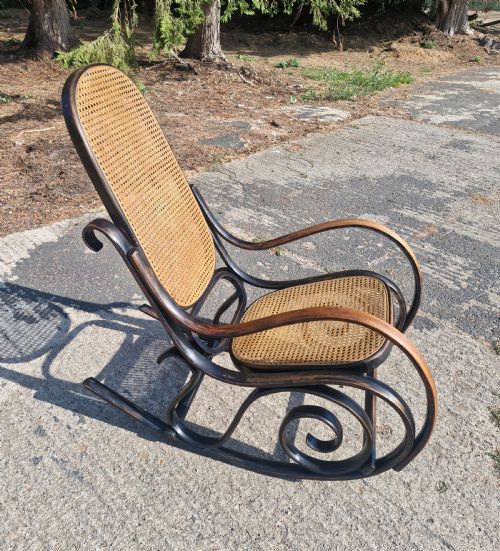
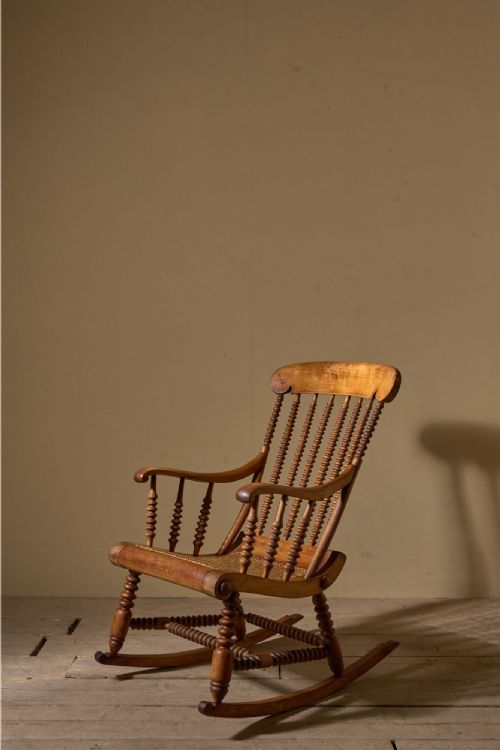
A victorian cane rocking chair encompasses diverse nineteenth-century forms, spanning robust spindle back designs and steam-bent structures.
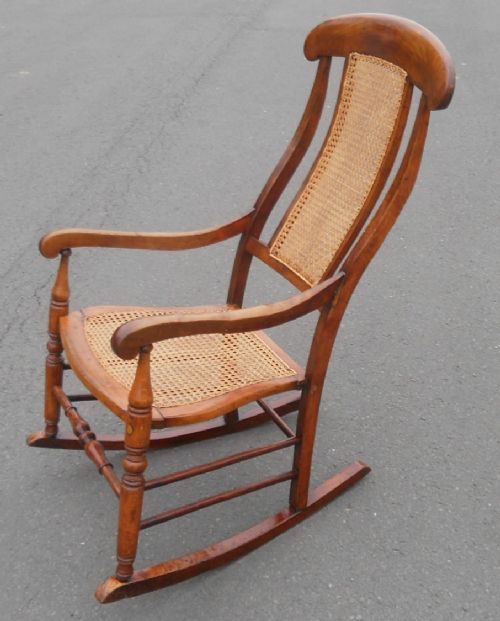
The selections on this page concentrate on timber frames fitted with woven cane or rattan seats, moving from early country versions to later bentwood interpretations.
Buyers encounter standard armchairs alongside smaller child's variants, all sharing the distinctive curved runners that define the rocking chair tradition.
How they were made
Craftsmen built these chairs primarily from beech, oak, and general hardwood, often utilising turning techniques for spindles and bobbins.
Seats and backs incorporate woven cane and rattan, threaded through frame perforations to create flexible, supportive surfaces.
Later nineteenth-century and early twentieth-century examples employ steam-bent timber methods to achieve continuous curved arm and back structures.
Victorian Cane Rocking Chair Retail Price Guide 2026
Typical asking prices for victorian cane rocking chair among the pieces listed under this phrase on Sellingantiques today, from the lower quarter to the upper quarter. They describe what is for sale here now, not the wider market.
The listings span the nineteenth century into the 1920s, featuring beech, oak, and rattan cane across adult and child sizes.
What varies in quality
Quality rests upon the integrity of the timber frame and the precision of the turnery, where crisp bobbin details distinguish superior examples from plain variants.
The condition and execution of the cane work dictate overall standard, as hand-woven patterns require tighter tension and finer material than hurried repairs.
Makers such as Thonet introduce a degree of refinement through patented bentwood engineering, setting industrial production apart from local country carpentry.
Thonet
The Victorian Cane Rocking Chair Glossary
- Cane
- Material derived from the outer bark of rattan palms, split and woven into flexible chair seats. It provides a lightweight yet durable surface.
- Bentwood
- Timber softened via steam or boiling water and pressed into curved forms. This technique creates seamless continuous frames.
- Spindle back
- A chair back constructed from numerous vertical turned wooden rods. This style lightens the visual weight of the seating.
- Bobbin turned
- Wood turned on a lathe to resemble a series of wooden reels or bobbins strung together. It adds decorative texture to structural posts.
- Rattan
- A climbing palm used whole for structural framing or split for weaving. It underpins the flexible panels found in these seats.
Victorian Cane Rocking Chair: Frequently Asked Questions
How do I identify a Victorian rocking chair?
Examine the timber species, turnery details, and construction methods characteristic of the nineteenth century. Look for traditional joinery combined with woven cane seating.
Compare the proportions and stylistic markers against known periods such as the Victorian era or Edwardian years.
Are bentwood rockers comfortable?
Bentwood rockers utilise flexible steam-bent frames that absorb movement and provide gentle spring during use. The curved designs accommodate natural postures.
Many incorporate woven cane panels that conform slightly to body weight.
How should I care for cane seats?
Maintain cane by keeping the material hydrated with occasional damp wiping to prevent brittleness. Avoid placing the chair near direct heat sources.
Weight distribution matters, so avoid kneeling directly on the woven panels.
What is a bobbin turned chair?
Bobbin turning involves shaping wooden stretches into repeated spherical or spool-like motifs using a lathe. This decorative woodwork appears frequently on nineteenth-century frames.
It provides a tactile surface texture distinct from plain tapered legs.