

Victorian Candleholder
A victorian candleholder brings nineteenth-century warmth to a room, offering practical illumination through cast brass, silver plate, and coloured glass.
Victorian Candleholder
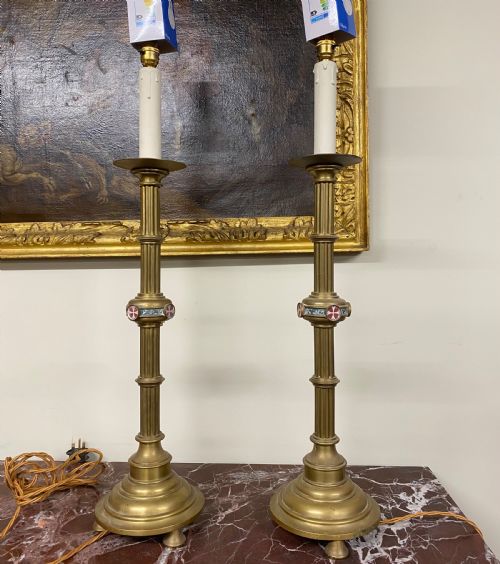
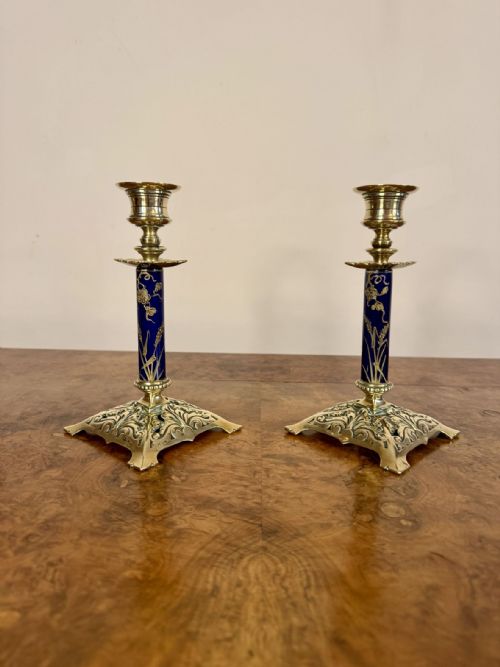
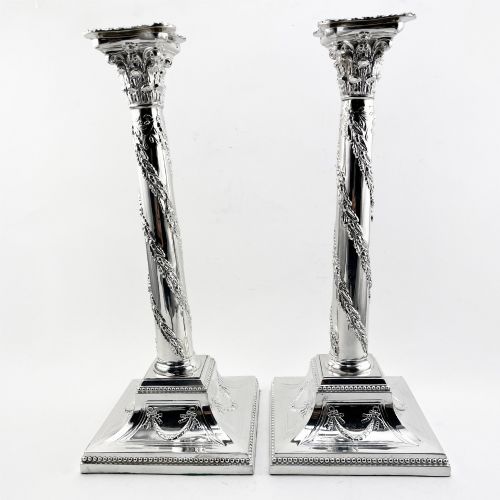
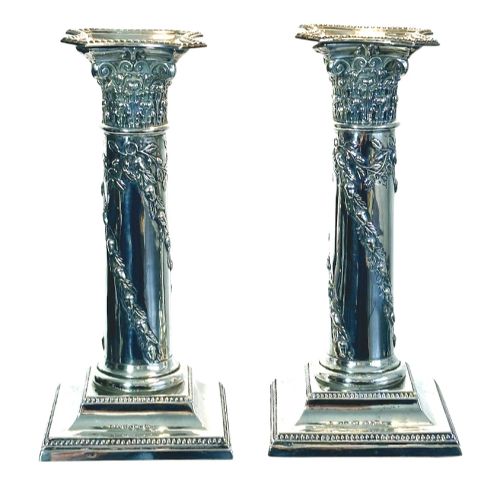
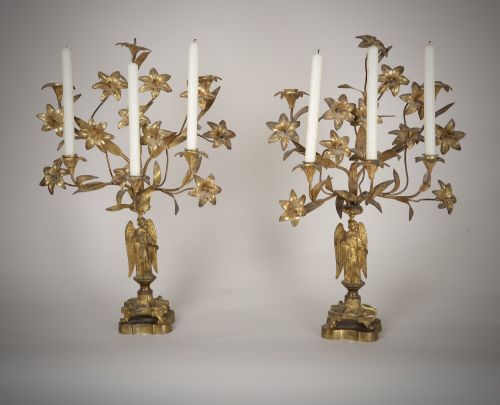
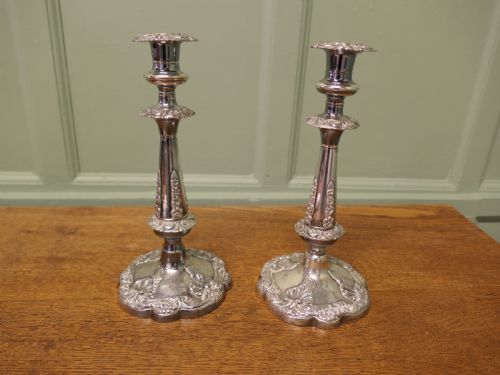
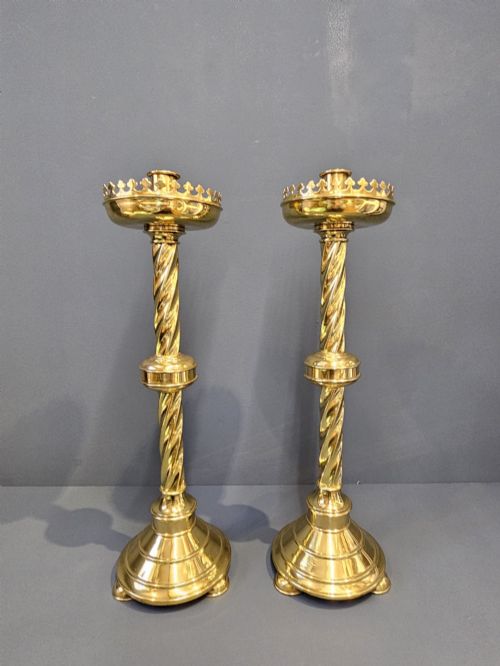
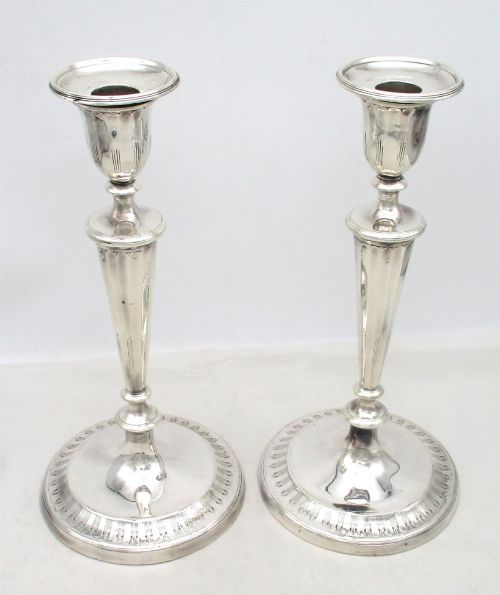
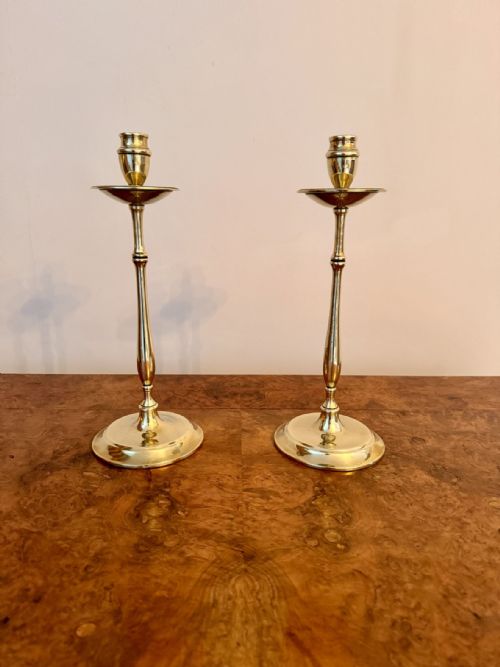
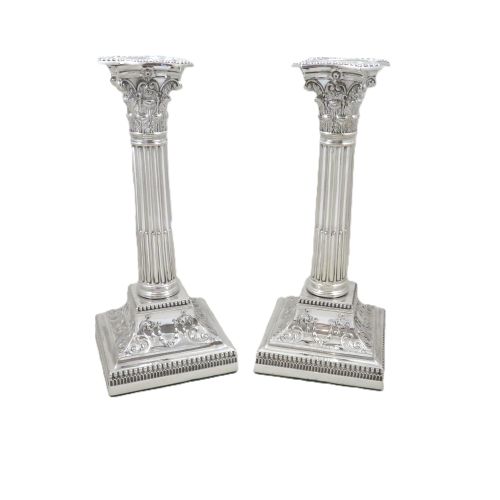
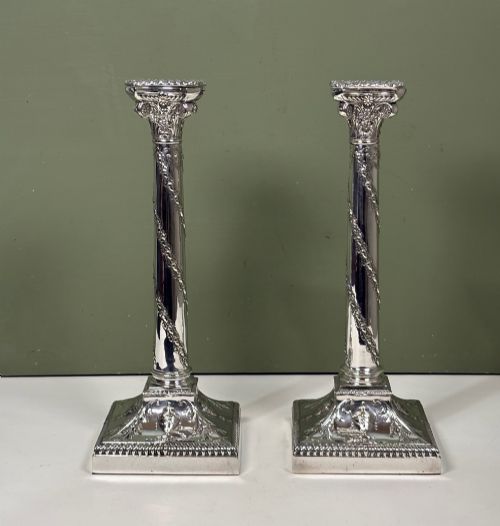
A victorian candleholder encompasses a diverse range of lighting devices produced during the nineteenth century, including single candlesticks, multi-light candelabra, chambersticks, and wall sconces. Brass and silver plate emerge as the predominant materials on this page, often shaped into classical columns or gothic revival forms.
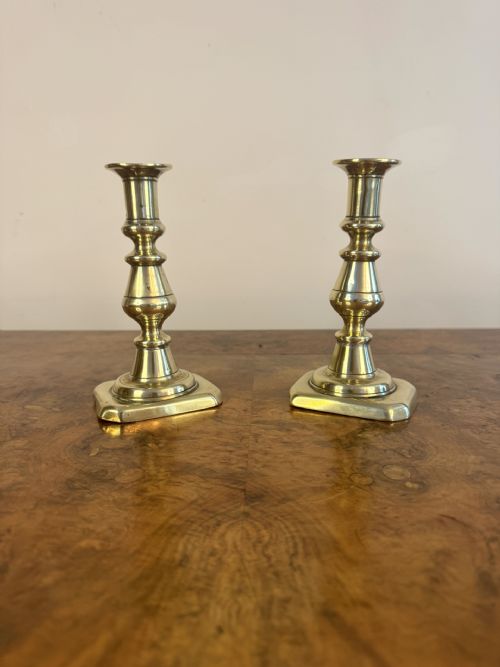
Buyers will encounter utilitarian brass ejector sticks alongside decorative porcelain figures and glass table lustres hung with prisms. Many examples survive as matched pairs, spanning decades from the 1860s through to the early 1900s.
The domestic interior of the period relied on these portable metal and ceramic fixtures for room-to-room lighting before electric bulbs became commonplace. Specialised formats such as student desk lamps and travel-sized folding designs like Brighton buns also appear within the selection.
Materials and methods
Foundry work dominated production, utilising cast brass, bronze, and ormolu to create sturdy stems and weighted bases. Seamed construction methods often leave subtle vertical lines on older metal bodies where rolled sheet brass was joined.
Silver plating on base metals provided the luxurious appearance of solid sterling silver at a lower cost, employing techniques that deposited a thin layer of silver over copper or white metal. Applied decorative motifs, including porcelain inserts, glass shades, and tortoiseshell panels, were then fitted by hand.
Victorian Candleholder Retail Price Guide 2026
Typical asking prices for victorian candleholder among the pieces listed under this phrase on Sellingantiques today, from the lower quarter to the upper quarter. They describe what is for sale here now, not the wider market.
A pug dog occasionally holds the candle.
Distinctions in craftsmanship
Heavier metal weight and crispness in chased or cast surface detail separate superior pieces from simpler utilitarian items. Well-defined acanthus leaves on Corinthian capitals or sharply rendered figural elements indicate skilled workshop production.
The integration of materials determines refinement, such as the clarity of cut crystal prisms on lustres or the seamless fit of internal ejector mechanisms in brass candlesticks.
Bruce Talbert·Hawksworth Eyre·Sutherland And Sons
The Victorian Candleholder Glossary
- Ejector candlestick
- A brass stick containing an internal spring-loaded or slide mechanism to push out the remaining stub of a candle. This clever device prevented wax from becoming stuck down the socket.
- Chamberstick
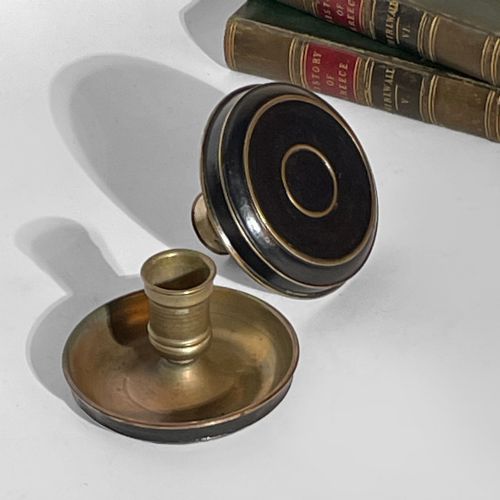
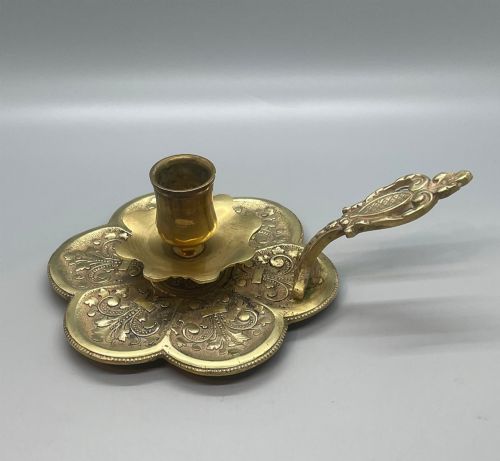
- A low candleholder fitted with a wide saucer base and a loop handle for carrying a candle around a house at night. They frequently accommodated a small conical extinguisher known as a snuffer.
- Table lustre
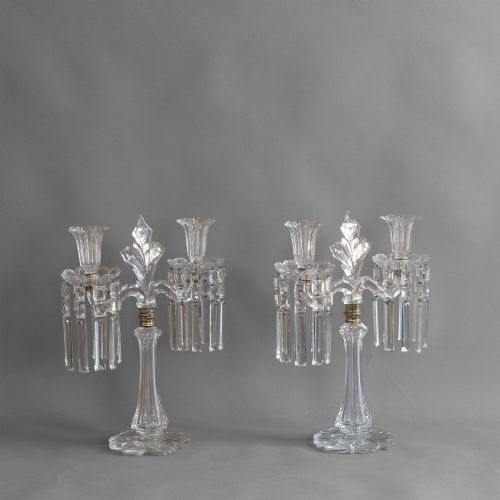
- An ornamental glass or porcelain vase hung with cut crystal glass prisms designed to reflect candle flame light. They were popular centrepieces on nineteenth-century dining tables and mantelpieces.
- Pricket
- A candleholder that supports a candle upon a sharp metal spike inserted into the base of the wax. This style often appears on church or gothic revival altar pieces.
- Girandole
- A decorative wall bracket holding one or more candles, usually featuring a mirrored backplate to multiply the reflected light in a room. They were frequently executed in gilded bronze or brass during the Victorian period.
Victorian Candleholder: Frequently Asked Questions
What is a chamberstick used for?
A chamberstick provided portable illumination for navigating dark hallways and staircases before electric lighting existed. The wide saucer caught dripping wax while the loop handle allowed safe carrying.
Many examples included a tiny metal cone resting in the dish to extinguish the flame safely upon reaching a bedroom.
How do I clean antique brass candlesticks?
Dust accumulated in crevices can be removed gently using a soft natural bristle brush. Avoid harsh modern chemical dips that strip away the desirable historic patina accumulated over a century.
Gentle wiping with a dry or very slightly damp cloth preserves the surface character of nineteenth-century metalwork.
Were these made as pairs?
Many nineteenth-century lighting items were manufactured and sold as symmetrical pairs to adorn mantelpieces and sideboards. Dining tables and drawing rooms required balanced arrangements for formal entertaining.
Single survivors also occur frequently, having been separated from their original matching companions over generations of use.
What are table lustres?
Table lustres are decorative glass or ceramic vessels embellished with long cut glass crystal pendants called prisms. Placed on tables, they caught and refracted the flickering light from burning candles.
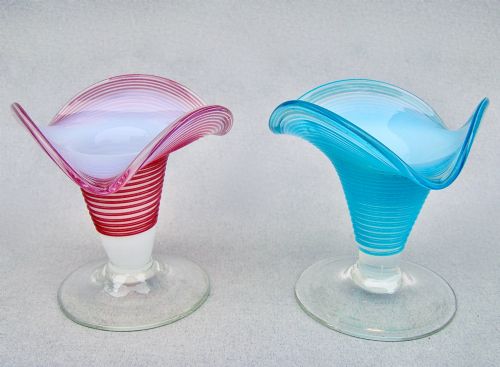
Coloured ruby or green glass versions were particularly fashionable in Victorian parlours for adding rich warmth to interior schemes.