



Victorian Campaign Chest Drawers
When evaluating a victorian campaign chest drawers, you examine robust, two-part portable furniture designed for officers on the move.
Victorian Campaign Chest Drawers
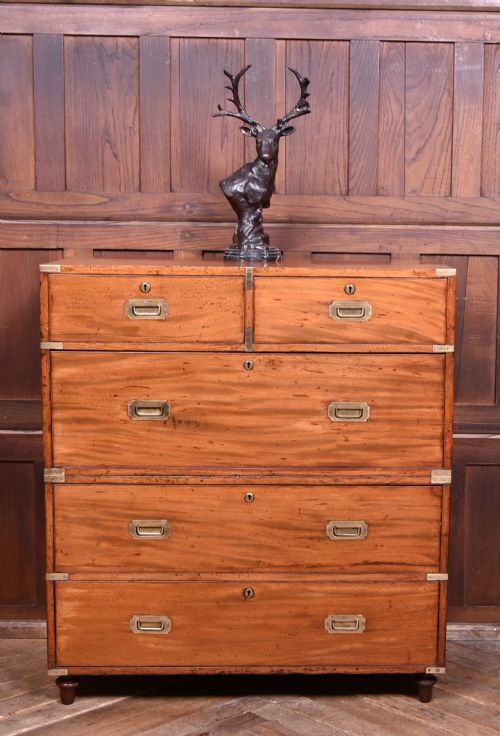
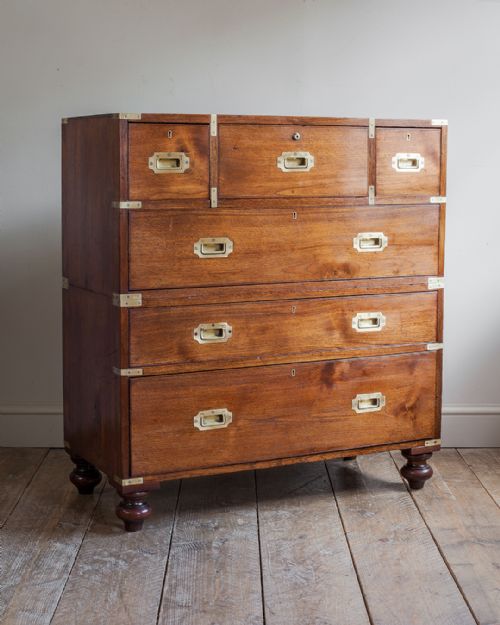
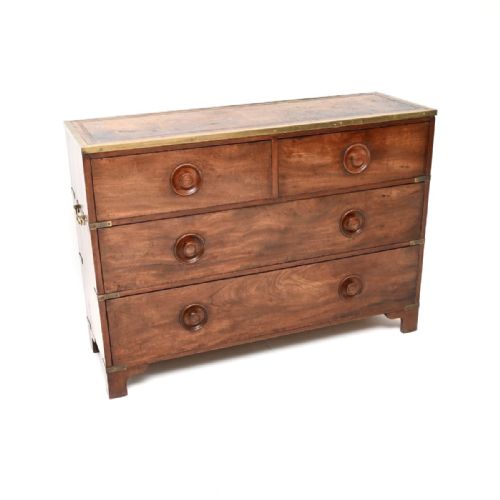
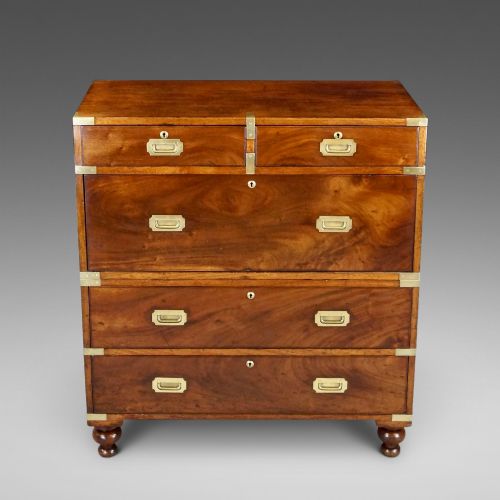
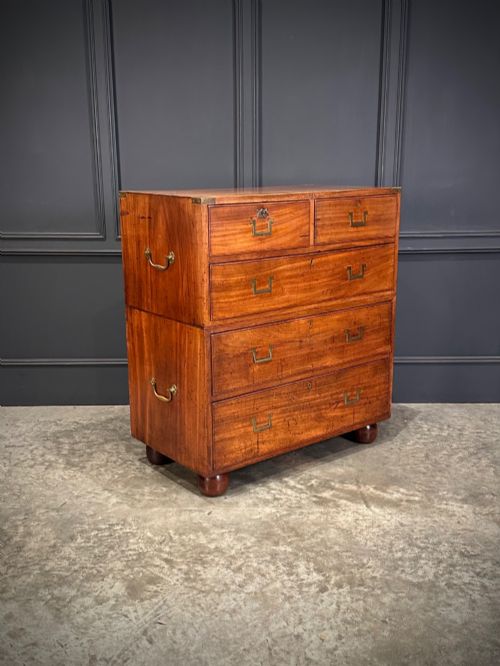
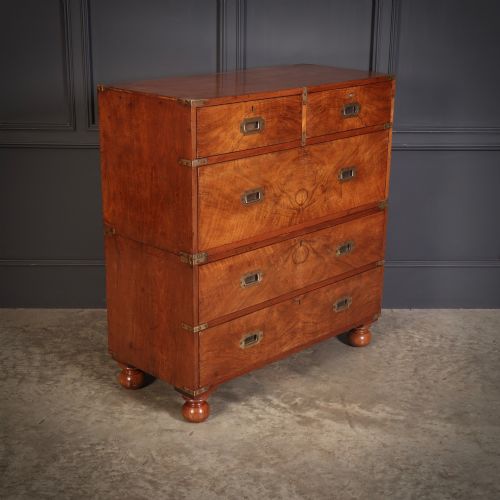
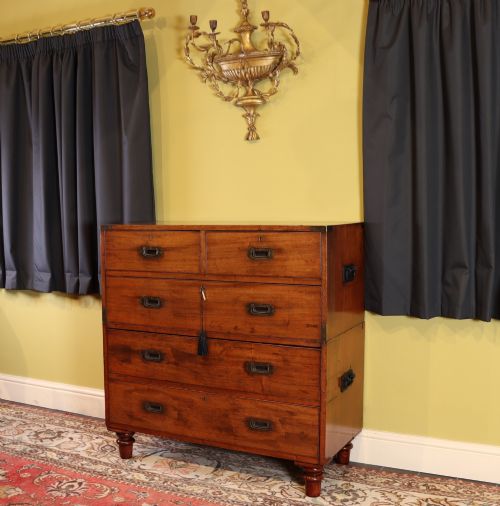
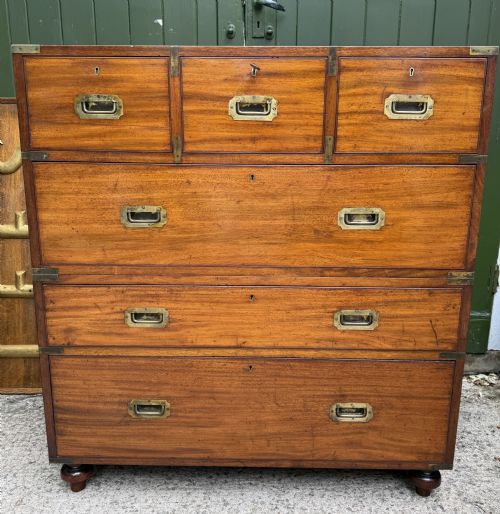
A victorian campaign chest drawers is a utilitarian storage unit built in two separate sections for easy transport during military deployment. Most examples encountered here are constructed from dense timbers such as mahogany or teak, fitted with flush brass handles and protective corner brackets.
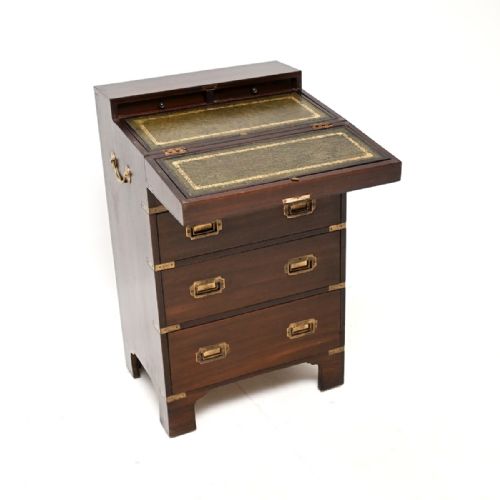
Beyond standard chest of drawers formats, forms extend to secretaire configurations featuring drop-down writing desks, alongside compact bedside variations and occasional filing drawers. These pieces reflect British colonial administration and military life throughout the nineteenth century.
The layout typically incorporates two short drawers over three long ones, engineered to divide cleanly at the centre. This modular construction allowed officers to pack their belongings securely into transit cases.
How They Were Made
Makers utilised durable tropical hardwoods like mahogany, teak, and camphor wood to withstand tropical climates and rough transit. These timbers were selected for stability and resistance to warping under extreme environmental changes.
Brass strapping, inset corner plates, and recessed drop handles were screwed flush to every surface to prevent snagging during movement. Dovetailed drawer joints and internal dust partitions ensured structural integrity despite constant disassembly.
Listings demonstrate that campaign chests appear in mahogany, teak, and camphor wood, spanning the nineteenth century.
What Varies in Quality
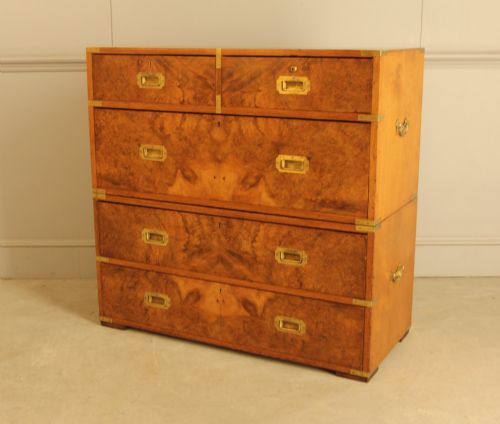
The distinction between standard military issue and superior officer-grade pieces lies in the choice of timber figurations, such as burr walnut or select flame mahogany, and the precision of the brass joinery. Finely executed secretaire fittings and secret compartments elevate an ordinary utilitarian chest into a masterclass of cabinetmaking.
Structural rigidity upon reassembly indicates superior craftsmanship, where sections align seamlessly without binding drawers. The quality of the original brass hardware and the presence of makers' stamps further distinguish exceptional workshop output.
S. W. Silver & Co.·Ross & Co.·Army & Navy·Graves and Sons of Devonport·Arthur Foley & Son of Salisbury
The Victorian Campaign Chest Drawers Glossary
- Campaign chest
- A modular chest of drawers built in two separate sections designed for military transport. Recessed brass handles and corner brackets protect the timber during relocation.
- Secretaire chest
- A chest of drawers featuring an integrated upper drawer that folds down to reveal a writing surface and pigeonholes. This combines desktop storage with clothes organisation.
- Two-part chest
- Furniture constructed as upper and lower carcases that stack together and lock with internal sliding bolts. This division halved the weight and bulk for pack animals or wagons.
- Flush handle
- A metal pull let directly into the wood face so it does not project beyond the drawer front. This prevented the hardware from catching on canvas covers or narrow doorways.
- Camphor wood
- An aromatic timber frequently utilised in colonial campaign furniture to deter insects. Its distinct scent remains evident in many surviving examples.
Victorian Campaign Chest Drawers: Frequently Asked Questions
Why are campaign chests built in two parts?
The two-part construction allowed officers to split a heavy chest of drawers into manageable loads for transport on pack animals or wagons.
Metal pins and flush brackets locked the sections securely together once the regiment reached a new encampment.
How do I identify a secretaire chest?
A secretaire chest incorporates a false drawer front that drops down on hinges to create a writing desk.
Inside, you will find small drawers, pigeonholes, and sometimes secret compartments for correspondence.
What woods were used for these chests?
Cabinetmakers primarily used dense, durable hardwoods like mahogany and teak to endure harsh colonial climates.
Camphor wood and burr walnut also appear, selected for insect resistance or decorative grain patterns.
Are brass corners purely decorative?
Brass binding and recessed corners protected vulnerable wood edges from impacts during frequent loading and transit.
Sitting flush with the timber, the metal prevented the furniture from catching on ropes or canvas.