


Victorian Burr Walnut Case
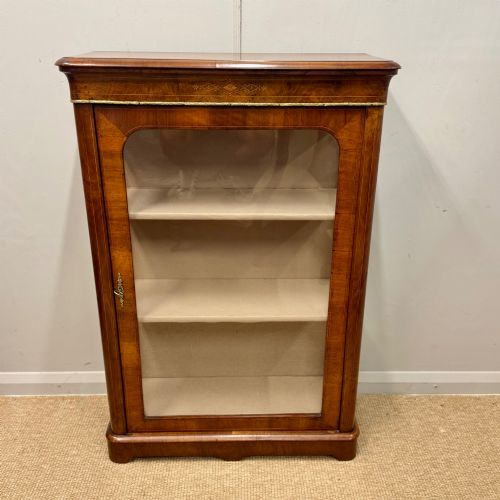
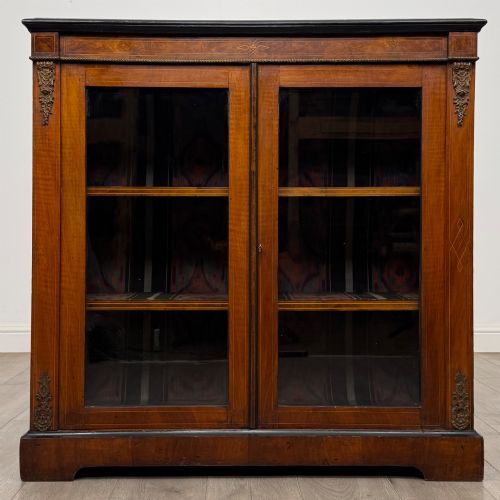
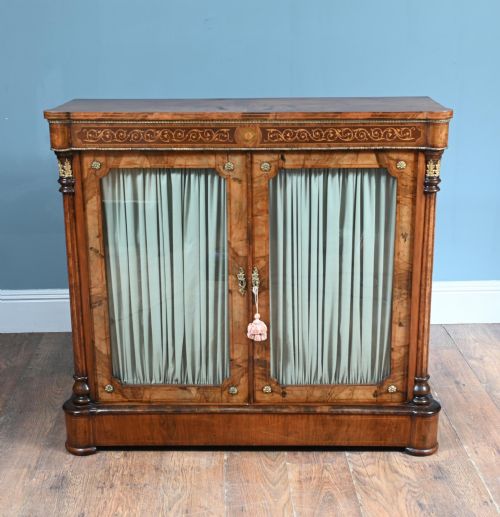
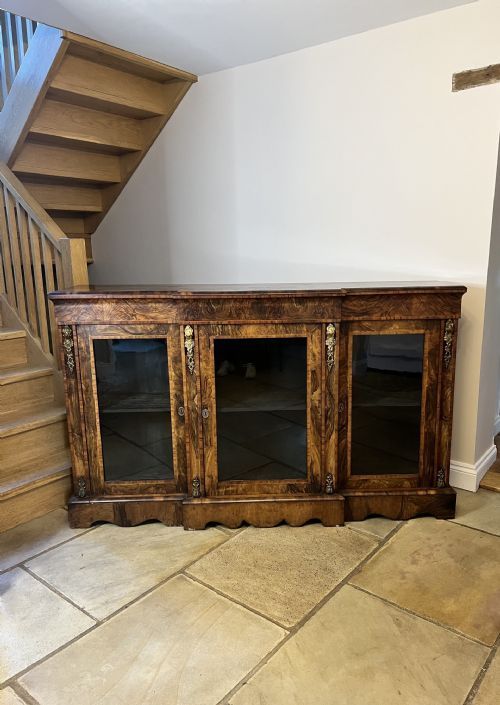
A Victorian burr walnut case offers dramatic swirling wood grain paired with the refined cabinet-making of the nineteenth century.
Victorian Burr Walnut Case
A victorian burr walnut case encompasses display cabinets, pier cabinets, credenzas, bookcases, and smaller fitted boxes designed for travel, jewellery, or writing.
The pieces on this page originate predominantly from the Victorian period, spanning decades from the 1850s through the 1890s, alongside occasional Regency examples.
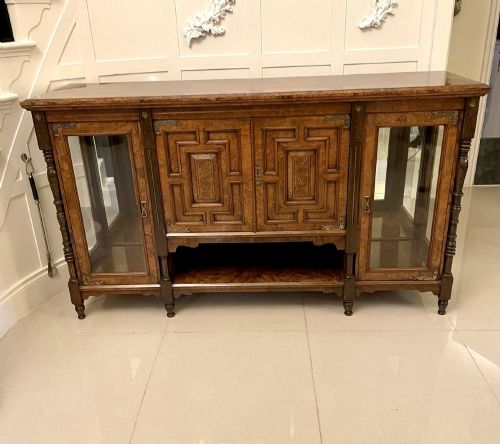
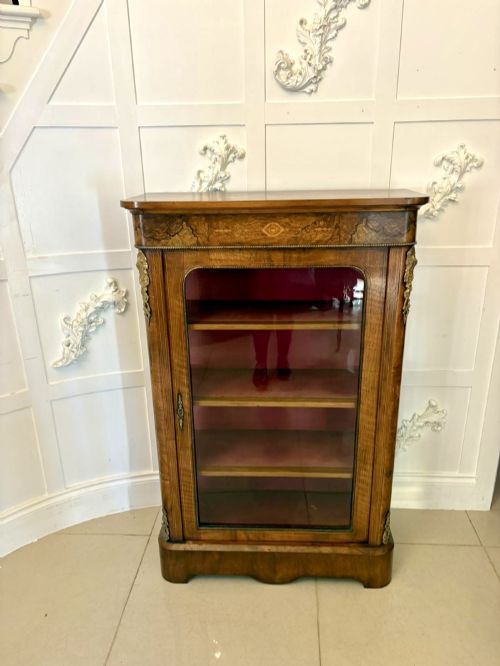
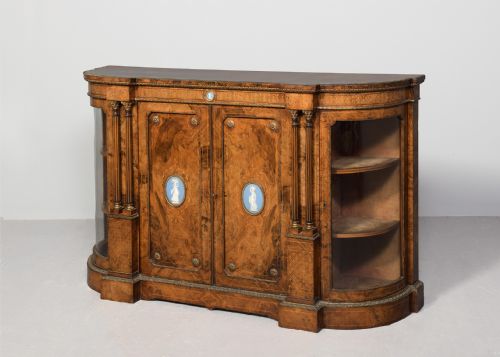
Buyers most frequently encounter glazed pier cabinets, low credenzas, and upright display furniture intended for formal nineteenth-century reception rooms.
Materials and Technique
Craftsmen applied thin veneers of burr walnut over solid secondary timbers to showcase the intricate, swirling knot formations unique to the growth of the tree.
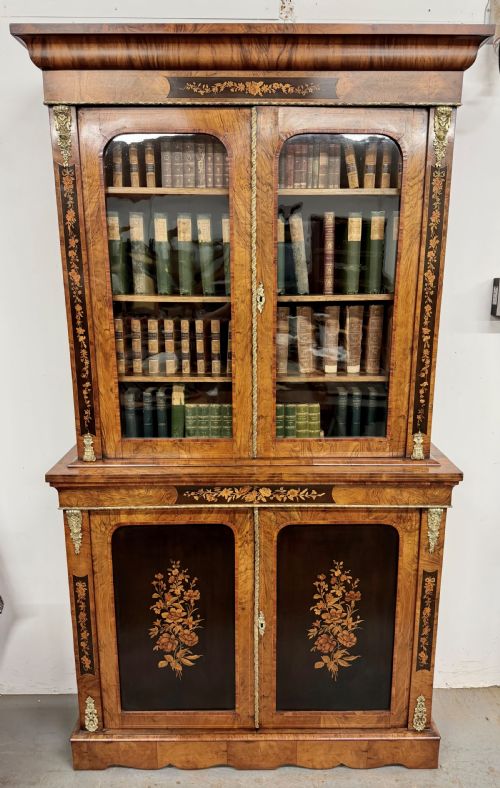
Many cabinets and bookcases incorporate delicate marquetry inlay, ebony framing, and cast ormolu mounts to accent the rich brown tones of the walnut.
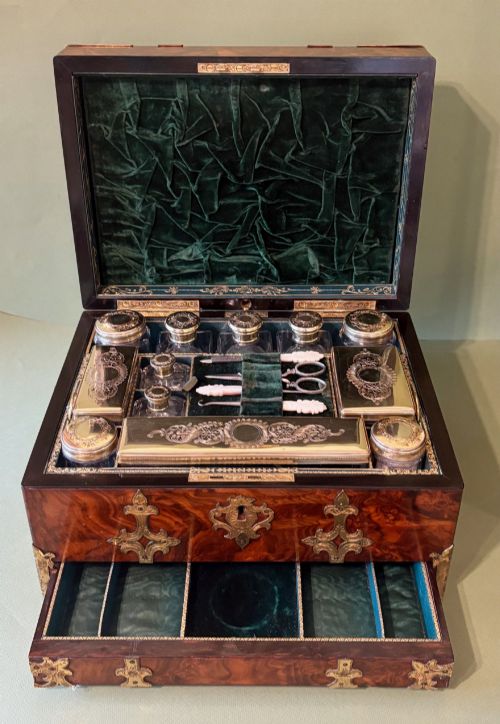
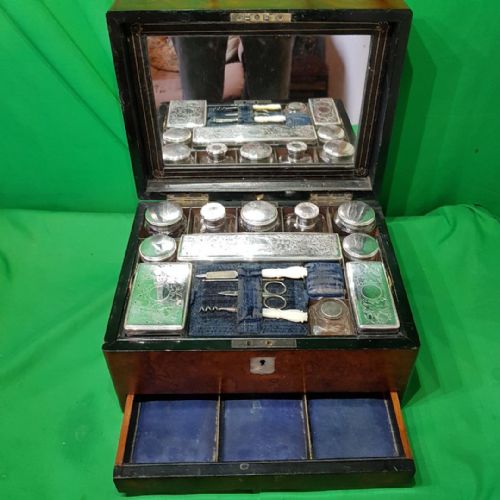
Glass panels feature heavily in the display furniture, while smaller boxes utilise brass banding, velvet linings, and fitted silver or mirror interiors.
Listings feature walnut, glass, brass, ormolu, and velvet across Victorian and Regency display furniture.
Standards of Construction
The distinction between standard items and exhibition-grade pieces rests upon the density and symmetry of the burr walnut veneer selected for the exterior surfaces.
Superior examples demonstrate meticulous precision in their marquetry inlay, crispness in their ormolu mounts, and robust internal carcase construction.
The intricacy of fitted internal compartments in smaller travelling boxes and the integration of original glass and brass hardware further separate finer pieces.
Parkins and Gotto·Baldwin of Loughborough
The Victorian Burr Walnut Case Glossary
- Burr walnut
- A wood veneer taken from the growth warts or burls of a walnut tree, prized for its swirling, highly figured patterns. It creates a decorative surface used extensively on high-end nineteenth-century furniture.
- Pier cabinet
- A narrow display cabinet designed specifically to fit the wall space between windows. These glazed cupboards typically house porcelain or collected objects.
- Ormolu
- Gilded bronze mounts applied to furniture edges and door frames for decorative contrast. This French-derived technique adds a metallic gleam against dark wood.
- Marquetry
- The art of applying thin slices of various woods to a structure to form decorative patterns or pictures. Craftsmen use contrasting tones to build floral or geometric motifs.
- Credenza
- A low sideboard or cabinet featuring doors and glass display sections, developed in the Victorian era for dining rooms and drawing rooms.
Victorian Burr Walnut Case: Frequently Asked Questions
What is a burr walnut case?
A burr walnut case is a piece of nineteenth-century furniture or decorative storage surfaced with highly figured wood veneer. These items range from large glazed display cabinets to compact travelling vanity boxes.
The distinctive grain comes from tree burls, giving each cabinet or box a swirling pattern that defined prosperous Victorian interior design.
How do I date a Victorian cabinet?
Dating relies on architectural styles, construction methods, and materials recorded across the decades. Pieces from the 1860s often display elaborate ormolu mounts and marquetry, while later 1880s examples sometimes incorporate ebonised details.
Examining the secondary woods inside drawers and the type of glass used in doors helps narrow down the manufacturing decade.
Were these cabinets used for books?
Many larger examples function as bookcases, featuring adjustable shelving behind glazed wooden doors. Open bookcase variants were equally common in Victorian libraries and drawing rooms.
Cabinets with solid side cupboards and glass centres served a dual purpose for displaying decorative ornaments alongside bound volumes.
How do I care for burr walnut?
Burr walnut requires stable indoor humidity away from direct sunlight to prevent veneer cracking or fading. Regular dusting with a soft, dry cloth preserves the polished finish.
Avoid placing these antique cases near heat sources or damp environments to protect the historic wood and internal velvet or fabric linings.