

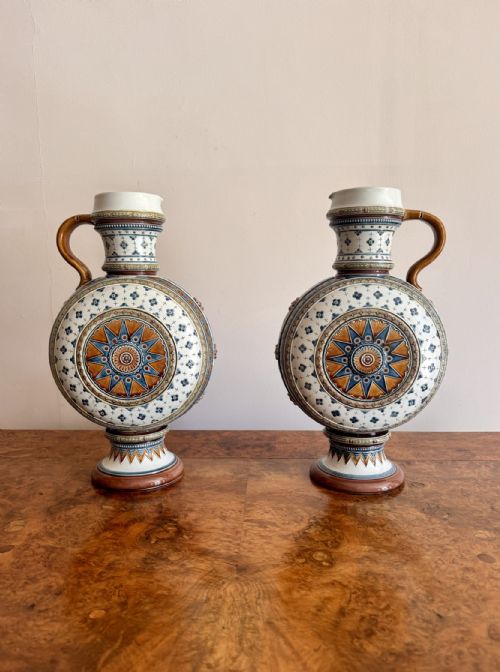
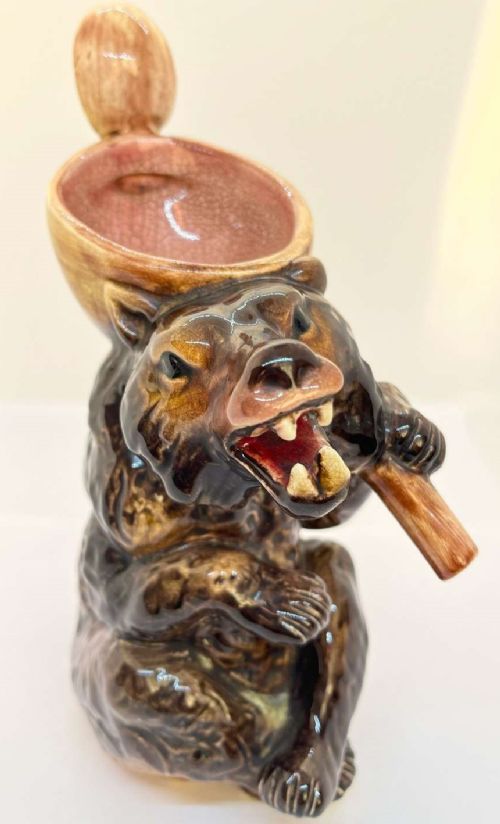
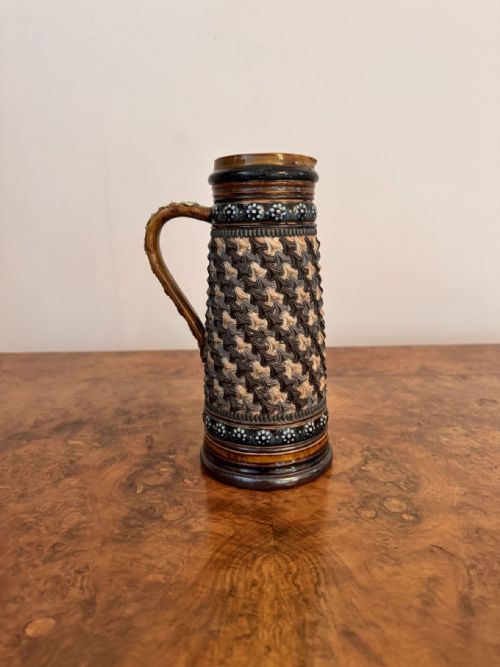
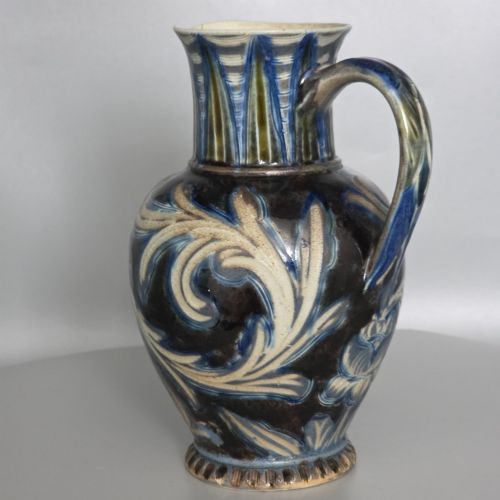
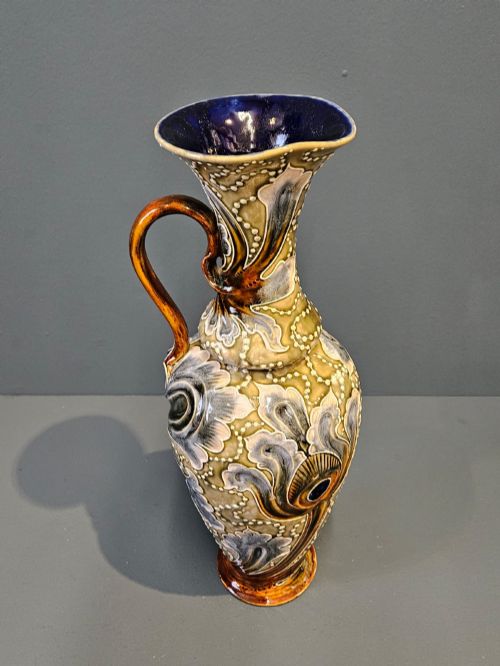


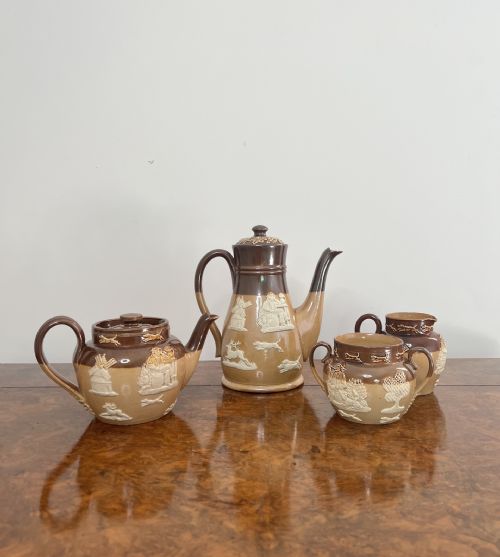

Victorian Brown Glazed Pitcher
These Victorian brown glazed pitcher examples bring robust nineteenth-century utility and ornamental character to any table.

Victorian Brown Glazed Pitcher
A Victorian brown glazed pitcher is a practical or decorative vessel shaped from clay and finished with rich earthy tones. When you search for a Victorian brown glazed pitcher, you encounter diverse forms ranging from heavy salt-glazed stoneware to bright majolica and folk art pieces.
The selections span the nineteenth century, including pieces from the eighteen-fifties through to nineteen hundred. Common utilitarian shapes include harvest jugs, puzzle jugs, and large ewers designed for everyday service or display.
Makers utilised durable ceramic bodies to create functional vessels that survived decades of heavy use. Many pieces reflect specific regional styles such as Victorian Arts and Crafts or Art Nouveau aesthetics.
Materials and production methods
Potters built these vessels using dense stoneware and earthenware clays capable of holding liquids securely. The raw clay was shaped on a potter's wheel or in a mould before receiving its characteristic surface treatment.
Surface finishes relied heavily on salt glaze and lead glaze techniques to create impermeable, lustrous brown coatings. Artisans sometimes added incised decoration, applied reliefs, or silver rims to elevate the finish of the piece.
Victorian Brown Glazed Pitcher Retail Price Guide 2026
Typical asking prices for victorian brown glazed pitcher among the pieces listed under this phrase on Sellingantiques today, from the lower quarter to the upper quarter. They describe what is for sale here now, not the wider market.
The listings span from eighteen-fifty to nineteen hundred, featuring stoneware, earthenware, and salt-glazed ceramics.
Assessing quality in brown glazed pitchers
The standard of a Victorian brown glazed pitcher depends on the crispness of its moulded or incised details. Finer pieces display deliberate control over the glaze application, ensuring even coloration and depth across the body.
Artistic collaboration and maker identification distinguish exceptional examples from standard commercial wares. Pieces bearing distinct studio stamps or recognizable signatures command greater interest through their documented craftsmanship.
Doulton Lambeth·Holdcroft·Emma Shute·George Jones
The Victorian Brown Glazed Pitcher Glossary
- Stoneware
- A heavy, vitrified ceramic made from clay fired at high temperatures. It is completely impermeable to liquids even without a glaze.
- Salt glaze
- A glossy, slightly textured finish achieved by throwing common salt into the kiln during high-temperature firing. The sodium reacts with the clay body to form a durable coating.
- Puzzle jug
- An interactive historical vessel featuring perforated necks and misleading spouts designed to challenge drinkers. Guests had to cover hidden holes with their fingers to drink without spilling.
- Harvest jug
- A large utilitarian vessel traditionally used for serving ale during agricultural gatherings. These jugs often feature incised hunting scenes, harvest motifs, or commemorative inscriptions.
Victorian Brown Glazed Pitcher: Frequently Asked Questions
How were these pitchers used originally?
Victorian brown glazed pitcher examples served practical roles in domestic settings for pouring water, beer, or tea. Large harvest and hotel versions handled heavy communal service during meals or gatherings.
Smaller decorative ewers and jugs functioned as ornamental table pieces or formed parts of larger ceramic tea and wash sets.
How do I date a brown glazed pitcher?
Dating relies on combining stylistic clues, clay types, and any stamped factory marks found on the base. Pieces from the mid-nineteenth century often display simpler utilitarian forms, while later items embrace Art Nouveau or Arts and Crafts motifs.
Factory stamps and specific artist ciphers provide precise attribution to workshops operating between eighteen-fifty and nineteen hundred.
Are these pitchers safe for daily use?
Most nineteenth-century ceramic and stoneware vessels function reliably for holding dry items or display purposes. However, historic lead glazes and older hairline fractures mean regular food and liquid use requires careful consideration.
Gentle hand washing preserves the historic glaze surfaces and any applied silver rims from unnecessary chemical or thermal stress.
What defines a salt-glazed finish?
A salt glaze is created when salt transforms into vapour inside the hot kiln and bonds with the silica in the clay. This process produces a distinctive orange-peel texture across the brown surface.
The resulting finish resists moisture entirely and protects the durable stoneware body beneath from everyday wear.