

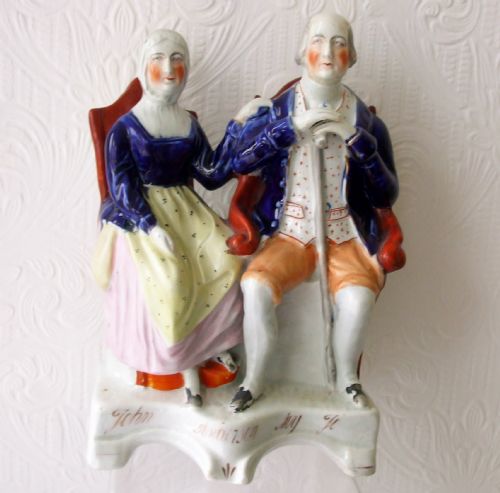


English Folk Art Ceramic
English folk art ceramic pieces bring homely vernacular charm and storytelling character straight into any interior.
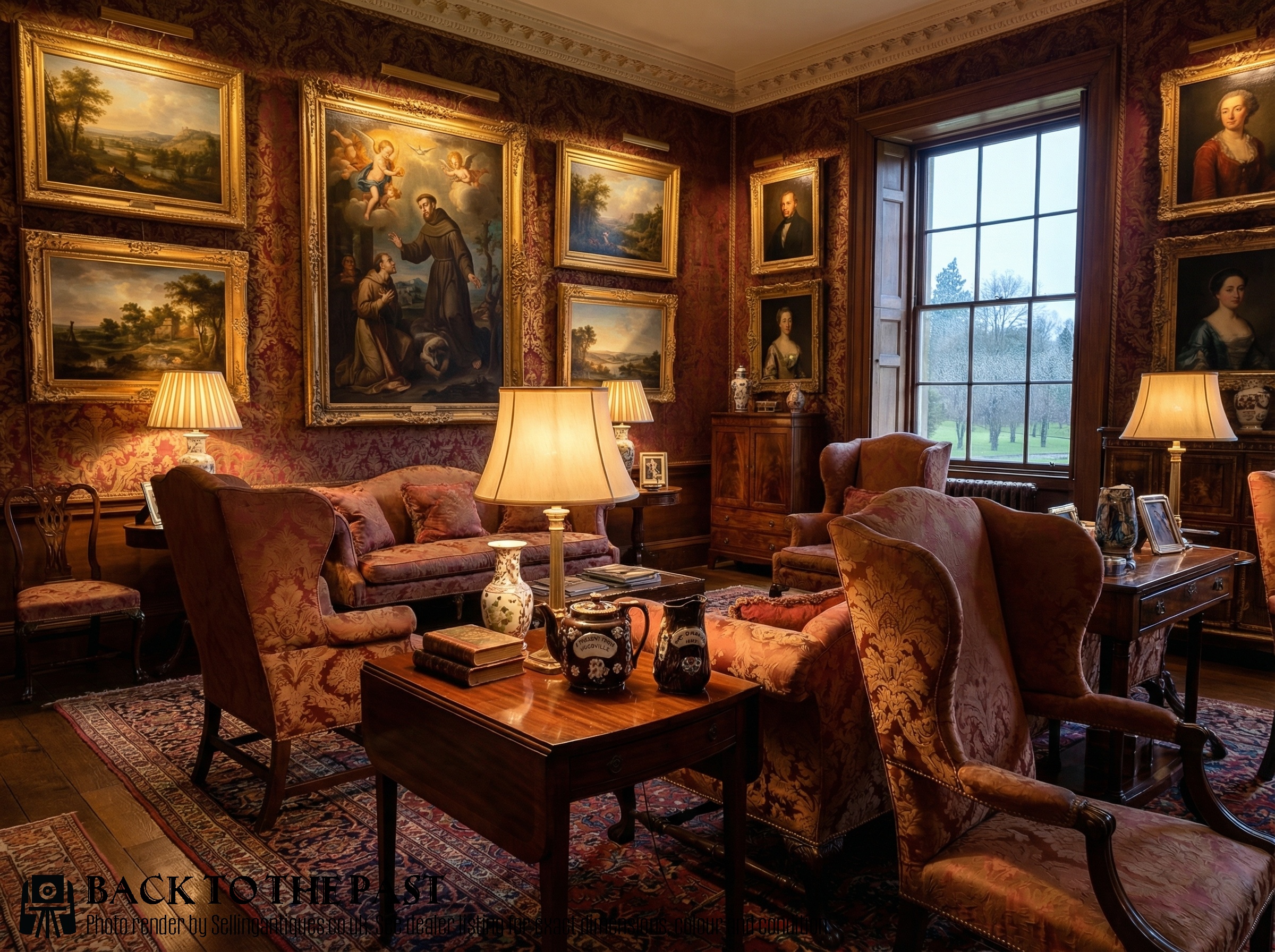
English Folk Art Ceramic
When you search for english folk art ceramic, you encounter vernacular earthenware and pearlware made for everyday domestic use or humble display. The pieces span the Georgian, Regency, and Victorian periods, reflecting popular culture, literature, and rural life.
Most examples on this page are figurative or utilitarian pottery objects, ranging from Staffordshire flatback figures and portrait groups to Verwood money boxes and bargeware teapots. Makers created these items for ordinary households rather than royal courts.
Subjects include literary figures, highwaymen, milkmaids, and animal creamers, all modelled with naive vigour and robust charm. This tradition encompasses distinctive regional styles like Yorkshire and Dorset pottery alongside broader Victorian folk art.
Materials and methods
Potters shaped local clays into earthenware, pearlware, and terracotta bodies, building utilitarian forms and sculptural figures by hand or using simple press moulds. These foundational materials dictated the sturdy weight and tactile presence of each object.
Artisans applied rich lead glazes and enamel paints to decorate the surfaces, often adding spontaneous highlights in cobalt blue, green, and ochre. Firing in traditional kilns created natural variations in the glaze, ensuring no two vessels or figures turned out identical.
English Folk Art Ceramic Retail Price Guide 2026
Typical asking prices for english folk art ceramic among the pieces listed under this phrase on Sellingantiques today, from the lower quarter to the upper quarter. They describe what is for sale here now, not the wider market.
Highwayman Tom King on horseback occasionally stares down polite tea drinkers from the mantelpiece.
Assessing quality
The richness and stability of the lead glaze or enamel colours also dictate the visual hierarchy, with well-preserved surfaces retaining deep lustre. Intact original glazing and bold hand-painted touches elevate domestic objects beyond ordinary utilitarian ware.
Staffordshire Pottery·Verwood Pottery·Yorkshire Staffordshire
The English Folk Art Ceramic Glossary
- Earthenware
- Porous pottery fired at lower temperatures, commonly used for traditional kitchenware and decorative figures before being glazed. It forms the heavy, tactile body of most vernacular items.
- Pearlware
- A refined fine-grained earthenware developed in the late eighteenth century with a bluish glaze that pooled in recesses. It bridges the gap between creamware and true porcelain.
- Flatback
- A ceramic figure modelled with a detailed front and a flat, unpainted back designed to stand against a mantelpiece. This method saved time and materials during production.
- Bargeware
- Utilitarian pottery decorated with applied coloured clay flowers, leaves, and names, traditionally made for canal boat dwellers. These large teapots and jugs served as floating home ornaments.
- Prattware
- Earthenware decorated with specific underglaze metallic oxides like cobalt and manganese under a clear lead glaze. The palette is typically limited to blue, ochre, brown, and green.
English Folk Art Ceramic: Frequently Asked Questions
How were bargeware teapots used?
Bargeware teapots served both as heavy-duty vessels for brewing tea and as prized decorative ornaments aboard nineteenth-century canal barges. Their applied clay flowers and names made them personal possessions.
Boat families displayed them proudly on narrowboat cabin shelves alongside brassware and polished wood.
How do I display figures at home?
Staffordshire flatback figures and pottery animals suit stable mantelpieces, wooden dressers, or enclosed shelving where they can be viewed at eye level. Their flat backs allow them to sit flush against walls.
Keep them away from direct sunlight and high-traffic areas to protect their hand-painted enamel surfaces from accidental knocks.
Are cow creamers functional?
Cow creamers served as practical milk jugs on Georgian and Regency dining tables, filled through an aperture on the back and poured via the animal's mouth. Many were modelled with cow milkmaids beside them.
Over time, these whimsical items transitioned from the dining table to the collector's cabinet as decorative folk art.