
Victorian Brass Table Lighting
Victorian brass table lighting brings together heavy cast metal bases and coloured glass shades to illuminate period interiors.
Victorian Brass Table Lighting
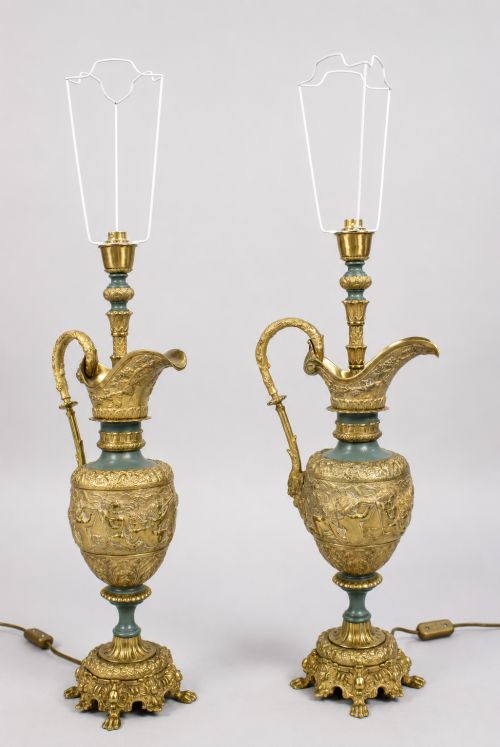
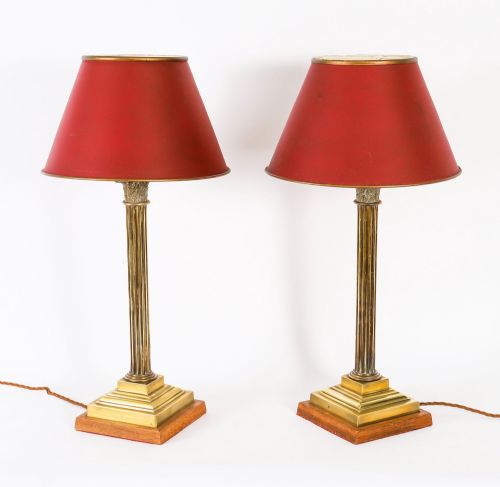
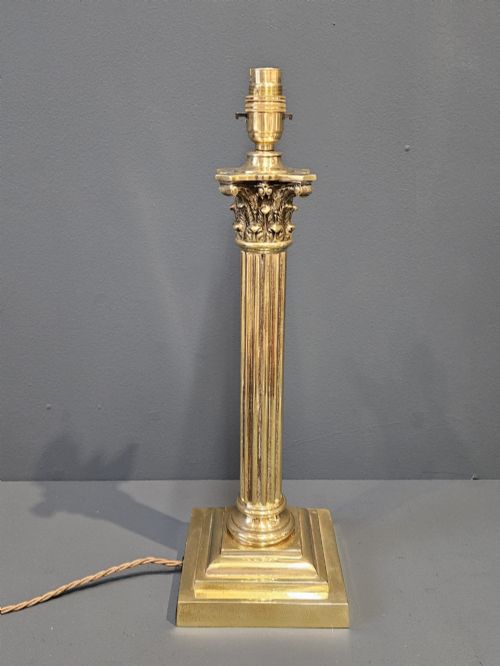
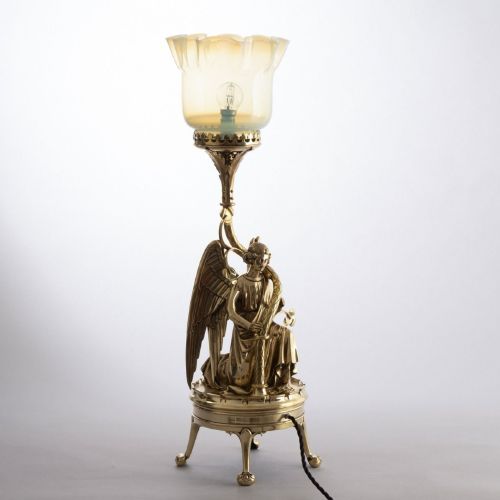
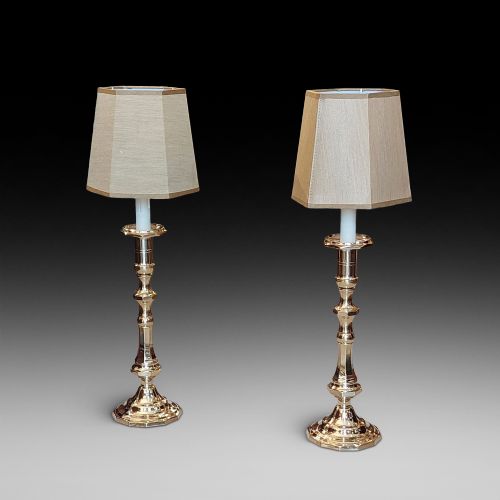
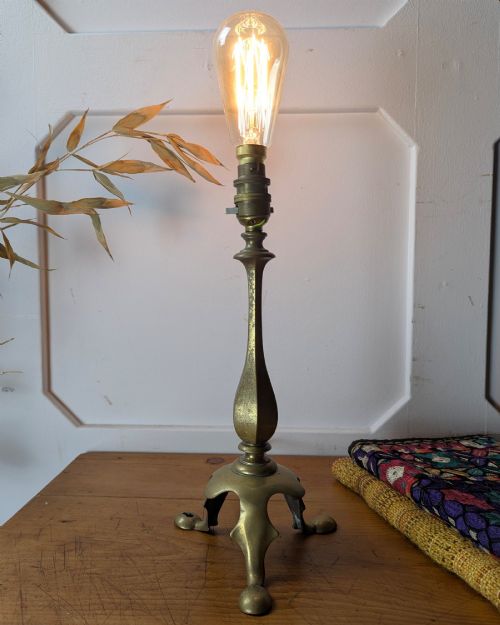
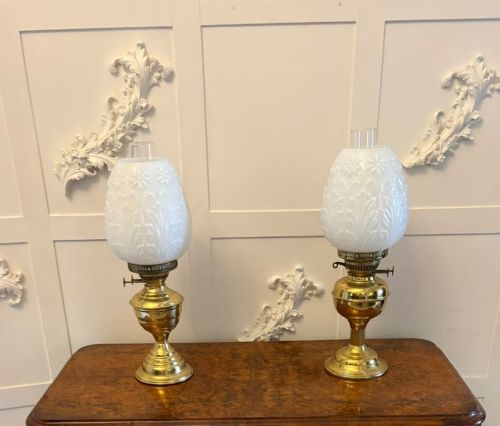
Victorian brass table lighting encompasses oil lamps, converted candlesticks, and adjustable reading lamps sourced from the nineteenth century and the early twentieth century. Buyers seeking this category encounter columnar designs, such as Corinthian or Ionic shafts, alongside elaborate Gothic and Rococo revival examples.
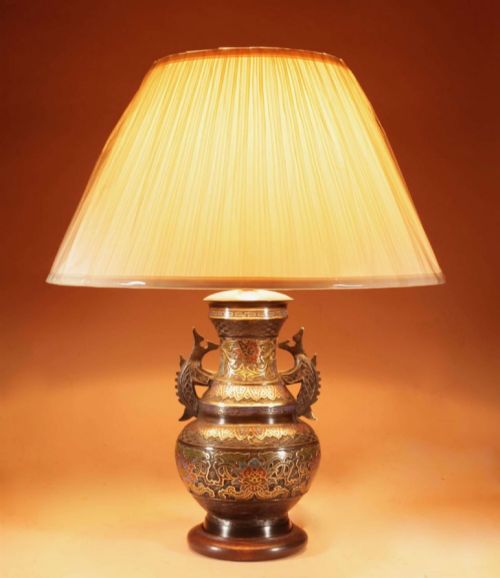
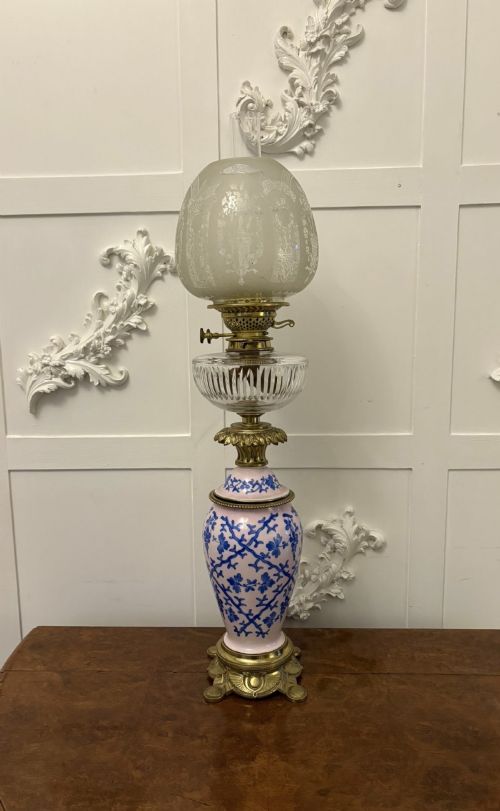
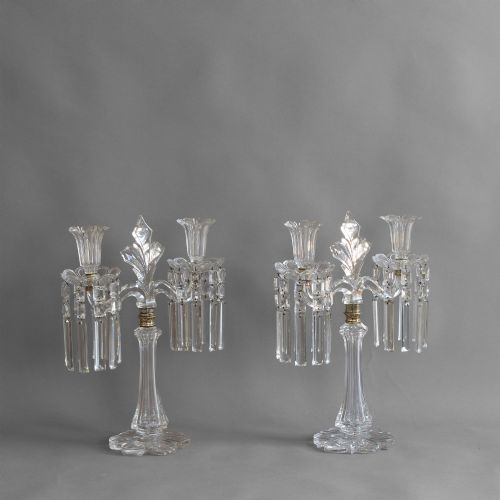
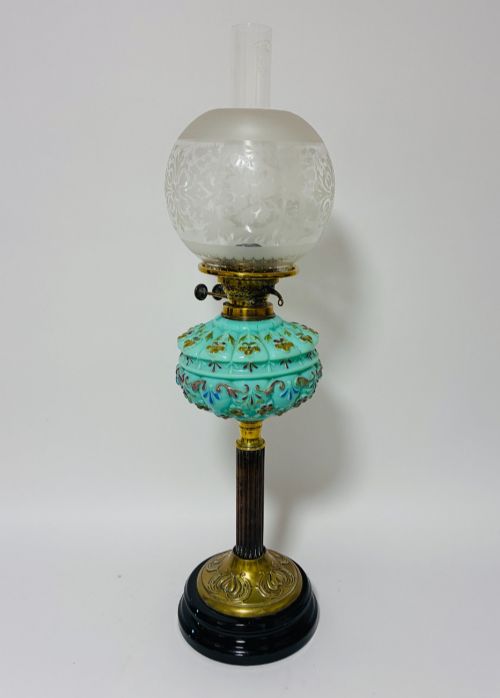
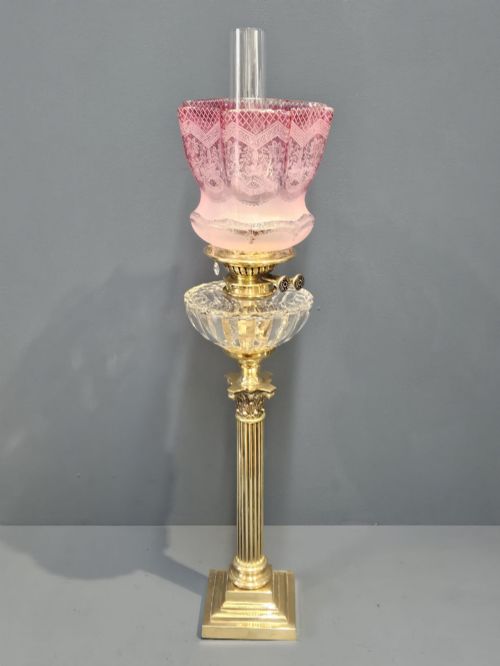
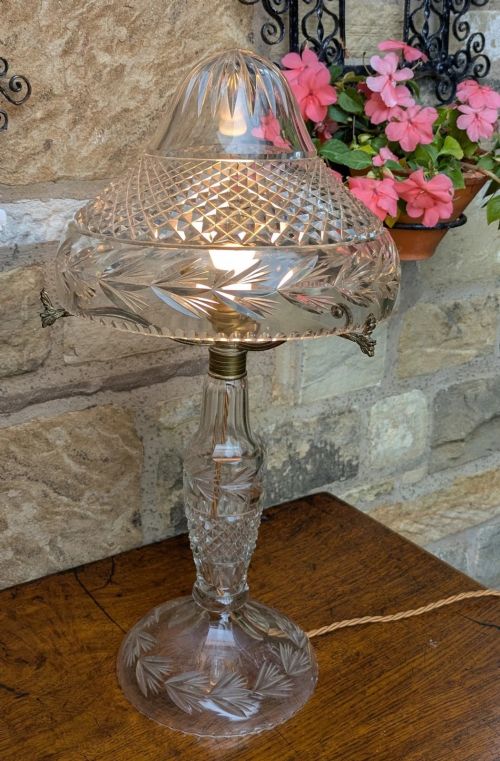
The selection ranges from simple student lamps with utility burners to large duplex oil reservoirs fitted with hand-blown cranberry, opaline, or cut crystal glass shades. Many surviving examples originate as domestic oil burners or candle holders later adapted for electrical illumination.
The styles span standard Victorian production, Edwardian variations, and distinct regional forms including French or Anglo-American porcelain combinations. These items function practically on desks and sideboards while retaining their period manufacture.
How they were made
Makers utilised cast brass, gilt bronze, and ormolu to form heavy structural columns and decorative bases, frequently combining these metals with ceramic bodies or porcelain inserts. Components were turned on lathes, cast in sand moulds, and joined with threaded fixings.
Shades and reservoirs required specialist glassblowing and cutting techniques, producing cranberry glass, vaseline glass, and opaline finishes. Metalwork often received applied gilt or polished patination to accentuate classical revival details like rams heads and fluted shafts.
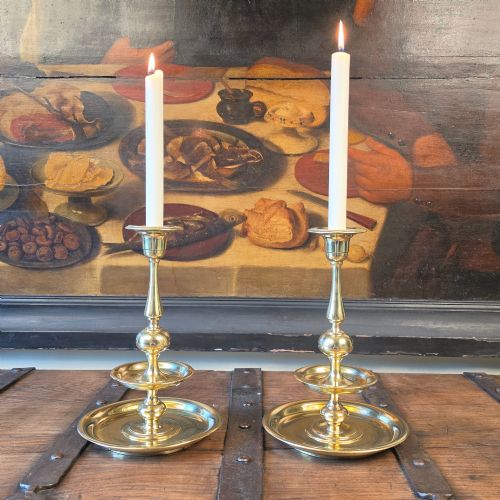
An eighteenth-century candle stump makes a quiet witness inside a nineteenth-century column.
What varies in quality
Quality rests in the weight and crispness of the brass casting, where sharp fluting on Corinthian columns and detailed relief work distinguish superior workshops from standard production. Heavier gauges of metal provide stability to tall columnar lamps and multi-burner oil fonts.
The integrity of the glass elements creates a distinct division, as hand-blown and deeply cut shades with uniform colour distribution elevate a piece above simpler pressed glass alternatives. Original components and matched burner assemblies also preserve historical cohesion.
W.A.S. Benson·Hinks·Mc Gary
The Victorian Brass Table Lighting Glossary
- Corinthian column
- A classical architectural shaft design featuring ornate acanthus leaf capitals, frequently utilised for tall Victorian table lamps. This form imitates ancient stone columns in cast brass.
- Duplex burner
- A double-wick mechanism developed in the nineteenth century to produce a brighter oil flame. It requires two flat wicks operating through a shared gallery.
- Cranberry glass
- A transparent red glass created by adding gold chloride to the molten batch. It appears frequently in Victorian lamp shades.
- Opaline glass
- An opaque, milky-white glass popular during the nineteenth century for soft light diffusion. It is often found paired with gilt brass mounts.
- Ionic column
- A classical order defined by twin scroll capitals atop a fluted shaft. It forms the structural base for many period oil lamps.
- Ormolu
- Finely chased and gilt bronze applied to decorative objects and lamp bases. The technique produces a rich, gold-coloured metallic surface.
Victorian Brass Table Lighting: Frequently Asked Questions
How do I wire an antique oil lamp?
Conversion to electricity usually involves running a cord through the original burner or central column without drilling destructive new holes in the metal.
Professional rewiring ensures the brass components are properly earthed and fitted with modern lamp holders suited to contemporary bulbs.
What burns in a Victorian oil lamp?
Period lamps utilised paraffin or kerosene drawn up through fabric wicks within brass burners. Modern users typically run purified paraffin designed for indoor domestic lighting.
Burning scented oils or incorrect fuels can damage fragile wick mechanisms and deposit soot inside antique glass shades.
How do I clean antique brass bases?
Dusting with a dry soft cloth preserves the existing patination and prevents the accumulation of grime on detailed relief work. Aggressive chemical polishes remove historical surface ageing and strip the original finish.
Warm soapy water on a damp cloth removes stubborn dirt from smooth metal surfaces if dried immediately afterwards.
Are these glass shades original?
Many Victorian lamps survived with replacement shades because fragile glass elements broke during daily domestic use over the decades. Matching a shade to a base requires checking the fitter rim diameter against the burner gallery.
Hand-blown variations in thickness and colour density help determine whether a shade matches the period of the brass base.