

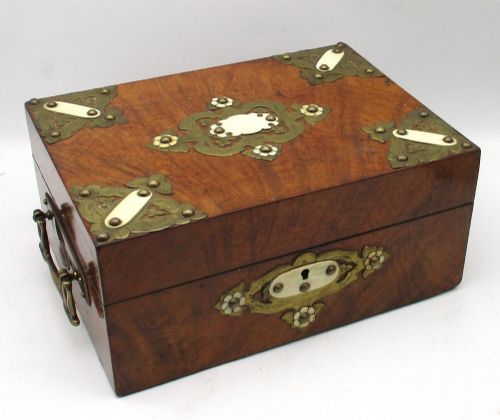
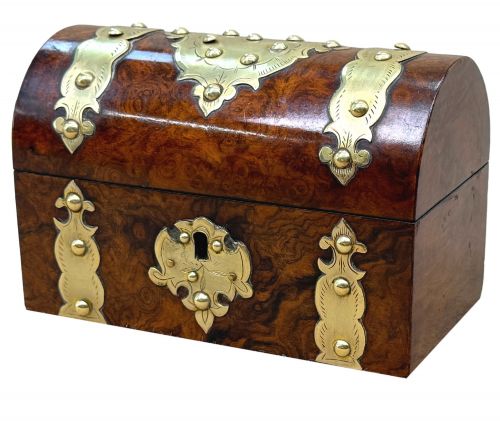


Victorian Brass Strapped Box
A victorian brass strapped box brings solid nineteenth-century utility into a modern room, offering heavy timber and protective metalwork designed to travel.
Victorian Brass Strapped Box
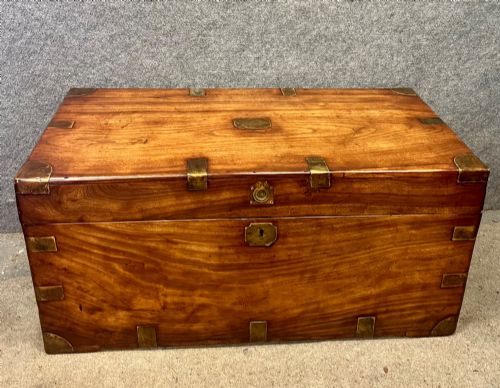
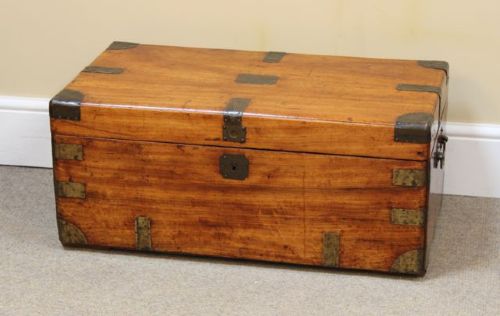
A victorian brass strapped box encompasses everything from massive campaign trunks down to tabletop writing slopes and stationery cabinets. Buyers searching this phrase meet nineteenth-century containers built for transport or secure domestic storage, frequently constructed during the height of the Victorian era.
The common thread across these forms is timber reinforcement using brass corners, straps, and banding to withstand hard use. Most pieces on this page originate from the mid to late nineteenth century, spanning camp chests, writing boxes, and desktop stands.
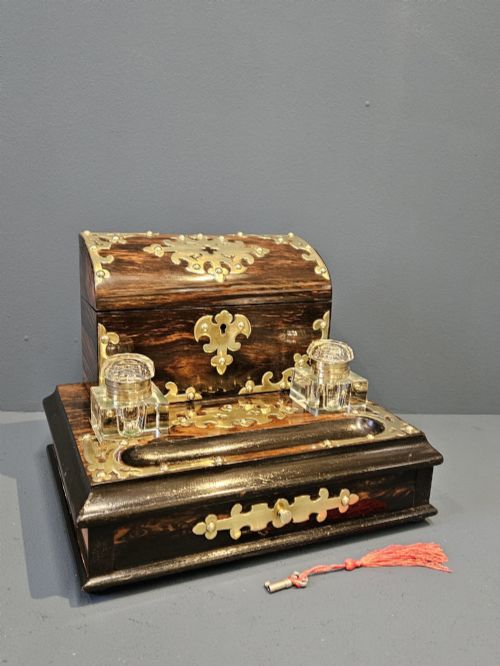
Smaller tabletop iterations like correspondence boxes, glove boxes, and inkstands sit alongside large teak and camphor wood trunks intended for military or merchant travel. Each object utilises metal edging to protect vulnerable mitred joints from impact.
Materials and Construction Methods
Cabinetmakers built these containers using dense hardwoods such as teak, mahogany, oak, camphor wood, and exotic veneers like coromandel and burr walnut over solid framing. These durable timbers resisted warping and cracking in varied climates, particularly when deployed on military campaigns or sea voyages.
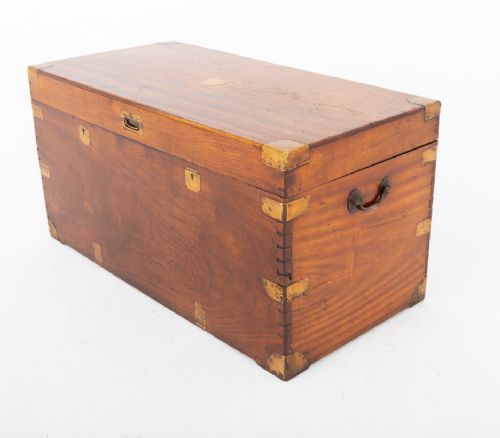
Heavy sheet brass was cut, folded, and fastened with countersunk brass screws to secure every corner and edge of the box. Flush-fitting campaign handles, escutcheons, and strapping sat level with the wood surface to prevent snagging during transit.
Listings feature Victorian boxes in dense tropical hardwoods including teak and camphor wood alongside decorative luxury veneers like burr walnut.
Assessing Quality and Craftsmanship
Superior examples display precise, hand-cut dovetail joinery at the corners and meticulous inletting of brass straps flush with the surrounding timber. Lesser pieces show irregular brass placement, simpler butt joints, or modern replacement hardware that disrupts the period balance.
The choice of primary wood and secondary veneers dictates the tier of the piece, with richly figured burr walnut and coromandel sitting at the upper end of domestic luxury. Utility chests in teak, oak, or camphor wood rely on robust construction and original brass inscriptions or fitted interiors rather than decorative veneers.
C.G. Hope Hastings
The Victorian Brass Strapped Box Glossary
- Campaign chest
- A modular chest of drawers or trunk made in sections with recessed brass handles and corner brackets, designed for military officers on the move. These pieces dismantled easily for transport on pack animals or ships.
- Writing slope
- A portable slant-front desk that opens to reveal a velvet-lined writing surface, inkwells, and secret compartments for stationery. They were essential desk accessories before modern office furniture became standard.
- Escutcheon
- A protective brass plate surrounding a keyhole that prevents the wood from splintering around the lock. On these boxes, they often double as decorative brass mounts matching the corner straps.
- Coromandel
- A dense, heavily figured Southeast Asian timber featuring dark brown and black stripes against a warm background. It was favoured by Victorian cabinetmakers for high-end tabletop boxes and stationery cabinets.
- Pietra dura
- An Italian technique of inlaying cut and fitted polished coloured stones into a stonework or wood surface to form pictorial designs. On nineteenth-century boxes, it appears as decorative panels set into the lid.
Victorian Brass Strapped Box: Frequently Asked Questions
What were brass strapped boxes used for?
These boxes served multiple roles, functioning as portable desks for officers, secure chests for silver and documents, or luxury containers for gloves and stationery. Their heavy metal strapping protected contents from the rigours of travel and damp climates.
Larger versions accommodated uniforms and personal gear during military campaigns, while desktop models kept correspondence and writing materials organised in Victorian households.
How do I care for a wood and brass box?
Keep wooden surfaces nourished with a traditional microcrystalline wax rather than modern silicone polishes, which build up over time. Clean brass elements gently with a soft cloth to avoid removing the warm historic patina.
Place the box away from direct sunlight and sudden radiator heat to prevent the solid timbers and delicate veneers from splitting or lifting.
Are campaign boxes waterproof?
While tight-grained timbers like teak and camphor wood resist moisture naturally, and close-fitting lids keep out dust and rain, these boxes were not sealed for immersion. Their primary defence was dense timber and secure brass hardware rather than modern waterproof gaskets.
Travel chests relied on pitched lids and tight joinery to withstand tropical downpours and humid sea voyages during the nineteenth century.
How do I spot a reproduction?
Examine the screws holding the brass straps in place; modern slotted or Phillips screws with uniform machine threading indicate later work. Period boxes feature hand-finished brass screws with slightly irregular slots and subtle signs of age.
Look closely at the timber inside the box and along the base joints to check for machine tool marks, kiln-drying stamps, or modern adhesives that reveal recent manufacture.