

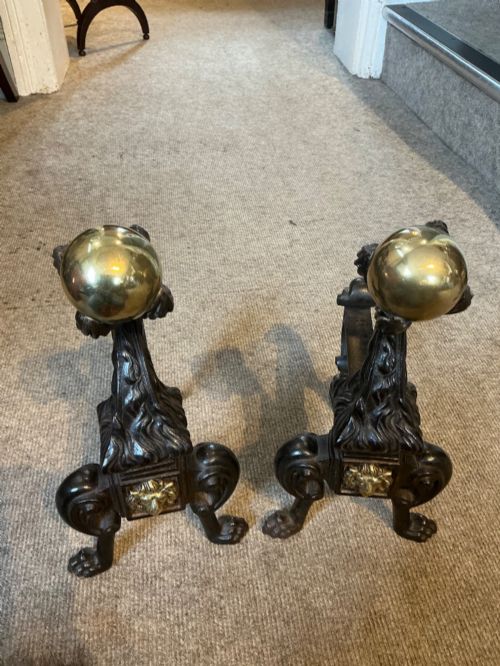


Victorian Brass Firedogs
Victorian brass firedogs anchor a hearth with substantial metalwork, offering both structural support for logs and a polished focal point for the room.
What Victorian brass firedogs are
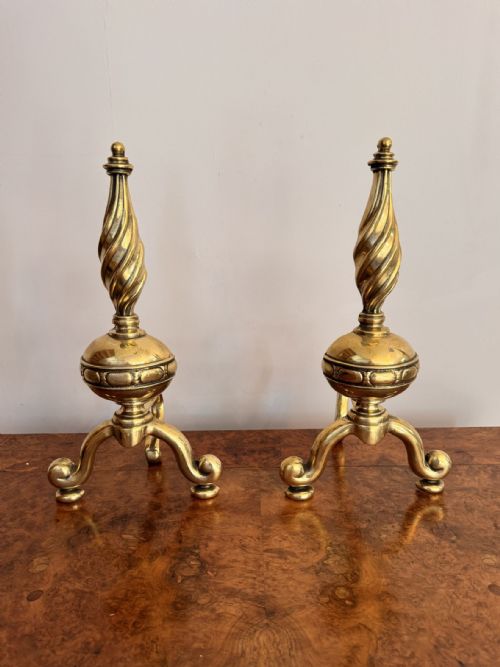
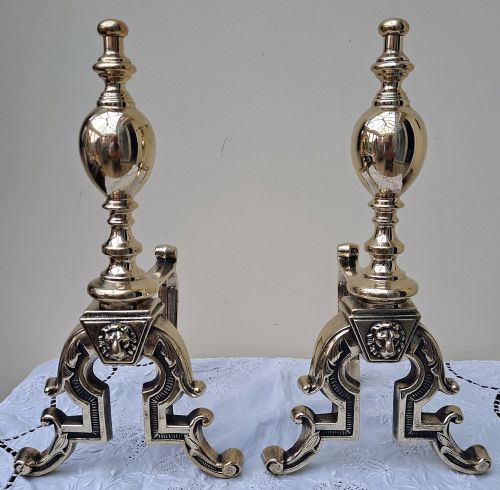
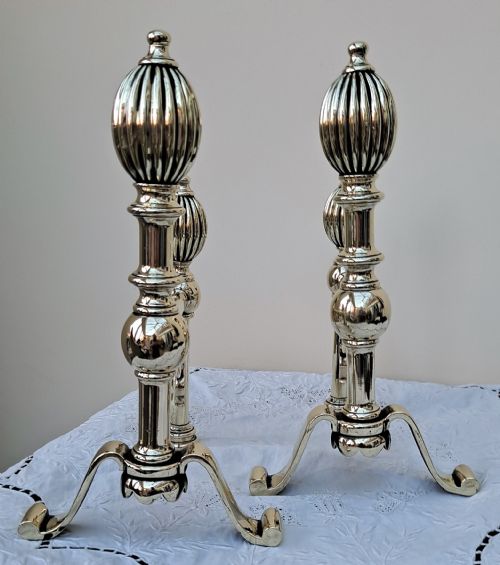
Victorian brass firedogs are functional fireplace accessories designed to hold wood off the hearth floor, improving airflow beneath the fire. When searching this phrase, buyers encounter pairs formed primarily during the nineteenth century, including the Victorian era proper and the turn of the twentieth century in nineteen hundred.
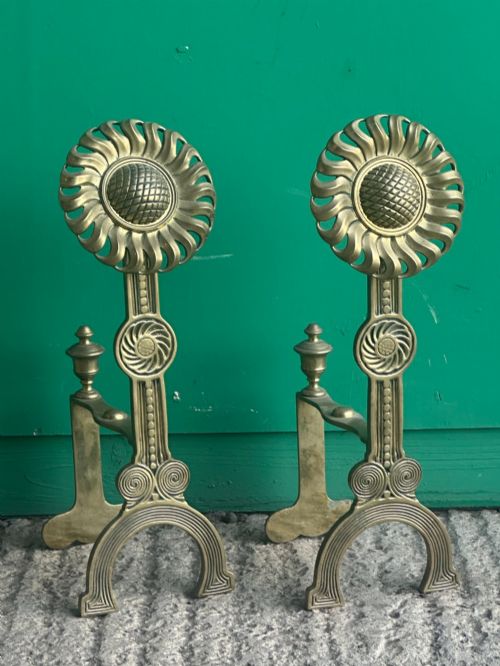
The selection includes standard pairs alongside sets that incorporate cast iron or steel elements, sometimes accompanied by matching fireplace tools. Stylistic influences span widely across the period, featuring Victorian Gothic Revival, seventeenth century revival, Regency revival, and Arts and Crafts designs.
Origins are rooted in English manufacture, utilising traditional foundry work to produce robust pairs intended for formal reception rooms and domestic hearths alike.
How they were made
Makers utilised durable metals, combining brass, cast brass, iron, cast iron, and steel within single assemblies. The heavy internal bars and uprights often relied on cast iron for strength, while the visible fronts and decorative finials employed polished brass.
Foundry techniques allowed artisans to shape complex revival motifs and clean geometric lines, merging structural ironwork with decorative brass castings to withstand intense hearth temperatures.
Retail Price Guide 2026
Typical UK retail prices for victorian brass firedogs, calculated from the Sellingantiques database of over a million retail prices indexed since 2003. This retail price guide relies exclusively on Sellingantiques data; no external sources or auction records are used, so the figures do not describe the wider market.
Some nineteenth century sets included matching fire tools, ensuring the poker matched the posture of the dogs.
What varies in quality
The hierarchy of quality rests upon the crispness of the brass casting and the weight of the underlying iron components. Finer examples display sharp detailing in stylistic revivals, whereas simpler pieces show softer edges and standard commercial foundry work.
Material integration also dictates standard, as mixed sets featuring well-fitted cast iron and heavy cast brass demonstrate superior construction compared to lighter, purely decorative alternatives.
The Victorian Brass Firedogs Glossary
- Firedog
- A metal support used in pairs to hold logs above the hearth floor. This term is frequently used interchangeably with andirons.
- Andiron
- A horizontal bar supported on legs with an upright pillar at the front, functioning as a firedog. They often feature decorative brass terminals.
- Gothic Revival
- An architectural and decorative style drawing inspiration from medieval forms. Pieces in this category display characteristic pointed arches and heavy ornamentation.
- Arts and Crafts
- A design movement prioritising honest construction and simplified forms. Objects in this style avoid excessive machine embellishment.
- Regency Revival
- A later interpretation of early nineteenth century classical design. These items incorporate restrained proportions and formal decorative motifs.
Frequently Asked Questions
What is the difference between firedogs and andirons?
The terms refer to the exact same object used to support logs in a fireplace.
Regional preferences and historical terminology dictated which word makers and owners used.
How do I know if they are solid brass?
Examination of the weight and the reverse reveals whether the piece is cast entirely in brass or backed by iron.
Many pairs combine heavy iron internal bars with cast brass fronts for stability.
Can these be used in a working fireplace?
Traditional pairs constructed from cast iron and brass are structurally robust enough for active hearth use.
Buyers should ensure the dimensions suit the depth of their specific fireplace opening.
How do I date a pair of firedogs?
Stylistic revivals provide clues, linking pieces to nineteenth century movements such as Gothic or Arts and Crafts.
Material composition and construction methods further clarify the period of manufacture.