



Victorian Brass Fire Screen
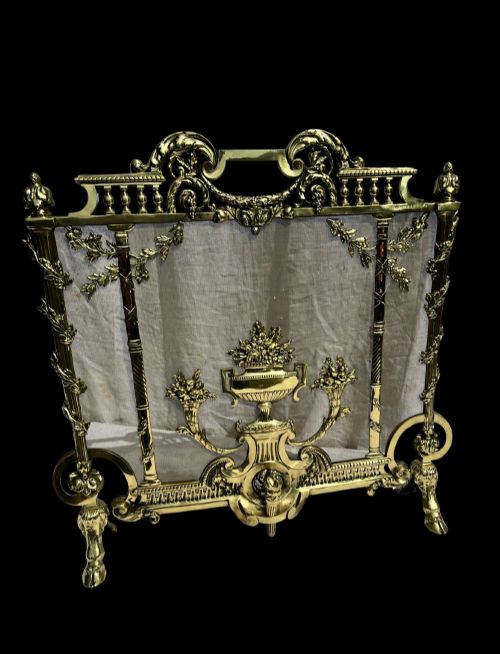
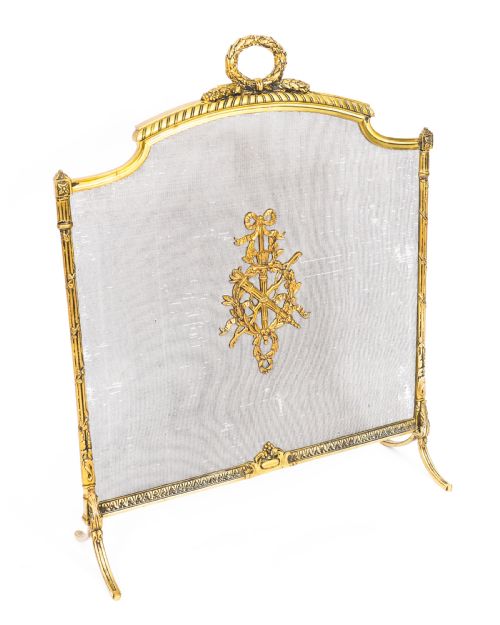
A victorian brass fire screen deflects hearth heat and protects the room, combining functional iron and wirework with ornate cast frames.
Victorian Brass Fire Screen
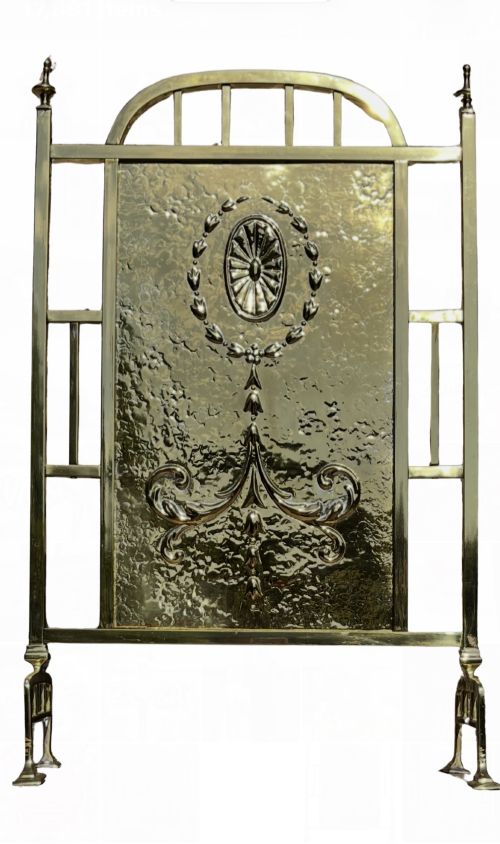
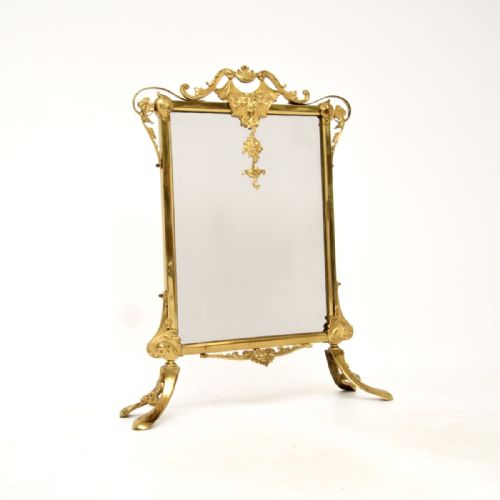
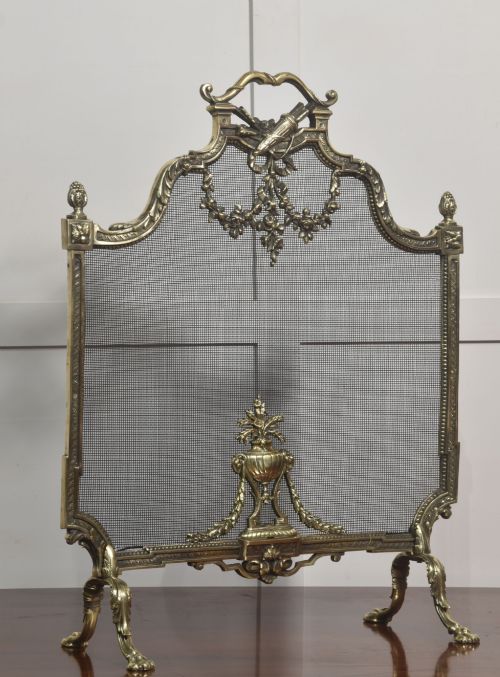
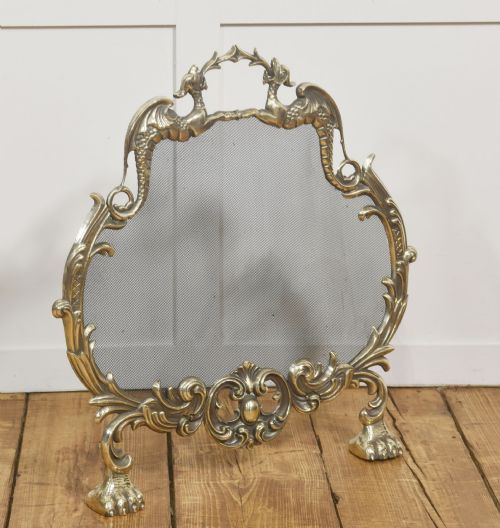
A victorian brass fire screen guards the hearth while doubling as a decorative centrepiece for the chimney breast during warmer months. These screens originate primarily from the nineteenth century, spanning various revivals including French Rococo, Arts and Crafts, and Empire styles.
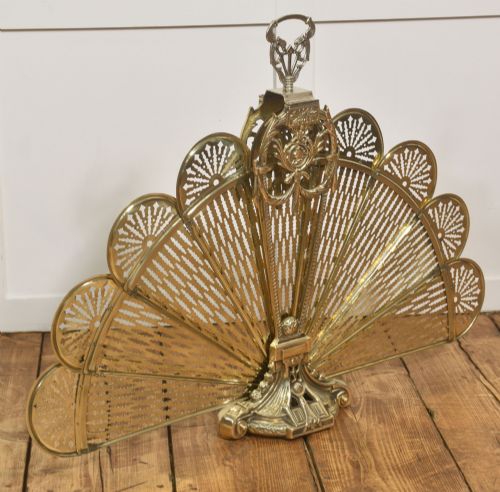
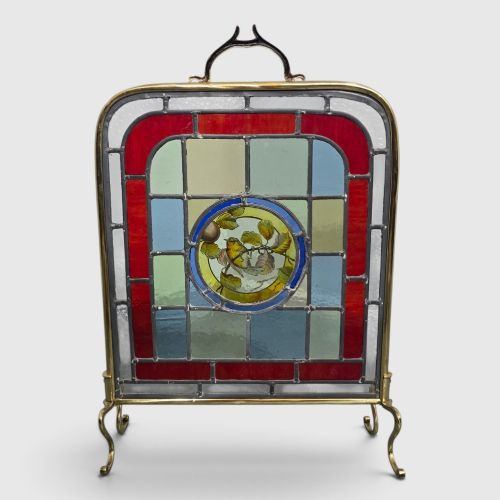
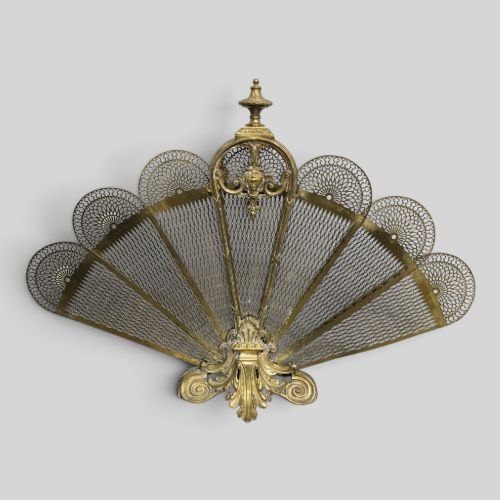
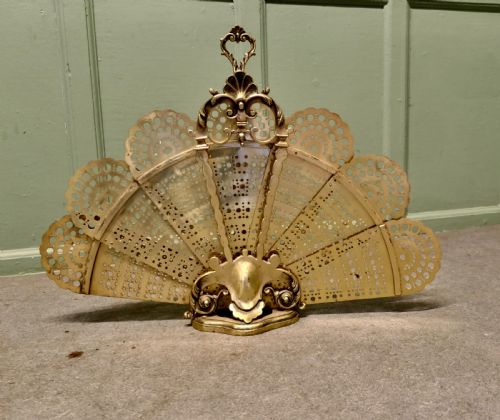
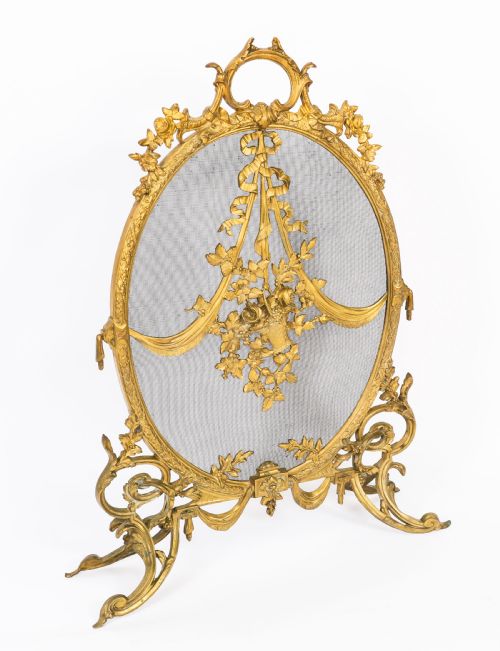
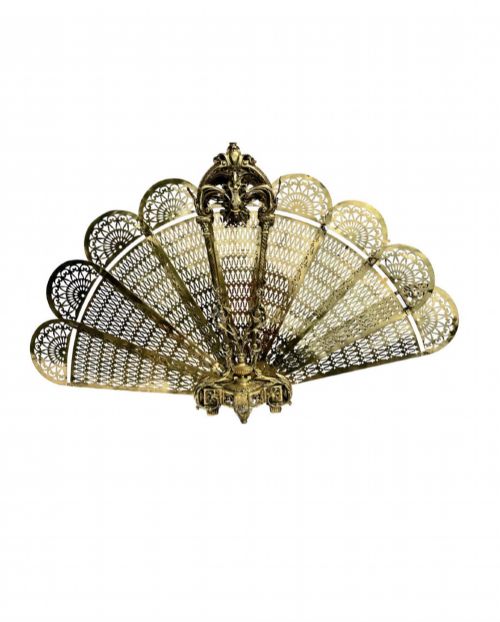
The most common form met here is the folding peacock fan fire screen, which opens into a dramatic semi-circular array of brass blades. Alongside these, buyers regularly encounter solid framed panels inset with bevelled glass, leaded stained glass, or wire mesh spark guards.
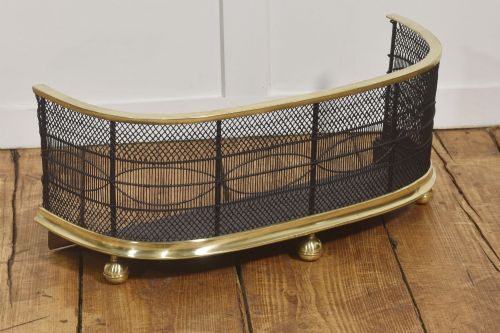
Utility pieces such as nursery fenders and fire guards also appear frequently, often incorporating sturdy iron frames and wirework to keep stray embers safely contained. More ambitious examples integrate mirrors, embroidered textiles, or hand-painted panels within polished brass frameworks.
How They Were Made
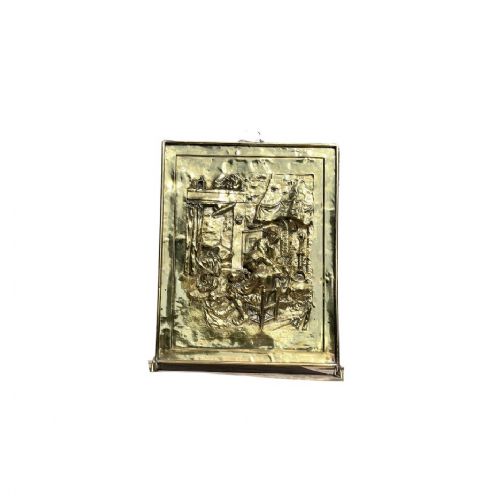
Makers utilised cast and sheet brass alongside structural iron for weight and rigidity, frequently applying a gilt finish or black polish to the metal surfaces. Frames were pierced, chased, or embossed to achieve intricate decorative motifs drawn from Rococo and Renaissance revivals.
Infilling materials varied widely, incorporating fine wire mesh, leaded stained glass, cut glass, and mirrored plates secured with lead or metal framing. Folding fan screens relied on articulated overlapping brass blades riveted together to expand and collapse smoothly.
Specialised variants integrated additional elements such as oak panels, ceramic tiles, or textile inserts held securely within heavy brass rims and stable support feet.
Victorian Brass Fire Screen Retail Price Guide 2026
Typical asking prices for victorian brass fire screen among the pieces listed under this phrase on Sellingantiques today, from the lower quarter to the upper quarter. They describe what is for sale here now, not the wider market.
Listings feature items spanning the 17th through the early 20th centuries, with a strong concentration of Victorian and 19th-century designs.
What Varies in Quality
The distinction between ordinary and exceptional pieces lies in the weight of the brass gauge and the depth of the chasing and piercing work on the frame. Heavier, more substantial castings hold their structural rigidity far better over decades of daily hearthside use.
Artistry in the infill panels separates standard production from superior craftsmanship, particularly in the hand-cut precision of bevelled mirror glass, leaded stained glass, or intricate needlework. Folding peacock screens demonstrate higher quality when the individual fan blades operate smoothly without binding or slackness.
Stylistic coherence and the presence of integrated decorative details, such as etched sunbursts or embossed armorial motifs, elevate the visual impact of the piece significantly.
The Victorian Brass Fire Screen Glossary
- Peacock fan
- A folding fire screen composed of expanding segmental brass blades that fan out to resemble a peacock tail. This design became immensely popular during the late nineteenth century for decorative summer hearth placement.
- Nursery fender
- A low safety barrier placed around the hearth to keep children and trailing clothing away from open flames. These typically feature sturdy iron or brass frames combined with protective wire mesh.
- Spark guard
- A functional wire mesh screen designed to catch flying embers while maintaining visibility of the fire. They appear in flat, bowed, and serpentine configurations.
- Chasing
- A metalworking technique where details are hammered into the front surface of the brass rather than cut away. This adds texture and relief to decorative floral or abstract motifs.
Victorian Brass Fire Screen: Frequently Asked Questions
What is a peacock fire screen?
A peacock fire screen is a folding hearth accessory made of overlapping metal blades that expand into a semicircle. When closed, it forms a compact unit, and when opened, it resembles a decorative tail.
Victorian makers favoured this design for summer fireplace display when the hearth was not in use. The individual brass blades often feature pierced or engraved decoration along their upper edges.
How were fire screens used?
Fire screens served primarily to block excessive radiant heat from an open coal fire when sitting close to the hearth. They also acted as decorative shields to hide a dormant summer fireplace.
Sturdier versions functioned as protective guards to prevent children and trailing clothes from getting too near the flames. Others incorporated mirrors to bounce natural light back into the room.
Are these screens safe to use with modern fires?
Many period screens equipped with wire mesh or solid brass panels remain fully functional for containing stray sparks and embers. However, delicate glass panels or antique textiles require careful placement away from extreme heat.
Sturdy nursery fenders and heavy wire mesh spark guards offer practical protection for traditional hearth setups. Regular inspection ensures the structural joints and mesh remain secure.
How do I identify different styles?
Rococo Revival pieces display exuberant asymmetry, scrolling foliage, and C-scroll motifs cast in heavy brass. Arts and Crafts examples favour simpler geometric lines, hammered surfaces, and integrated leaded glass or mirror panels.
French Empire and Neoclassical variants often incorporate classical architectural details, flaming torches, and gilded bronze finishes. Examining the primary motifs and framing style reveals the prevailing design influence.