


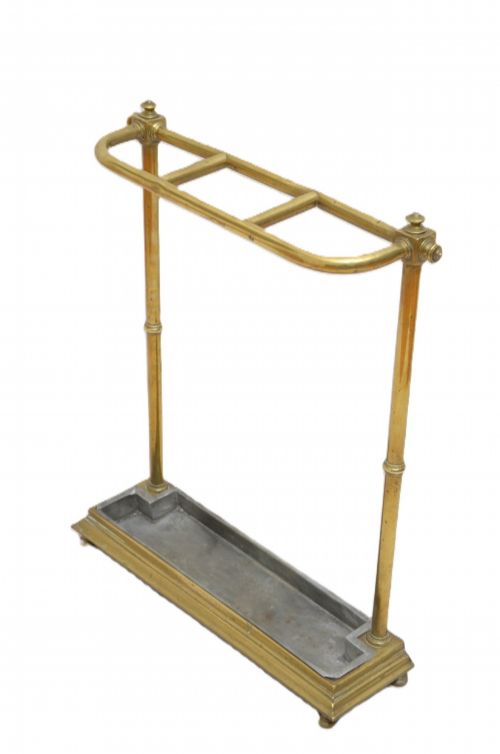
Victorian Brass Cane Rack
These Victorian brass cane rack examples organise hallways with proper weight, combining bright metal framework and practical drip management for daily use.
Victorian Brass Cane Rack
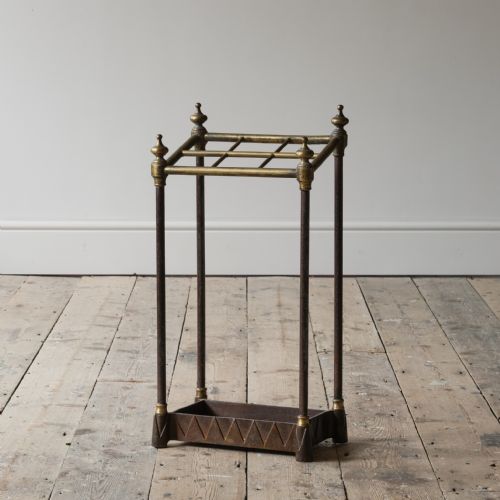
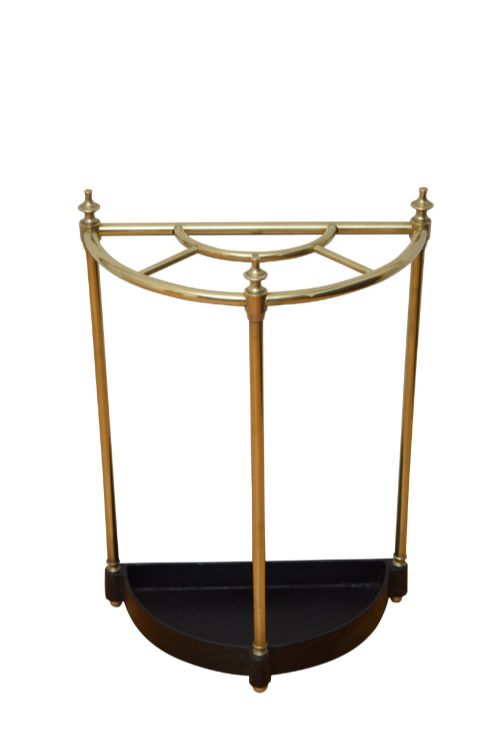
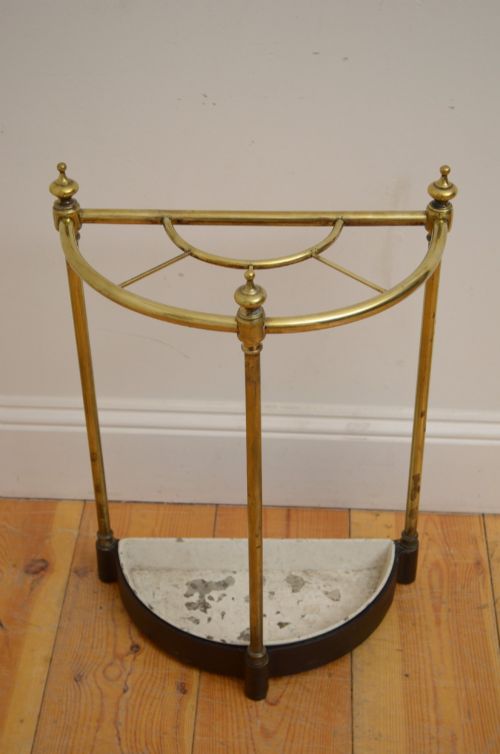
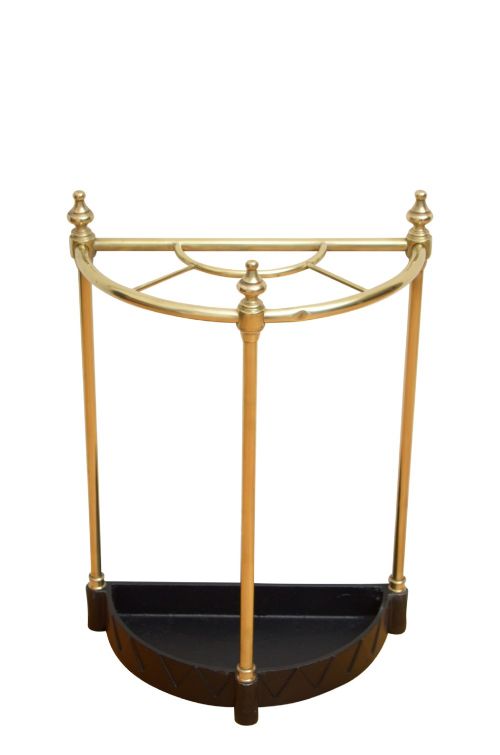
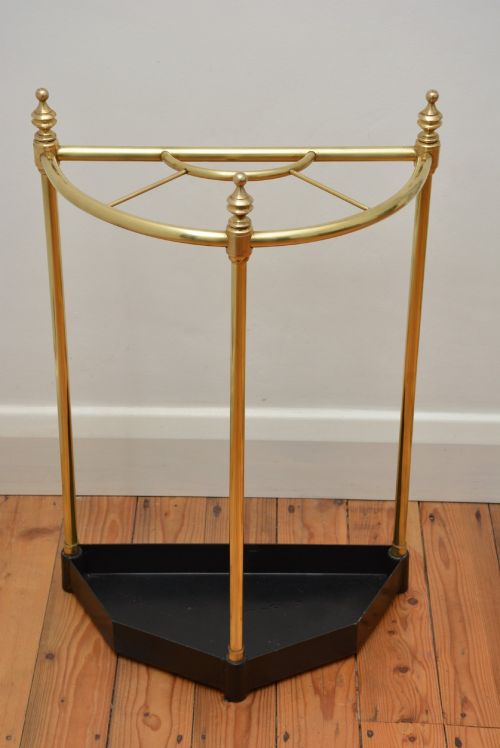
A victorian brass cane rack serves as a hallway organiser for walking sticks, umbrellas and canes, appearing in half moon, demi lune, corner and circular shapes. These hall furnishings date predominantly from the nineteenth century through the Edwardian era, spanning styles from Gothic Revival to Art Nouveau.
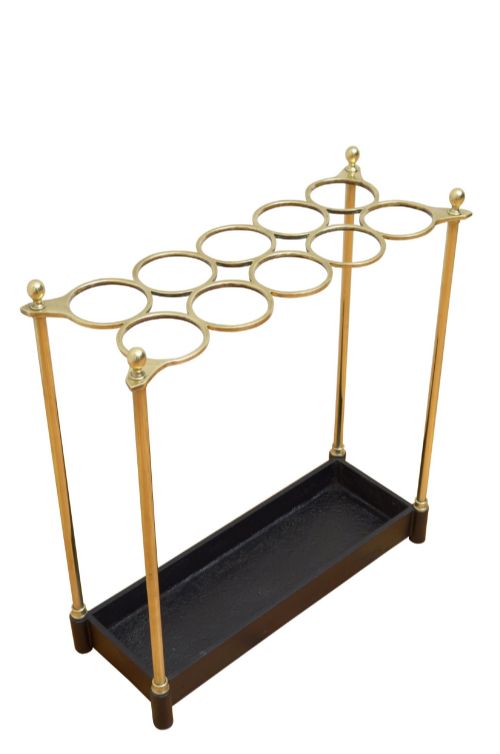
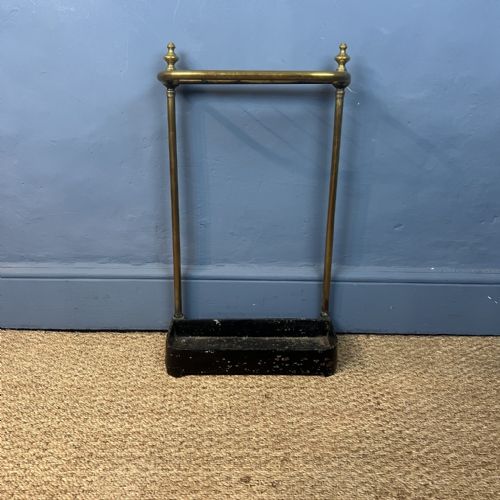
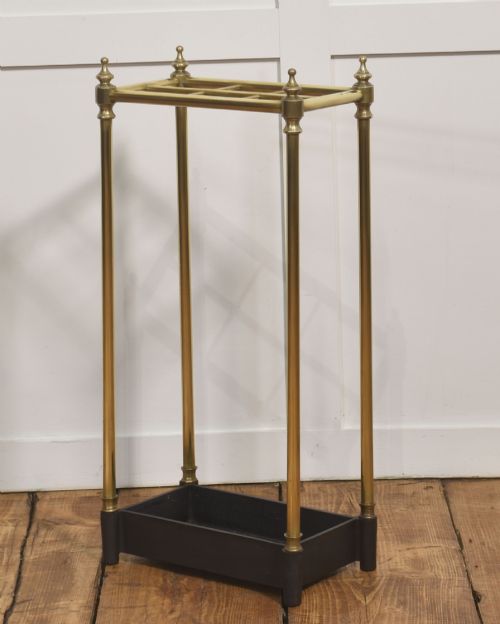
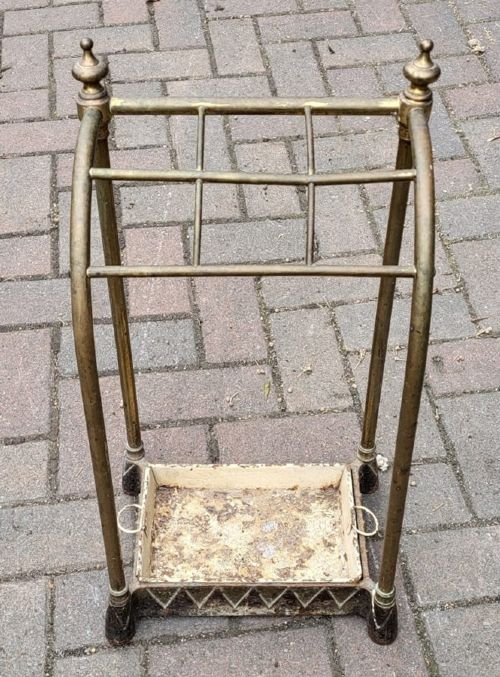
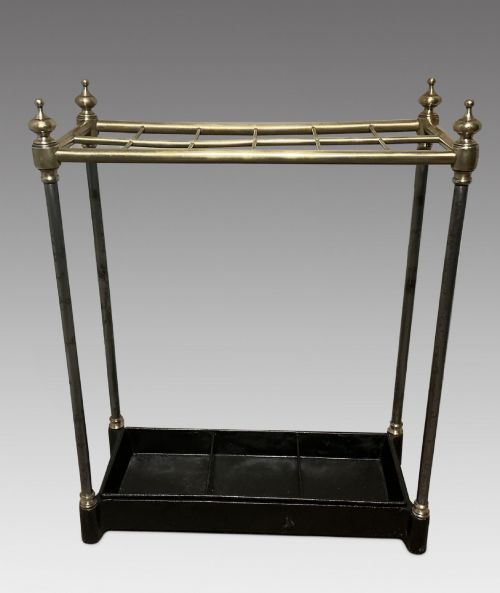
The version most commonly met on this page uses a brass upper frame or stick loop paired with a heavy cast iron base and a removable metal drip tray. Many examples utilise compact footprints designed to fit neatly against narrow entrance walls or into hallway corners.
Materials and Construction
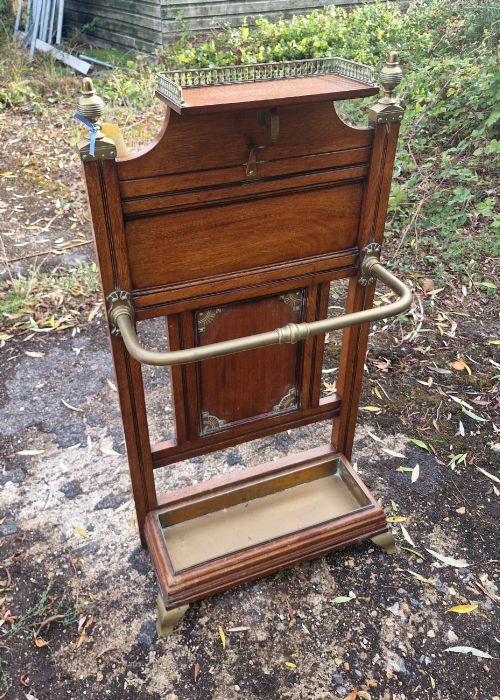
Makers built these stands using sheet brass, tubular brass, and cast iron, often combining wooden frames in mahogany or oak with brass mounts and railings. Heavy cast iron bases provide the necessary counterweight to prevent tipping when loaded with wet timber or heavy walking canes.
Construction techniques involve riveted or screwed brass divisions, decorative ball finials, and cast metal drip trays positioned at floor level to catch water. Some pieces integrate steel elements or ceramic inserts alongside the primary brass framework.
Materials appearing across these listings include brass, cast iron, oak, mahogany, ceramic, copper, and iron.
Evaluating the Pieces
Quality rests on structural solidity, particularly the integrity of the joints connecting the brass frame to the heavy iron or timber base. Stands that retain their original drip tray and stable bun feet demonstrate better preservation than those missing these functional components.
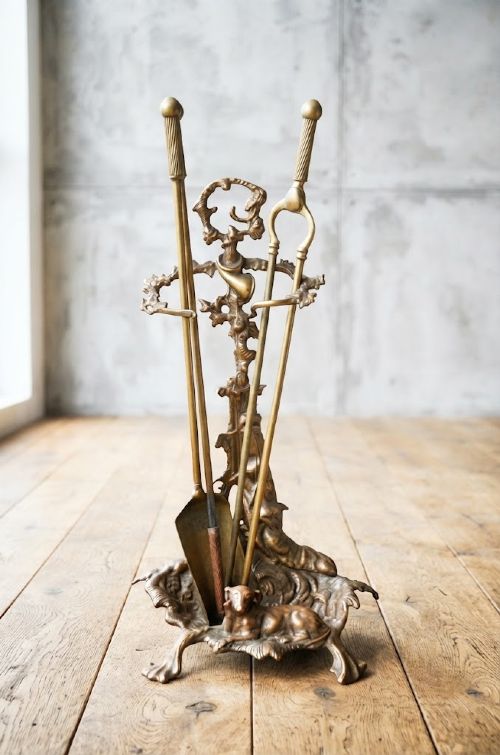
Design complexity also marks the distinction, as simpler utilitarian loops contrast with pieces exhibiting decorative cast hunting scenes, aesthetic movement detailing, or complex twelve division layouts. The gauge of the brass and the crispness of the casting define the visual finish of the piece.
Shoolbred
The Victorian Brass Cane Rack Glossary
- Demi Lune
- A half moon shape designed to sit flat against a hallway wall. This configuration saves valuable floor space in narrow entrances.
- Drip tray
- A removable metal dish placed at the base of the stand. It catches water running off wet umbrellas to protect hallway flooring.
- Stick loop
- The upper brass divider frame that keeps individual canes and umbrellas upright. These loops prevent the collection from leaning or sliding.
- Bun feet
- Small rounded feet elevating the base of the stand off the floor. They lift the metalwork clear of damp hall surfaces.
Victorian Brass Cane Rack: Frequently Asked Questions
How do I catch dripping water?
Most of these pieces include an original metal drip tray fitted directly into the base beneath the cane divisions.
This removable tray collects moisture from wet umbrellas, protecting your hallway floorboards from water damage.
Where were these placed originally?
Victorian households positioned these umbrella stands in entrance halls, boot rooms, and vestibules near the main front door.
They offered arriving guests and family members a convenient place to deposit wet walking sticks and umbrellas upon entry.
Are cast iron bases normal?
Heavy cast iron bases frequently appear combined with brass frames to provide essential weight and stability.
This added mass prevents the tall rack from tipping over when loaded with heavy wooden walking canes.