



Victorian Brass Bound Tallboy
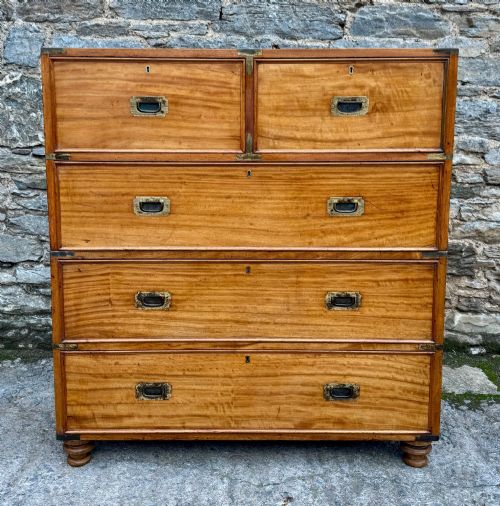
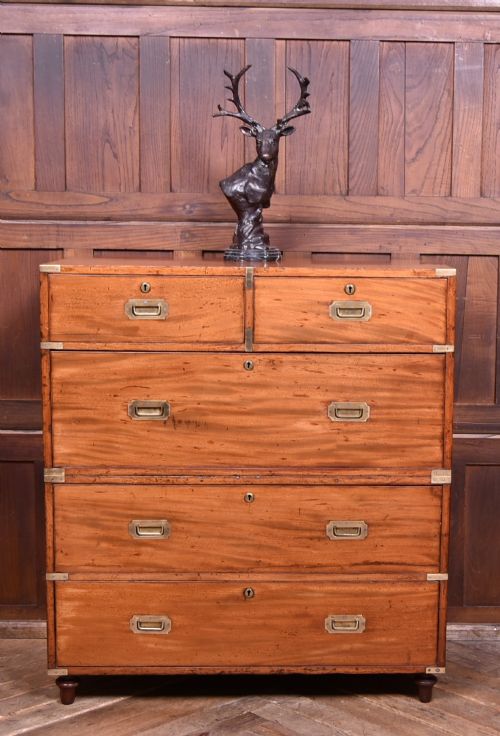
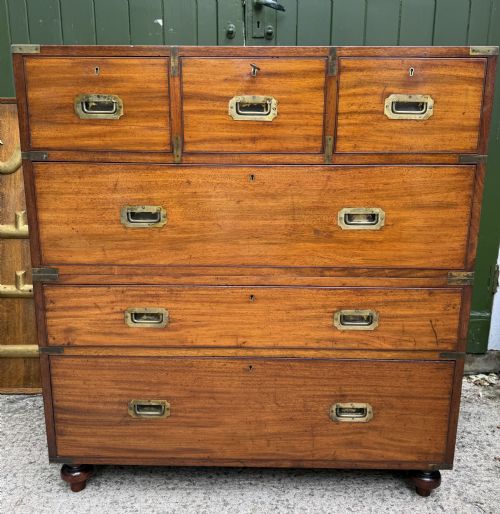
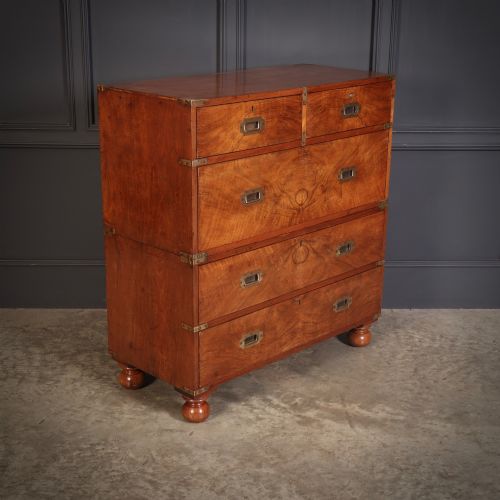
These Victorian brass bound tallboy pieces are robust campaign chests built to travel, offering rich mahogany, teak and camphor wood surfaces for any room.
Victorian Brass Bound Tallboy
A victorian brass bound tallboy brings together heavy timber carcases and protective metal corners designed for travel. These chests of drawers and secretaire chests emerge from the nineteenth century in various timbers.
Most pieces seen here adopt the Victorian military campaign style, built in two separate sections for easy transport on colonial campaigns. Buyers encounter sturdy chests of drawers as well as fitted cabinet forms housing writing desks.
Timbers range from traditional mahogany and walnut to durable teak, camphor wood, padouk and oak. Each piece reflects the functional requirements of officers on the move during the nineteenth century.
Materials and construction
Cabinetmakers constructed these chests from dense tropical hardwoods like teak, mahogany, padouk and camphor wood to withstand harsh climates and rough handling. These timbers provide both structural stability and rich natural grain patterns.
Corner brackets, strapwork and flush inset carrying handles are formed from heavy brass, secured firmly to the wood to protect vulnerable edges. The two-part construction allows the upper and lower halves to separate cleanly for transit.
Victorian Brass Bound Tallboy Retail Price Guide 2026
Typical asking prices for victorian brass bound tallboy among the pieces listed under this phrase on Sellingantiques today, from the lower quarter to the upper quarter. They describe what is for sale here now, not the wider market.
Judging quality in campaign furniture
Quality rests in the precision of the brass work and the selection of timber figures, such as highly figured walnut or richly grained mahogany. Superior examples maintain tight joints and smooth drawer actions despite their modular travel design.
Internal configuration also distinguishes finer pieces, particularly those featuring complex secretaire drawers with fitted pigeonholes and writing surfaces. The integration of original recessed brass handles and locking mechanisms completes a higher grade of manufacture.
Army & Navy
The Victorian Brass Bound Tallboy Glossary
- Campaign chest
- A modular chest of drawers built in two separate sections for ease of transport during military deployment. These pieces feature recessed brass handles to prevent snagging during travel.
- Secretaire chest
- A chest of drawers incorporating a dedicated writing drawer that pulls down to reveal small drawers and pigeonholes. This hybrid form served officers as a portable desk.
- Two-part chest
- A cabinet construction where the carcase divides horizontally into an upper and lower section, resting together on turned feet or a plinth base.
- Flush handle
- A metal pull inset into the surface of a drawer front so it does not project beyond the wood. This design protects the hardware from damage during transit.
- Strapping
- Brass bands fitted across the corners and edges of campaign furniture to reinforce the joints. These metal strips absorb impact and hold the hardwood panels rigid.
Victorian Brass Bound Tallboy: Frequently Asked Questions
What is a brass bound tallboy?
A brass bound tallboy is a sturdy chest of drawers reinforced with metal corner braces and straps. These pieces were originally designed for military officers on active service.
The modular construction allowed heavy furniture to be dismantled into manageable sections for transport across rough terrain. Today they serve as practical storage items with distinct historical character.
Why do these chests separate in half?
The two-part design allowed soldiers and colonial officers to pack and transport their belongings easily on ships, trains and wagons. Each half formed a self-contained box.
Once the destination was reached, the upper section simply stacked onto the lower base and secured with internal locking pins or brackets.
Which timbers were commonly used?
Cabinetmakers selected dense hardwoods that could resist humidity and splitting during long voyages. Mahogany, teak, camphor wood and padouk appear frequently in these listings.
Camphor wood offered the added benefit of natural insect deterrence, making it popular for clothing storage in tropical regions.