

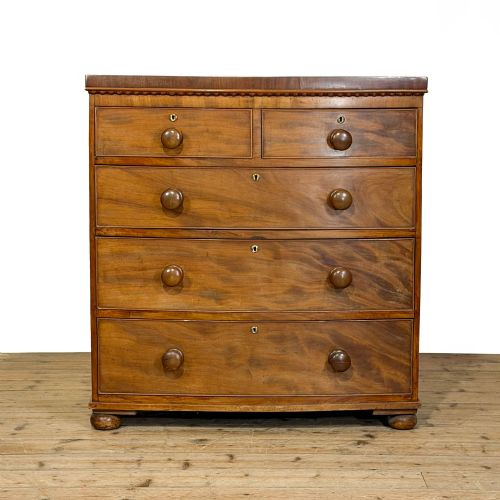
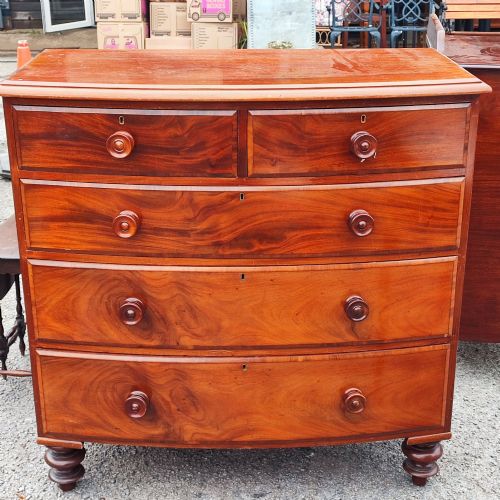
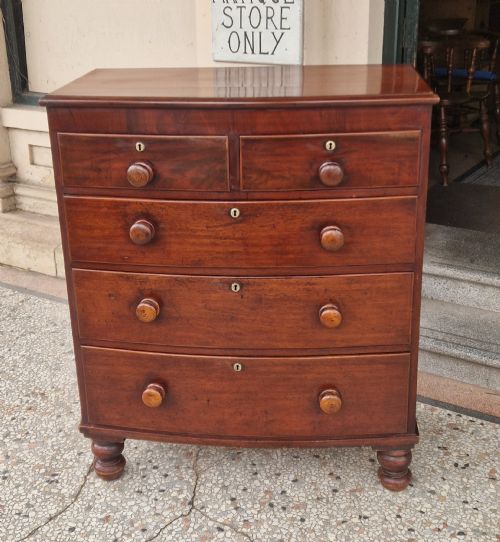
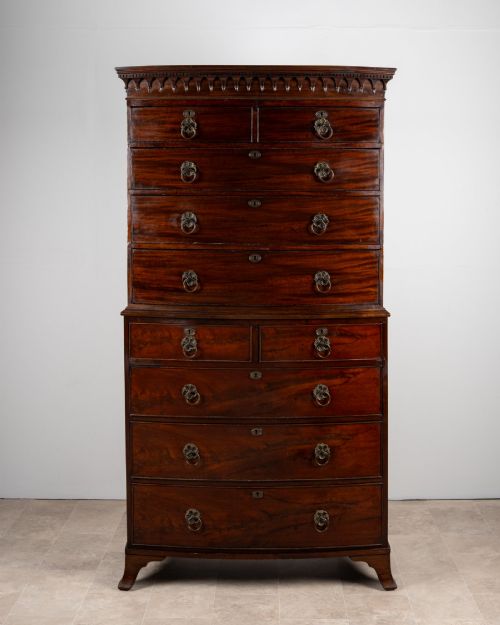



Victorian Bow Front Tallboy
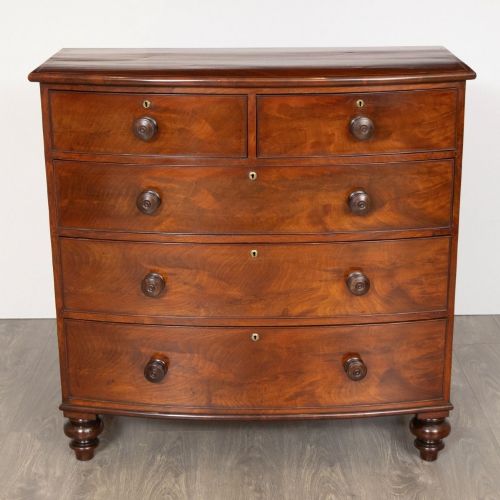
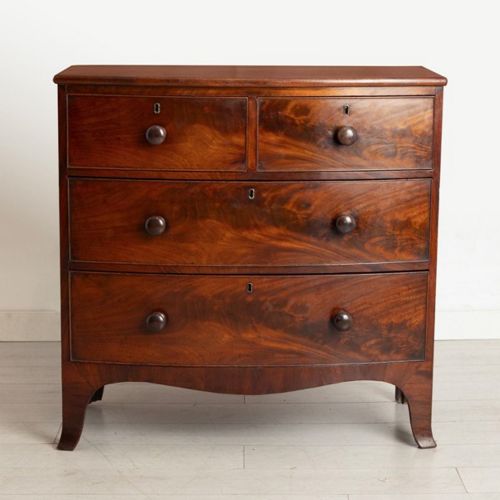
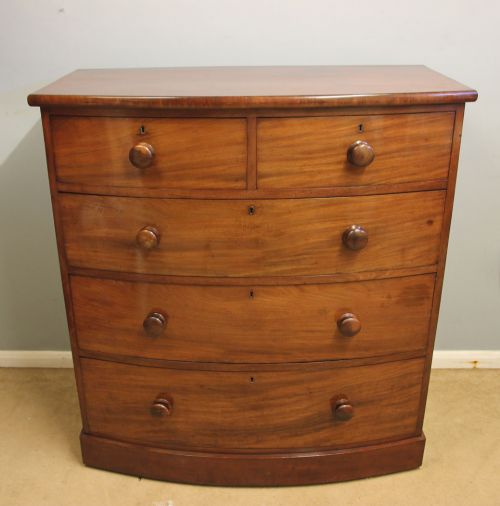
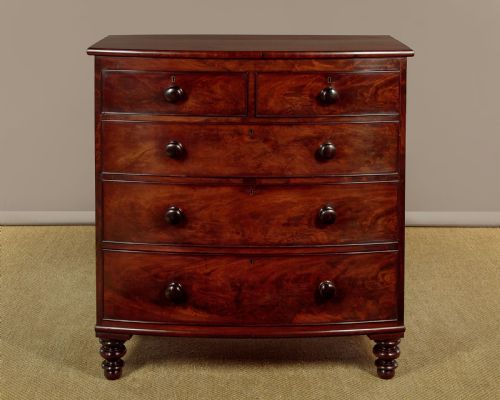
A victorian bow front tallboy brings curved mahogany grace and deep storage to a bedroom, combining nineteenth-century presence with practical drawer space.
Victorian Bow Front Tallboy
A victorian bow front tallboy stands as a substantial piece of nineteenth-century bedroom furniture designed to hold garments while offering a distinctive curved facade. These chests appear in various formats across the Victorian period, including standard multi-drawer configurations and Scotch chests from the middle decades of the century.
Makers of these items focused on domestic utility, resulting in tall proportions that maximise vertical storage without occupying an excessive footprint. Regional variations appear among the selection, including examples originating from English and American workshops.
Materials and construction methods
Construction relies heavily on mahogany, often enhanced with flame mahogany veneer to create striking figured patterns across the curved drawer fronts. Secondary timbers such as pine appear in internal carcase components and drawer linings.
Cabinet makers utilised brass for hardware, fitting drop handles and escutcheons that complement the dark tones of the polished wood. The curved facade requires precise joinery to shape the solid timber and laid veneers smoothly along the radius.
Victorian Bow Front Tallboy Retail Price Guide 2026
Typical asking prices for victorian bow front tallboy among the pieces listed under this phrase on Sellingantiques today, from the lower quarter to the upper quarter. They describe what is for sale here now, not the wider market.
Every Victorian chest hides decades of folded linen ghost-whispers beneath its mahogany drawers.
Factors determining quality
Quality separates through the selection and matching of wood veneers, particularly on the prominent curved drawer faces where rich flame patterns elevate the visual impact. The crispness of the bow front contour and the integrity of the joints dictate the success of the cabinet making.
The choice of secondary woods and the retention of original brass hardware contribute significantly to the overall merit of an individual chest. Proportion and scale also define the better examples, ensuring the tall proportions maintain balance and architectural harmony.
The Victorian Bow Front Tallboy Glossary
- Bow front
- A convex curved cabinet front that projects outward in an arc. This shape defines the primary visual characteristic of these chests.
- Tallboy
- A tall chest of drawers providing extensive vertical storage capacity. It organises garments across multiple stacked tiers.
- Flame mahogany
- A veneer cut from timber where the branch meets the trunk, displaying a flamy, feather-like grain figure. Cabinet makers reserve this material for principal visual surfaces.
- Escutcheon
- A protective plate surrounding a keyhole, usually cast in brass. It prevents the timber from wearing around the lock.
- Scotch chest
- A regional variety of nineteenth-century chest originating from Scotland, often featuring distinct proportions and top drawer arrangements. These pieces display robust nineteenth-century craftsmanship.
Victorian Bow Front Tallboy: Frequently Asked Questions
What is a bow front chest?
A bow front chest is a drawer unit featuring a convex curved front that projects outward into the room. This shape softens the corners of the furniture and provides a decorative presence.
Cabinet makers of the nineteenth century utilised this form to showcase figured mahogany veneers across the curved surfaces.
How do I date a Victorian chest?
Dating relies on examining construction techniques, timber choices, and secondary woods like pine used inside the drawers. Hardware styles and overall proportions also offer clues to the decade of manufacture.
Records show pieces spanning from the early Victorian era through to the eighteen-eighties.
Where were these chests placed?
These chests served primarily as bedroom furniture for storing garments, linen, and personal items. Their tall vertical format made them suitable for rooms requiring substantial storage without occupying excessive floor space.
Their finished appearance allowed them to sit prominently against bedroom walls.
Are all these chests made of mahogany?
Mahogany and mahogany veneer dominate the visible surfaces of these pieces, providing the characteristic dark red-brown tone. Secondary timbers such as pine appear in structural elements and drawer interiors.
Brass fittings complete the primary material palette.