

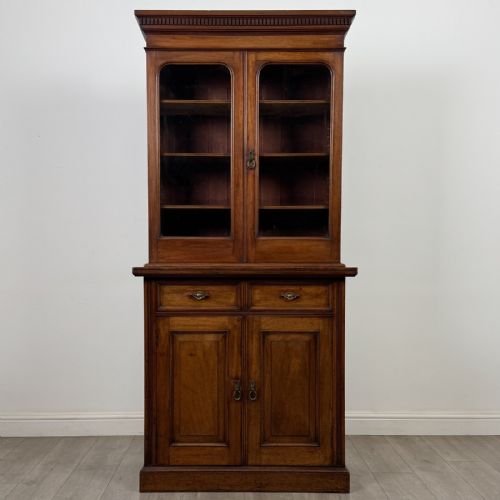
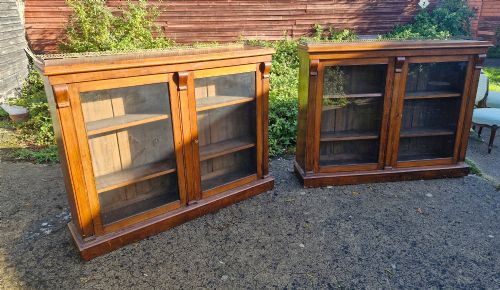
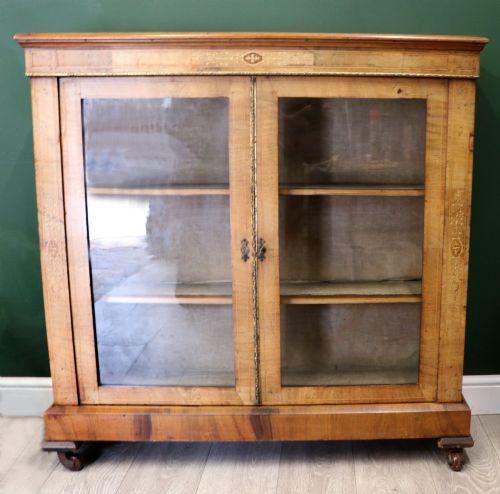

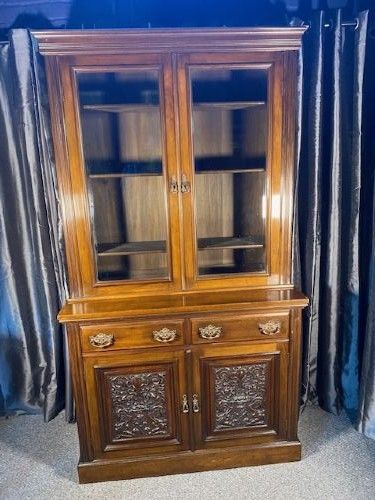
Victorian Bookcase with Glass Doors
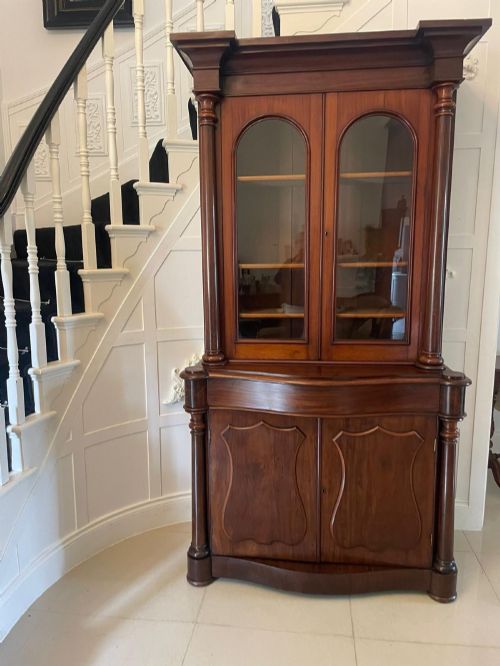
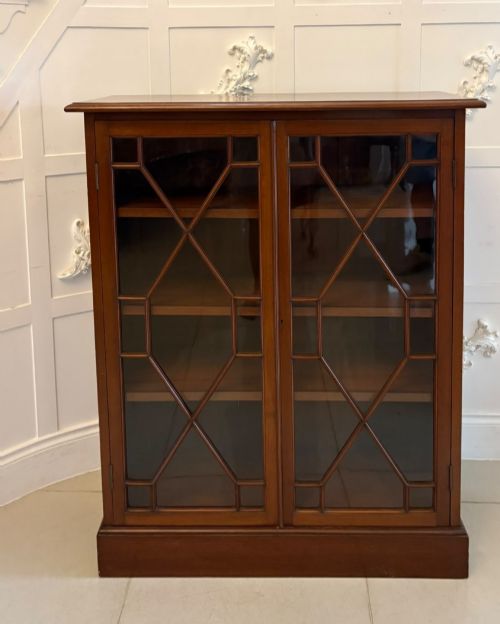
A victorian bookcase with glass doors brings period timber and glazed panels together to hold a library.
Victorian Bookcase with Glass Doors
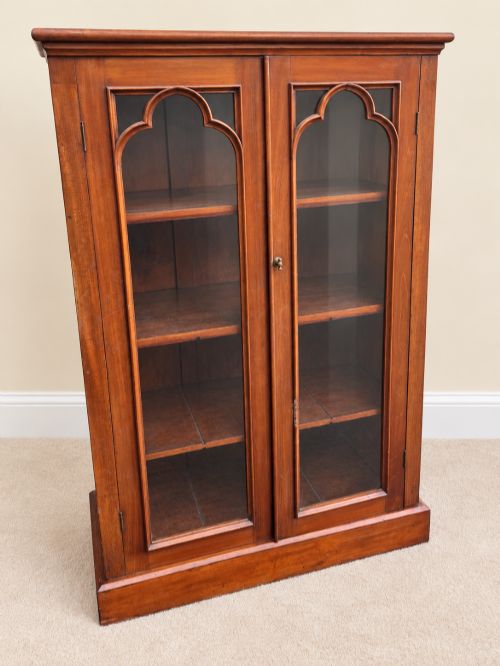
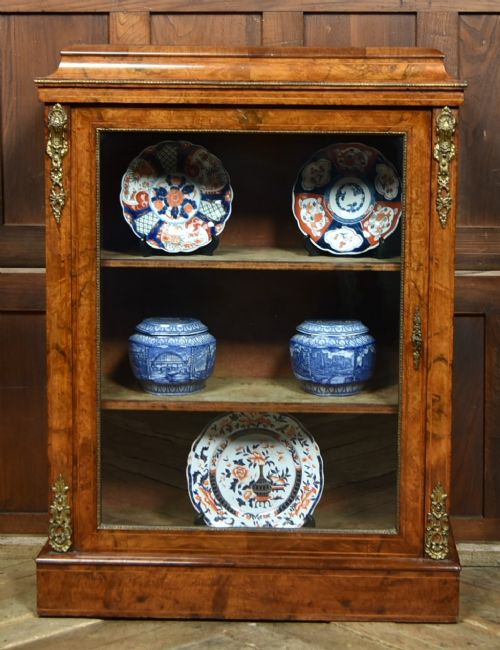
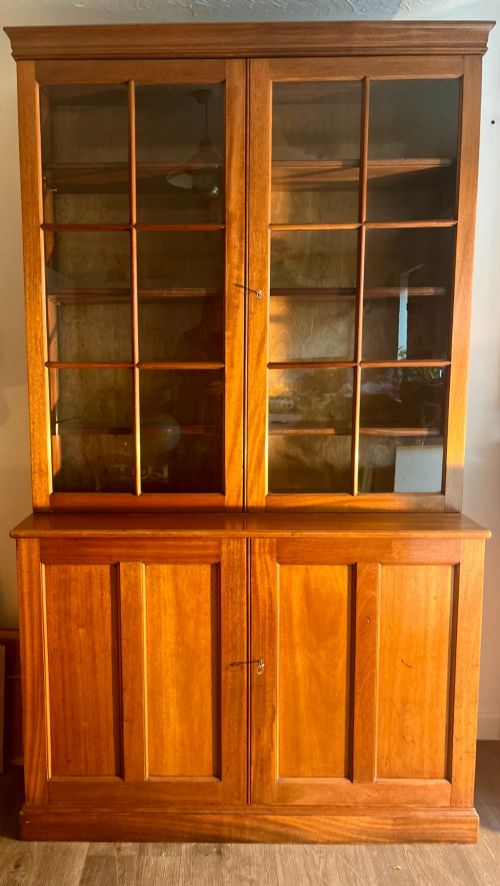
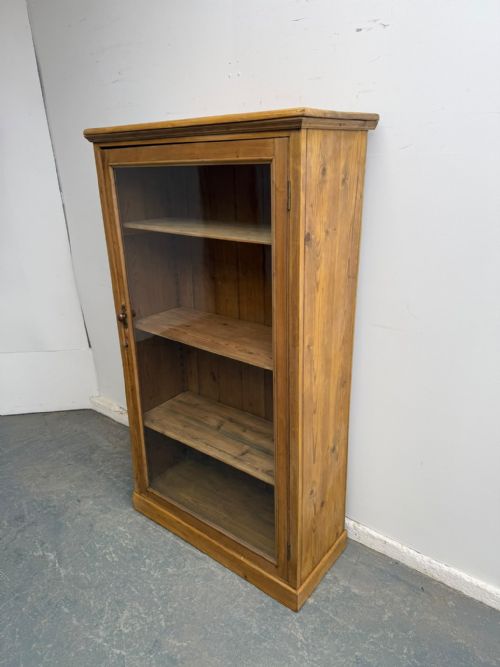
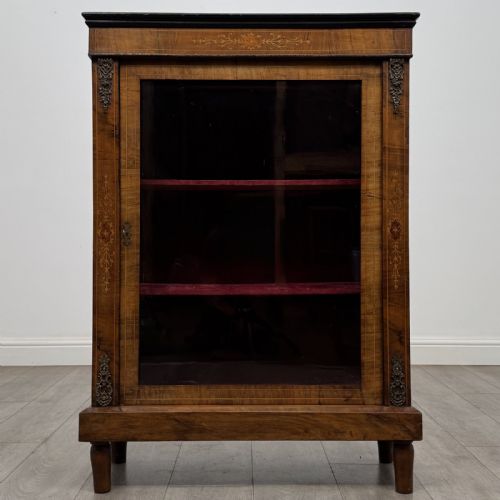
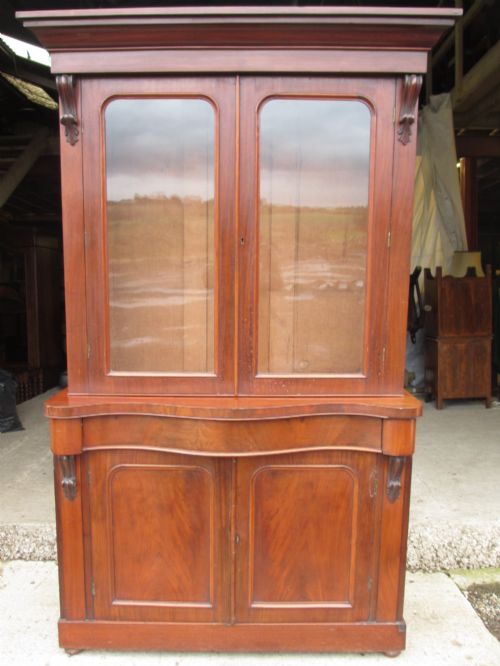
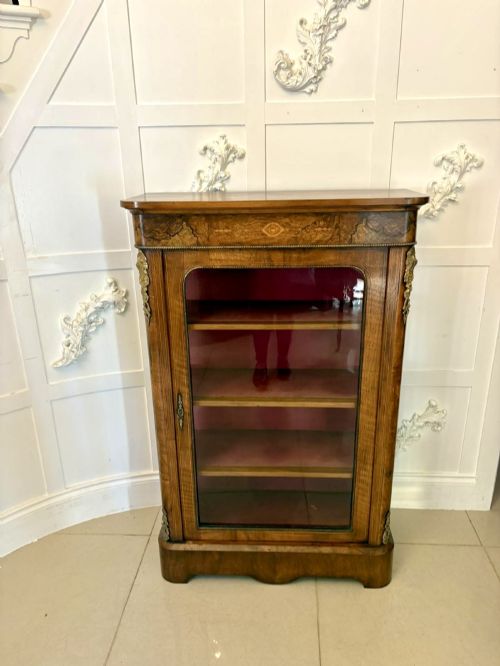
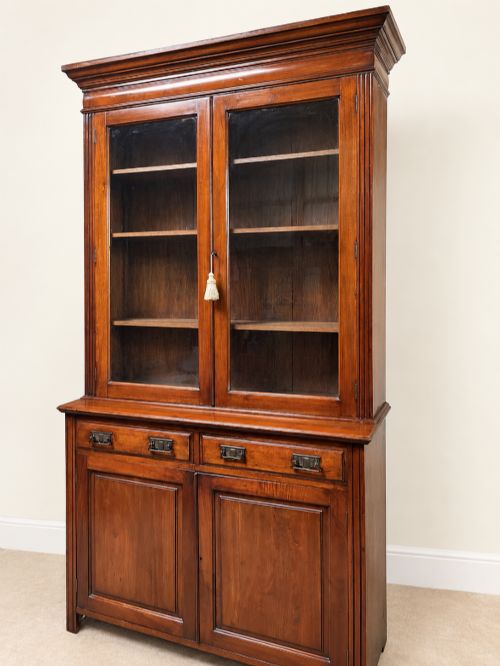
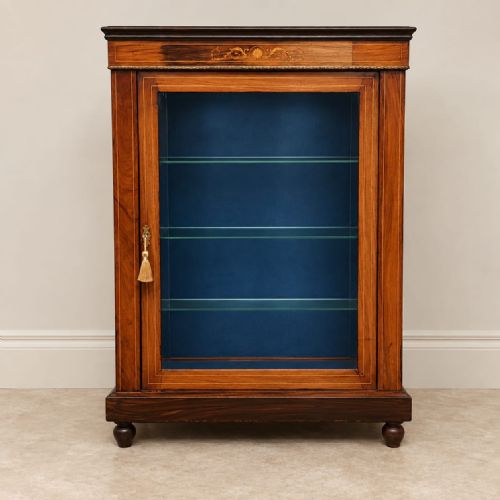
A victorian bookcase with glass doors spans simple pine dressers, mahogany library pieces, and inlaid walnut display cabinets. The examples here include compact pier cabinets, breakfront library bookcases, and side cabinets with glazed panels.
Most pieces date from the mid to late nineteenth century, reflecting the manufacturing output of the Victorian era. Forms range from Scottish country kitchen pieces to French-influenced library furniture.
Buyers encounter freestanding pieces designed to display books and decorative objects behind glass. The construction typically divides into a glazed upper section and a lower cupboard or base.
Materials and Construction
Cabinet makers utilised dense hardwoods such as mahogany, walnut, and rosewood for primary surfaces, often selecting figured veneers. Pine served for carcases and internal shelving, while exotic timbers like amboyna and tulipwood provided decorative banding.
Glass panels are set into timber doors, sometimes accompanied by brass fittings, ormolu mounts, and delicate boxwood marquetry inlay. Ebonised finishes and barley twist columns appear on specific nineteenth-century pieces.
Victorian Bookcase with Glass Doors Retail Price Guide 2026
Typical asking prices for victorian bookcase with glass doors among the pieces listed under this phrase on Sellingantiques today, from the lower quarter to the upper quarter. They describe what is for sale here now, not the wider market.
One small cabinet hides its books so well behind glass and barley twist columns that it looks ready for tea.
Gradations in Quality
The standard of a piece depends on the selection of timber veneers, such as figured walnut or matched mahogany, and the precision of the marquetry or inlay. Secondary timbers and internal construction details, including adjustable shelving and solid backboards, distinguish finer workshops from standard production.
Ornaments such as cast ormolu mounts, brass hardware, and well-executed ebonised details elevate the visual weight of a cabinet. The proportion of the glazing bars and the clarity of the glass panes also indicate the original maker's investment in the piece.
Druce & Co
The Victorian Bookcase with Glass Doors Glossary
- Pier Cabinet
- A low, freestanding display cabinet designed to stand against a wall between windows. These pieces often feature glass doors and marquetry inlay.
- Breakfront
- A cabinet design where the central section projects forward from the flanking wings. This architectural form creates depth in larger library bookcases.
- Marquetry
- Decorative patterns formed by fitting together thin veneers of different coloured woods. It appears frequently on walnut and rosewood Victorian furniture.
- Ormolu
- Gilt bronze mounts used as decorative ornamentation on nineteenth-century furniture. These mounts are cast and chased before being applied to the timber surface.
Victorian Bookcase with Glass Doors: Frequently Asked Questions
How do I clean the glass?
Use a soft cloth and a mild glass cleaner applied to the cloth rather than directly onto the wood. This prevents moisture from damaging nineteenth-century timber finishes and surrounding frames.
Take care around delicate inlay and brass or ormolu mounts while wiping the panels.
Are the shelves adjustable?
Many nineteenth-century bookcases feature adjustable shelving supported on wooden racks or metal pins. This allows the interior height to accommodate varying book sizes.
Some country pieces and older pine cabinets may have fixed shelves.
Where should I place it?
Position these cabinets away from direct sunlight and strong heat sources to protect timber veneers from drying out. Stable room humidity preserves the joints and polish of period wood.
Ensure the floor is level so the glazed doors hang correctly.
How do I identify a Victorian piece?
Examine the construction methods, timber choices, and hardware characteristic of the nineteenth century. Details like mahogany, walnut, and hand-cut dovetails point towards this period.
Styles range from early Victorian mahogany designs to late Victorian inlaid rosewood.