
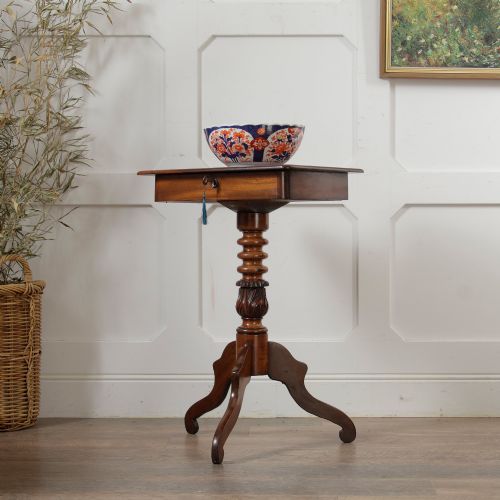


Victorian Bobbin Turned Furniture
Victorian bobbin turned furniture brings architectural spool-moulded timber into the home, offering distinct rhythmic profiles.
Victorian Bobbin Turned Furniture
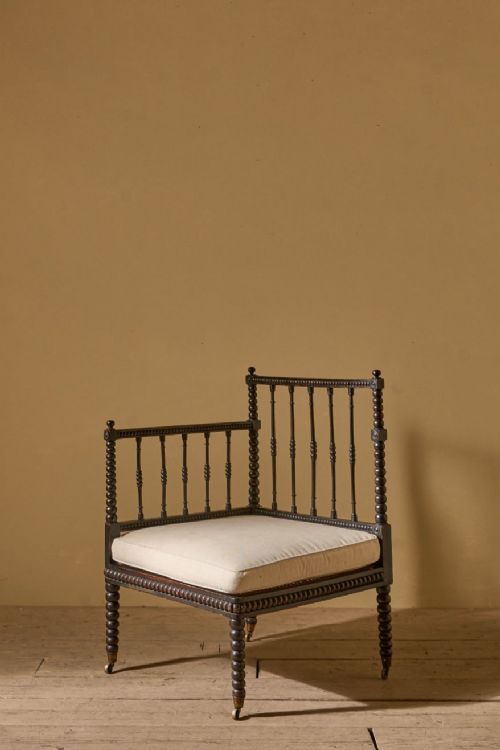
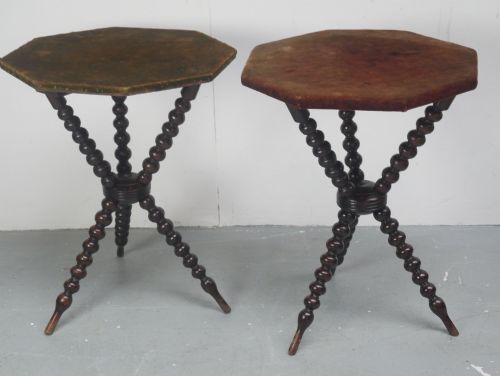
Victorian bobbin turned furniture encompasses seating and small tables characterised by repeating cylindrical turnings resembling spools of thread. These pieces range from corner chairs and armchairs to side tables and hanging shelves.
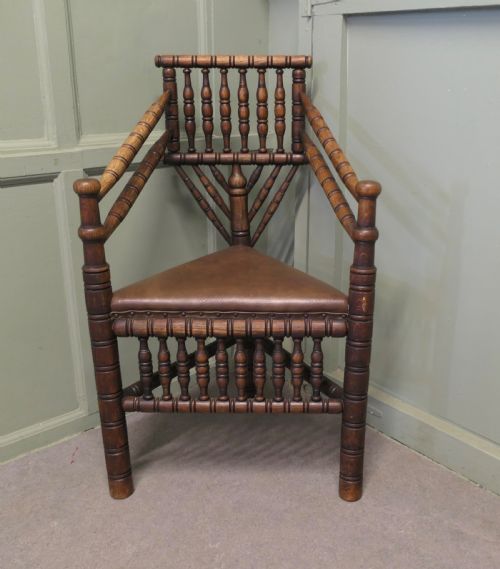
Buyers frequently encounter ebonised wood finishes alongside oak, walnut, and mahogany within this category. The items emerge from the nineteenth century across varied stylistic movements including Aesthetic Movement, Jacobean Revival, and Moorish Revival.
Seating forms include side chairs and rocking chairs whilst tables appear as pedestal, sewing, and occasional formats. The turnings create a domestic rhythm that suits both period interiors and modern settings.
How they were made
Cabinet makers utilised a lathe to shape hardwood, oak, walnut, mahogany, pine, birch, and rosewood into uniform spool profiles. Individual bobbin sections were joined securely to form the structural legs, stretchers, and frames of chairs and tables.
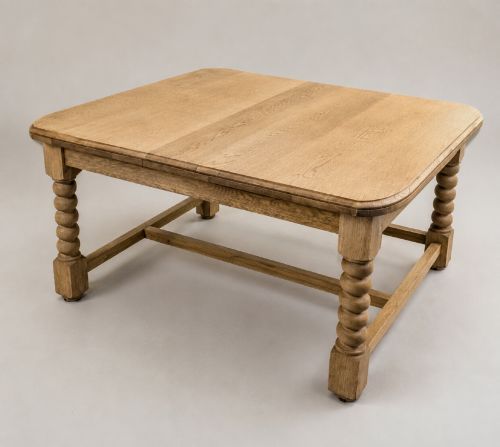
Surfaces were frequently ebonised to mimic exotic woods, or left as natural timber such as bleached oak. Detail work incorporated leather inserts, fabric upholstery, brass fittings, and ceramic elements on specific tables and chairs.
Listings feature oak, walnut, mahogany, pine, birch, and rosewood, alongside ebonised finishes across nineteenth-century seating and tables.
What varies in quality
The precision of the lathe work dictates the overall standard of the piece, with crisp, evenly spaced spool turnings separating superior examples from simpler work. The choice of primary timber, whether dense walnut or standard pine, alters the integrity of the construction.
The preservation of original ebonised finishes or natural patination on hardwoods contributes significantly to the standing of an item. Structural cohesion in joints, particularly on heavily utilised chairs and tables, marks the difference in cabinet-making execution.
Liberty & Co
The Victorian Bobbin Turned Furniture Glossary
- Bobbin turning
- A form of woodturning characterised by a series of rounded, spool-like shapes carved along the length of a spindle or leg. This technique creates a decorative, rhythmic profile popular in nineteenth-century joinery.
- Ebonisation
- The process of treating timber, commonly fruitwood or beech, to imitate ebony through staining and polishing. It results in a deep black, uniform finish seen on many Aesthetic Movement pieces.
- Corner chair
- A seating form designed to fit into the corner of a room, featuring a square seat set diagonally with a curved backrest supported by multiple spindles. These often utilise bobbin turned legs and supports.
- Gate-leg table
- A drop-leaf table where the leaves are supported by hinged legs that swing out like a gate. Several examples incorporate bobbin turned structural supports.
- Aesthetic Movement
- A late nineteenth-century design current that prioritised visual beauty over narrative meaning. It frequently employed ebonised finishes and simplified geometric forms.
Victorian Bobbin Turned Furniture: Frequently Asked Questions
What is bobbin turned furniture?
Bobbin turned furniture is woodwork featuring shaped spindles resembling reels or spools of thread, popular during the nineteenth century. These turnings form the structural legs, stretchers, and backrests of chairs, tables, and shelving units.
The style draws on earlier seventeenth-century joinery traditions but finds fresh expression in Victorian revivals and Aesthetic Movement interiors. Walnut, oak, ebonised hardwoods, and mahogany serve as the primary materials for these turned elements.
How do I style a bobbin chair?
A bobbin turned chair works effectively as an occasional seat in a hallway, bedroom, or living space where its silhouette stands clear. The rhythmic turnings pair well with both minimalist modern decor and traditional period rooms.
Because these chairs often feature ebonised wood or warm oak, they anchor neutral colour schemes and provide textural contrast against plain walls. Pairing them with simple side tables allows the spool-moulded frame to remain the focal point.
Are these pieces sturdy?
Construction quality depends on the density of the hardwood used, such as oak, walnut, or mahogany, and the integrity of the joints. Many tables and chairs remain robust daily companions if the turned stretchers are secure.
Lighter pieces like hanging shelves or small occasional tables are designed for decorative display rather than heavy weight-bearing use. Checking the firmness of the frame helps determine suitability for regular seating.
How do I clean ebonised wood?
Ebonised surfaces require gentle dusting with a soft, dry cloth to prevent micro-scratching on the black polished finish. Avoid harsh chemical cleaners or excessive moisture that can lift the stain or damage the underlying timber.
Occasional application of microcrystalline wax feeds the finish and maintains the subtle sheen characteristic of nineteenth-century ebonised furniture. This preserves the dark decorative appearance without building up greasy residues.