
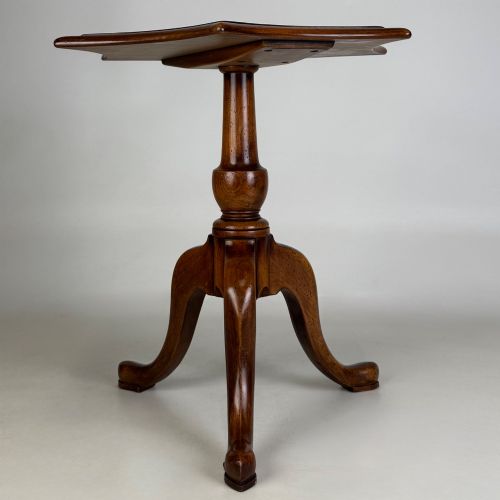
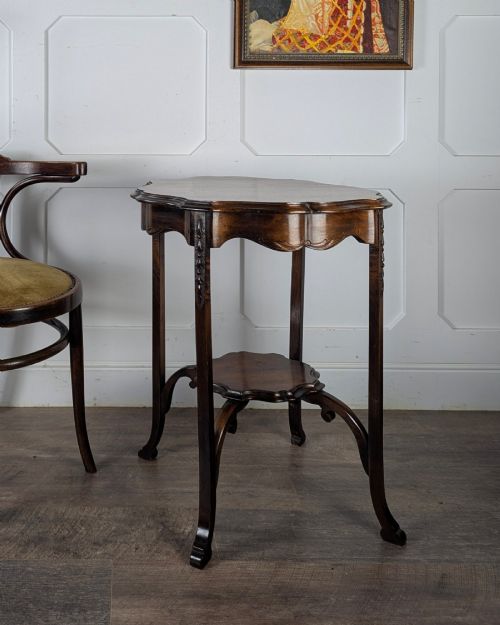
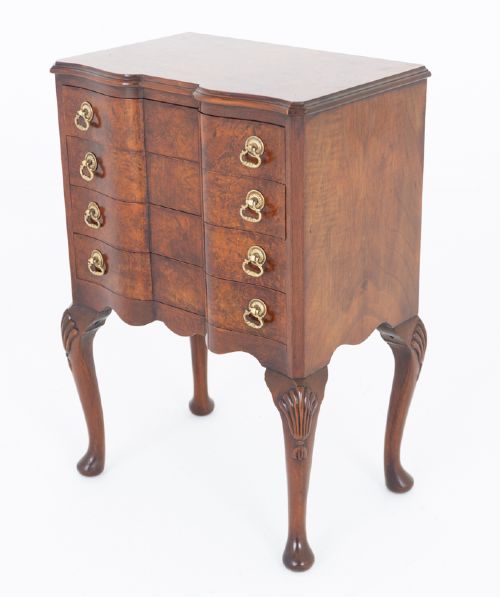
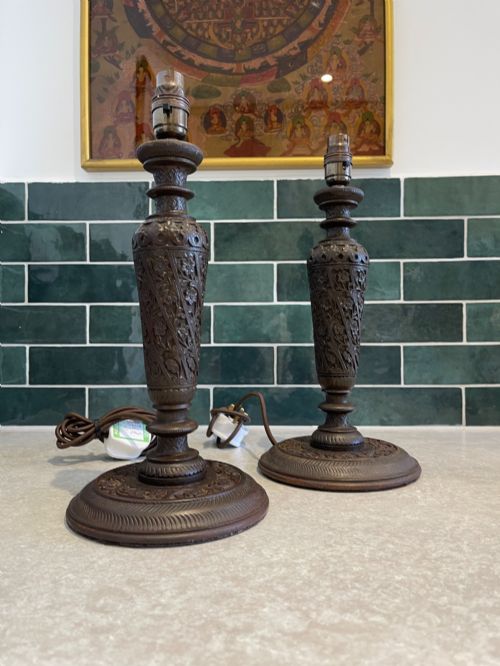




Traditional Walnut Lamp Table
These traditional walnut lamp table pieces bring warmth and refined timber grain to a room, offering a sturdy surface for lighting and display.
Traditional Walnut Lamp Table
When you search for a traditional walnut lamp table, you find a variety of compact occasional surfaces designed to hold lighting or sit beside seating. These items span periods from the Victorian era and 19th century through the Edwardian years into the 1920s and 1930s.
The forms on this page include side tables, nests of tables, wine tables, bedside cabinets, and coffee tables. You are most likely to meet Queen Anne style pieces and simpler Edwardian or Victorian side tables in solid walnut or burr walnut.
Makers and craftsmen drew on historic aesthetics, resulting in Revival designs alongside earlier 19th-century outputs and occasional Anglo-Indian or rustic interpretations.
How they were made
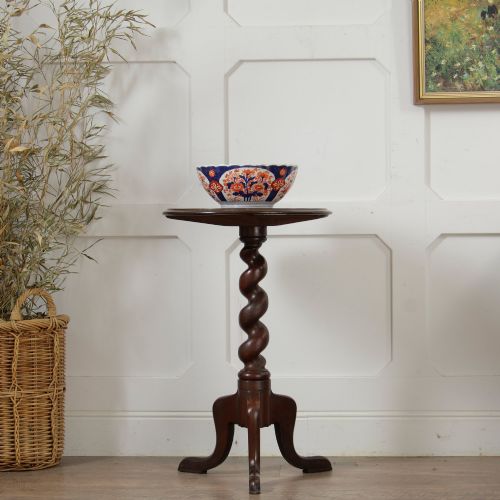
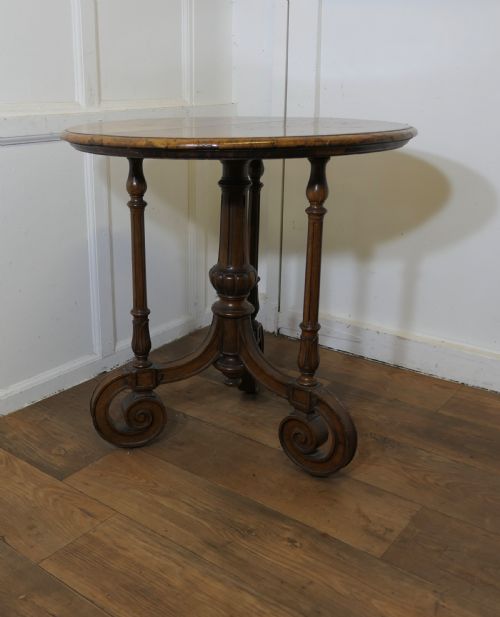
Carpenters utilised solid walnut and decorative wood veneer, often selecting burr walnut or figured walnut for tabletops to highlight rich, swirling grain patterns. Supporting structures frequently incorporated turned elements like barley twist and bobbin turning, alongside classic cabriole legs.
Construction details include brass hardware and occasional ceramic elements, while specialised treatments like pie crust edges and gate-leg mechanisms appear on specific wine and side tables.
Listings span multiple decades, incorporating Victorian, Edwardian, and 1920s furniture alongside 19th-century pieces.
What varies in quality
Quality rests primarily on the choice of timber and the dexterity of the cabinetmaker. Tables utilising highly figured burr walnut veneers demonstrate greater visual depth than plain surfaces.
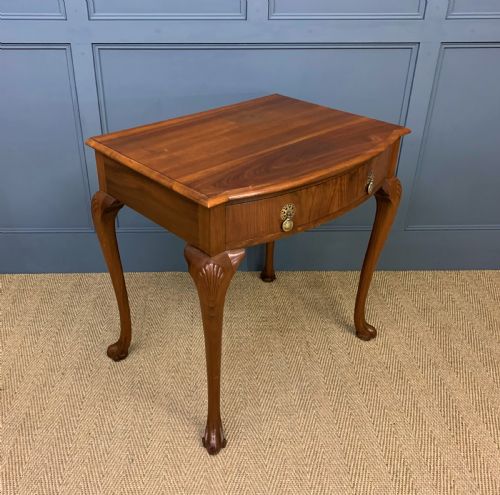
Fine craftsmanship shows in the crispness of carved details, such as Queen Anne style cabriole legs or moulded pie crust edges, and the stability of turned structural members like barley twist pedestals.
The Traditional Walnut Lamp Table Glossary
- Burr walnut
- A specialised timber cut from the wart-like growths on walnut trees, prized for its complex, swirling grain patterns. It creates highly decorative tabletops.
- Cabriole leg
- A furniture leg that curves outward and then tapers inward, commonly found on Queen Anne style tables. This form echoes traditional animal limbs.
- Pie crust edge
- A raised, scalloped wooden rim carved around the edge of a small round table top. It resembles the fluted pastry edge of a pie.
- Barley twist
- A spiral turning technique shaped into furniture legs and pedestals to catch the light. It adds texture and dynamic movement to vertical supports.
- Gate-leg table
- A table with hinged drop leaves supported by legs that swing out like a gate. This mechanism allows the surface area to expand or contract.
Traditional Walnut Lamp Table: Frequently Asked Questions
What is a traditional walnut lamp table used for?
These tables provide a stable surface for placing reading lamps, drinks, or small decorative items beside a chair or sofa. Their compact size makes them adaptable for various rooms in the home.
Historically, specific variants served specialised purposes such as wine tables or bedside cabinets, yet today they function flexibly as general lamp tables.
How do I identify a Queen Anne style table?
Queen Anne style pieces typically feature characteristic cabriole legs that curve outward at the knee and taper inward toward the foot. They often omit heavy carving in favour of clean, smooth lines that emphasise the walnut timber.
Many examples from the 1920s adopt this aesthetic, pairing the curved legs with figured walnut tops for a refined finish.
What is the difference between solid walnut and burr walnut?
Solid walnut uses standard timber planks milled straight from the tree trunk, offering uniform grain and robust structural strength. Burr walnut utilises specialised burr growth veneer applied over a stable base timber to display intricate, swirling patterns.
Tables featuring burr walnut grain were traditionally chosen for principal rooms where decorative impact mattered most.
How do I care for a walnut table surface?
Walnut timber benefits from regular dusting with a soft, dry cloth to prevent particulate buildup on the polished finish. Avoid placing tables in direct sunlight or near heat sources to protect the wood and veneer from drying out.
Applying appropriate wax polishes periodically helps maintain the natural lustre of the walnut grain without sealing the wood in synthetic films.
How can I tell the period of a walnut table?
Dating relies on observing construction methods, turned leg styles like bobbin or barley twist, and overarching design revivals. For instance, pieces displaying heavy Victorian turnings differ noticeably from the sleeker Queen Anne Revival items of the 1920s.
Examining the underside, timber thickness, and secondary woods helps confirm whether a piece originates from the 19th century or the early 20th century.