

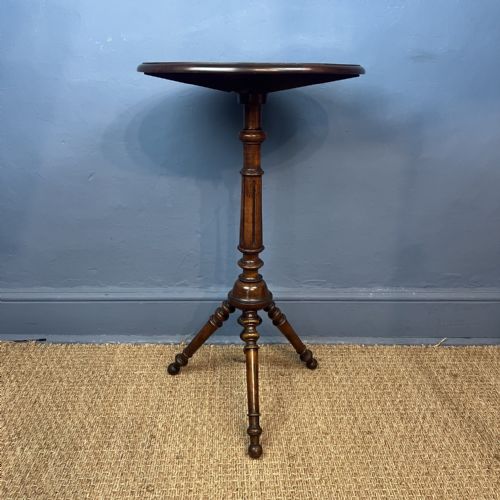

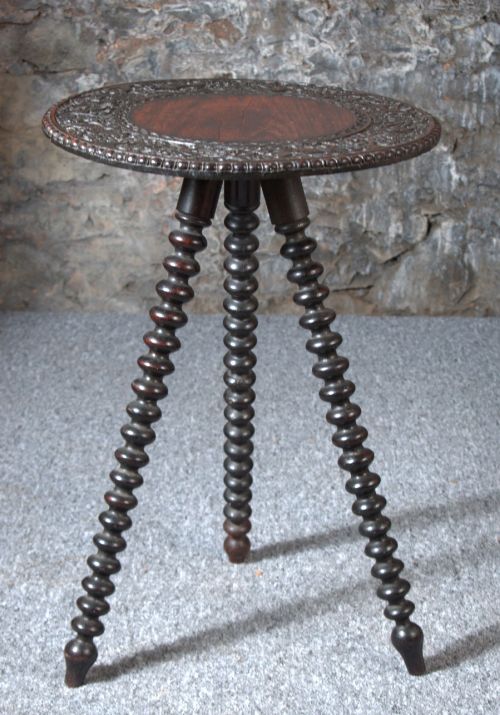


Bobbin Leg Occasional Table
A bobbin leg occasional table brings compact turned woodwork and practical small-scale surfaces into a room.
Bobbin Leg Occasional Table
A bobbin leg occasional table is defined by distinctive spool-turned supports beneath a compact surface. These pieces appear across various periods, ranging from the seventeenth century through to the early twentieth century.
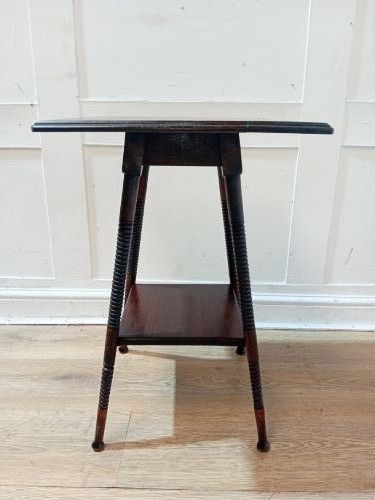
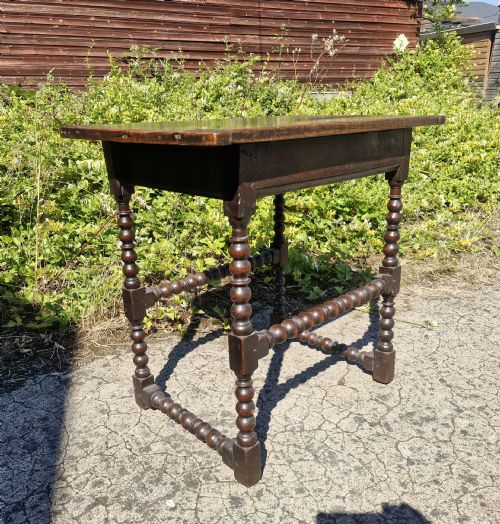
The selections on this page span diverse styles such as Jacobean Revival, Victorian, and Arts and Crafts. Alongside standard side tables, related forms like gateleg tables, gypsy tables, and lamp tables emerge in the listings.
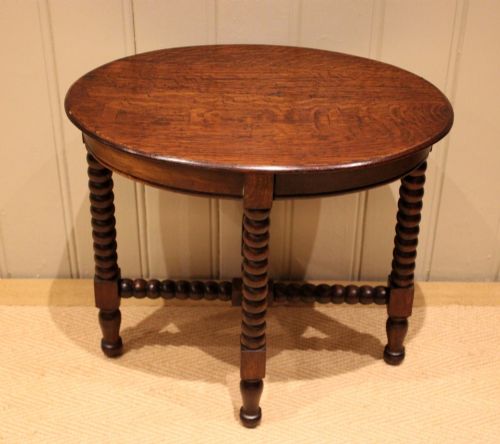
Oak remains the predominant timber, accompanied by walnut, mahogany, yew wood, and cherry. Pieces often serve specific functions as lamp tables, side tables, or small accent surfaces within domestic spaces.
Materials and Construction
Makers utilised solid native timbers, predominantly oak and walnut, alongside imported woods such as mahogany and padouk. Turning lathes shaped the repetitive spool and bobbin motifs characteristic of the legs.
Joinery methods varied according to the period, employing pegged mortise and tenon joints in earlier centuries and simpler mechanical fastenings in later Victorian examples. Surfaces frequently received wax polishes or ebonised finishes to enhance the grain.
Secondary materials such as brass fittings, leather inserts, velvet panels, and hand-painted decorations supplemented the primary woodwork on specific tables.
Listings feature oak, walnut, mahogany, yew wood, and cherry across periods spanning the seventeenth to the twentieth century.
Factors of Quality
The standard of turning defines much of the visual merit, with crisp, evenly spaced bobbin profiles marking superior examples. Timber selection also dictates grade, where figured burr walnut or dense old-growth oak elevate the piece.
Structural integrity depends on the tightness of the leg joints and the stability of the frame over centuries of use. Original surface patination and minimal replacement timber distinguish better-preserved specimens from heavily restored ones.
William Birch·Liberty of London
The Bobbin Leg Occasional Table Glossary
- Bobbin leg
- A support turned on a lathe to resemble a string of bobbins or spools. This decorative turning style appears frequently on seventeenth-century and Victorian furniture.
- Gateleg table
- A table with hinged flaps supported by legs that swing outward like a gate. This form allows the surface area to expand or contract.
- Gypsy table
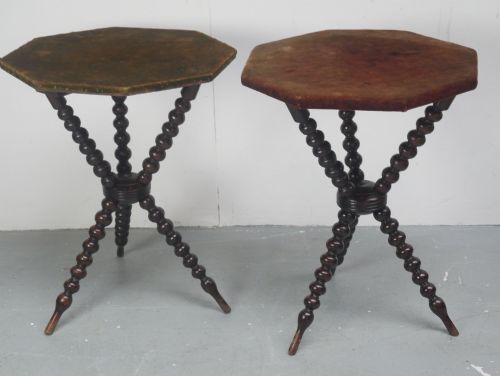
- A lightweight occasional table featuring three turned legs, popular during the late nineteenth century. These often included draped fabric or ebonised finishes.
- Occasional table
- A small, portable table designed for miscellaneous use in a room. Examples include lamp tables, side tables, and small accent pieces.
Bobbin Leg Occasional Table: Frequently Asked Questions
What is a bobbin leg table?
A bobbin leg table is a small accent piece supported by legs turned with a series of rounded spool shapes. These turned elements give the underframe a distinctive rhythmic profile.
Such tables function as side tables or lamp stands, originating across several centuries from the seventeenth to the early twentieth.
How do I date a bobbin table?
Dating relies on timber species, joinery methods, and the specific turning style of the legs. Earlier pieces often use solid oak with pegged joints, while Victorian examples introduce walnut, mahogany, and lighter construction.
Comparing the overall form with documented styles like Jacobean Revival or Arts and Crafts provides further chronological context.
Where should I place an occasional table?
These compact tables fit easily beside armchairs, sofas, or beds to hold lamps and small objects. Their modest footprint makes them useful in hallways and tight corners.
Different versions offer drawers or drop leaves for added utility in daily living spaces.
Are these tables sturdy?
Sturdiness depends on the tightness of the frame joints and the condition of the turned underframe. Well-constructed examples distribute weight evenly across the bobbin legs.
Regular checks of the leg fixings help maintain stability during everyday use.