



Victorian Blue Enamel Pendant
A victorian blue enamel pendant offers a glimpse into nineteenth-century sentiment, combining rich vitreous colour with high-carat gold and pearl accents.
Victorian Blue Enamel Pendant
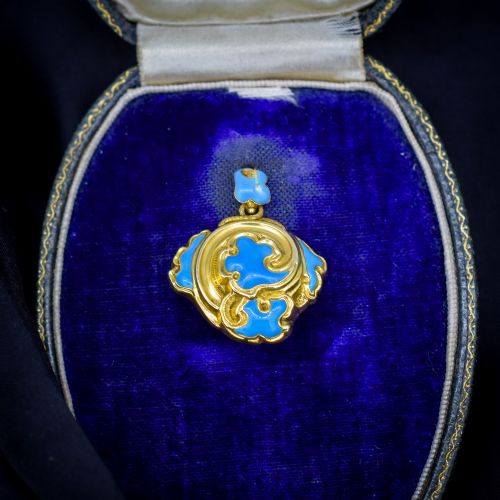
A victorian blue enamel pendant brings together the deep, lustrous hues of fired glass and the warm glow of gold, most frequently taking the form of a heart, cross, or locket. These pieces emerge from the nineteenth century, spanning from the middle decades through the late Victorian period.
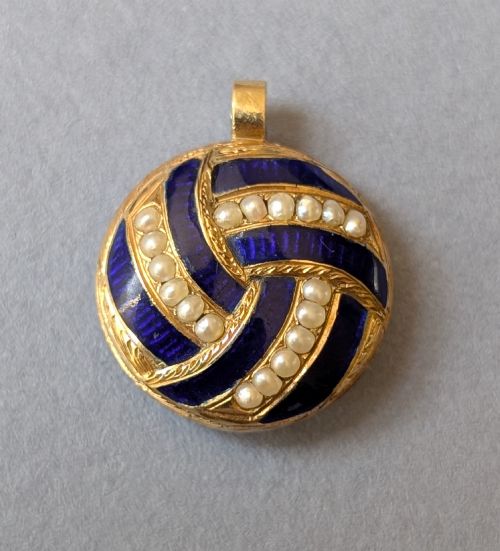
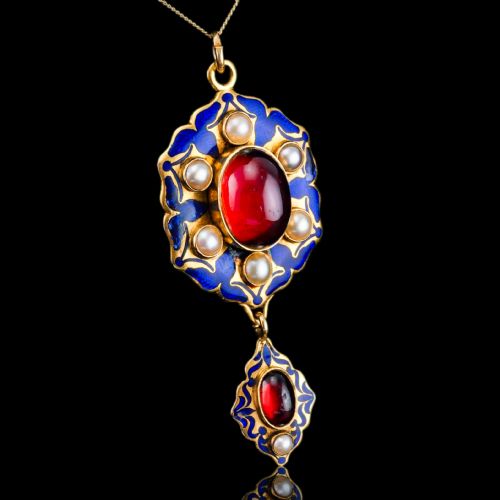
The versions most commonly met on this page combine blue enamel with pearls, diamonds, and occasionally hair work or photographs housed within a compartment. Forms range from puffy hearts and crosses to elaborate Renaissance revival designs.
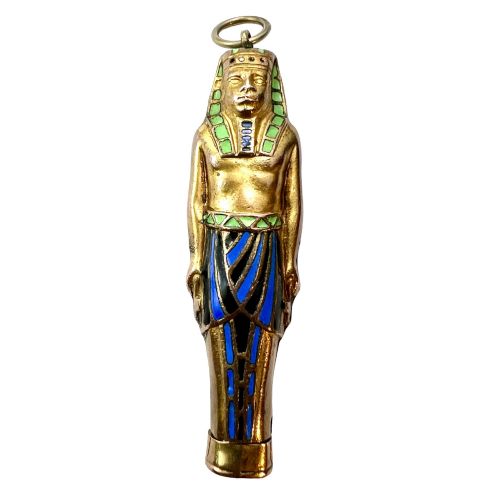
Many function simultaneously as lockets, holding personal mementos close to the wearer. The craftsmanship reflects the distinct aesthetic movements of the era, including French Belle Epoque and Egyptian revival influences.
How they were made
Goldsmiths of the period employed high-carat yellow gold, typically fifteen or eighteen carat, alongside lower alloys, shaping the metal into intricate settings for stones and enamel. Vitreous enamel was applied to the gold surface in rich blue shades, sometimes over guilloche engraving to create a patterned depth beneath the translucent glaze.
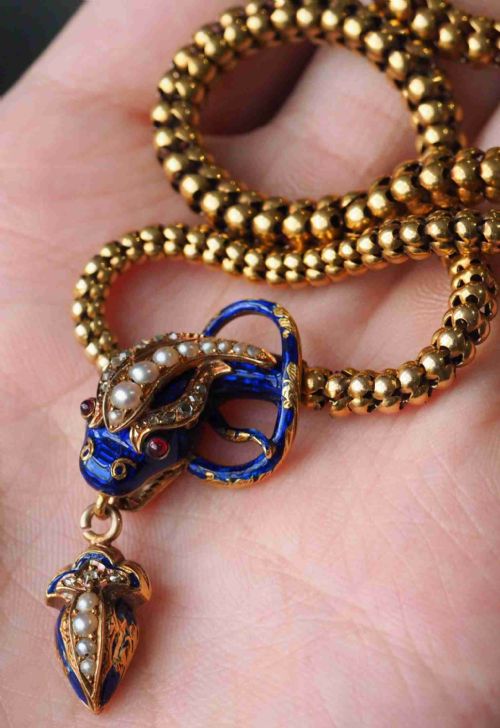
Gemstones such as rose-cut diamonds, pearls, and garnets were carefully hand-set into the gold frames, often accentuating central motifs like stars, pansies, or serpent coils. Skilled artisans also utilised glass paste and specialised techniques for hair work remembrance pieces.
Listings feature yellow gold ranging from nine to eighteen carat, combined with vitreous enamel, pearls, and diamonds across nineteenth-century periods.
What varies in quality
The depth and consistency of the blue enamel surface set finer examples apart, particularly where guilloche engine-turning creates light refraction beneath the glaze. Superior pieces exhibit immaculate preservation of the vitreous glass without significant loss or heavy scratching.
The weight and purity of the gold mountings, combined with the precision of hand-set pearls and diamonds, distinguish workshop output. Master craftsmanship is further evident in the articulation of complex forms like hinged lockets and three-dimensional motifs.
The Victorian Blue Enamel Pendant Glossary
- Guilloche enamel
- Enamel applied over a metal surface that has been mechanically engraved with a repetitive geometric pattern. This technique allows light to reflect through the translucent glaze, creating a shimmering depth.
- Puff heart
- A three-dimensional hollow pendant shaped like a heart, typically formed from two convex sheets of gold joined at a seam. These pieces often feature central enamel work and pearl star motifs.
- Mourning locket
- A piece of jewellery designed to hold a lock of hair or a miniature portrait in memory of a deceased person. They frequently incorporate black or blue enamel alongside gold hair work.
- Holbeinesque
- A Victorian revival style of jewellery inspired by sixteenth-century designs associated with Hans Holbein. These pieces are characterised by elaborate framework set with multiple gems, pearls, and enamel drops.
- Vitreous enamel
- A material made by fusing powdered glass to a substrate by firing, usually between seven hundred and nine hundred degrees Celsius. The powder melts, flows, and hardens into a smooth, durable glass coating.
Victorian Blue Enamel Pendant: Frequently Asked Questions
What periods do these pendants cover?
The pieces span the nineteenth century, with a strong concentration in the Victorian era from the eighteen-fifties onward. Listings also include items from the late nineteenth century and the early twentieth century.
Craftsmanship reflects stylistic shifts across these decades, moving from mid-century sentimentality to later revival movements and French Belle Epoque influences.
How were these pendants worn?
Victorian pendants were suspended from chains or ribbons around the neck, serving as personal ornaments or tokens of remembrance. Many double as lockets designed to keep private mementos hidden against the body.
Heavier gold and enamel pieces often accommodated watch chains or substantial necklaces, depending on the weight and scale of the pendant.
Are the lockets still functional?
Many examples retain their internal glass compartments, bezels, or hinged covers intended for photographs or hair work. The survival of these internal components varies from piece to piece.
Buyers often find remnants of nineteenth-century mementos still residing safely inside the closed compartments of these lockets.
What motifs appear on the enamel?
Blue enamel frequently provides a backdrop for star motifs set with seed pearls, floral arrangements like pansies, and serpentine coils. Crosses and puffy hearts also feature prominently as primary shapes.
Geometric guilloche patterns beneath the blue glaze add texture and visual movement to the surface of the gold pendants.
What gold purities are used?
Makers utilised a range of gold purities, most notably fifteen-carat and eighteen-carat yellow gold, alongside nine-carat varieties and rolled gold. High-carat options provide a rich, warm tone that complements the deep blue enamel.
Hallmarks and metal tests help identify the specific alloy composition employed by the nineteenth-century workshops.