

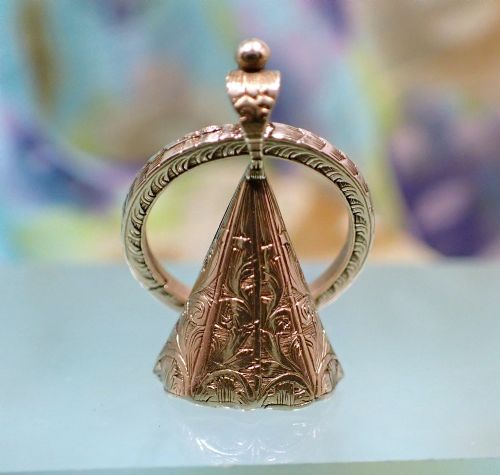


Victorian Bloodstone Fob
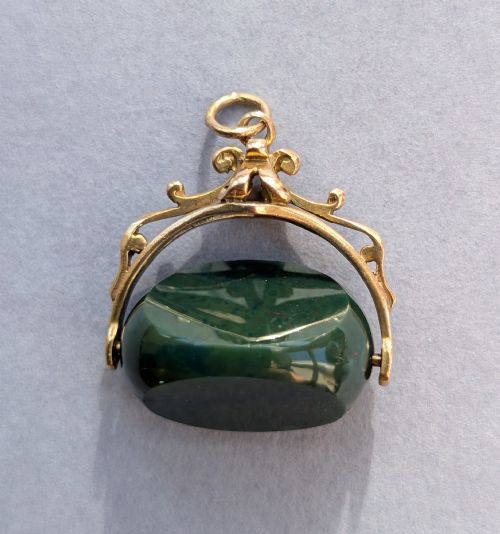
These Victorian bloodstone fob pieces are desk and pocket pieces made for the pocket watch chains of the nineteenth century.
Victorian Bloodstone Fob
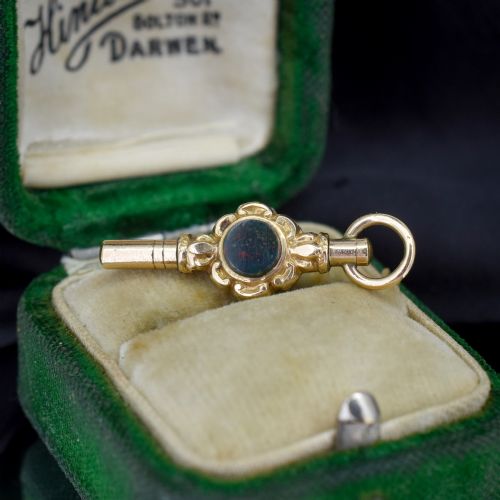
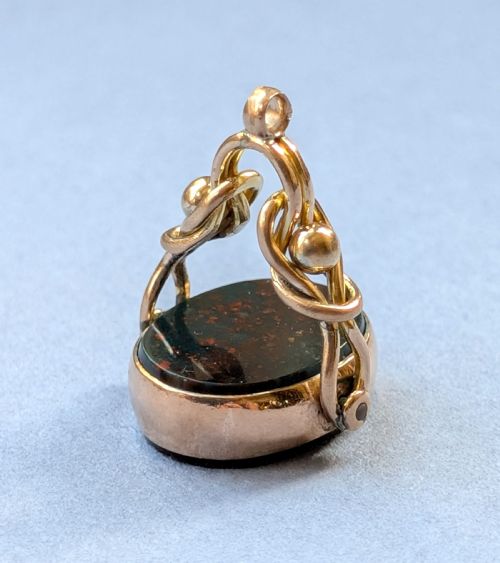
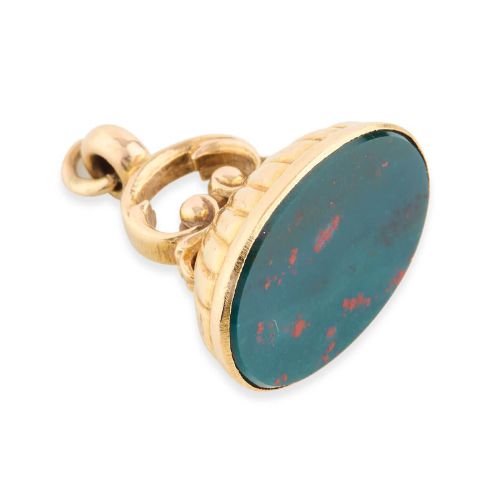
A Victorian bloodstone fob is a pendant or watch key designed to suspend from an Albert chain, uniting function with personal signet use. These pieces appear as stationary seals or spinning swivel mounts, housing bloodstone alongside agate, carnelian, or sardonyx.
The versions most commonly met on this page date from the Victorian and Edwardian eras, fashioned in various carats of gold, silver, and gold gilt. They take forms ranging from shield and horseshoe outlines to swivel seals engraved with initials or crests like Jane.
Collector interest centres on the dual-sided swivel designs and integrated watch keys, which connect directly to nineteenth-century timekeeping habits. The surviving examples demonstrate how everyday pocket accessories received considerable attention from period goldsmiths.
How they were made
Lapidaries cut and polished opaque dark green chalcedony with red jasper spots, known as bloodstone, alongside complementary hardstones like carnelian and agate. These stones were shaped into flat facets, shields, or convex seals to fit securely into metalbezels.
Goldsmiths worked in silver, gold gilt, and nine, fifteen, or eighteen carat gold, employing cast mounts, wirework, and split rings. Swivel mechanisms required precise pivots so the stone could turn smoothly between engraved shoulders and suspension loops.
Materials recorded across the inventory include bloodstone, agate, carnelian, sardonyx, silver, gold gilt, and 9ct, 15ct, and 18ct gold.
What varies in quality
Quality rests in the depth of the metalwork, the weight of the gold or silver mount, and the crispness of any engraved intaglio or cipher. Solid fifteen or eighteen carat gold settings and substantial silver keys stand apart from lighter hollow or gold cased alternatives.
The stone itself dictates the upper range, depending on the density of the red speckling across the dark green ground and the absence of natural fractures. Well executed swivel mechanisms that lock firmly into position show superior original construction.
The Victorian Bloodstone Fob Glossary
- Bloodstone
- An opaque dark green chalcedony quartz containing distinctive red iron oxide spots. It provides a durable hardstone surface traditionally used for intaglio seals.
- Swivel fob
- A pendant mounted on a central axis that allows the stone to rotate. This mechanism lets the wearer display either a blank stone, an engraved crest, or a second stone such as carnelian.
- Watch key
- A small winding key integrated into a fob pendant. These keys served to wind pocket watches before stem wind movements became standard.
- Intaglio
- A design carved into the surface of a gem so that an impression left in sealing wax appears in relief. They frequently carry initials, family crests, or personal names.
- Albert chain
- A heavy pocket watch chain named after Prince Albert, designed to stretch across a waistcoat. Fob pendants and watch keys hang directly from its centre bar.
Victorian Bloodstone Fob: Frequently Asked Questions
What is a bloodstone fob?
A bloodstone fob is a small decorative pendant originally hung from a pocket watch chain in the nineteenth century. Many feature a swivel mechanism or a functional watch key at the base.
The dark green stone with red spots served as a hardwearing surface for personal seals and intaglio carvings used to stamp wax on correspondence.
How do I wear a fob today?
These pieces suspend neatly from a short chain around the neck or attach to a waistcoat chain much like their original purpose. They also work well hung from charm bracelets alongside other period trinkets.
The compact size and durable stone make them practical for daily wear provided the suspension loop and jump rings are secure.
How do I tell Victorian from Edwardian pieces?
Victorian examples often display heavier gold weights, distinct Georgian influence in early pieces, and deep hand engraving on the mounts. Edwardian pieces tend to show lighter construction and refined proportions.
Assay marks and style shifts in the gold carats help date the mounts alongside any engraved presentation dates on the interior seals.