


Vintage Fob Seal Charm
These vintage fob seal charm pieces are miniature desktop signet seals adapted to wear on chains or charm bracelets, offering a tactile link to personal heritage.
Vintage Fob Seal Charm
When someone searches for a vintage fob seal charm, they are looking at small personal signet seals designed as pendants, charms, or watch keys, which originated as desk accessories before being adapted for jewellery. The pieces seen across the archive and current listings span the Georgian, Victorian, Edwardian, and mid-twentieth-century eras, reflecting shifts in dress and ornamentation.
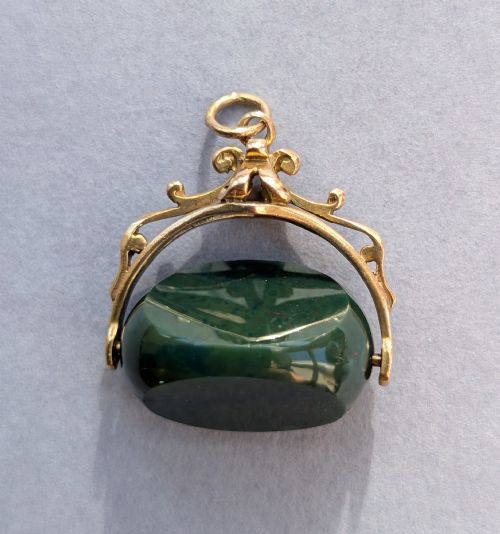
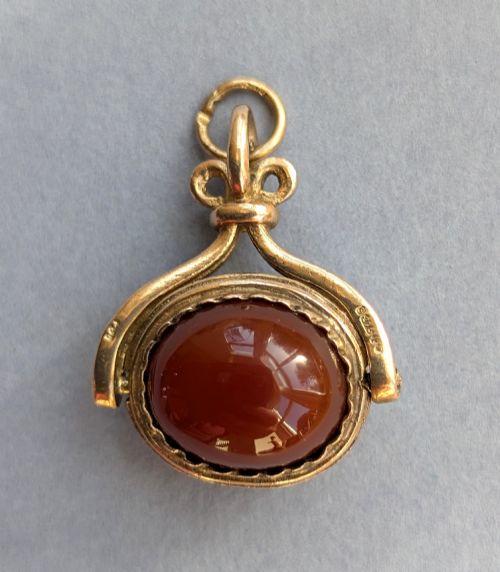
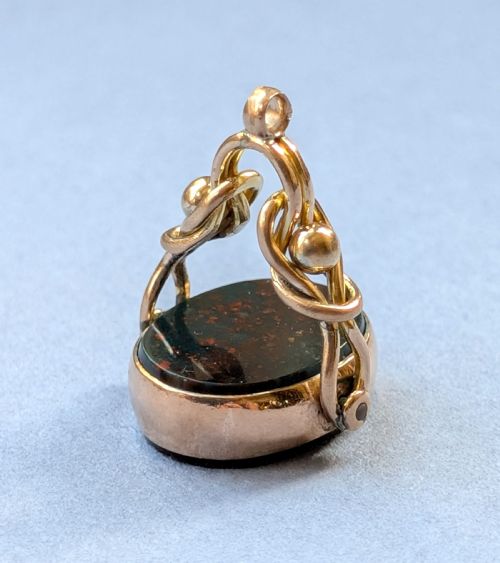
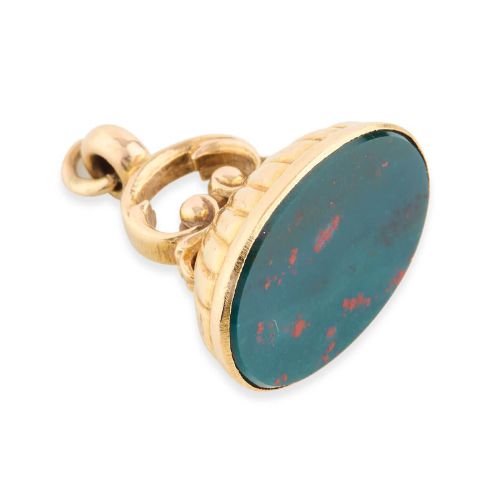
The most common versions met on this page are small swivel pendants and charm bracelet additions fashioned from yellow gold, rose gold, or gilt metal. These items typically feature hardstone bases carved with initials or blank faces for wax sealing, suspended from small loops ready for suspension.
Materials and Construction
The construction relies on precious metals such as nine-carat and eighteen-carat gold alongside gilt metal, shaped into intricate mounts that secure the mineral bases. Goldsmiths used casting, chasing, and swivel mechanisms to allow double-sided or rotating matrices within the pendant frames.
The striking faces utilise natural hardstones including bloodstone, carnelian, sardonyx, and agate, which were shaped and polished to take a clean impression in sealing wax. Enamel accents occasionally appear on the metal mounts, adding decorative contrast to the precious frames.
Listings feature items spanning the Georgian, Victorian, and Edwardian eras, alongside mid-century pieces.
Distinctions in Quality
Quality rests upon the crispness of the metalwork, whether cast with ornate detailing like lions or formed with clean geometric lines, and the weight of the gold used in the mount. Substantial nine-carat or eighteen-carat gold settings demonstrate a sturdiness lacking in thinner gilt metal alternatives.
The grade of the hardstone also separates examples, with deeply saturated carnelian, multi-coloured agate, and well-polished bloodstone representing superior choices over simpler glass or lower-grade stones. Additionally, a smoothly operating swivel mechanism indicates careful initial manufacturing.
The Vintage Fob Seal Charm Glossary
- Fob seal
- A small signet stamp originally attached to a pocket watch ribbon or chain. These items were pressed into hot sealing wax to authenticate letters and documents.
- Swivel
- A central pivot allowing the seal head to rotate between two different faces or a blank and a carved stone. This mechanical feature lets the wearer display two distinct options.
- Carnelian
- A brownish-red variety of chalcedony quartz commonly used as the matrix for intaglio carving on seals. Its warm colour made it a favourite choice for Georgian and Victorian jewellery.
- Bloodstone
- A dark green jasper flecked with red spots of iron oxide, utilised frequently in Victorian and Edwardian seals. It provides a striking, robust surface for personal ciphers.
- Intaglio
- A design incised or carved into the flat face of a stone so that when pressed into wax it creates a raised relief impression. This technique requires steady handwork by a skilled lapidary.
Vintage Fob Seal Charm: Frequently Asked Questions
What is a fob seal charm?
A fob seal charm is a miniature version of a desk signet seal, adapted with a loop to be worn on a necklace or charm bracelet.
Originally used to press initials into hot wax for sealing correspondence, these pieces now function primarily as decorative pendants.
How do I wear a fob seal?
These pieces suspend easily from medium-weight chains or cluster upon charm bracelets alongside other small trinkets.
Because many feature swivel mounts, the pendant moves naturally when worn, showcasing both sides of the hardstone.
How can I tell the period?
Georgian and early Victorian examples often display heavier hand-carved gold mounts with deep carnelian stones, while Edwardian pieces lean towards refined rose gold settings.
Assay marks and the specific style of the metal ornamentation provide further clues to the exact decade of manufacture.
What stones are used?
The most frequent hardstones found in these seals include carnelian, bloodstone, sardonyx, and banded agate.
Lapidaries selected these minerals for their hardness, which prevented the carved matrix from wearing down during repeated use in wax.