
Victorian Black Table
When you search for a victorian black table, you are looking for dark-toned nineteenth-century surfaces that bring genuine visual weight and historic character to a room.
Victorian Black Table
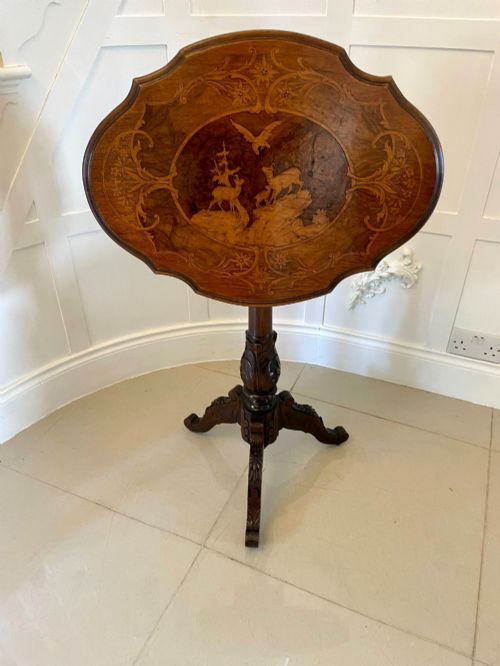
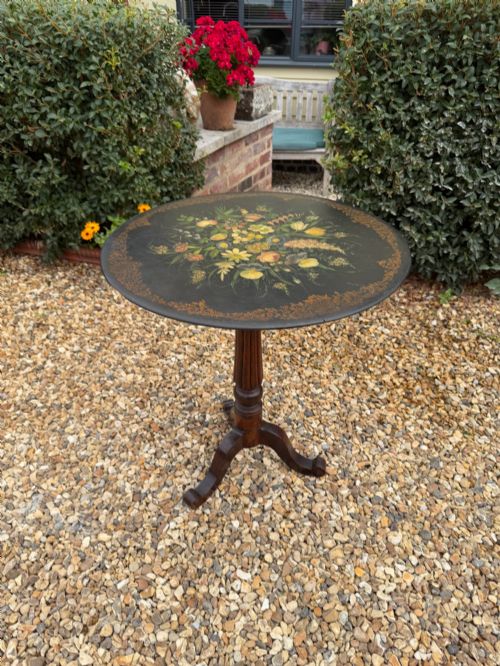
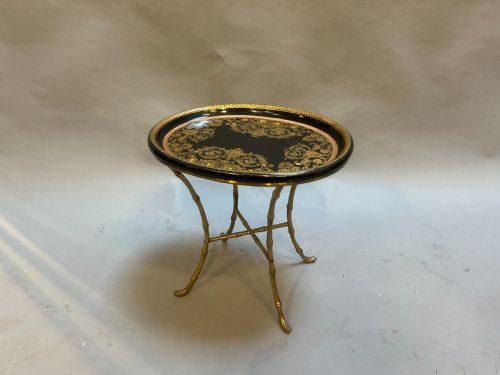
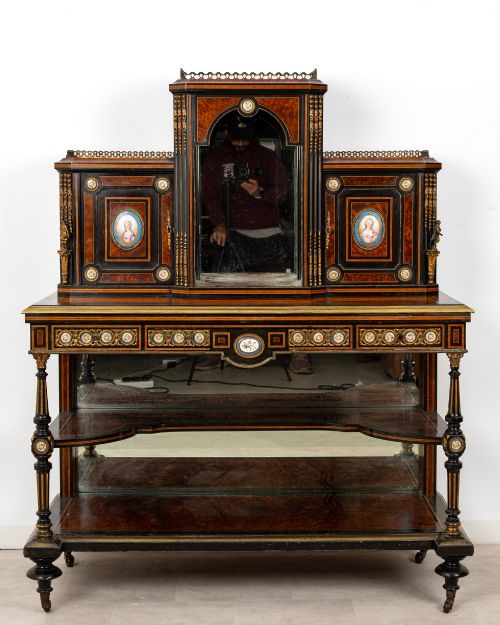
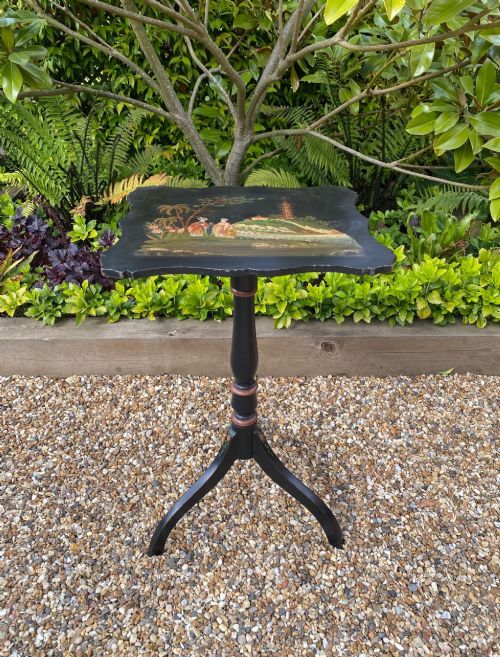
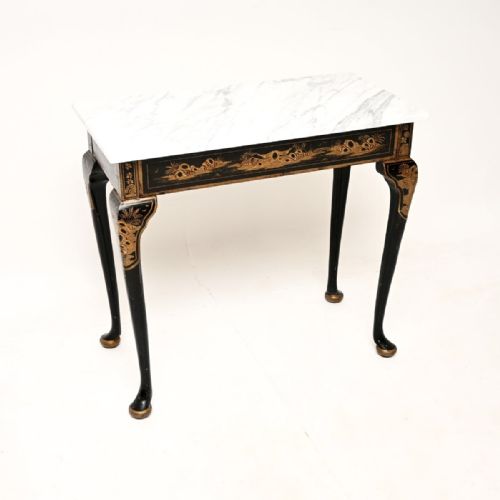
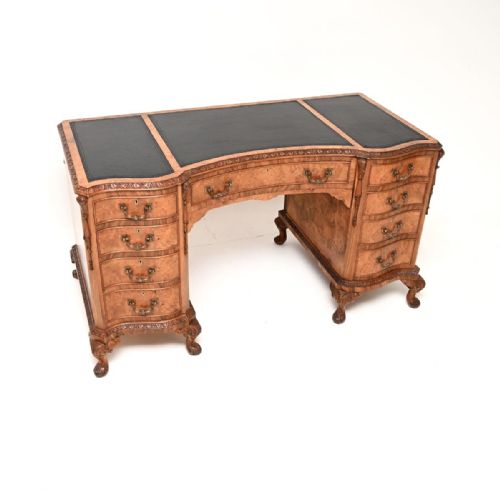
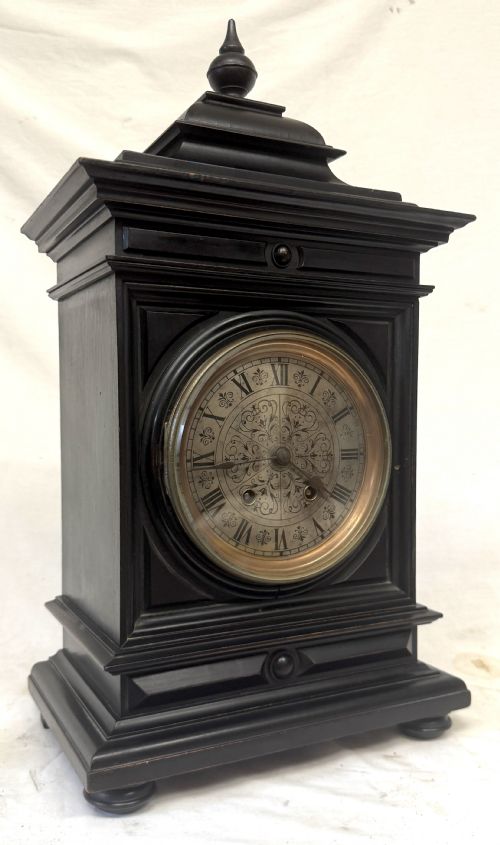
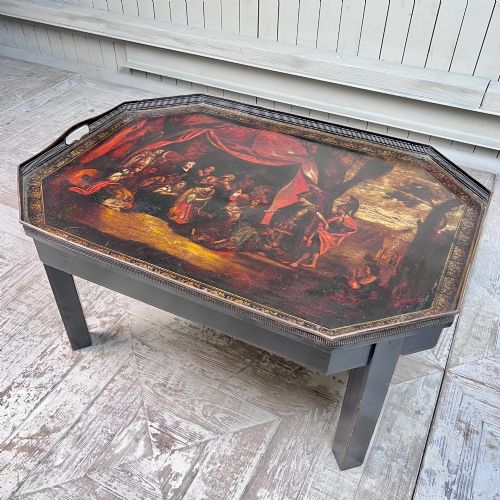
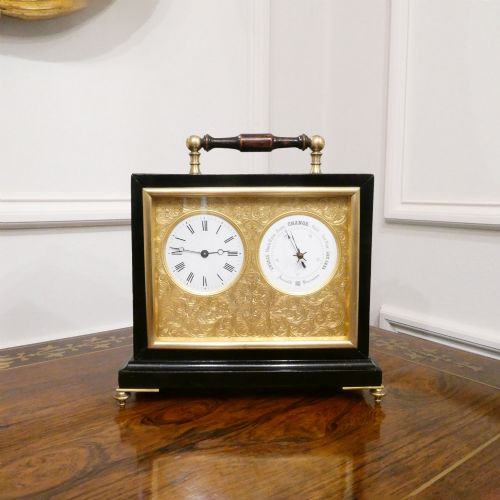
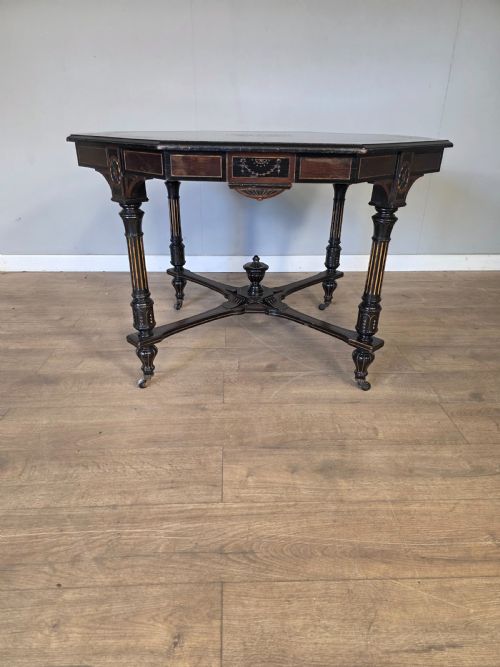
A victorian black table encompasses a variety of dark-finished surfaces produced during the nineteenth century, ranging from formal parlour furnishings to decorative occasional pieces. You will most frequently encounter ebonised wood and black lacquer designs, often enhanced with gilt, marquetry, or painted Chinoiserie motifs.
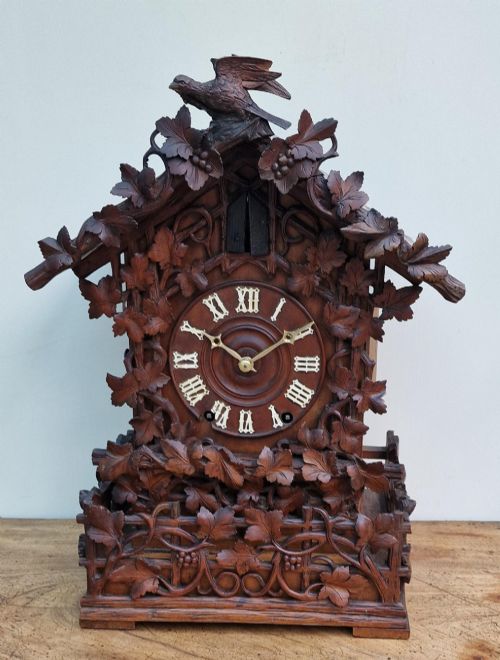
The form spans a wide functional range, including side tables, centre tables, tray tables, and folding tripod designs intended for drawing rooms and libraries. Many pieces reflect specific aesthetic movements of the period, such as the Japanese-inspired tastes of the late nineteenth century or Swiss Black Forest carving traditions.
How they were made
Cabinetmakers achieved the characteristic dark finish primarily through ebonising - staining open-pored timbers like walnut, fruitwood, or mahogany to imitate costly ebony - or by applying multiple layers of black lacquer and varnish. These surfaces were frequently decorated with hand-painted gilt ornamentation, mother-of-pearl inlay, or intricate chip-carving.
Structural integrity relied on traditional joinery methods suited to the specific form, from mortise and tenon frames for occasional tables to turned pedestals and tripod legs. Materials like papier-mâché and bamboo also appear in the archive, moulded or assembled to create lightweight yet durable surfaces.
German cow horn tables from the late nineteenth century prove that Victorians would happily turn livestock into tea-time conversation pieces.
What varies in quality
The distinction between standard commercial production and finer work rests on the execution of the surface finish and the precision of the decorative details. Superior examples display carefully smoothed ebonising, crisp hand-painted Chinoiserie or marquetry inlay, and stable, well-balanced frames that show minimal warping.
Origin and maker attribution significantly influence distinction, with pieces bearing documented workshop signatures or exhibiting deep relief carving commanding greater interest among collectors. The integrity of the original lacquer or varnish layer, preserved over generations without excessive restoration, remains a primary indicator of enduring value.
Maple and Co·Johnstone and Jeanes·Hindley and Sons
The Victorian Black Table Glossary
- Ebonised
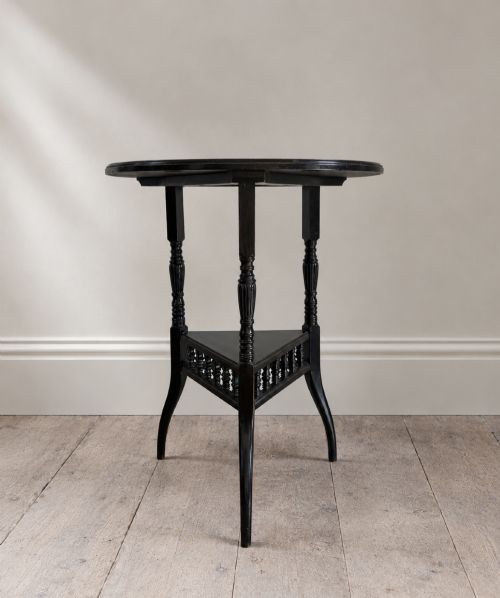
- Wood treated with stain or dye to simulate the dark, dense appearance of genuine ebony. This finish became widespread during the nineteenth century for furniture reflecting Aesthetic and neoclassical tastes.
- Étagère
- A piece of furniture consisting of open shelves for displaying small objects or ornaments. These multi-tiered stands often utilised ebonised frames during the Victorian era.
- Marquetry
- Decorative veneer work applied to furniture surfaces in intricate patterns using various woods, metals, or shell. Skilled artisans cut these elements to fit tightly together before gluing them to the carcass.
- Tripod Table
- A small table supported by a central pillar and three legs. Many nineteenth-century versions feature tilt-top mechanisms allowing the surface to be stored vertically against a wall when not in use.
Victorian Black Table: Frequently Asked Questions
What is an ebonised table?
An ebonised table is a wooden piece stained or painted black to resemble expensive ebony timber. This technique was popular in nineteenth-century cabinetmaking to achieve a dramatic, formal appearance.
Craftsmen often used walnut, fruitwood, or beech as a base before applying the dark finish, frequently pairing it with gilt highlights or inlaid details.
How do I care for a lacquer table?
Lacquer and ebonised surfaces require gentle handling to preserve the historic finish. Dust them regularly with a soft, dry cloth and keep them away from direct sunlight and heat sources.
Avoid using modern chemical sprays, silicone polishes, or abrasive cloths, which can dull or damage the delicate varnish layers accumulated over the decades.
Where were occasional tables used in a Victorian home?
Victorian occasional tables served flexible purposes in drawing rooms, parlours, and libraries as convenient surfaces for holding books, sewing baskets, or tea services. Their portable nature allowed them to be moved easily around the room as social activities changed.
Smaller tripod and tray designs could also be tucked into corners or placed beside seating when not in active use.