




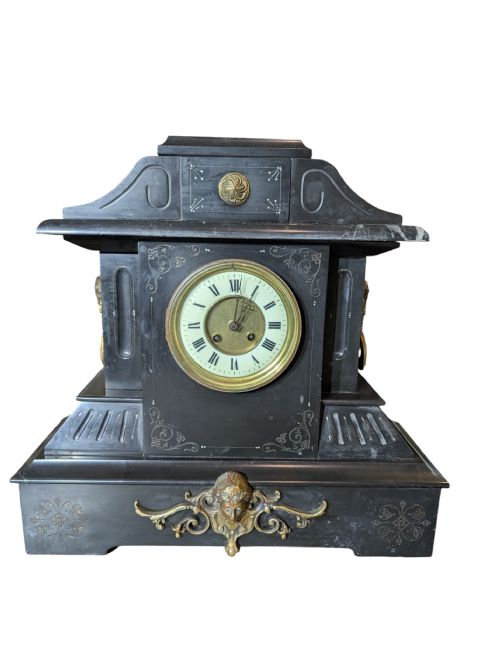
Victorian Black Clock
A victorian black clock brings architectural presence to a room, combining heavy stone or dark wood with precise mechanical movement.
Victorian Black Clock
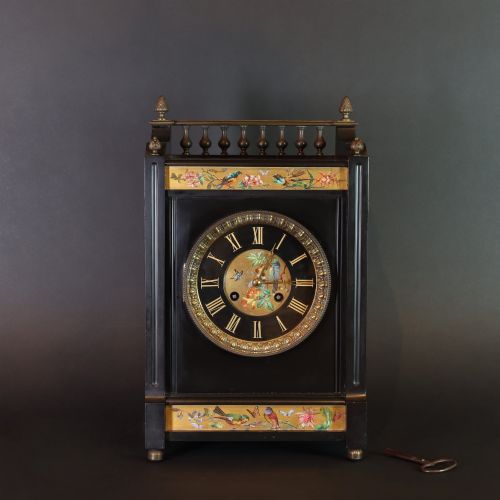
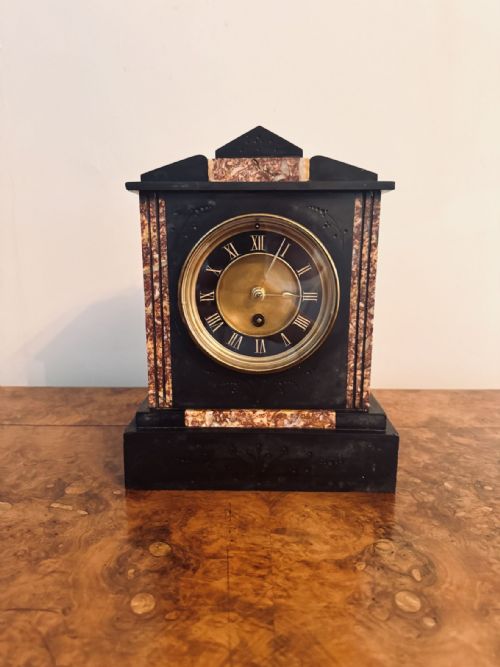
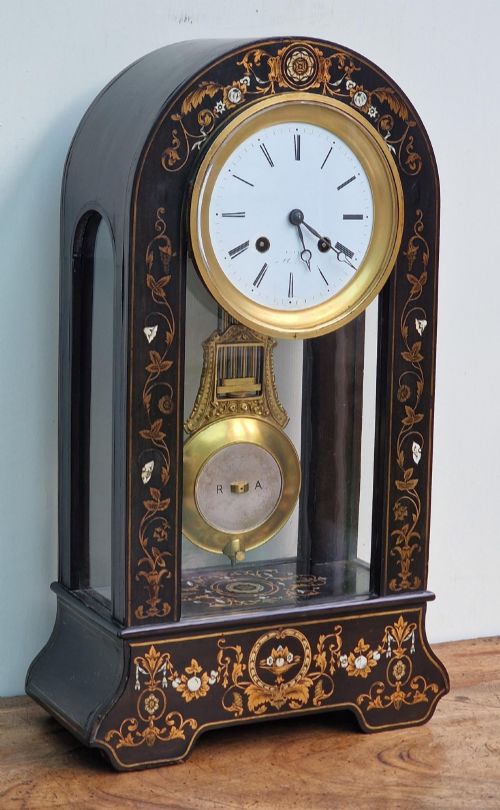
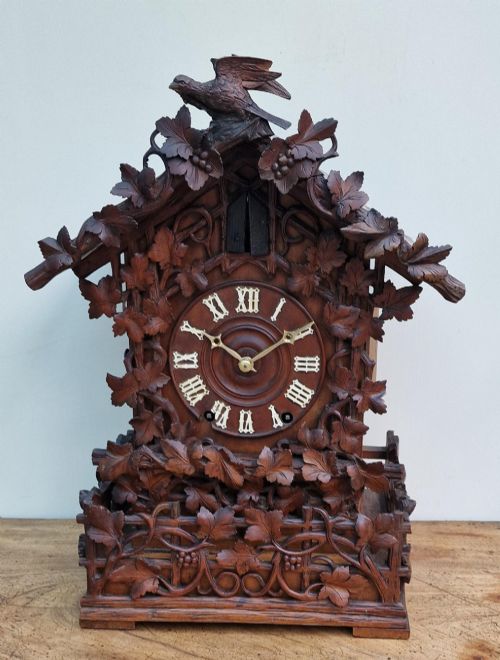
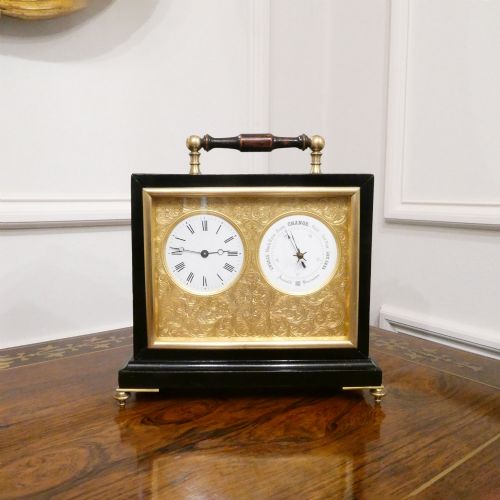
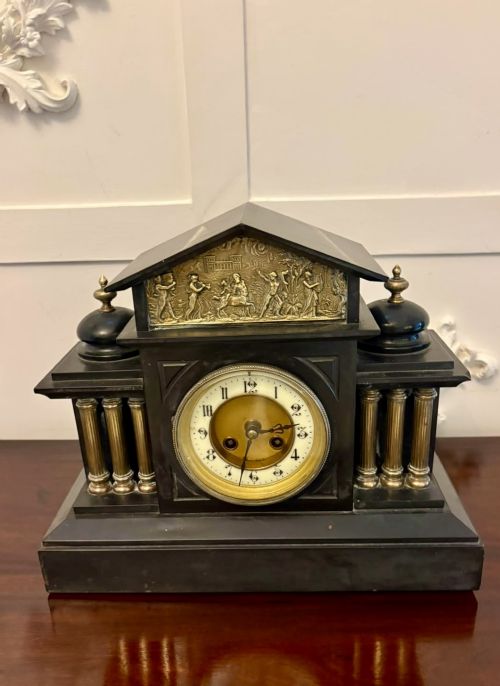
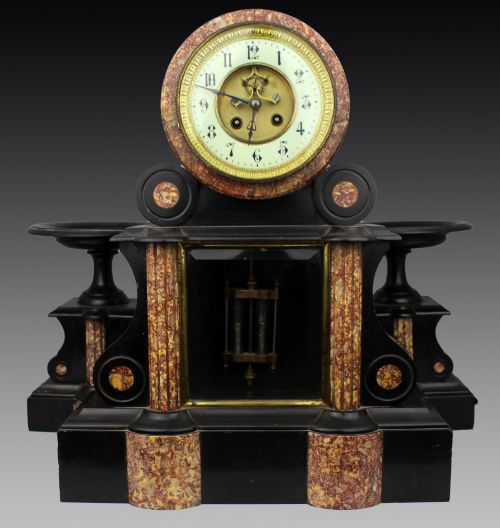
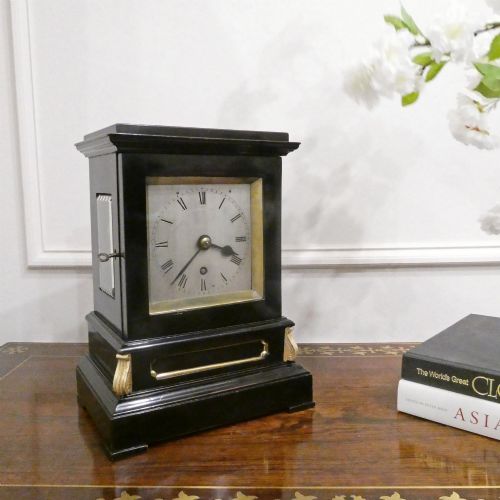
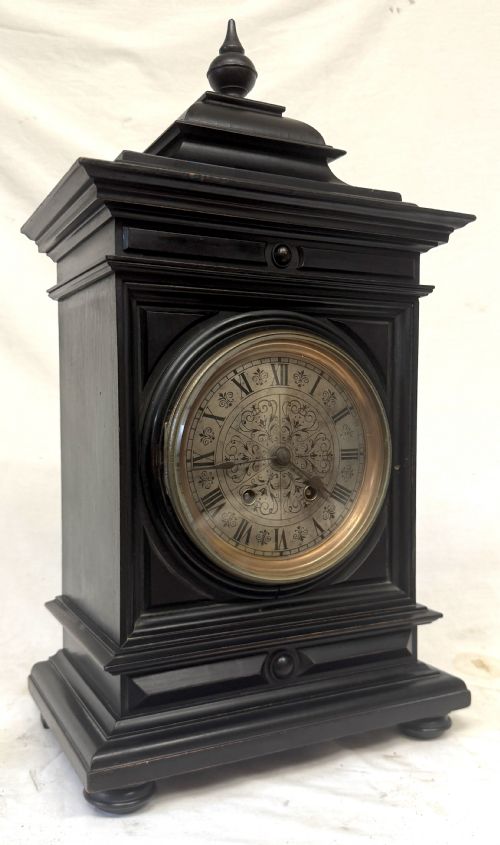
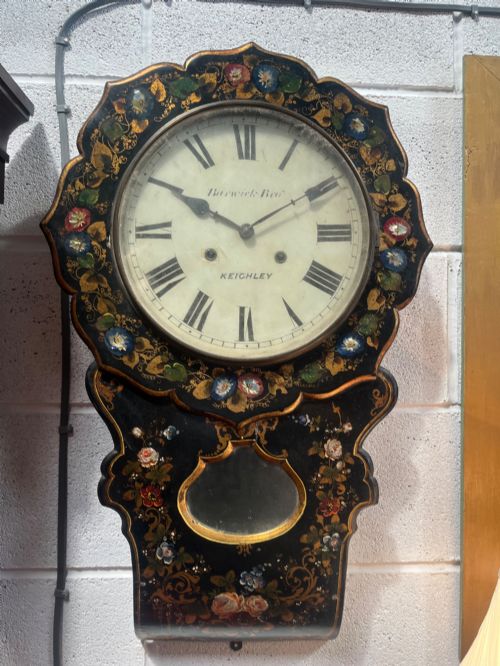
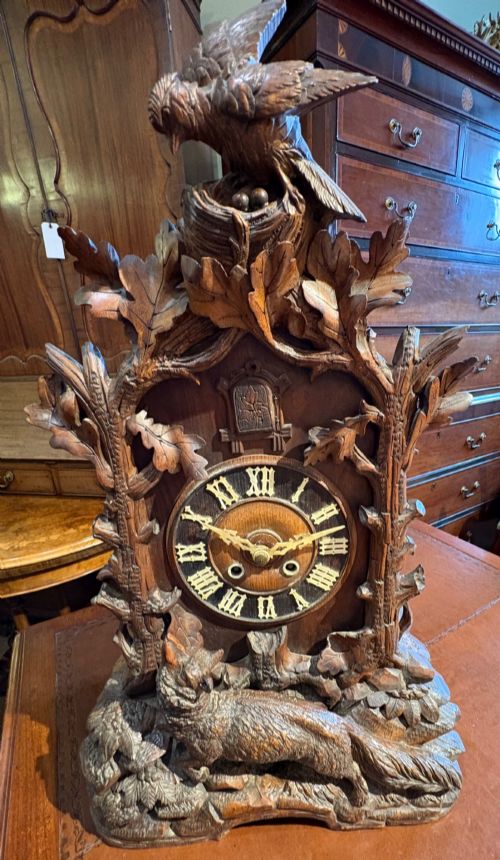
The most common versions met on this page are constructed from black slate, sometimes inlaid with contrasting marble, or formed from ebonised wood. Alongside these heavy desk and mantel designs, buyers frequently encounter wall clocks and carved wooden Black Forest items from the same era.
Originating across Britain, France, Germany, and Switzerland, these timepieces range from simple library clocks with fusee movements to grand French mantel pieces accompanied by matching side garnitures. Their utility spans utilitarian timekeeping in public spaces to decorative display in Victorian parlours.
How They Were Made
Makers utilised dense natural materials such as black slate and marble, shaping heavy blocks into architectural pediments, columns, and drumhead cases. Ebonised and carved woods, including walnut and linden, provided alternative dark foundations for bracket clocks and Black Forest cuckoo designs.
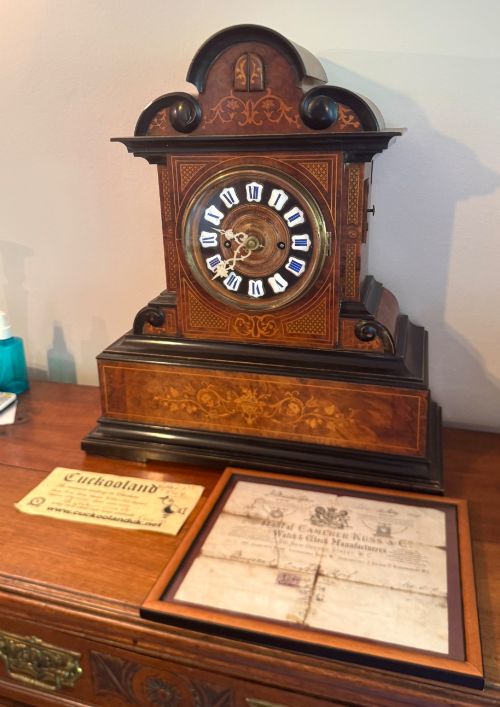
Brass, gilt bronze, and ormolu mounts were applied to stone and wood cases to create contrast, while enamelled dials and silvered chapter rings displayed the time behind protective glass bezels. Movements were engineered from brass and steel, utilising eight-day or single fusee mechanisms driven by springs or weights.
Victorian Black Clock Retail Price Guide 2026
Typical asking prices for victorian black clock among the pieces listed under this phrase on Sellingantiques today, from the lower quarter to the upper quarter. They describe what is for sale here now, not the wider market.
Listings feature periods from the 1850s through the Edwardian era, constructed in materials including black slate, marble, brass, and ebonised wood.
What Varies in Quality
The division between standard production and top-tier work rests on the complexity of the movement and the integration of the case architecture. Superior examples house signed French or English movements featuring visible escapements, calendar complications, or chiming functions, rather than basic time-only mechanisms.
Material selection and decorative execution separate regional workshops from master makers. Finely polished black marble inlaid with contrasting stone, crisply cast ormolu mounts, and deeply carved walnut cases indicate higher workshop investment than plain painted or veneered substitutes.
Japy Frères·Philippes Paris·Thomas A Paris·Baby and Jannings·D. Munsey of Cambridge·Phillips Brothers·Bergen & Co
The Victorian Black Clock Glossary
- Fusee
- A conical pulley used in clock movements to equalise the declining power of the mainspring as it unwinds. This mechanism helps the clock maintain consistent timekeeping throughout its running period.
- Garniture
- A set of decorative matching pieces consisting of a central clock flanked by matching ornaments such as urns or vases. These sets were designed to sit symmetrically on a mantelpiece.
- Ebonised
- Wood treated with a dark stain or finish to imitate true ebony. It was widely utilised on Victorian clock cases to achieve a dense, uniform black appearance.
- Escapement
- The mechanical linkage that controls the release of power from the gear train, giving the clock its characteristic ticking sound. Visible escapements display this movement directly on the dial.
- Chapter ring
- The circular band on a clock face that bears the numerals indicating the hours. On antique pieces, these are often silvered, painted, or cast in brass.
Victorian Black Clock: Frequently Asked Questions
How do I wind a Victorian clock?
Most mechanical clocks utilise a key inserted into winding holes on the dial to tension the internal springs or lift the hanging weights. Care must be taken not to overwind the mechanism.
Different movements require different intervals, ranging from daily winding for wall clocks to eight-day cycles for larger architectural mantel pieces.
What is a garniture set?
A garniture set pairs a central clock with matching decorative sidepieces, usually designed to sit together across a mantelpiece. These matched groupings became popular in wealthy Victorian interiors.
The side ornaments frequently mirror the architectural materials and motifs of the main clock case, such as black marble or gilt bronze.
How do I identify a French movement?
French movements from the nineteenth century often bear stamped maker marks, serial numbers, or foundry stamps directly onto the brass backplate. These marks frequently include the names of prominent Parisian workshops.
Many of these movements were imported into Britain and fitted into local slate or wooden cases by regional retailers.
Where should I place a heavy slate clock?
Heavy slate and marble clocks require a sturdy, level surface capable of supporting considerable weight without sagging. Mantelpieces and heavy sideboards provide the traditional and secure foundation these pieces need.
Keeping the clock level is essential for the pendulum to swing evenly and maintain accurate timekeeping.