
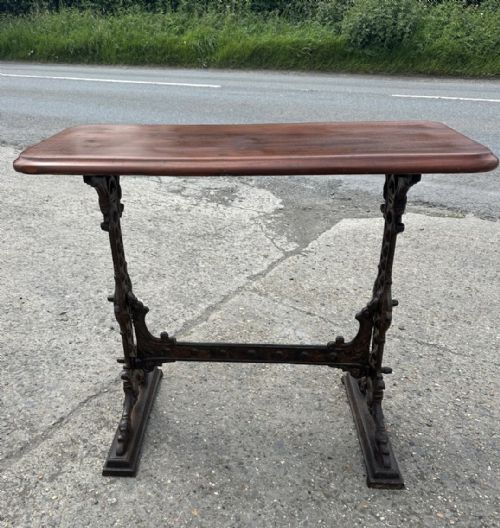
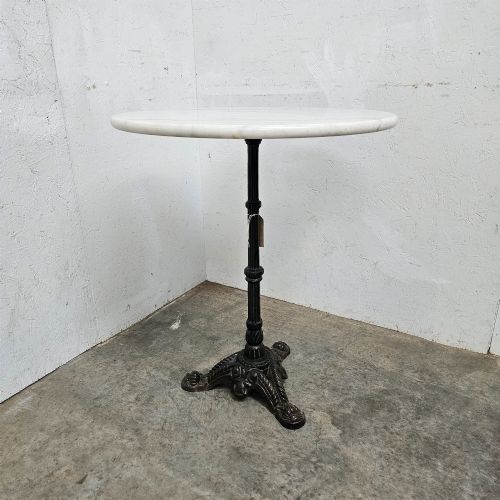


Victorian Bistro Table
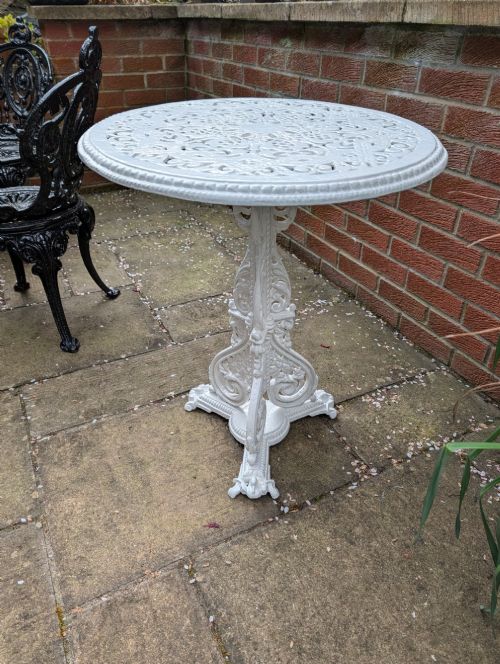
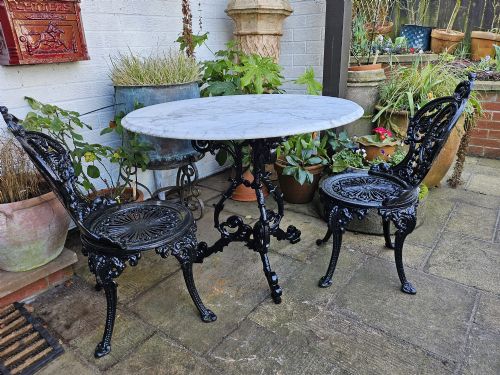
A victorian bistro table brings sturdy metalwork and compact surfaces together, offering a practical centrepiece for a conservatory, garden or small dining space.
Victorian Bistro Table
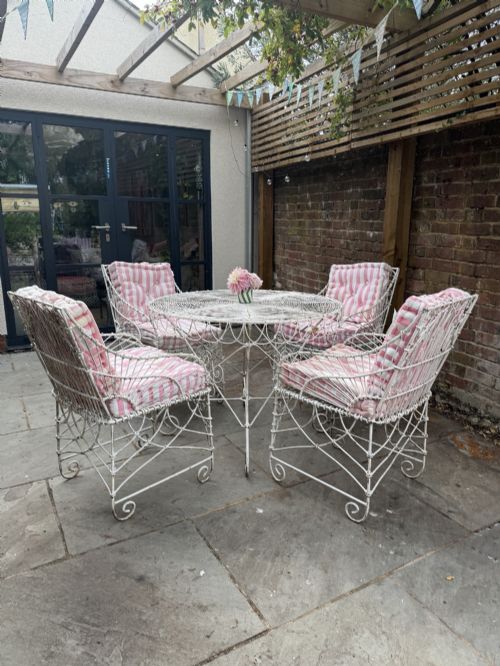
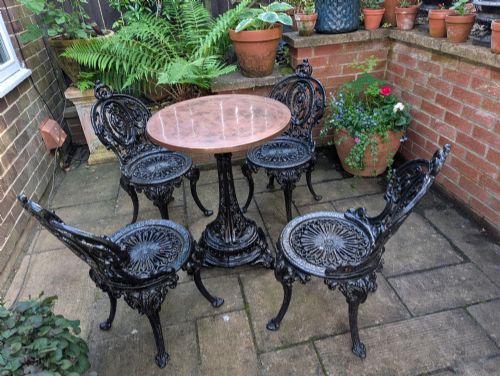
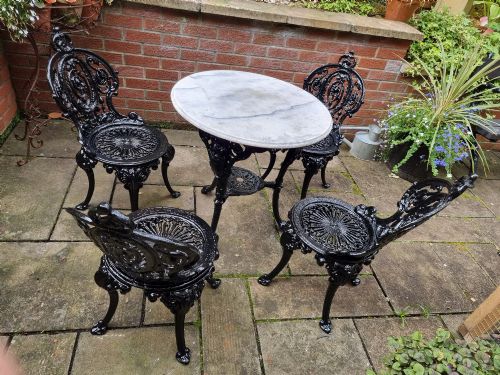
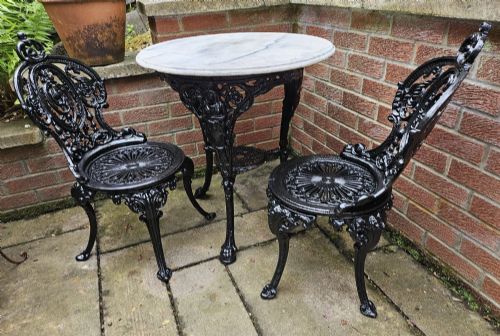
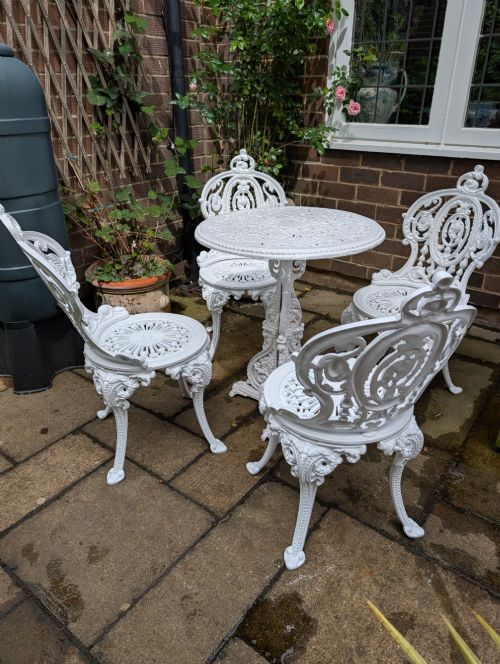
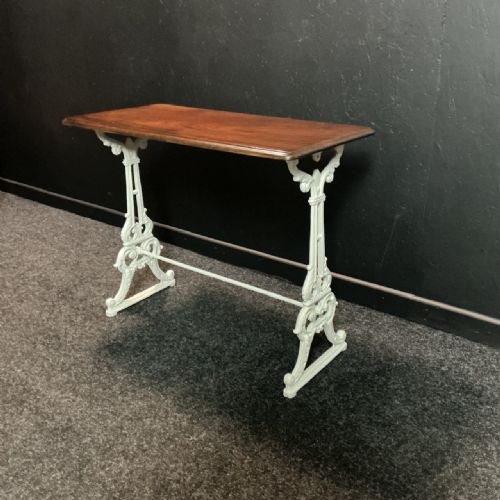
The forms span garden tables, pub tables, console tables, and occasional tables, often found accompanied by matching chairs as part of a set. Origins range from English taverns to French cafes and domestic conservatories.
Makers and designers working within this period produced everything from utilitarian pub furnishings to distinctive decorative scrollwork and named designs. The selection reflects both domestic utility and outdoor social spaces.
What varies in quality
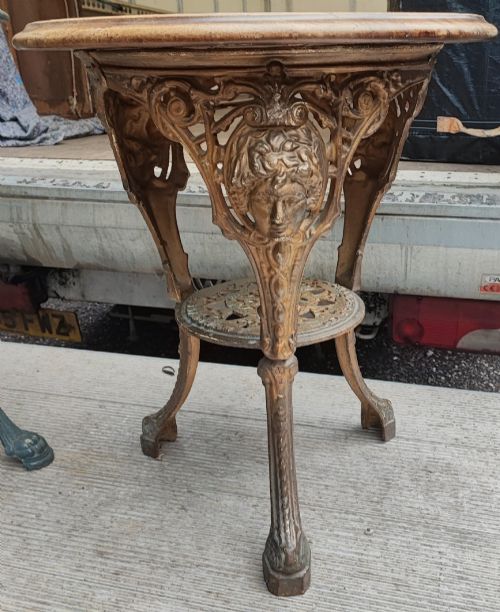
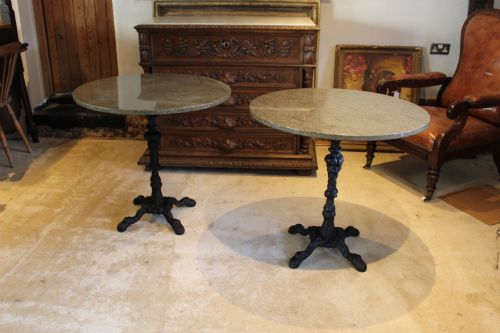
Quality rests in the crispness of the casting and the structural integrity of the metal base, where finer pieces display sharp relief in scrollwork and balanced proportions. Heavy cast iron provides enduring stability compared to lighter or later reinterpretations.
The choice and preservation of the top surface dictate distinction, with original marble, polished granite, or aged timber tops elevating a piece beyond standard utilitarian examples. Original surfaces and retained paint or patination distinguish superior specimens.
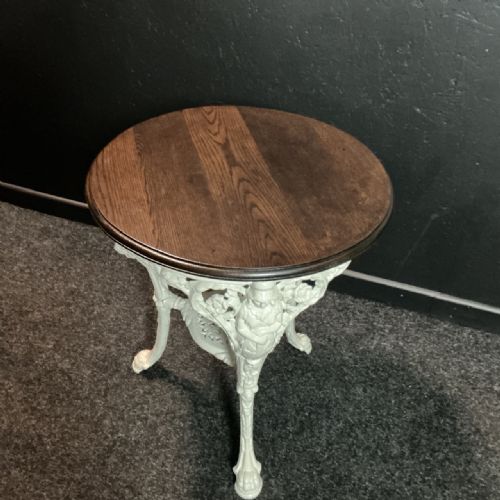
Pub tables bearing the Britannia design feature a stout iron figure embedded in the pedestal, holding up your pint with unwavering Victorian dedication.
Christopher Dresser
The Victorian Bistro Table Glossary
- Britannia metal
- An alloy typically used in decorative hardware, though in these listings Britannia also denotes a specific heavy cast iron pub table base design featuring a seated figure.
- Scrollwork
- Curved ornamental metal patterns cast into the iron frame. This technique adds decorative movement to structural table supports.
- Strapp work
- An ornamental strap-like iron pattern utilised on table frames. It creates an openwork geometric effect across the metal components.
- Pub table
- A commercial tavern table built with a heavy iron base to prevent tipping. These pieces frequently feature timber or marble tops designed for hospitality use.
Victorian Bistro Table: Frequently Asked Questions
Where were these tables used originally?
These tables served primarily in nineteenth-century public houses, French cafes, and domestic gardens or conservatories. Their compact footprints made them adaptable for tight spaces.
Commercial examples handled heavy daily patronage, while garden and conservatory pieces provided durable outdoor and sheltered seating.
Are the table tops original to the bases?
Many examples retain their original marble, granite, or timber tops such as mahogany and pine. Surface materials were selected for durability in tavern or garden settings.
Matching heavy iron bases with appropriate stone or wood surfaces remained a standard practice across the nineteenth and early twentieth centuries.
How do I care for a cast iron base?
Cast iron requires minimal maintenance beyond keeping the metal dry and protected from prolonged dampness. Regular dusting preserves the surface finish.
Painted or patinated iron benefits from gentle cleaning without harsh abrasives to maintain the historical surface integrity.
What styles are available?
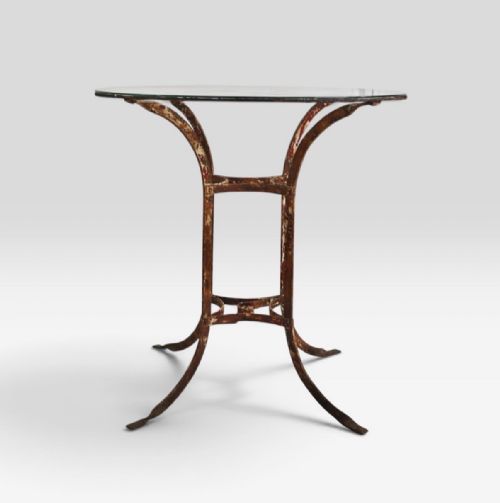
Styles range from Victorian scrollwork and strapp work to French bistro designs and industrial pub tables. Pieces span English tavern furniture and continental cafe aesthetics.
Design influences include aesthetic movement patterns alongside utilitarian pub and garden forms.