






Victorian Bird Dome
These Victorian bird dome examples bring preserved exotic birds under glass into your interior, offering a glimpse into nineteenth-century natural history collections.
Victorian Bird Dome
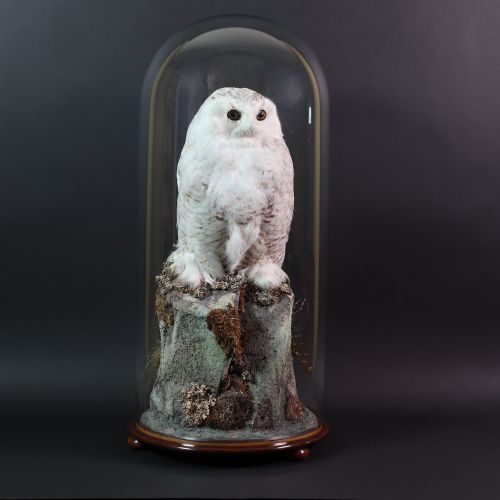
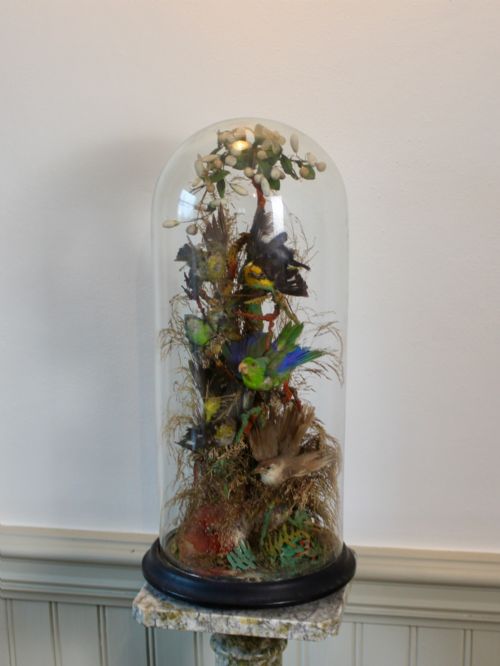
A victorian bird dome combines taxidermy bird specimens with glass enclosures, showcasing colourful exotic species arranged within naturalistic settings. You are most likely to encounter Victorian and late nineteenth-century iterations on this page, spanning flat-sided domes and round glass covers.
The objects take several forms, ranging from single specimens like a canary or bower bird to substantial compositions containing multiple South American or Indian birds. Makers housed these arrangements over ebonised wood bases, sometimes incorporating painted elements and grasses to mimic natural habitats.
Materials and construction
Makers utilised blown glass domes mounted onto ebonised wood or timber bases to protect delicate feathers from dust and damage. Internal arrangements relied on wire frames, paint, and natural grasses to support and position the taxidermy specimens securely.
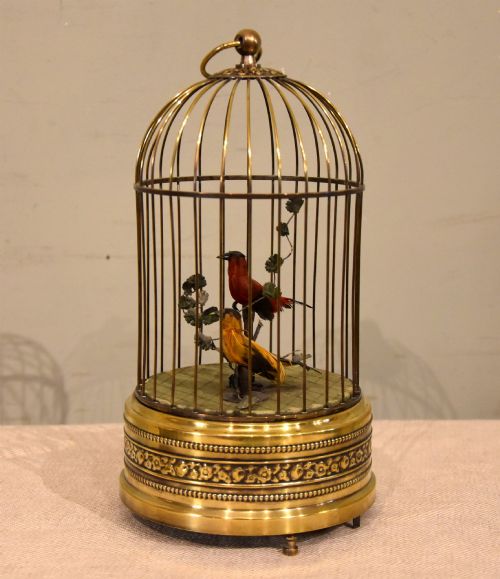
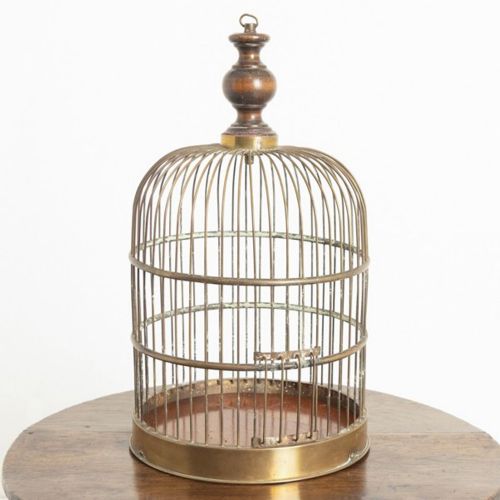
Metal components such as brass and wrought iron appear in related cages and structural mounts, whilst the preserved bird skins themselves required specialist taxidermy skills to retain their lifelike plumage.
Victorian Bird Dome Retail Price Guide 2026
Typical asking prices for victorian bird dome among the pieces listed under this phrase on Sellingantiques today, from the lower quarter to the upper quarter. They describe what is for sale here now, not the wider market.
Materials recorded across these objects include preserved feathers, blown glass, paint, wire, and ebonised wood bases.
Factors determining quality
The clarity and integrity of the original glass dome, alongside the stability of the ebonised wood base and the naturalism of the internal grasses, separate standard decorative pieces from exceptional historical examples.
Henry Ward London·A Pollard·James Gardner
The Victorian Bird Dome Glossary
- Taxidermy
- The art of preparing, stuffing, and mounting the skins of animals for display. In these pieces, it involves preserving birds to appear lifelike under glass.
- Ebonised wood
- Timber treated to resemble ebony, typically finished in a deep black. This material frequently forms the circular or oval bases supporting the glass domes.
- Flat sided dome
- A glass cover with flattened sides rather than a traditional round profile. This specific shape alters the visual distortion of the birds inside.
- Naturalistic
- A style of arrangement that mimics the natural habitat of the subject. These settings use grasses and painted details to recreate an outdoor scene.
Victorian Bird Dome: Frequently Asked Questions
How do I clean a glass dome?
Lift the glass cover very carefully using two hands, ensuring you do not knock the internal taxidermy specimens or delicate wire elements.
Use a soft microfibre cloth and a mild glass cleaner on the outside only, keeping moisture away from the historic base and feathers.
Where should I display my dome?
Place the piece on a sturdy piece of furniture away from direct sunlight, which can fade the colourful plumage of tropical birds over time.
Avoid areas subject to dampness or significant temperature fluctuations to protect the antique wood base and internal organic materials.
How do I date these pieces?
Examine the materials used for the base, such as ebonised wood, and look for construction traits typical of the nineteenth century.
Attribution marks or labels from known taxidermy firms affixed to the underside of the base also help establish a more precise timeframe.
Were these made for science?
Most surviving examples served a decorative purpose in Victorian drawing rooms and studies to display an interest in natural history.
While inspired by scientific exploration and exotic travel, the arrangements prioritized aesthetic composition over strict ornithological classification.