



Victorian Bird Diorama
A victorian bird diorama brings nineteenth-century natural history indoors, preserving exotic and native plumage beneath glass.
Victorian Bird Diorama
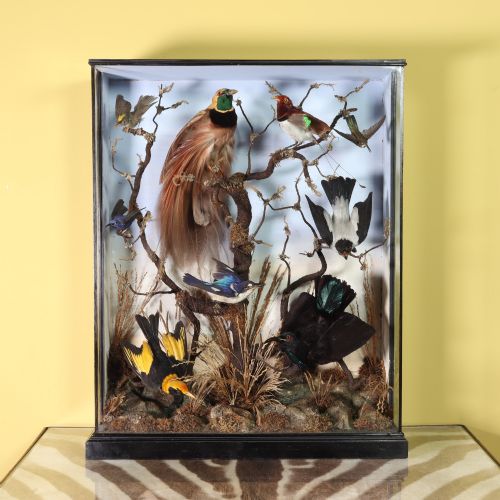
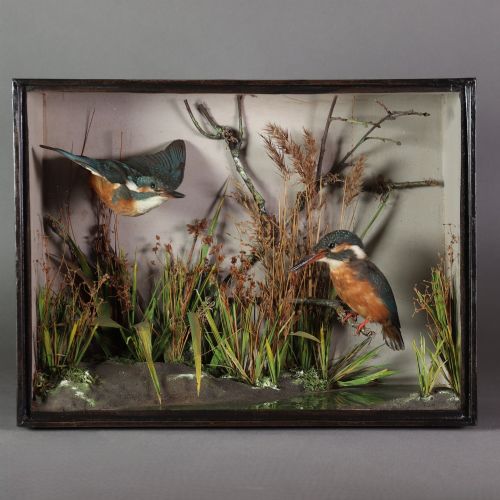
A victorian bird diorama gathers preserved specimens inside glazed timber cases, arranging them to mimic natural habitats. These pieces emerge from the nineteenth century, spanning the victorian and edwardian periods.
The form ranges from single pairs of kingfishers and waxwings in winter snow scenes to complex groupings of tropical birds originating from New Guinea, South America, and Australia. Common British birds such as Eurasian jays, pheasants, and bantams also appear frequently.
Makers constructed these displays to look like living fragments of woodland or jungle. They serve as curiosities for a study, library, or drawing room cabinet.
How they were made
Taxidermists prepared preserved specimens and natural specimens over wire and plaster armatures. They set the birds within timber cases enclosed by glass panels to protect the delicate plumage from dust.
Makers built miniature landscapes using real moss, painted paper, and artificial snow. These materials created convincing backdrops for species such as bee-eaters, herons, and shovelers.
Materials preserved in these displays include wood, timber, glass, paper, moss, and natural specimens.
What varies in quality
The skill of the taxidermist determines the natural posture and anatomical accuracy of the preserved birds. Practitioners like T. E. Gunn or J Griffiths achieved lifelike expressions that lesser makers missed.
The complexity of the setting distinguishes standard domestic pieces from significant natural history examples. Cases containing mixed exotic species with detailed painted backgrounds command greater attention than simple single-bird mounts.
J Griffiths of Burford·T. E. Gunn
The Victorian Bird Diorama Glossary
- Taxidermy
- The art of preparing, stuffing, and mounting the skins of animals for display. Practitioners arranged birds in lifelike poses within protective enclosures.
- Diorama
- A three-dimensional scene featuring wildlife specimens set against a painted or constructed background. These displays recreate natural habitats inside glazed timber cases.
- Curiosity cabinet
- A piece of furniture or collection space dedicated to natural history specimens and unusual artefacts. Victorians utilised these displays to showcase exotic finds from global travels.
- Specimen
- An individual animal preserved for scientific study or decorative exhibition. These natural specimens formed the focal points of nineteenth-century domestic displays.
- Dome
- A rounded glass cover placed over a base to protect fragile taxidermy mounts. This circular housing method kept dust away from tropical birds.
Victorian Bird Diorama: Frequently Asked Questions
How do I clean the glass on a bird diorama?
Use a soft cloth and mild glass cleaner applied directly to the cloth rather than the wood or case joints. Take care not to let moisture seep inside the enclosure.
Keep abrasive materials away from antique glass to prevent scratching the fragile surface.
Where should I place a taxidermy case at home?
Position cases away from direct sunlight and damp areas to protect the feathers and painted paper backgrounds. Stable indoor temperatures prevent the timber frames from warping.
Place them on sturdy tables or within cabinets where accidental knocks cannot damage the glass.
What birds appear most often in these cases?
British species such as jays, pheasants, kingfishers, and moorhens feature regularly in nineteenth-century displays. Local taxidermists also mounted farmyard birds like bantams and pigeons.
Exotic imports from Australia and South America turn up in more ambitious cabinets.
How do I identify a victorian display?
Look for construction details such as hand-blown or early drawn sheet glass, pegged timber joints, and traditional paper backing inside the case. Materials like moss and painted scenery point directly to nineteenth-century workshop methods.
Makers' labels pasted inside the wooden frame often confirm the exact period and origin.