

Victorian Bedroom Nursing Chair
A victorian bedroom nursing chair offers a low seat and supportive back, designed originally for maternal comfort.
Victorian Bedroom Nursing Chair
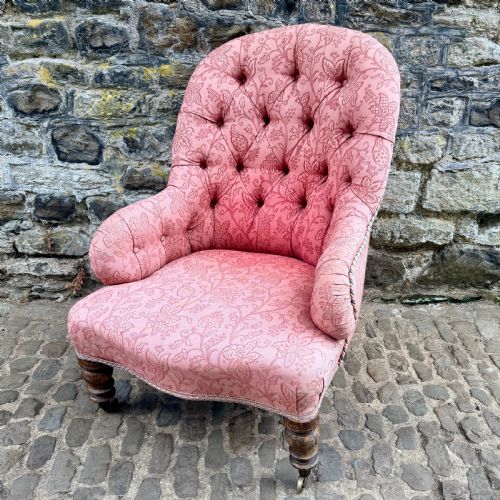
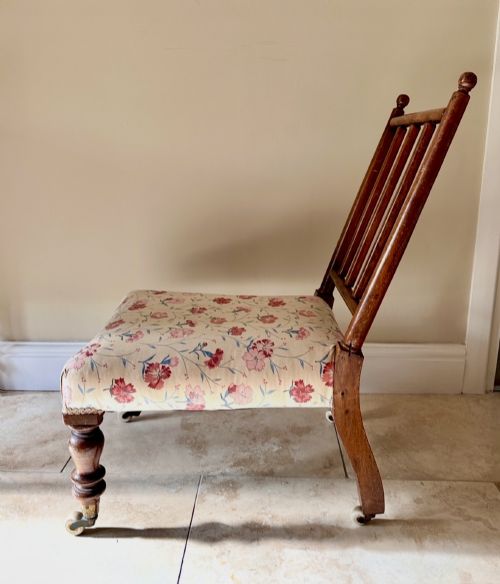
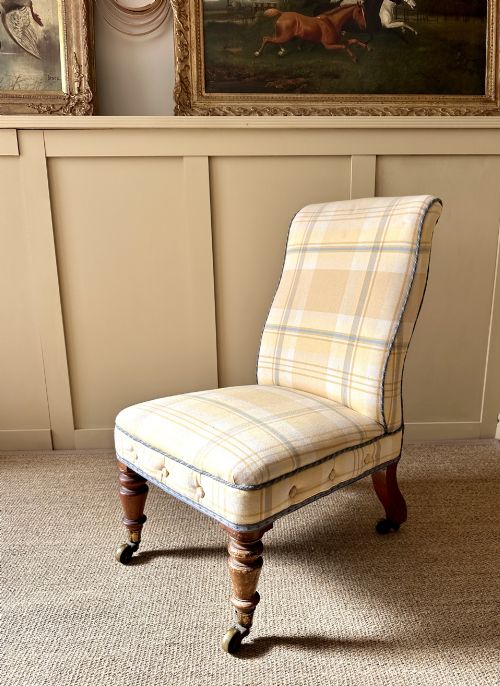
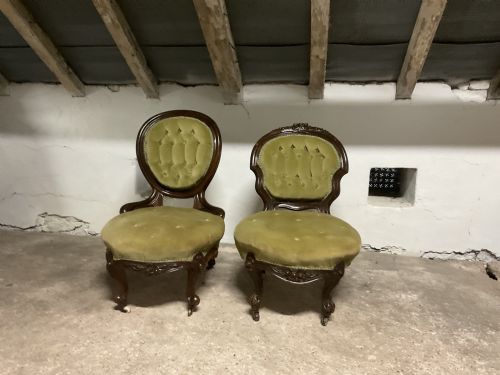
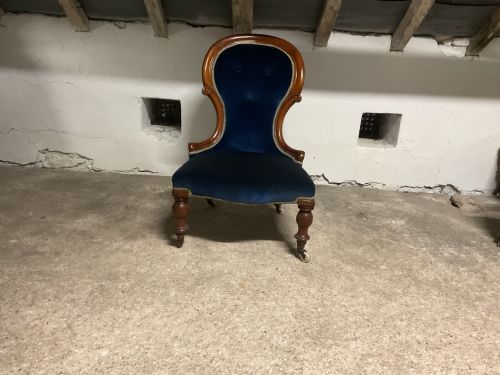
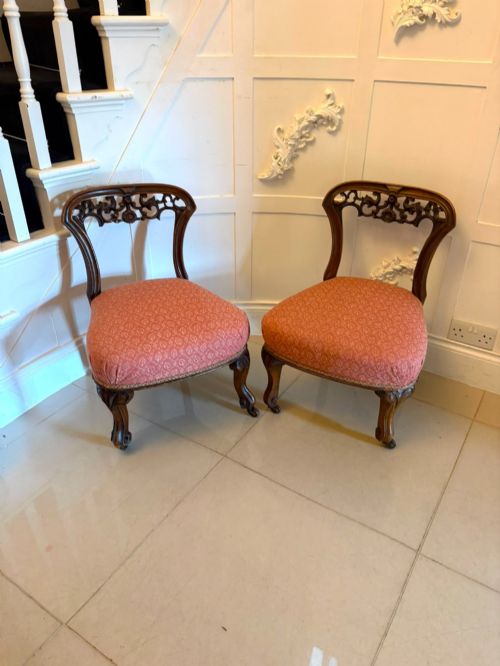
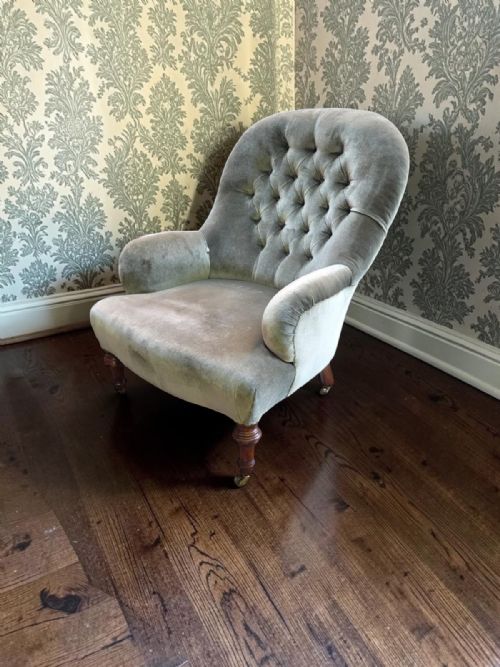
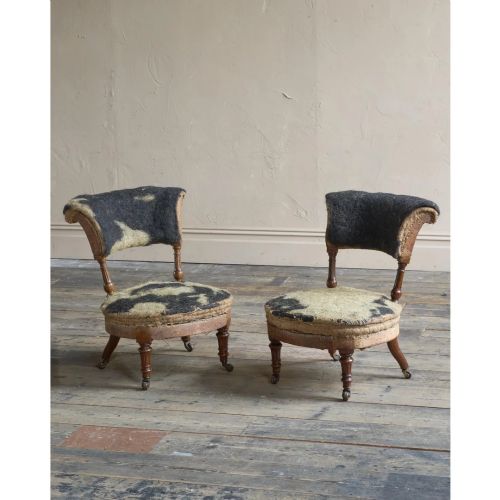
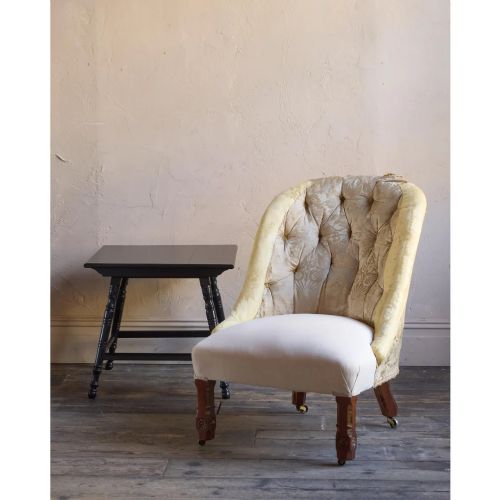
A victorian bedroom nursing chair is a low-seated upholstered chair designed for comfort during feeding and nursery tasks. These pieces appear across the nineteenth century in forms such as slipper chairs, low salon chairs, and occasional chairs.
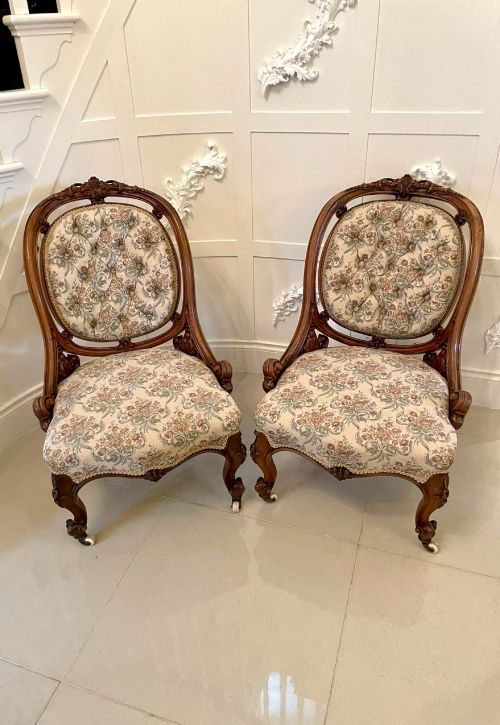
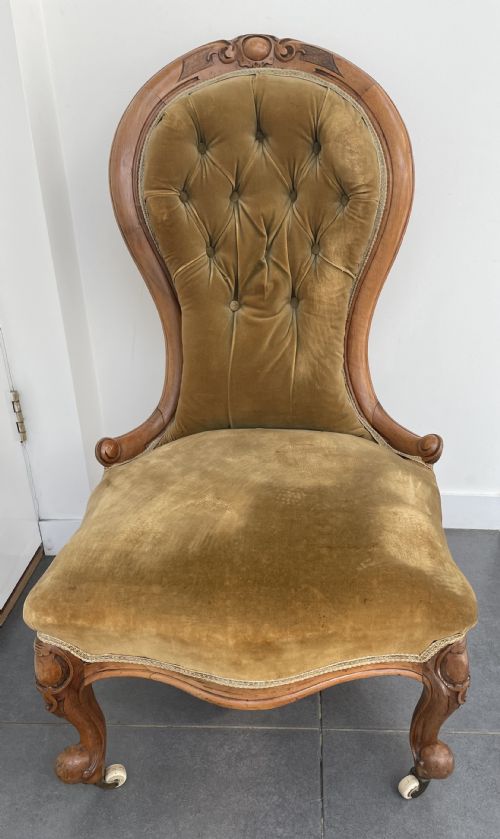
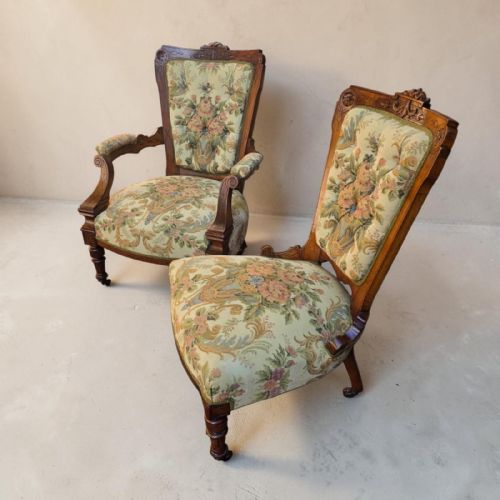
The most common versions on this page are walnut or mahogany framed examples, often featuring carved details, button backs, and low seats tailored for bedroom use. Variations span from early Victorian rosewood designs to later Aesthetic Movement and Edwardian pieces.
How they were made
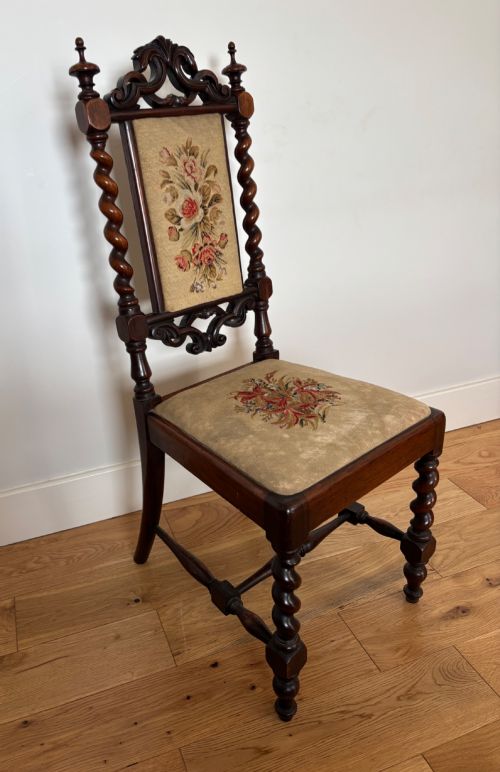
Frames are constructed from hardwoods such as walnut, mahogany, rosewood, and oak, frequently shaped with carved decoration, bobbin turnings, or barley twist supports. Timber components provide the structural skeleton for substantial padding and upholstery.
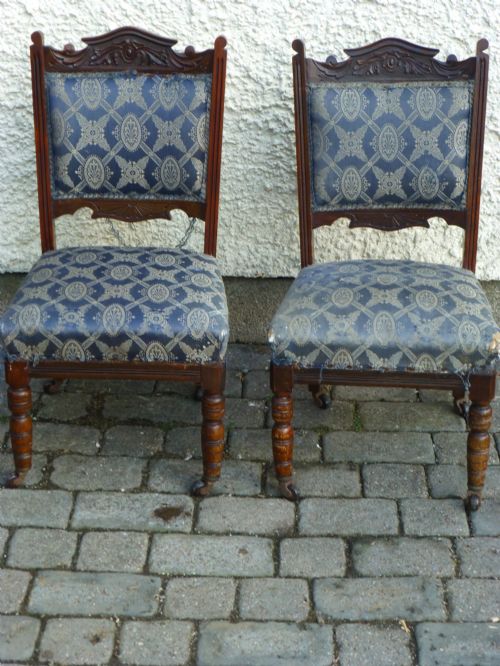
Upholstery traditionally employs horsehair, springs, and stuffing covered in velvet, leather, or printed fabric. Brass castors, ceramic wheels, and fringe details are frequently integrated into the legs and base.
The inventory spans the nineteenth century, covering early Victorian, Aesthetic Movement, and Edwardian production periods.
What varies in quality
The calibre of timber carving and the crispness of detail on walnut and mahogany frames set better examples apart from simpler production. Maker attribution, through stamps or known workshop signatures, elevates a piece significantly.
The integrity of the internal stuffing, frame tightness, and the choice of textile finish determine the standard of preservation and comfort. Pieces retaining original frames with careful reupholstery demonstrate superior longevity.
Holland and Sons·Howard and Sons·Gillows
The Victorian Bedroom Nursing Chair Glossary
- Spoon back
- A padded chair back shaped like the bowl of a spoon to fit the human spine. This ergonomic contour appears frequently on nineteenth-century parlor and bedroom seating.
- Button back
- Upholstery pulled into diamond patterns by deep-set buttons. This technique secures internal stuffing while creating a textured, cushioned surface.
- Aesthetic Movement
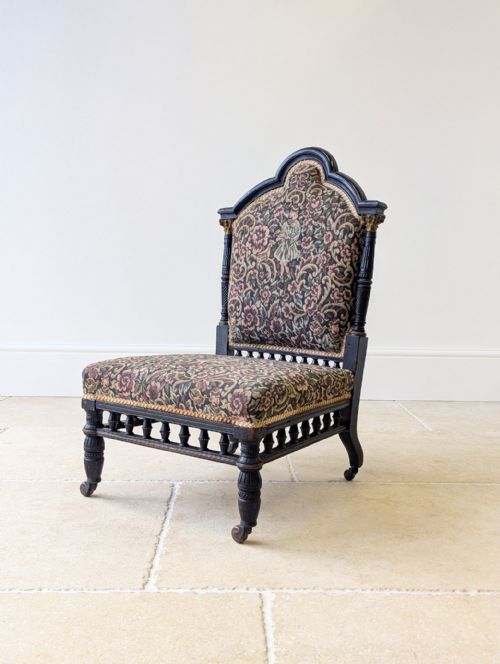
- A late nineteenth-century design style emphasising artistic visual qualities over heavy historicism. Pieces from this movement often utilise ebonised wood and simpler, refined lines.
- Bergere
- An enclosed wooden armchair with woven cane panels on the back and sides. This French-inspired form offers a lighter visual weight within a bedroom setting.
Victorian Bedroom Nursing Chair: Frequently Asked Questions
How do I identify a true victorian bedroom nursing chair?
Look for a characteristically low seat height combined with a supportive, often buttoned back designed for nineteenth-century domestic comfort. Timber choices like walnut or mahogany and stylistic cues such as spoon backs help confirm the era.
Examine the frame construction under the upholstery line for traditional joinery methods and maker stamps. Comparing proportions with documented examples from the period clarifies authenticity.
Were these chairs only used in nurseries?
While the low seat was initially intended for nursing infants, these versatile pieces served widely as bedroom chairs, slipper chairs, and occasional seating for dressing rooms.
Their compact proportions made them suitable for sitting near fireplaces or dressing tables across various domestic quarters.
How do I care for antique velvet upholstery?
Vacuum the fabric gently using a soft brush attachment to remove dust without crushing the pile. Keep pieces away from direct sunlight to prevent fading of the textile.
Professional cleaning is recommended for deeper maintenance to preserve the integrity of historic fibres and stuffing.
Can I use these chairs in a modern living room?
The low profile and distinctive silhouette allow these seats to function well as accent chairs or reading seats in contemporary sitting rooms. Their compact scale makes them adaptable to smaller spaces.
Pairing them with modern furnishings creates a balanced interior contrast while retaining practical utility.