


Victorian Beach Oil Painting
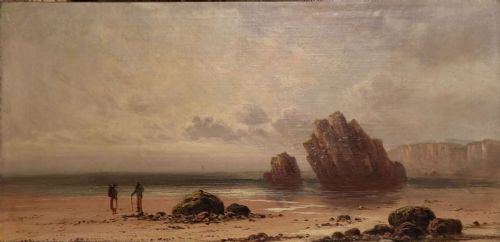
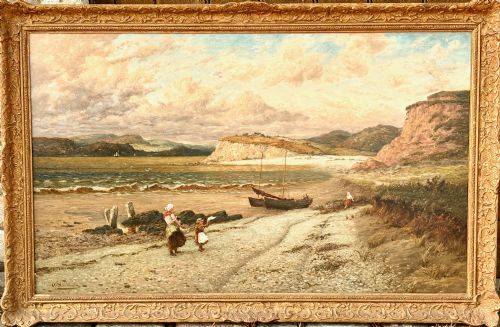
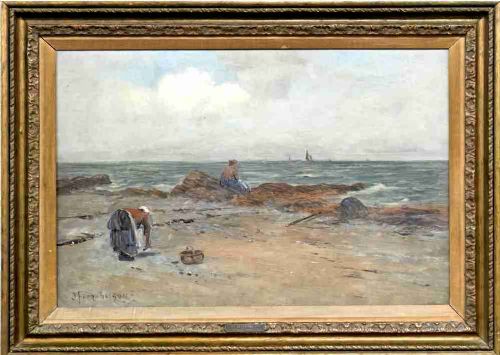
A victorian beach oil painting captures the motion of the tide, the sweep of the coast and figures on the sand through the brushwork of the nineteenth century.
Victorian Beach Oil Painting
A victorian beach oil painting records coastal scenes, maritime landscapes and gatherings by the shore from the nineteenth century and related periods. The subjects range from fisher folk and oyster pickers to shipwrecks, bathing huts and children on the sand.
You meet works framed in giltwood and gesso, painted on canvas or wood panels. The depictions span British impressionism, realist coastal scenes and nineteenth century marine art.
Most examples originate from British and French contexts, showing locations such as Scarborough, Hastings, Morecambe Bay and regional coastal spots. The focus rests on the interplay of sea, sky and sand under natural light.
How they were made
These works utilise oil paint applied to canvas or wood supports, often housed within gilt wood frames enhanced with gesso ornamentation. Painters built up textures through layered brushwork to render the weight of the sea and the grain of the shore.
Gold leaf gilding frequently finishes the frames, adding a warm border that complements the palette of the coastal scenes. Canvas stretched over wooden frames provides the primary ground for the oil pigments.
Listings feature works executed in oil on canvas and wood, set within giltwood and gesso frames across nineteenth and twentieth century periods.
What varies in quality
The strength of a victorian beach oil painting lies in the handling of light, atmosphere and the specific details of coastal life rather than mere scale. Mastery over the movement of water and the depth of the sky separates standard topographical records from compelling artistic statements.
The preservation of the oil on canvas and the original integrity of the giltwood and gesso frame influence the overall presence of the piece. Brushwork that captures texture with confidence elevates the work above rigid or formulaic depictions of the shore.
Joseph Farquharson·James Webb·Sir David Murray·William Shayer·Robert Macaulay Stevenson·Daniel Sherrin·John Duvall
The Victorian Beach Oil Painting Glossary
- Oil on Canvas
- Pigment mixed with drying oil applied to a woven fabric stretched across a wooden frame. This medium allowed artists to achieve rich textures and varied opacity.
- Giltwood
- Wood carved and covered with a thin layer of gold leaf or metallic powder. It provides a bright, reflective border to traditional frames.
- Gesso
- A plaster mix applied to wood or canvas to prepare a smooth surface for painting or framing. It often receives ornamental moulding before gilding.
- Marine Art
- Painting that focuses primarily on the sea, ships, coastal views and maritime activities. It forms a core category within nineteenth century visual culture.
- Post-Impressionism
- An artistic movement extending beyond impressionism that prioritised expressive forms and symbolic use of colour. Works in this style show looser interpretations of coastal light.
Victorian Beach Oil Painting: Frequently Asked Questions
What subjects appear in these paintings?
The works depict coastal scenes, shipwrecks, fisher folk, bathing huts and children playing on the sand. Locations include named spots like Scarborough, Hastings and Morecambe Bay.
Artists also recorded everyday activities such as gathering kelp or picking oysters along the shore.
How should I frame and display them?
Many pieces retain their original giltwood and gesso frames, which suit the traditional aesthetic of nineteenth century art. Hang them away from direct sunlight to protect the oil pigments and gold leaf.
Ensure the room maintains stable humidity to preserve both the canvas and the wooden support.
How do I identify the period?
Examine the style of dress of the figures, the construction of the canvas stretcher and the framing techniques used. Nineteenth century works often feature realist or early impressionist brushwork.
Signatures, dates inscribed on the canvas or reverse, and recorded artist biographies help confirm the date.
Are these works strictly British?
While the majority reflect British coastal scenes and painters, the selection includes French post-impressionist interpretations of seaside gatherings. The regional focus ranges across various European shores.
Subject matter and technique often reflect the particular coastline the artist visited.