

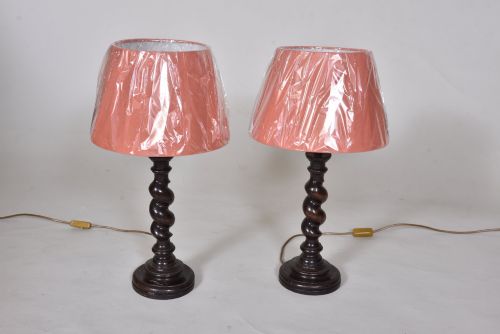


Victorian Barley Twist Lighting
Victorian barley twist lighting brings tactile, spiralling warmth into a room through twisted stems of brass, oak, and walnut.
Victorian Barley Twist Lighting
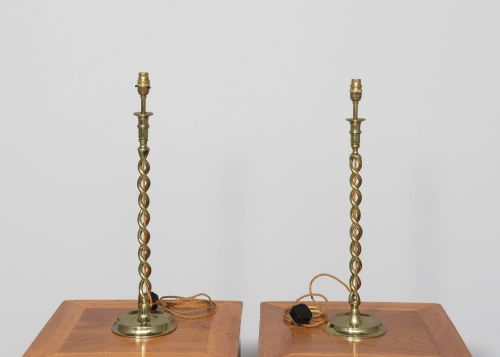
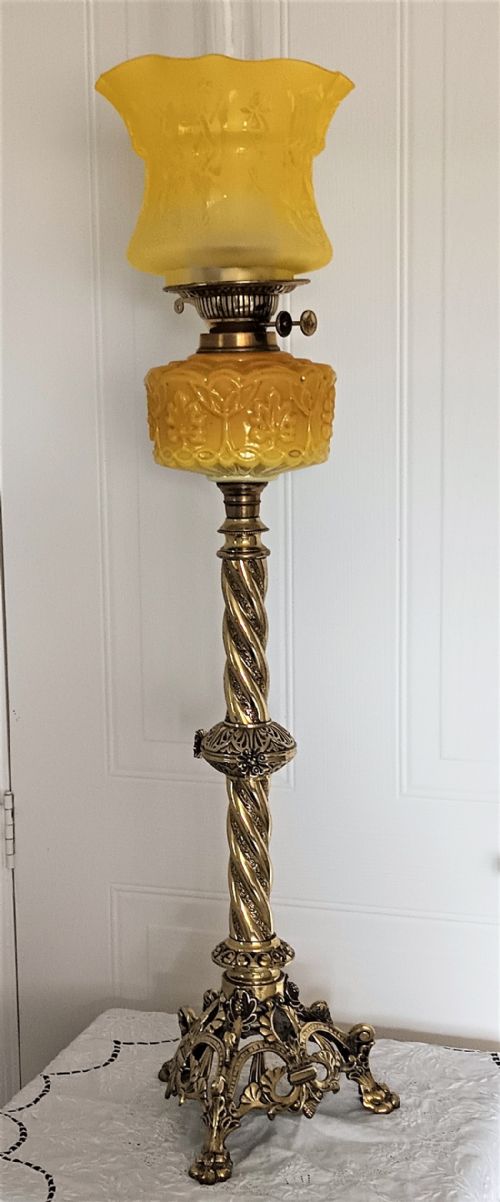
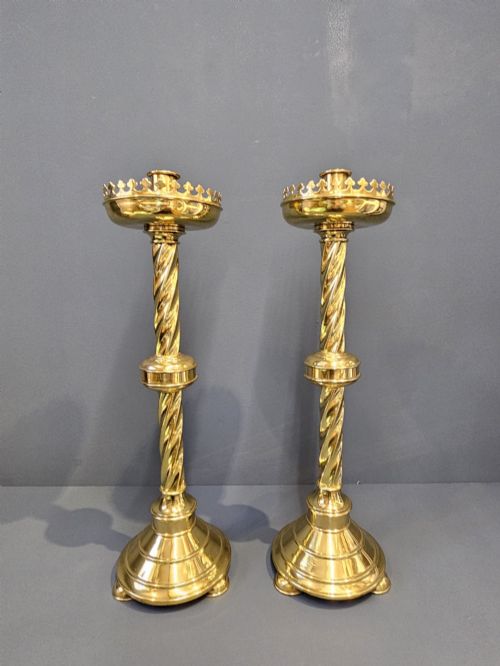
Victorian barley twist lighting encompasses functional antique lamps and converted candlesticks that bring distinct nineteenth-century turning into domestic interiors. These pieces appear in forms ranging from tall brass floor lamp stands and table lamps to oil lamps and ecclesiastical church candlesticks.
The materials span bright and dark metals alongside timbers such as oak, dark oak, bleached oak, and walnut. Many examples reflect the architectural and decorative revivals of the era, drawing upon Gothic, Renaissance, and Jacobean styles.
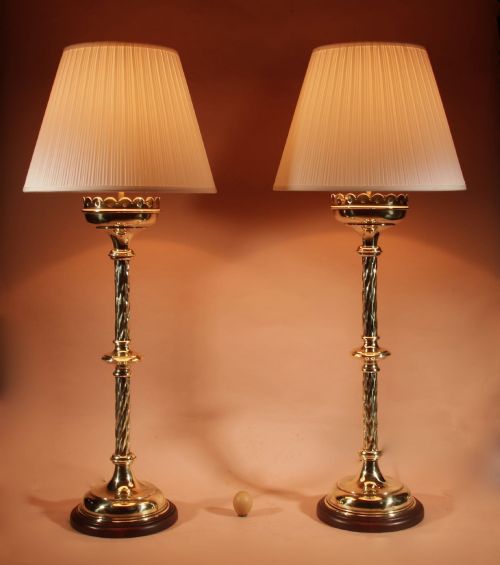
Conversions feature prominently among these listings, with tall pairs of brass candlesticks and church candlesticks adapted for modern electrical use. Alongside dedicated lamp bases, these items demonstrate how nineteenth-century ecclesiastical and domestic metalwork finds a second life in contemporary rooms.
How they were made
Makers shaped these items using heavy brass casting and precision wood turning to achieve the characteristic helical spiral. Brass components were often cast in sections and joined, while wooden shafts were turned on a lathe to create the rhythmic diagonal ridges.
Timber pieces utilise oak and walnut, frequently showing deep carving or simple smooth turned surfaces depending on the revival style. Metal items combine polished brass with fitted collars, weighted bases, and occasionally glass or fabric elements for oil lamp reservoirs and shades.
Victorian Barley Twist Lighting Retail Price Guide 2026
Typical asking prices for victorian barley twist lighting among the pieces listed under this phrase on Sellingantiques today, from the lower quarter to the upper quarter. They describe what is for sale here now, not the wider market.
Listings feature periods spanning the Victorian era, nineteenth century, and decades between 1860 and 1900, alongside materials like brass, oak, glass, and walnut.
What varies in quality
The calibre of Victorian barley twist lighting rests upon the crispness of the spiral turning and the substance of the materials used. Heavier cast brass and dense, deeply carved hardwoods command greater appreciation than lighter, more utilitarian counterparts.
Proportion and scale also dictate distinction, particularly in matched pairs of tall candlesticks or floor lamp stands. Pieces that retain their original structural integrity without excessive wear to the twisted threads demonstrate superior craftsmanship from the nineteenth century.
T Thomason & Co
The Victorian Barley Twist Lighting Glossary
- Barley twist
- A spiralling shaft resembling the growth habit of barley, carved into wood or cast in metal. This decorative turning became immensely popular during various nineteenth-century revival periods.
- Ecclesiastical
- Relating to the Christian Church, describing items originally made for use in places of worship. Church candlesticks of this type are typically heavier and taller than domestic examples.
- Gothic Revival
- An architectural and design movement drawing inspiration from medieval forms, featuring pointed arches and rich ornamentation. This style heavily influenced nineteenth-century metalwork and lamp design.
- Renaissance Revival
- A style looking back to the art and architecture of the fifteenth and sixteenth centuries. Pieces bearing this influence often display robust proportions and classical decorative motifs.
Victorian Barley Twist Lighting: Frequently Asked Questions
What is Victorian barley twist lighting?
Victorian barley twist lighting consists of nineteenth-century lamps, floor stands, and converted candlesticks featuring spiralling turned stems. These pieces are typically formed from cast brass, oak, or walnut.
They reflect aesthetic movements such as Gothic and Renaissance revivals, bringing tactile historical character into modern spaces.
Were these always electric lamps?
Most of these items began life as candlesticks or oil lamps before being converted to electrical use later in their lifespan. Tall brass church candlesticks and standard table candlesticks frequently undergo this adaptation.
This conversion allows period metalwork to function safely with modern wiring while retaining its original nineteenth-century appearance.
How do I date these pieces?
Dating relies upon examining the manufacturing techniques, materials, and stylistic cues associated with the nineteenth century. Periods frequently span from the Victorian era through the late nineteenth and early twentieth centuries.
Characteristics such as heavy brass casting, specific turning depths, and revival styles help narrow down the production window.
How do I style them at home?
These lamps and stands work well as focal points on side tables, desks, or as freestanding floor lighting in traditional or eclectic interiors. The warm tones of polished brass and dark oak complement neutral walls and textured fabrics.
Pairing matching candlesticks creates symmetry, while single tall stands add height and architectural interest to a room.