

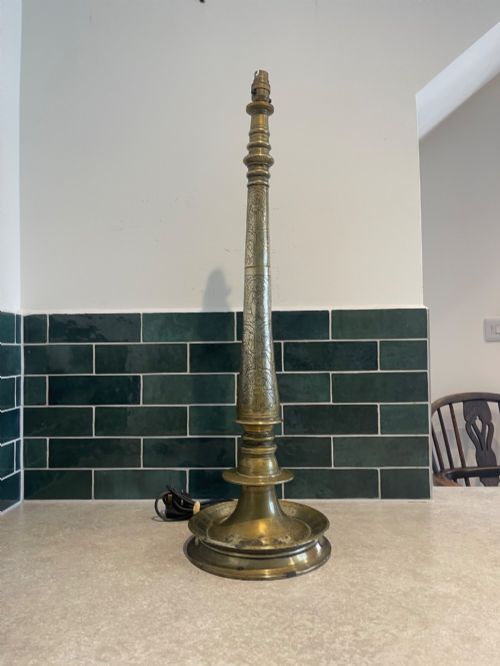

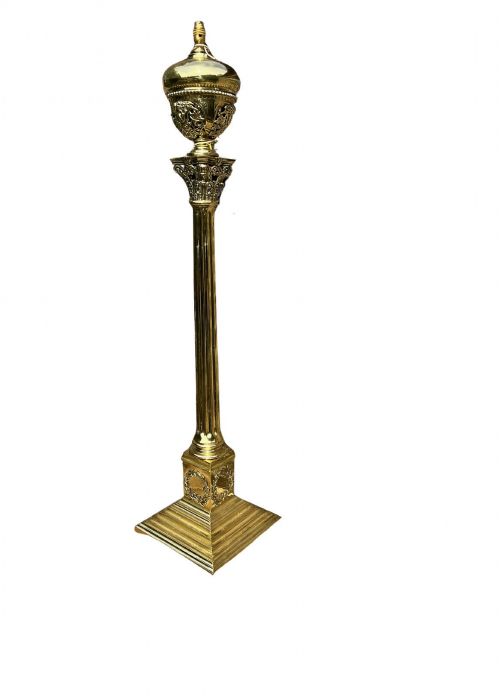


Tall Brass Lamp Bases
Tall brass lamp bases bring height and steady metalwork to a room, ranging from converted Victorian candlesticks to slender Edwardian floor standards.
Tall Brass Lamp Bases
Tall brass lamp bases encompass upright lighting fixtures and converted candlesticks that bring significant height to a room. When you search for tall brass lamp bases, you encounter both table-standing columns and taller floor standards designed to cast light from above.
The selections span distinct historical eras, including the Victorian period, the Edwardian era, and the early twentieth century. Many pieces originate as church candlesticks, altar lights, or architectural columns before conversion into functional lamps.
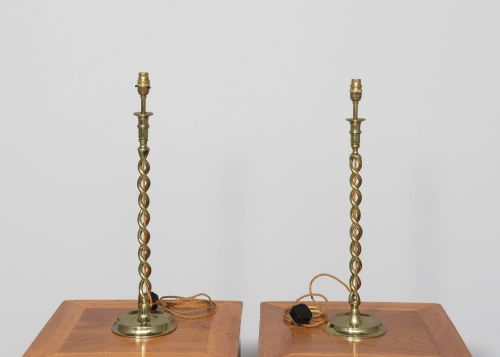
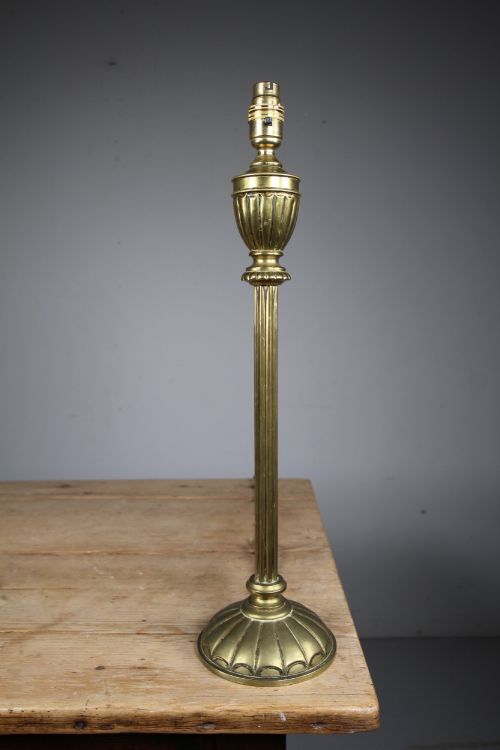
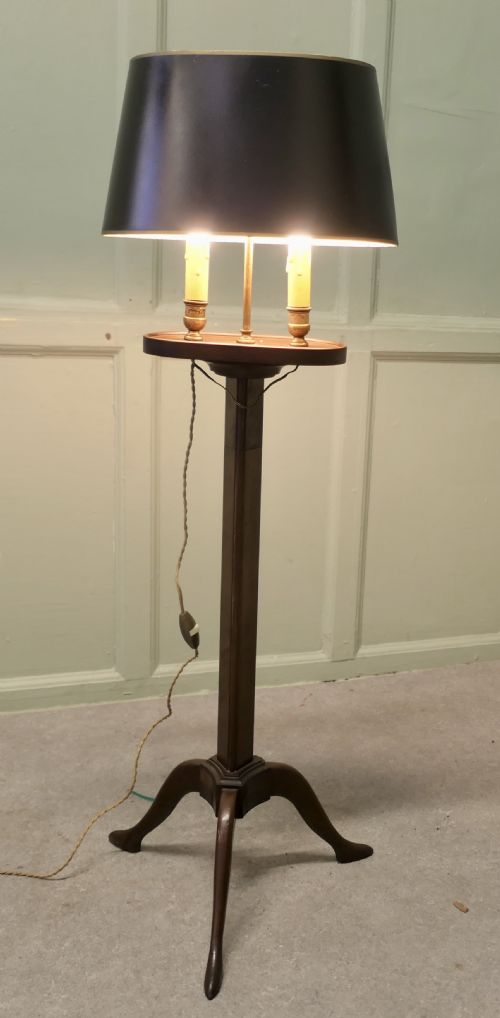
Forms vary from heavy Corinthian columns and barley-twist shafts to adjustable twin-candle bouillotte designs and painted metal bodies. These pieces often incorporate secondary materials such as ceramic bases, mahogany, inlaid wood, and cut glass alongside the primary metal.
How they were made
Makers utilised cast brass and sheet metal, often combining heavy weighted bases with slender vertical columns to ensure stability at height. Turning, casting, and soldering form the primary structural methods seen across Victorian and Edwardian examples.
Surface treatments range from polished brass and silver plating to contrasting black ceramic sections and painted toleware. Converted pieces integrate modern electrical fittings into older candlestick sockets, retaining the original turned and fluted metal bodies.
Tall Brass Lamp Bases Retail Price Guide 2026
Typical asking prices for tall brass lamp bases among the pieces listed under this phrase on Sellingantiques today, from the lower quarter to the upper quarter. They describe what is for sale here now, not the wider market.
The listings span the Victorian, Edwardian, and 1920s periods, incorporating brass, ceramic, mahogany, and cut glass.
What varies in quality
The caliber of a piece rests on the crispness of its casting, particularly in classical details like Corinthian capitals and fluted columns. Heavier gauge metal and substantial weight indicate superior construction that prevents tipping, especially in taller floor standards.
Proportion and balance dictate the visual success of the conversion, where original candlesticks must translate cleanly into functional lighting without awkward height additions. The integration of secondary elements, such as inlaid wood or cut glass stems, reveals the maker's attention to detail.
Whytock and Reid of Edinburgh
The Tall Brass Lamp Bases Glossary
- Corinthian Column
- A classical column form featuring an ornate capital decorated with acanthus leaves, frequently utilised for formal table and floor lamps.
- Standard Lamp
- A heavy-based freestanding floor lamp designed to stand directly on the floor and illuminate a room from a greater height.
- Bouillotte Lamp
- An adjustable multi-light lamp traditionally used for card games, featuring a central stem and twin candle arms beneath a shade.
- Barley-Twist
- A sculptural turning style resembling a twisted rope, carved or cast into the vertical wooden or brass shaft of the lamp.
- Toleware
- Painted or enamelled sheet metal, often finished in black and utilised on lamp bodies for a contrasting surface texture.
Tall Brass Lamp Bases: Frequently Asked Questions
Are these lamps converted from old candlesticks?
Many taller table lamps begin life as heavy church or domestic candlesticks before receiving electrical wiring and fittings at a later date.
This adaptation preserves antique metalwork while rendering the pieces practical for modern domestic lighting needs.
How do I tell Victorian from Edwardian brass lamps?
Victorian examples tend to feature heavier, more ornate ornamentation such as barley-twists and Gothic or classical revival details.
Edwardian pieces often display cleaner classical revival lines, sometimes incorporating contrasting ceramic sections or lighter proportions.
Can floor standards fit standard modern bulbs?
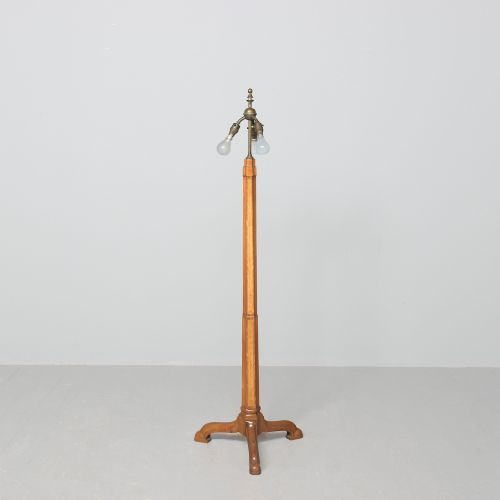
Most floor standards accommodate standard bulbholders following rewiring and adaptation during their conversion or maintenance.
It remains wise to check the specific lampholder type to ensure compatibility with contemporary shades and bulbs.
Where should I place a tall floor lamp?
Tall floor standards suit corners and seating areas where their height can project light downward over a wider surface.
Their substantial metal presence also allows them to function as sculptural elements within a room when unlit.