





Victorian Bamboo Style Table
These Victorian bamboo style table designs bring genuine nineteenth-century character into a room through clever construction and lacquered panels.
Victorian Bamboo Style Table
A buyer searching for a victorian bamboo style table encounters a range of nineteenth-century forms spanning from side tables and two-tier occasional tables to etageres, washstands, and sewing tables. These pieces draw heavily on Aesthetic Movement and Chinoiserie tastes, often combining natural or turned wooden frames with decorative panels.
The version most commonly met on this page is the two-tier side table or occasional table, frequently featuring lacquered panels and lower shelves intended for display or tea service. Alongside these, buyers find specialised forms such as half-moon console tables, bijouterie tables, and larger dressing cabinets.
Origins stretch across English, French, and Anglo-Indian workshops of the period, demonstrating how widely the fashion for exoticism spread. Dating generally clusters around the late nineteenth century, specifically the eighteen-eighties and eighteen-nineties, with occasional examples extending into the Edwardian era.
How they were made
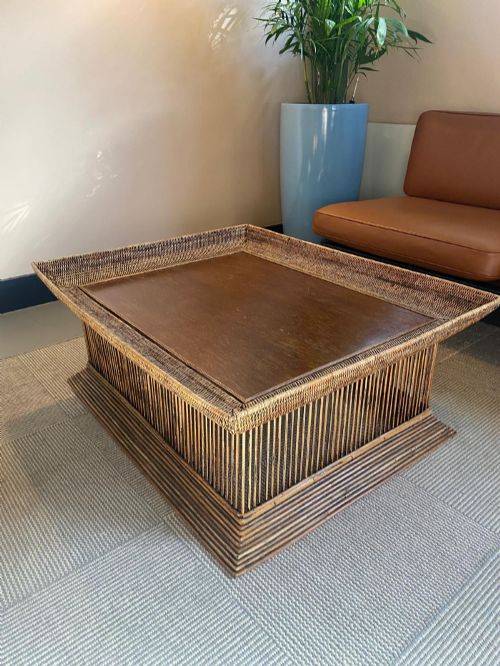
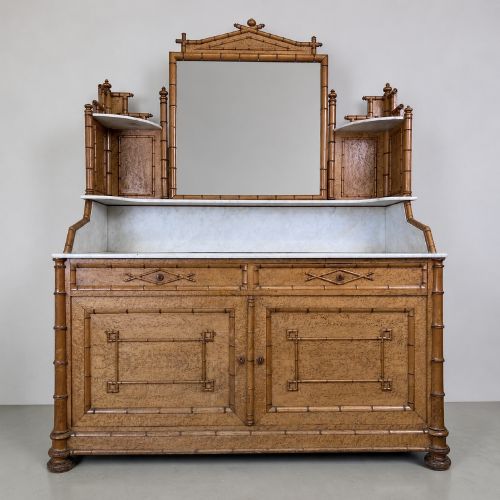
Makers utilised actual bamboo alongside turned wood shaped and painted to imitate bamboo, known as faux bamboo, creating sturdy frames from light materials. These structures often incorporate bird's-eye maple, pine, and ebonised woods to support heavier tops.
Surfaces frequently showcase lacquer work and painted Chinoiserie motifs, sometimes paired with inset marble slabs, glass, or woven reed. Brass fittings and papier-mache elements appear on specific occasional and card tables, adding textural contrast to the natural cane framework.
Victorian Bamboo Style Table Retail Price Guide 2026
Typical asking prices for victorian bamboo style table among the pieces listed under this phrase on Sellingantiques today, from the lower quarter to the upper quarter. They describe what is for sale here now, not the wider market.
Listings feature periods from the nineteenth century up to nineteen-twenty, incorporating materials such as lacquer, marble, glass, and woven reed.
What varies in quality
Quality rests primarily on the crispness of the turning in faux bamboo frames and the integrity of the lacquered panels. Finer examples display meticulous hand-painted details on their lacquer surfaces rather than mass-produced transfers.
The choice of secondary materials also dictates the tier of the piece, with solid marble tops, detailed brass hardware, and intricate woven reed lower shelves elevating the construction above standard utility tables.
The Victorian Bamboo Style Table Glossary
- Faux bamboo
- Turned and painted wood designed to replicate the segmented appearance of natural bamboo. Makers utilised this technique to ensure greater structural rigidity in furniture legs and frames.
- Aesthetic Movement
- A late nineteenth-century design style emphasising visual beauty over narrative subject matter. Pieces from this movement often incorporate Japanese and Chinese motifs.
- Etagere
- A set of open shelves for displaying small objects or ornaments. These tiered structures form a significant portion of bamboo and lacquer furniture.
- Chinoiserie
- European artistic interpretations of Chinese and East Asian artistic traditions. This style dominates the decorated panels found on many nineteenth-century occasional tables.
- Bijouterie table
- A glass-topped display table designed specifically for showcasing small valuables and curiosities. They frequently appear on slender legs with lower display shelves.
Victorian Bamboo Style Table: Frequently Asked Questions
Where were these tables made?
These tables originate from various European and international workshops during the nineteenth century, including English, French, and Anglo-Indian makers. Each region applied distinct decorative touches, from French marble inserts to Anglo-Indian woven reed details.
Influenced by global trade and the popularity of Eastern design, workshops adapted traditional forms to suit Western domestic interiors.
How do I care for a lacquered table?
Lacquered surfaces require gentle treatment, avoiding direct sunlight, excessive moisture, and harsh chemical cleaners. Dusting with a soft, dry cloth preserves the decorated panels and painted finishes over time.
Keeping the table in a stable environment with moderate humidity prevents the wood underneath from expanding and damaging the delicate surface finish.
Are these tables sturdy enough for daily use?
Many of these pieces were built for light domestic use, such as holding books, tea services, or decorative items on their multiple tiers. While sturdy when handled with reasonable care, they are generally lighter than traditional hardwood furniture.
Checking the joints and lower shelf attachments helps ensure stability, particularly on designs featuring slender bamboo or turned wooden legs.