


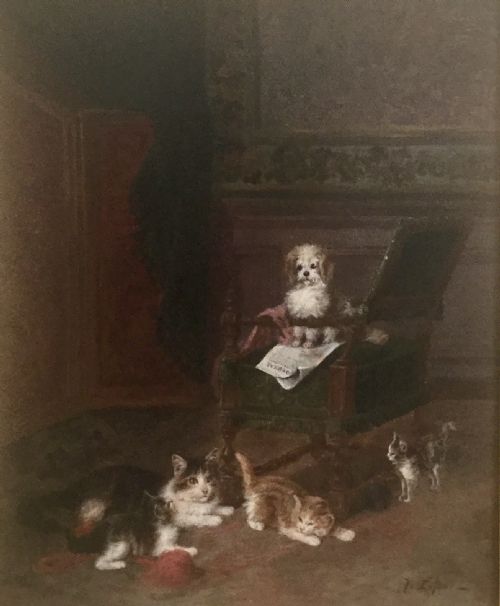


Victorian Animal Genre Art
Victorian animal genre art captures charming domestic scenes of farmyard animals and household pets, offering collectors a delightful window into nineteenth-century rural and domestic life.
Victorian Animal Genre Art
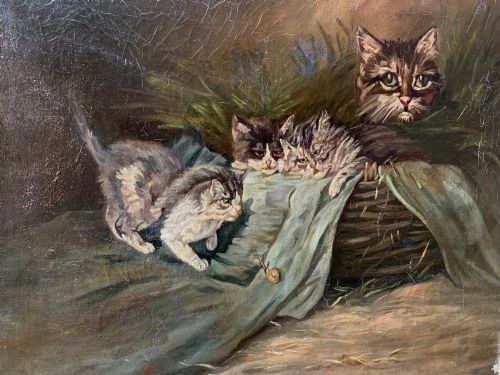
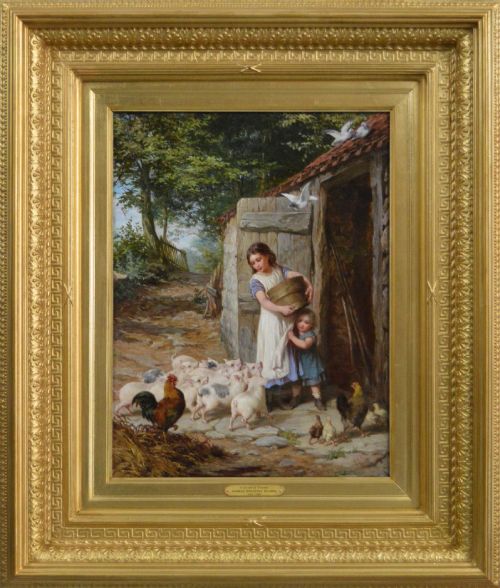
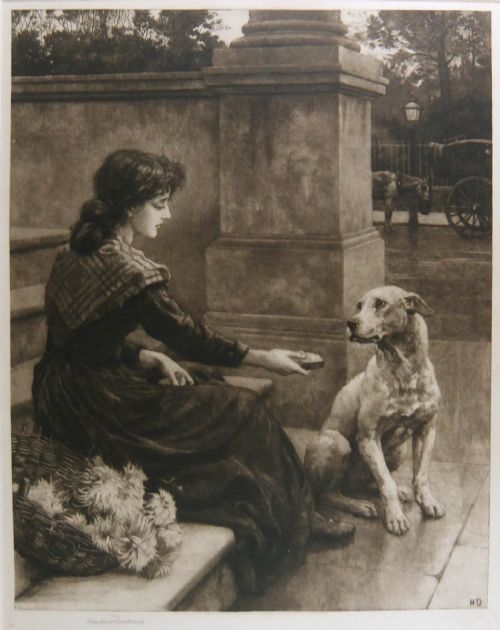
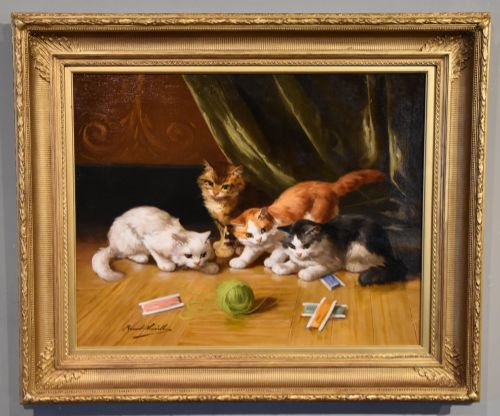
Victorian animal genre art centres on narrative paintings and etchings depicting domestic pets, farmyard livestock, and animals interacting with people. These works bridge portraiture and storytelling, showing cats, dogs, ponies, and farm animals in detailed domestic or agricultural settings.
Buyers will most frequently encounter oil paintings on canvas alongside original watercolours and etchings. The subjects range from playful kittens and tea parties to bustling farmyard scenes featuring horses, pigs, and poultry.
Originating largely within the nineteenth century, these pieces reflect the era's fascination with sentimentality and realism. Artists of the period captured both the individual character of animals and the charming atmosphere of cottage life.
Materials and Techniques
Artists created these works primarily using oil on canvas, watercolour on paper, and original printmaking techniques for etchings. Canvases were stretched and painted with rich pigments, whilst watercolours captured lighter, more fluid domestic moments on paper.
Frames play an integral role in the presentation of these pieces, often constructed from wood adorned with gesso and gold leaf. Gilt wood framing enhances the visual depth of the paintings, complementing the traditional nineteenth-century aesthetic.
Listings feature works spanning the nineteenth and early twentieth centuries, predominantly utilising oil on canvas, watercolour, and paper.
Assessing Quality and Execution
Quality in these works rests upon the artist's ability to render animal anatomy and texture with precision and expression. Superior pieces capture lifelike fur, movement, and engaging character rather than stiff or generic representations.
The sophistication of the composition distinguishes finer examples, particularly where multiple animals and human figures interact harmoniously within a cottage or farmyard setting. The handling of light, particularly in oil paintings and watercolours, further elevates a piece.
George Augustus Holmes·Herbert Dicksee·Alfred Arthur Brunel de Neuville·Helena Maguire·Agnes Augusta Tallboys·John Frederick Herring Jnr·Jules Le Roy·Charles Hunt Jnr
The Victorian Animal Genre Art Glossary
- Genre art
- Paintings or works of art depicting scenes from everyday life, typically involving ordinary people and domestic animals. This style focuses on narrative and domestic realism rather than grand historical or mythological themes.
- Etchings
- Printmaking techniques where lines are incised into a metal plate with acid before being inked and pressed onto paper. Herbert Dicksee produced notable examples in this medium.
- Gesso
- A plaster-like mixture applied to wooden frames before gilding with gold leaf. It provides a smooth surface for intricate moulded ornamentation.
- Watercolour
- Pigments suspended in a water-based solution, applied to paper. Helena Maguire utilised this medium for detailed animal studies.
Victorian Animal Genre Art: Frequently Asked Questions
What subjects appear in animal genre art?
These works feature domestic pets such as kittens and dogs alongside farmyard livestock including horses, pigs, goats, and poultry. Many compositions place these animals in cottage interiors interacting with people.
Scenes range from playful groups of kittens at tea parties to busy agricultural yards and quiet domestic moments involving ponies and foals.
How do I date a piece from this period?
Dating relies on stylistic markers of the nineteenth-century French and British schools, artist signatures, and framing materials. Many works carry specific dates or reflect the working periods of established Victorian painters.
Subject matter and costume details within genre scenes also offer strong clues to the decade of creation, spanning from the 1870s through to the early twentieth century.
How should I display and care for these pieces?
Oil paintings and watercolours require stable indoor environments away from direct sunlight to protect pigments and paper from fading. Gilt wood frames should be dusted gently with a soft, dry cloth.
Keeping works out of humid areas ensures both the canvas and the underlying wooden stretcher or paper support remain preserved for years to come.