


Victorian Anglo Indian Stand
A victorian anglo indian stand brings intricate colonial craftsmanship and rich timber into a room, offering both practical surface space and distinct regional artistry.
Victorian Anglo Indian Stand
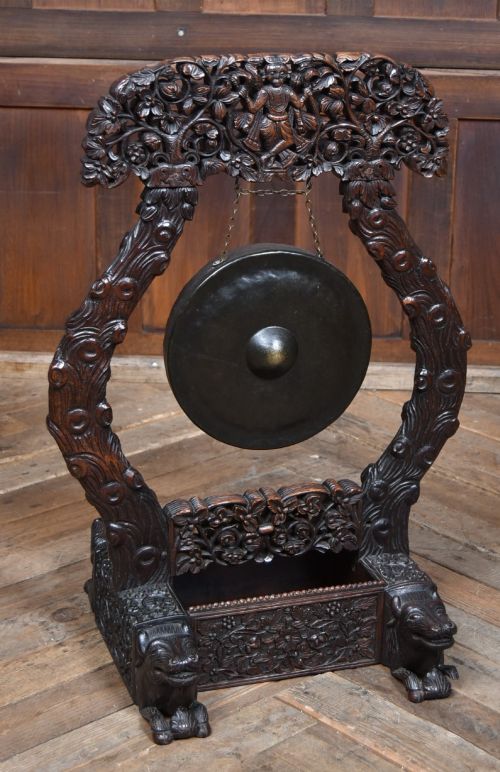
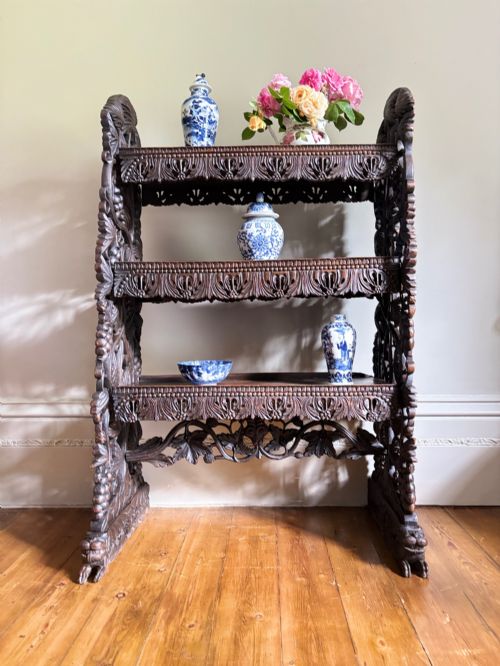
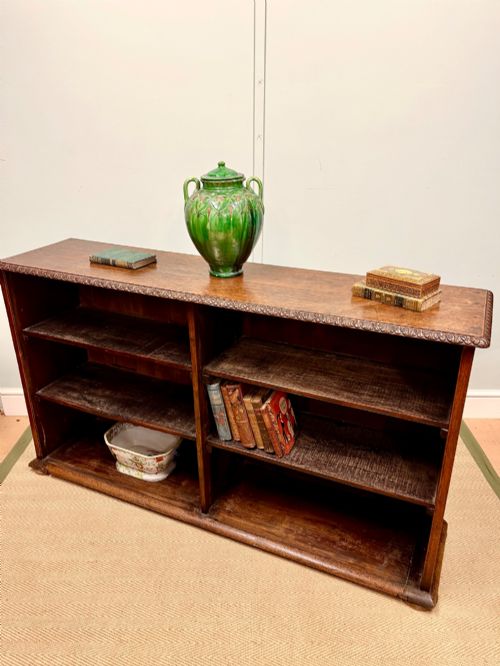
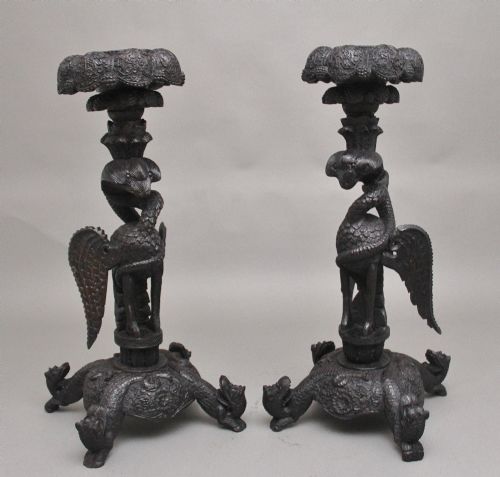
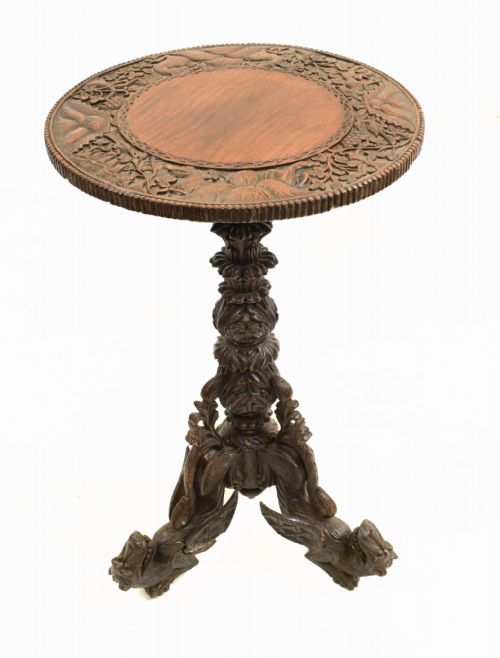
A victorian anglo indian stand encompasses a diverse range of furniture and decorative pieces produced during the nineteenth century under British colonial influence. Buyers searching this phrase typically encounter occasional tables, folding book stands, side tables, and multi-tiered buffets constructed in regions such as Bombay, Burma, and Kashmir. These items combine traditional British furniture forms with elaborate indigenous carving, turning functional household objects into ornate display pieces.
How they were made
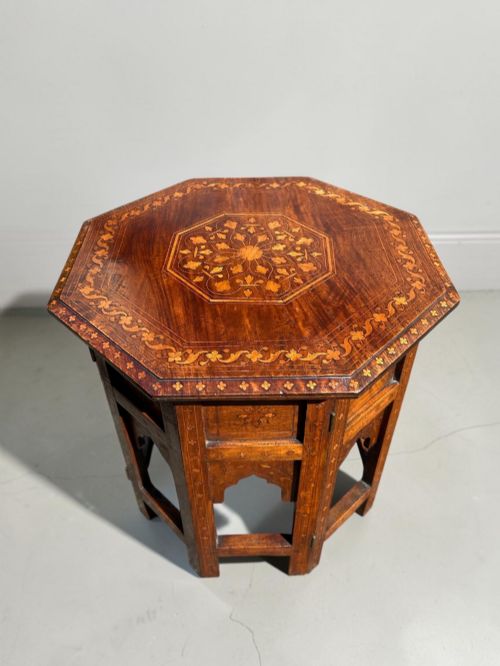
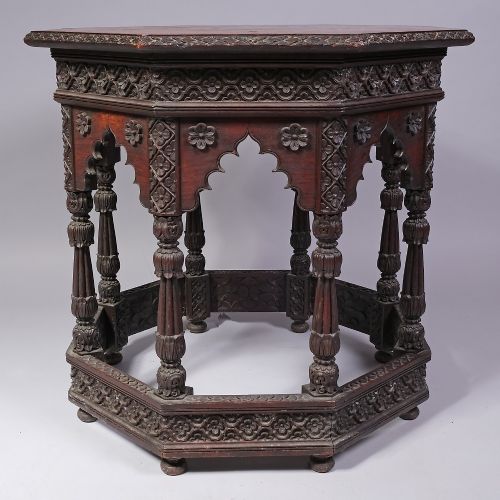
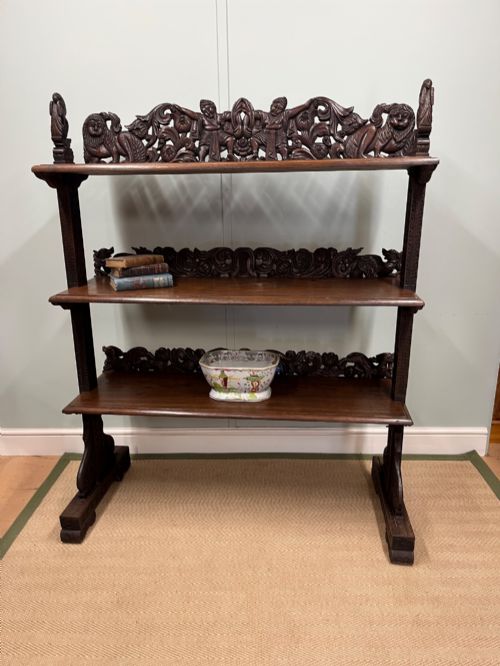
Construction relies heavily on dense timbers native to South Asia, including teak, padauk wood, rosewood, and general Indian hardwood. Artisans shaped these heavy materials using traditional hand-carving techniques, often covering surfaces in dense floral motifs, animal figures, or geometric patterns. Folding mechanisms on reading stands and campaign tea tables demonstrate precise joinery designed for portability.
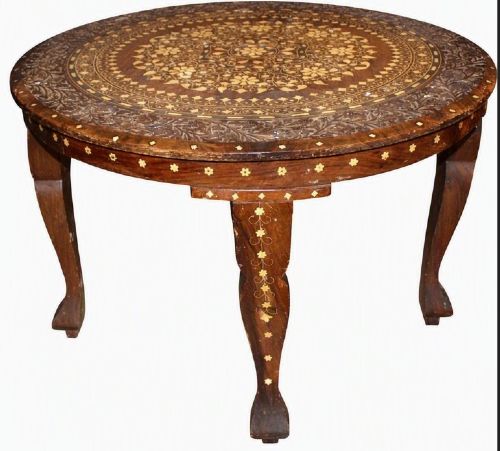
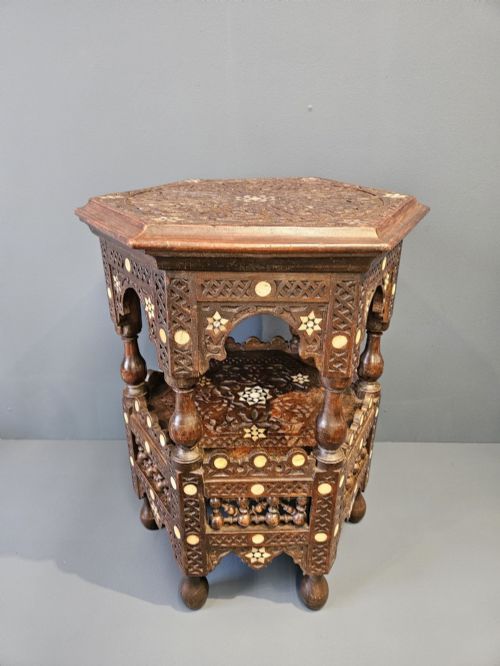
Inlay work forms a major part of the construction technique, utilising contrasting materials such as bone, brass, and mother-of-pearl set directly into the timber. Some pieces incorporate painted details or lacquer work, particularly on Kashmiri papier-mâché items and painted wooden elements. Ebonised bamboo and woven reed also appear, reflecting the influence of the Aesthetic Movement on colonial production.
Materials recorded across the inventory range from dense tropical hardwoods and brass inlay to delicate painted papier-mâché and woven reed.
What varies in quality
Quality in these pieces depends largely on the depth, crispness, and complexity of the hand carving across the timber. Superior examples exhibit sharply defined relief work where foliage and animal figures maintain distinct edges rather than appearing rounded or smoothed by wear. The density and grain of the underlying wood, such as solid rosewood or heavy teak, also elevate the piece.
The precision of inlaid elements like bone, brass, or mother-of-pearl dictates the standard of execution, with finer items showing tight fitting without excessive filler. Additionally, the structural integrity of folding mechanisms and the balance of multi-tiered structures or tripod bases determine how well the object maintains its form over time.
Liberty & Co
The Victorian Anglo Indian Stand Glossary
- Padauk wood
- A heavy, durable tropical hardwood with a distinctive reddish-brown tone. It provides a stable base for deep relief carving.
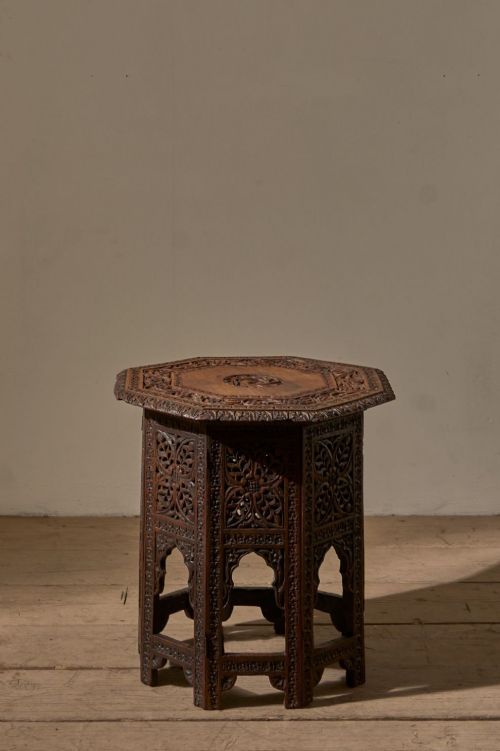
- Octagonal table
- A tabletop featuring eight sides, frequently seen in Hoshiapur and Bombay production. These tops often fold or lift from their folding bases.
- Campaign furniture
- Portable furnishings designed for easy transport by military officers and officials. These items typically feature folding frames and clever collapsible joints.
- Aesthetic Movement
- A late nineteenth-century design style emphasising visual beauty over narrative content. It influenced British colonial pieces through ebonised finishes and bamboo construction.
- Papier-mâché
- A composite material made from paper pulp mixed with glue and oil, then pressed and dried. It forms a smooth surface for hand-painted Kashmiri desk accessories.
Victorian Anglo Indian Stand: Frequently Asked Questions
What is an elephant table?
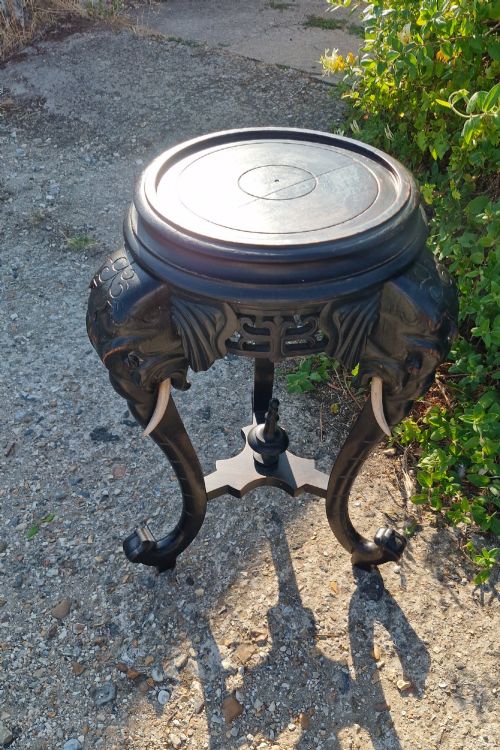
An elephant table is a small occasional stand featuring carved wooden elephant heads and tusks supporting the top. These pieces originated in the Bombay Presidency during the nineteenth century.
They served as decorative accent furniture in Victorian drawing rooms. Today, they function well as plant stands or bedside tables.
How do I identify Anglo-Indian furniture?
Anglo-Indian furniture is identified by its combination of European furniture forms and traditional South Asian hand-carving techniques. Common indicators include dense floral motifs, pierced fretwork, and native timbers like teak and padauk.
Many examples also incorporate contrasting inlay work using bone, brass, or mother-of-pearl. These stylistic traits reflect the crossover between British domestic tastes and colonial craftsmanship.
Where were folding book stands used?
Folding book stands were utilised by scholars, readers, and travellers in colonial offices and domestic studies. Their collapsible design allowed them to be easily stored or moved when not in use.
In modern interiors, they provide a stable desktop pedestal for displaying open books or folios. Their hinged construction demonstrates practical colonial engineering.