
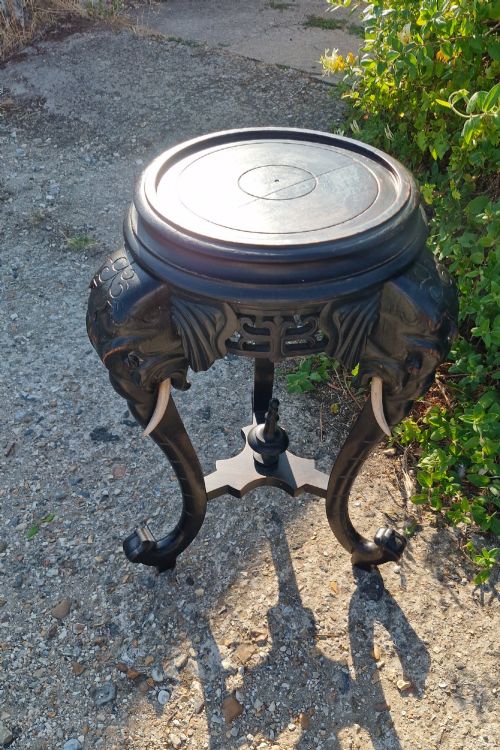
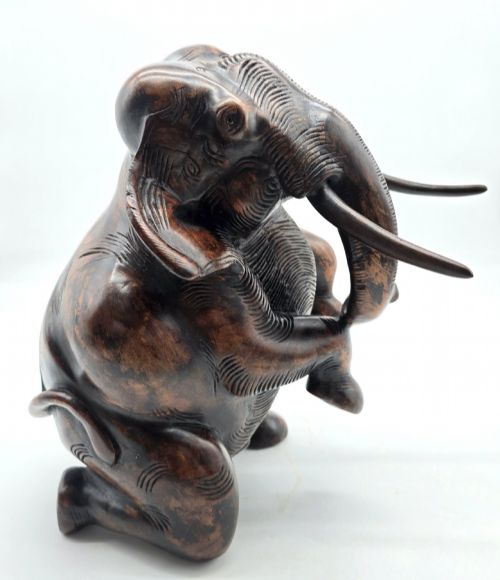
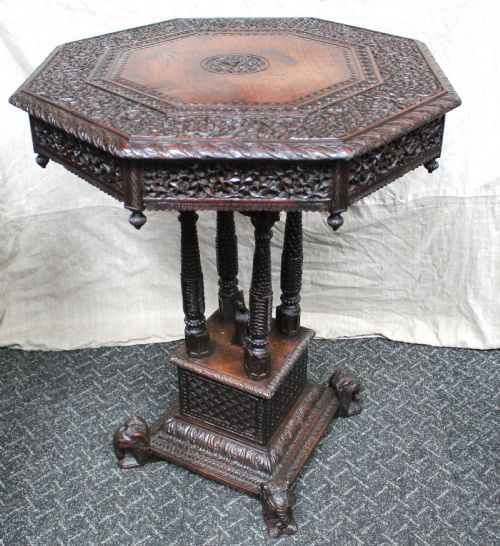


Victorian Anglo Indian Elephant
These Victorian Anglo Indian elephant pieces combine British colonial taste with intricate local craftsmanship, offering a striking focal point for any room.
Victorian Anglo Indian Elephant
The most common forms on this page include solid teak and hardwood tables, often associated with the Bombay Presidency or Burma. These pieces merge British furniture types with indigenous carving traditions.
Smaller decorative objects such as brass book rests and ebony sculptures also appear frequently among the listings. Each item reflects the exchange of design ideas across the British Empire during the Victorian era.
Materials and Construction Methods
The makers relied heavily on dense regional timbers such as teak, ebony, and hard rosewood, which allowed for deep, crisp relief carving. Artisans also incorporated brass, copper, and silver elements for hardware and decorative vessels.
Surface ornamentation involved intricate hand-carving techniques, often covering every available surface with foliage, geometric patterns, and figurative details. Painted wooden elements and bone tusks occasionally highlight sculptural animal forms.
Assessing Craftsmanship and Material Selection
The choice of material also dictates the tier of the piece, with dense ebony and heavy solid teak commanding attention over softer woods. Furthermore, the retention of original elements, such as painted tusks or delicate brass inlays, elevates the overall standard.
The Victorian Anglo Indian Elephant Glossary
- Anglo-Indian
- Pertaining to decorative arts produced in India during the period of British rule, fusing European forms with local craftsmanship. This style dominates the heavier furniture pieces.
- Bombay Presidency
- A major administrative subdivision of British India known for distinctive carved furniture and occasional tables. Pieces from this region often utilise teak.
- Ebonised
- Wood finished to resemble ebony through staining or painting. This treatment appears on several Victorian decorative items.
- Kutch
- A region in western India celebrated for traditional metalwork. Silver items from here frequently display intricate repoussé decoration.
- Jardiniere
- An ornamental pot or stand for holding plants or flowers. Examples from the nineteenth century are typically fashioned from hand-engraved brass.
Victorian Anglo Indian Elephant: Frequently Asked Questions
Where were these elephant tables placed?
These tables served primarily as occasional or side tables in Victorian drawing rooms and studies. They were positioned to hold lamps, tea services, or decorative objects.
The sturdy construction of teak and hardwood allowed them to function as practical furniture while showcasing exotic decorative motifs to visiting guests.
How do I identify a Raj period piece?
Raj period items typically display dense hand-carvings executed in regional hardwoods like teak and ebony. The motifs often incorporate local flora alongside figural elephant supports.
Examining the construction methods and the tool marks on the underside helps confirm nineteenth-century origin and traditional workshop methods.
What woods were used for these items?
Makers utilised durable local timbers including teak, rosewood, and ebony. These dense materials provided the necessary strength for intricate, deep-relief carving.
Some smaller objects also incorporate bone or painted wooden elements to render tusks and fine decorative details.
How should I care for carved teak?
Maintain carved teak and hardwood surfaces by dusting regularly with a soft, dry cloth. Avoid placing these items near direct heat sources or strong sunlight.
Applying a minimal amount of appropriate furniture wax occasionally helps preserve the natural grain and moisture of the old wood.