

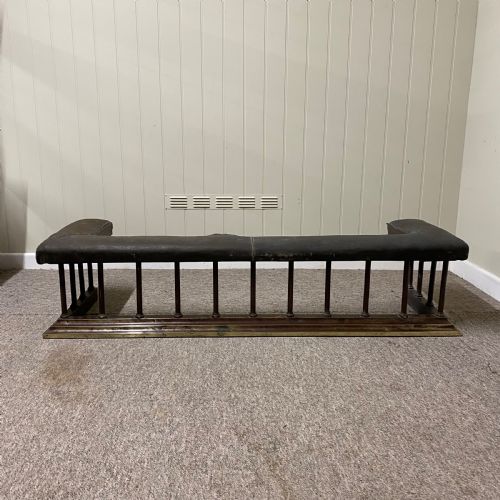
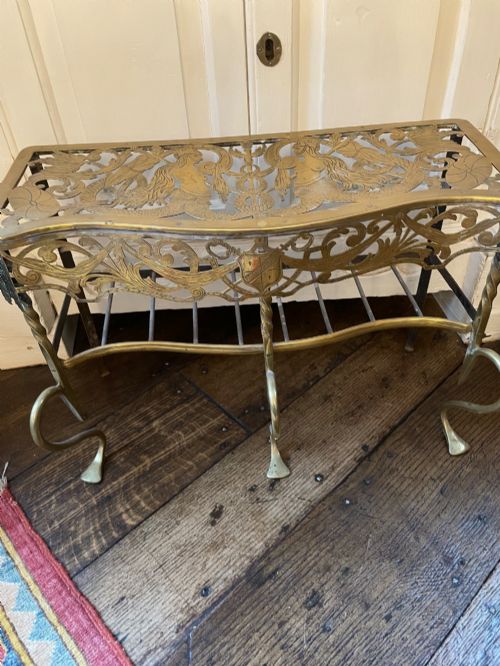
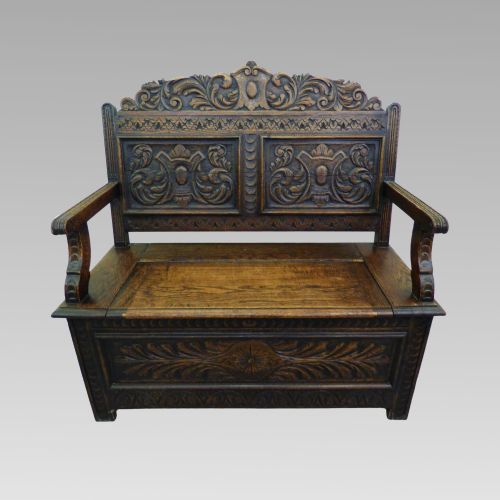
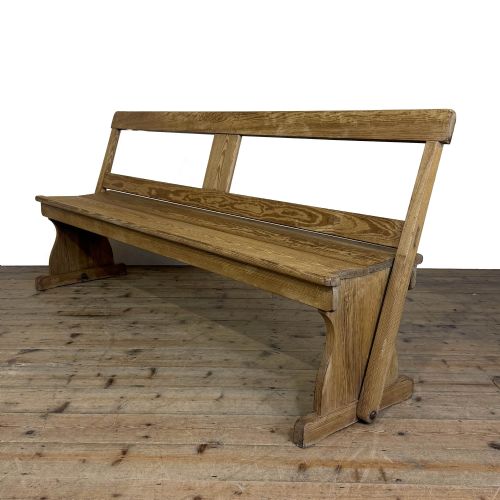
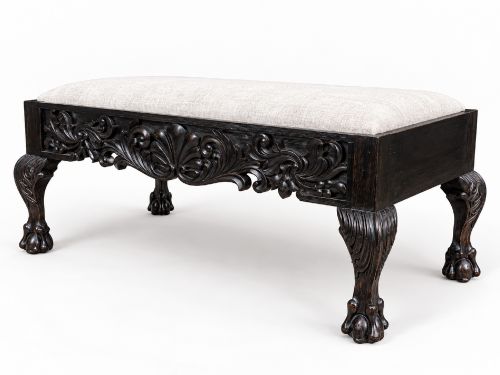
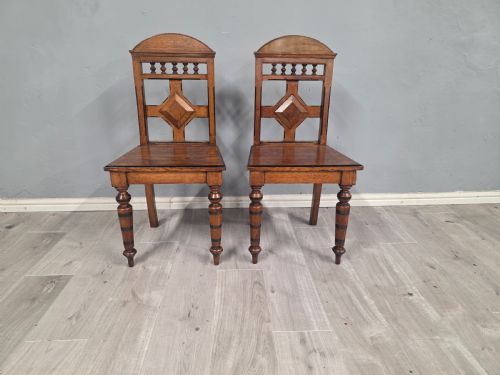
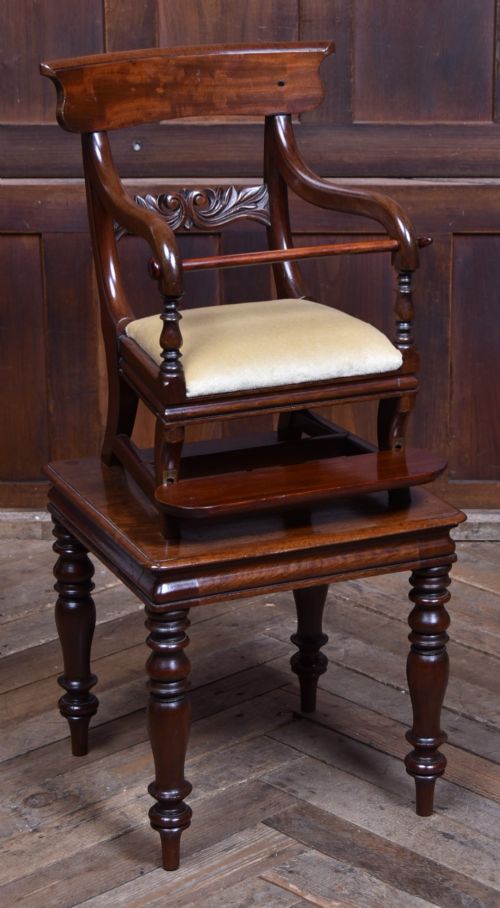
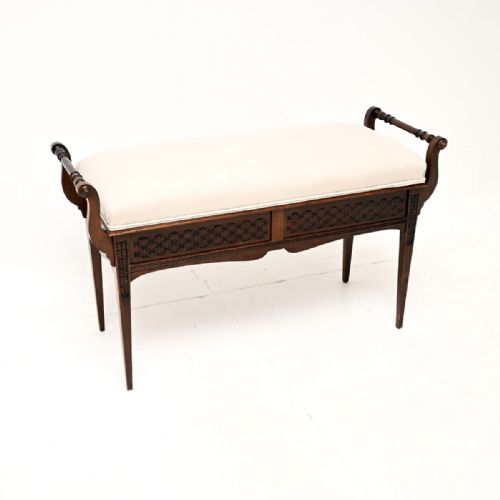
Victorian and Edwardian Seating
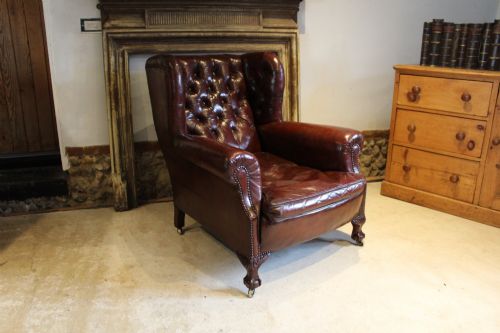
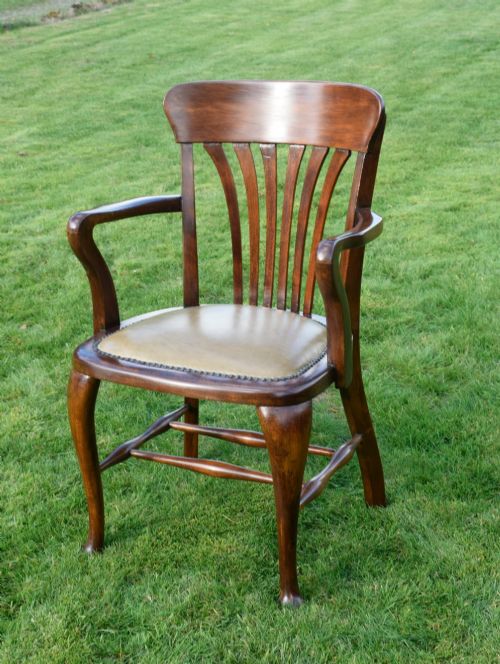
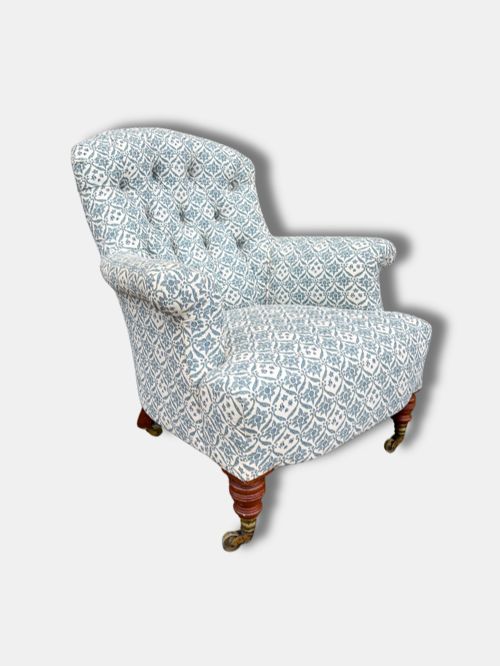
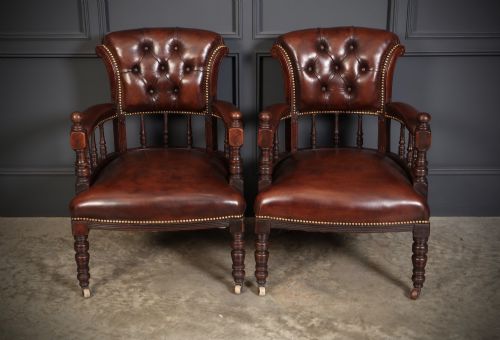
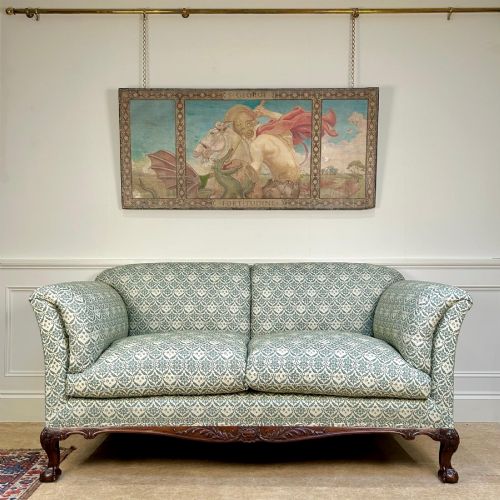
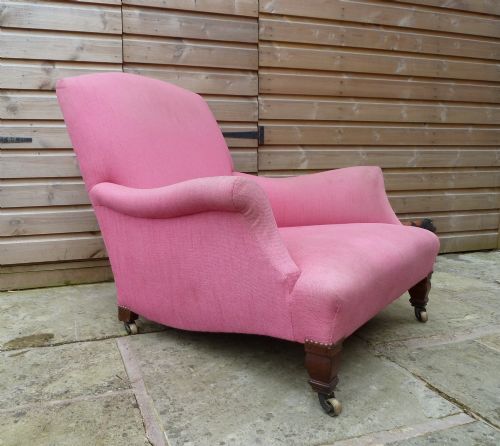
Victorian and Edwardian seating spans sturdy oak country chairs and upholstered button-back armchairs designed for comfortable daily sitting.
Victorian and Edwardian Seating
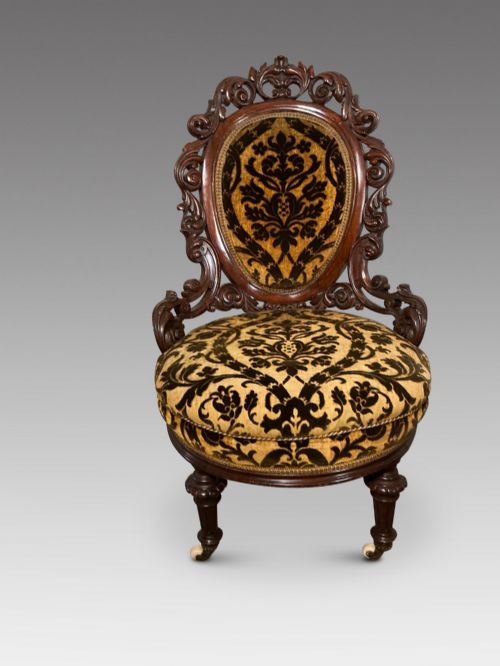
You meet heavy mahogany and oak frames alongside lighter ebonised salon chairs and beech elbow chairs. English country pieces sit alongside Scottish Baronial stools and Irish benches, reflecting the broad domestic production of the era.
Materials and construction methods
Cabinetmakers utilised solid timbers such as mahogany, oak, walnut, rosewood, and beech to construct robust frames. Turning, carving, and ebonising formed the decorative vocabulary, while cane and woven rush provided flexible seating surfaces.
Upholstered items relied on horsehair stuffing, button-backing, and robust fabric coverings like velvet. Structural joinery involved traditional methods to ensure durability under daily domestic use.
Victorian and Edwardian Seating Retail Price Guide 2026
Typical asking prices for victorian and edwardian seating among the pieces listed under this phrase on Sellingantiques today, from the lower quarter to the upper quarter. They describe what is for sale here now, not the wider market.
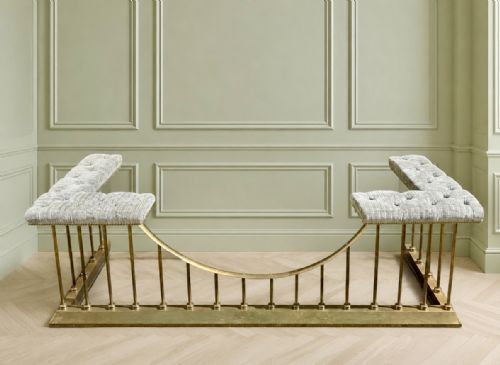
Listings for victorian and edwardian seating incorporate materials such as brass, cane, velvet, and goncalo alves wood across multiple seating forms.
Distinctions in construction and finish
Quality rests in the weight and selection of the timber, the crispness of hand-carved details, and the integrity of the underlying frame construction. Pieces from established workshops display tighter joinery and more refined proportions than standard commercial output.
The sophistication of the upholstery work, the choice of secondary woods, and the preservation of original surfaces separate standard utility items from high-end salon seating and bespoke commissions.
James Shoolbred·Howard And Sons·William Morris·Warings·Gillows
The Victorian and Edwardian Seating Glossary
- Bergere
- An upholstered armchair with closed sides traditionally filled with cane or wickerwork panels. This French-inspired form gained popularity in late nineteenth-century British drawing rooms.
- Ebonised
- Wood treated with a dark stain or finish to imitate ebony. This technique was favoured during the Aesthetic Movement and late Victorian periods for striking visual contrast.
- Button-back
- An upholstery style where depressions are formed in the padding by pulling buttons deep into the stuffing. It provides structural support while creating a distinctive tufted pattern.
- Spindle-back
- A chair back constructed with vertical turned wooden rods or spindles. This vernacular design appears frequently in nineteenth-century country and Windsor seating.
- Chippendale revival
- A stylistic movement reviving eighteenth-century carved mahogany motifs, particularly chair splats and cabriole legs. Makers produced these revival dining chairs in sets during the late nineteenth century.
Victorian and Edwardian Seating: Frequently Asked Questions
How do I identify a Howard and Sons armchair?
Howard and Sons chairs typically feature deep, sprung seats, low profiles, and specific caster stampings on the wooden legs. Their frames are often marked with serial numbers or paper labels.
Matching the upholstery style, such as tight buttoning or loose feather cushions, alongside the precise turning of the legs helps confirm attribution to the firm.
What is the difference between Victorian and Edwardian chairs?
Victorian seating generally employs heavier timbers, darker finishes, and more ornate carving, reflecting formal nineteenth-century interior aesthetics. Upholstery tends to be heavily sprung and buttoned.
Edwardian pieces often display lighter proportions, satinwood or mahogany inlays, and simpler lines influenced by Arts and Crafts or early modern preferences.
Can I use antique dining chairs daily?
Solid mahogany and oak dining chairs from the nineteenth century are structurally robust enough for regular seating if the joints remain tight. Periodic checks on the frame stability ensure safe daily use.
Care should be taken with delicate show-wood finishes and antique textiles, which benefit from sensible weight distribution and gentle cleaning routines.
How should I care for antique velvet upholstery?
Velvet surfaces require gentle brushing with the grain to prevent crushing the pile. Professional cleaning is recommended for antique textiles to avoid damaging historic fibres and backing materials.
Keep upholstered seating away from direct sunlight and heat sources to prevent the fabric colours from fading and the underlying stuffing from drying out.