

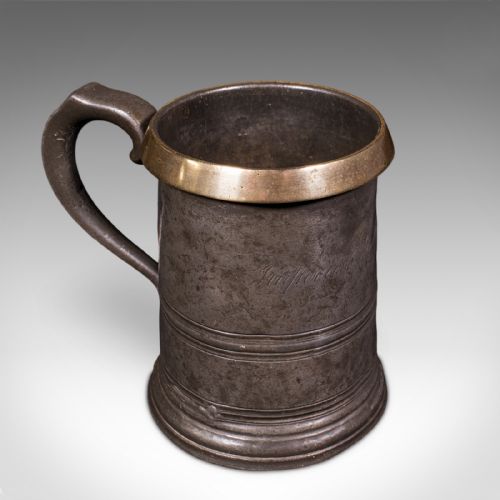


Victorian Ale Measure
These Victorian ale measure pieces are robust barware and tavern gear that bring genuine historic character to a kitchen or collection.
Victorian Ale Measure
A victorian ale measure is a functional tavern vessel designed for dispensing and serving liquor in public houses and homes during the nineteenth century. These items appear primarily in forms such as jugs, tankards, flagons, and graduated sets.
The material selection centres on durable metals like pewter, copper, and brass, often stamped with verification marks. Surviving examples range from single pint vessels to large multi-gallon harvest jugs.
Provincial English, Irish, and Scottish workshops produced these utilitarian objects to meet strict licensing standards. Buyers encounter both individual pieces and matched sets bearing old tavern or maker inscriptions.
How they were made
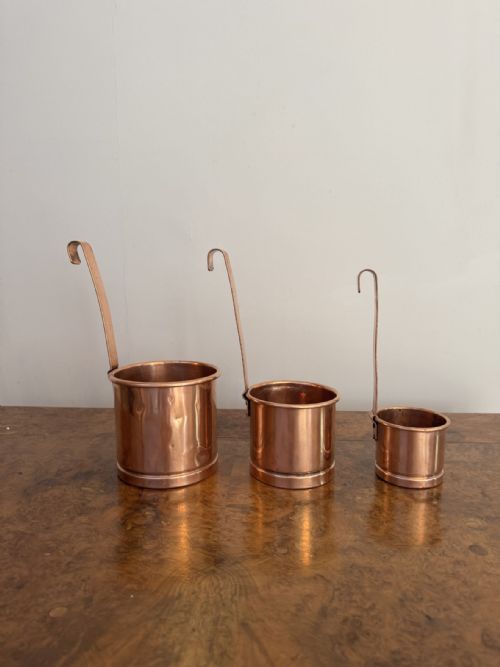
Metalworkers shaped heavy sheet copper and brass into smooth-walled vessels using skilled seaming and hammering techniques. Seams are often visible along the body and handle attachments, reflecting straightforward workshop methods.
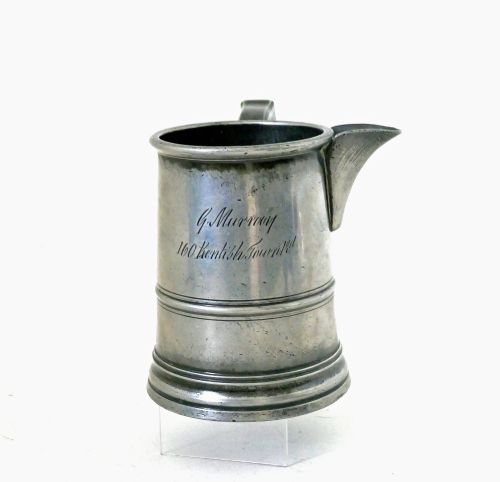
Pewter measures were cast in moulds and finished by hand, utilising alloys of tin and lead to achieve a durable surface. Engraved lettering and VR verification marks were added directly to the metal after initial construction.
What varies in quality
Quality rests in the heaviness of the metal gauge and the integrity of the original form without extensive modern repairs. Measures that retain crisp touchmarks, clear capacity stamps, and well-defined shape command greater interest.
Sets showing a matched graduation in size demonstrate higher original utility than assembled groups. Surface patination, clean lines, and legible tavern or maker inscriptions elevate the standing of a piece.
G. Murrouy·J. Bower·Frederic Sanders
The Victorian Ale Measure Glossary
- Haystack measure
- A distinctively shaped Irish or English metal measure with a flared body resembling a hayrick. These items often appear in graduated sets.
- Harvest jug
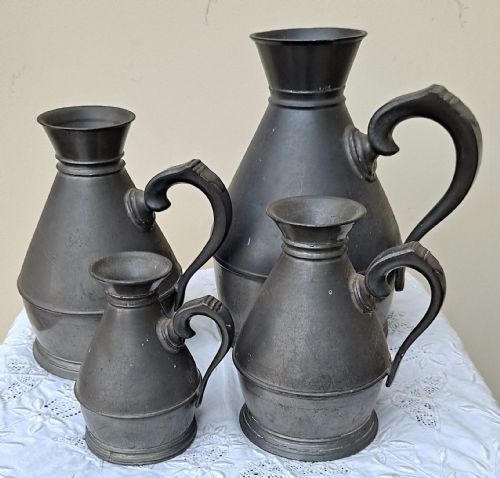
- A large-capacity vessel used for carrying ale to workers in the fields during seasonal farming. They frequently hold one gallon or more.
- Bell shaped tankard
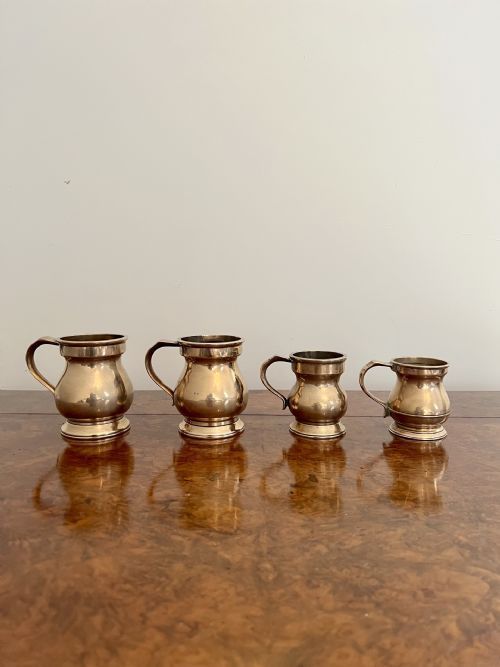
- A drinking vessel with a curved profile widening toward the base, typical of nineteenth-century tavern ware. Sets of these are found in copper and pewter.
- VR mark
- A royal cypher stamp denoting Victoria Regina, indicating official verification of capacity for public house use. These marks validate the government standard of the period.
- Tavern measure
- A standardised vessel employed in public houses to pour exact quantities of liquid refreshment. They form a core category of breweriana.
Victorian Ale Measure: Frequently Asked Questions
What is a Victorian ale measure?
A Victorian ale measure is a metal jug or tankard used in nineteenth-century taverns to serve exact quantities of liquor. They were built from copper, pewter, and brass for daily commercial service.
These vessels range from small one-pint sizes to massive multi-gallon flagons. They are collected today for their robust metalwork and association with historic pub culture.
How do I know the capacity?
Capacity is often indicated by stamped VR royal cyphers, capacity text, or standard sizing such as quart or pint. Graduated sets display clear proportional steps from the smallest to the largest vessel.
Individual pieces frequently bear explicit volume statements on the body or rim. These markings reflect period regulations for public house serving standards.
Where were they used?
These measures were utilised primarily in public houses, inns, and taverns across England, Ireland, and Scotland. Large harvest jugs also saw service in agricultural settings during seasonal farming.
Their sturdy construction suited the rough demands of commercial hospitality environments. Today they transition easily into domestic display as decorative kitchenalia.
How should I clean copper and pewter?
Metal measures generally benefit from gentle dusting and minimal intervention to preserve their historic surface patination. Aggressive polishing removes the aged character accumulated over decades in taverns.
If cleaning is necessary, use non-abrasive treatments suited specifically for copper, brass, or pewter. Avoid harsh chemical dips that strip away the authentic finish.