

Victorian Adjustable Table
A victorian adjustable table adapts mechanically to suit the reader, the writer or the dresser, combining period timber with brass ratchets and screws.
Victorian Adjustable Table
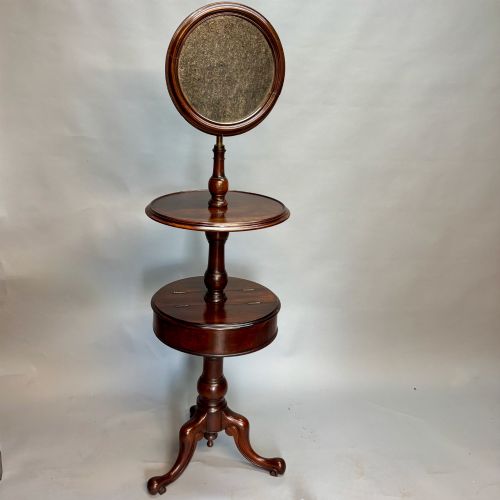
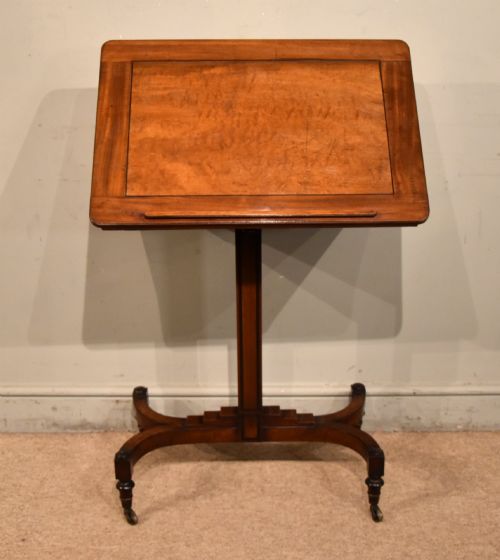
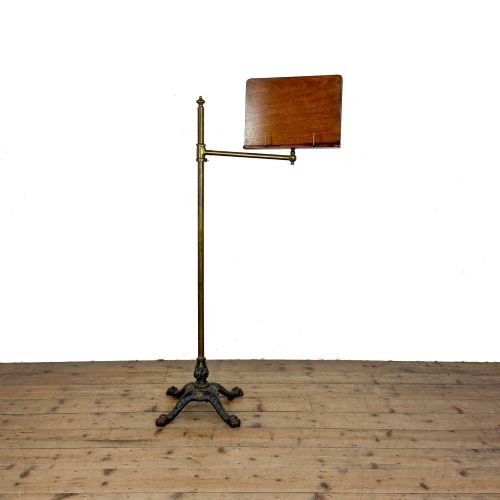
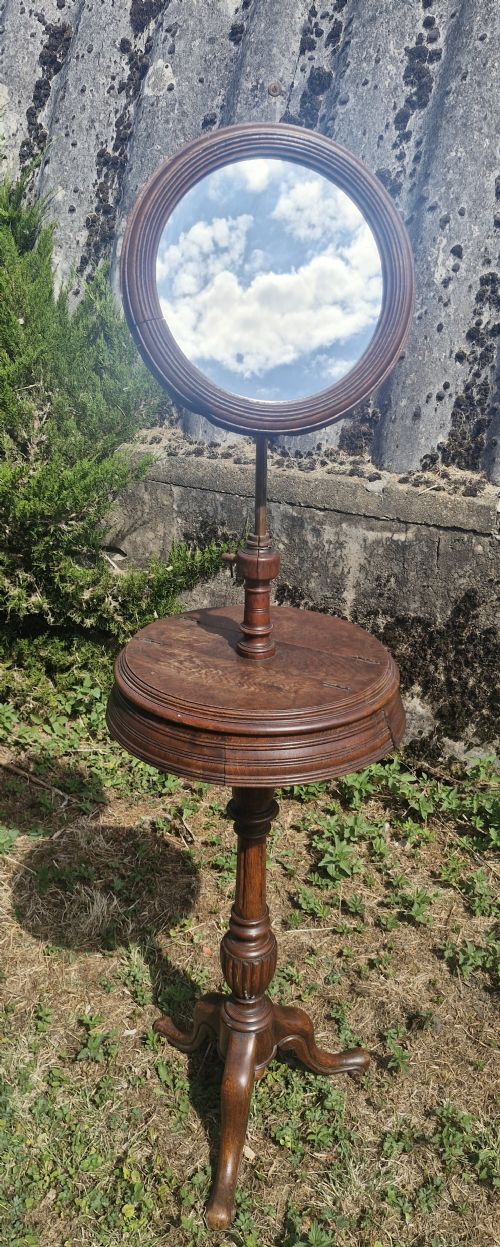
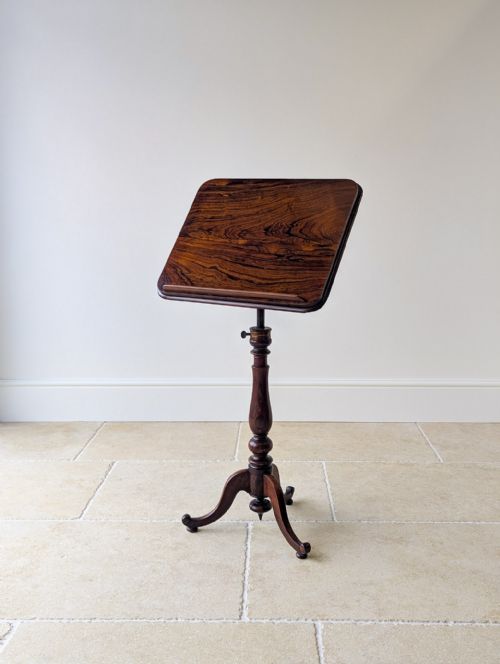
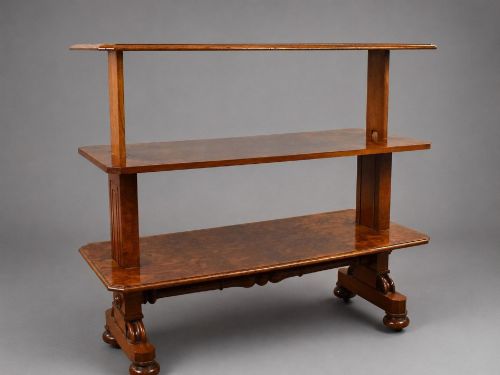
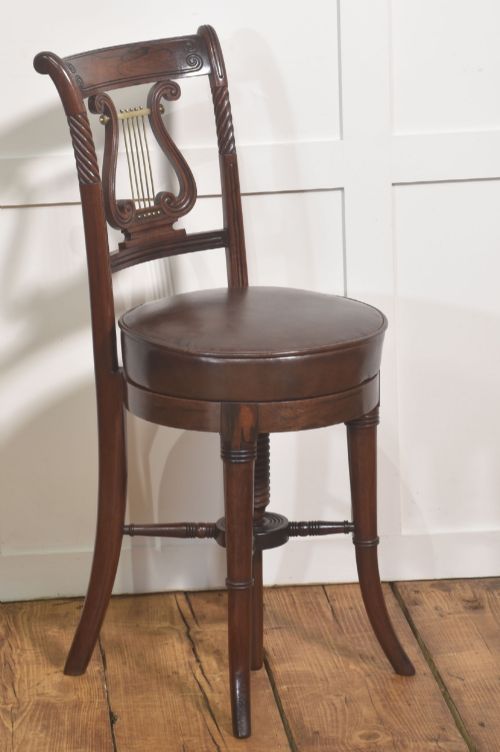
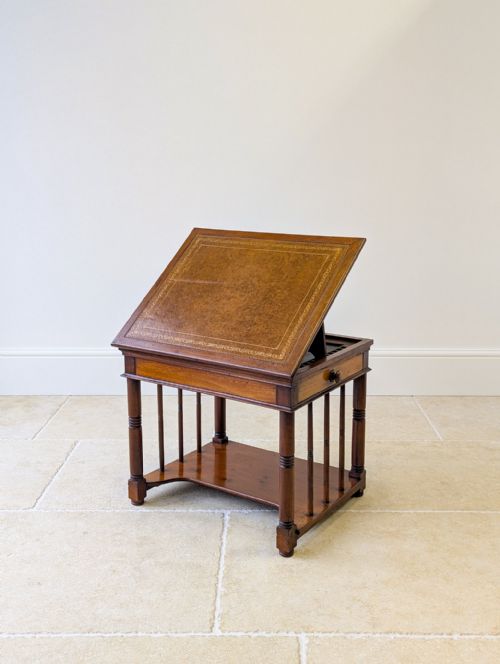
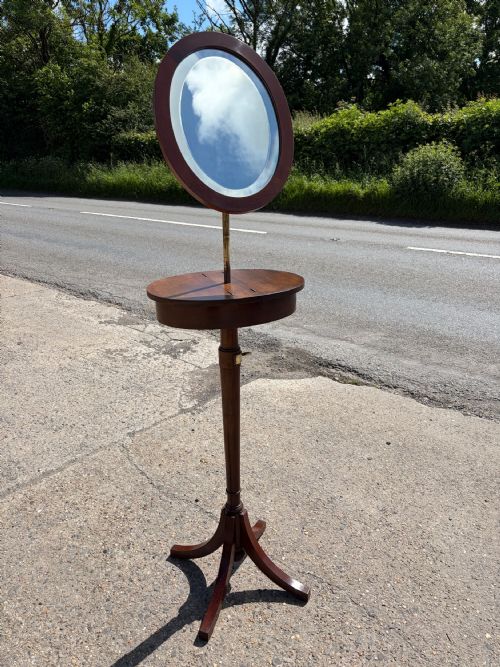
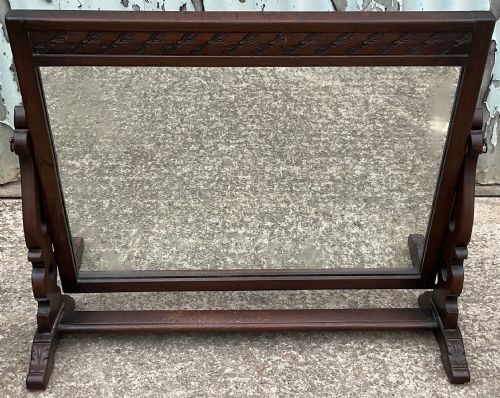
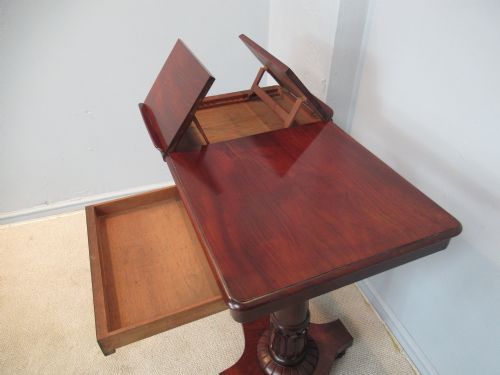
A victorian adjustable table encompasses reading stands, library tables, shaving stands and occasional pieces designed to alter in height or angle. The pieces seen most frequently are mahogany and walnut reading tables and music stands, alongside mechanical occasional pieces and dumbwaiters.
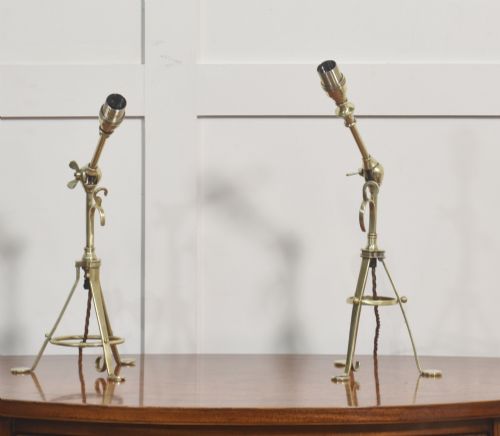
The category spans the nineteenth century, with strong representation from the Victorian era and earlier William IV and Regency periods. Makers and patentees such as Carters of London appear among library and bedside reading tables, whilst brass lighting and stands also feature.
These items served functional roles in the library, drawing room or bedroom, allowing books, lamps or mirrors to be positioned precisely for the user. Their mechanisms relied on screws, ratchets and telescopic shafts engineered to hold heavy timbers and brass work securely in place.
How They Were Made
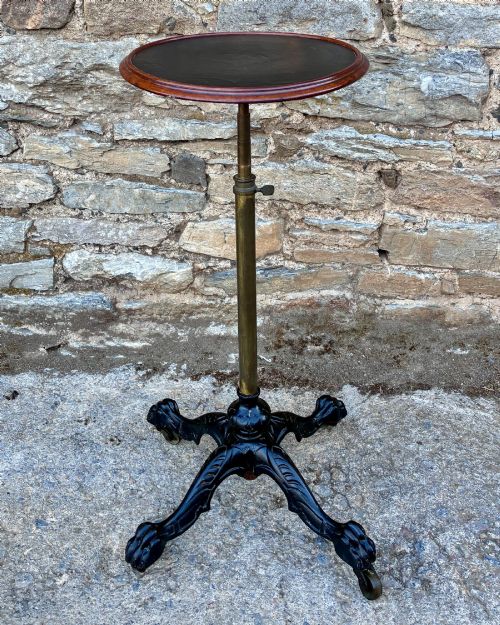
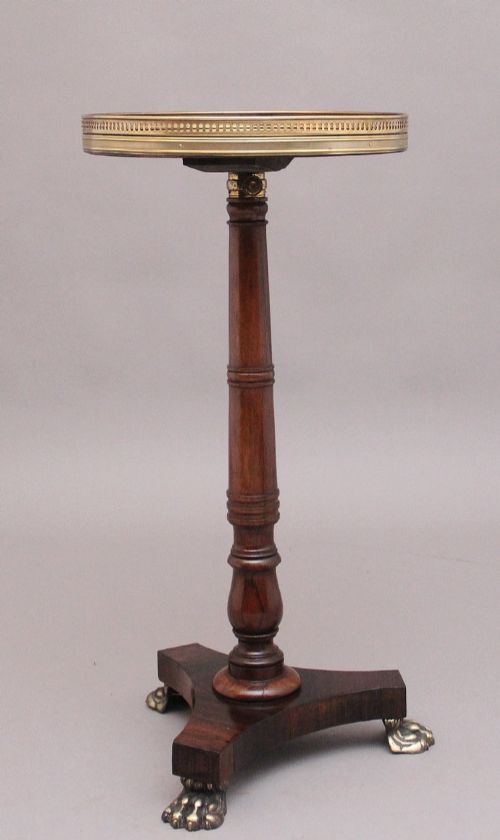
Construction relies heavily on dense timbers such as mahogany, rosewood, burr walnut and oak, often paired with cast brass mechanisms, ratchets and screw assemblies. Telescopic brass columns and cast iron bases provide the necessary weight and stability for moving parts.
Joinery techniques balance decorative cabinet work with robust engineering to support pivoting desk surfaces, extending stems and folding leaves. Drawer linings, turned tripod bases and carved details demonstrate the standard joinery methods of the nineteenth century workshop.
Some reading tables feature tiny candle arms that swing out precisely where the writer needs them.
What Varies In Quality
Quality rests in the precision and complexity of the mechanical action, from smooth telescopic rises to securely locking reading angles. Simpler friction fits contrast with patented rack-and-pinion systems signed by makers like Carter.
The choice of timber grain, particularly figured mahogany or burr walnut, dictates the visual status of the piece, alongside the weight and finish of the cast brass fittings. Original components and unblemished operating parts elevate an example above standard utility pieces.
W A S Benson·Wild And Wessel·Carters Of London·John Carter
The Victorian Adjustable Table Glossary
- Telescopic
- Describing a pillar or shaft formed of concentric tubes sliding one inside another to alter height. This mechanism allows reading stands and lamp columns to extend smoothly.
- Ratcheting
- Utilising a notched bar and pawl to hold a tilting desk top or mirror at incremental angles. It provides secure adjustment for reading and writing furniture.
- Dumbwaiter
- A multi-tiered piece of dining furniture featuring rotating or stationary shelves, sometimes built with adjustable sections. They served to hold food and utensils near the dining table.
- Campaign
- Built for portability with folding stands or removable parts, often in mahogany with brass mounts. These pieces were designed for travel during the nineteenth century.
- Metamorphic
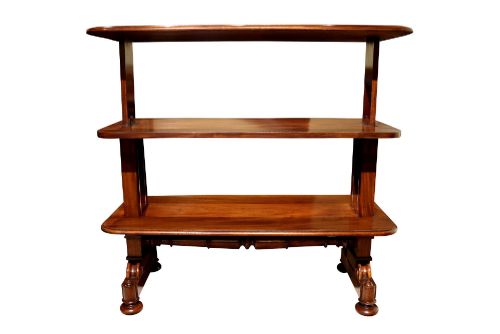
- Changing form from one type of furniture into another through hinged or sliding actions. Examples include tables that convert into steps or reading desks.
Victorian Adjustable Table: Frequently Asked Questions
What is a Victorian adjustable table?
A Victorian adjustable table is a nineteenth-century piece of furniture designed with mechanical parts to alter its height, angle or configuration. These include reading stands, music tables, shaving mirrors and occasional tables made from timbers like mahogany and walnut.
The mechanisms typically involve brass ratchets, screws or telescopic columns. They were engineered for functional use in libraries, drawing rooms and bedrooms to suit the specific posture or task of the user.
How do you operate the reading mechanism?
The mechanism usually relies on a brass thumbscrew, a ratcheted arm or a sliding telescopic shaft housed within the central pillar. Loosening the screw or lifting the rack allows the surface to tilt or rise before locking firmly back into place.
Heavier reading tables often feature counterweights or crank handles to assist movement. Users should support the weight of the desk top whilst adjusting the height or angle to prevent sudden slips.
Where were these tables used?
These tables were primarily used in private libraries, studies, drawing rooms and bedrooms of large nineteenth-century homes. Reading stands and library tables sat beside armchairs, whilst shaving stands and dressing tables occupied the bedchamber.
Their adjustable nature made them versatile for holding heavy folios, sheet music, candles or washing implements. They moved around rooms easily depending on where light and convenience required them.
How do I care for the wood and brass?
Care involves dusting regularly with a soft, dry cloth and occasionally applying a traditional beeswax to nourish timbers like mahogany, rosewood and walnut. Avoid placing these tables near direct heat sources or strong sunlight, which can dry out the polish and warp the wood.
Brass components can be cleaned gently with a non-abrasive cloth to remove tarnish without disturbing the surrounding polish. Lubricating moving mechanical joints should be done sparingly with appropriate oils if stiffness occurs.