
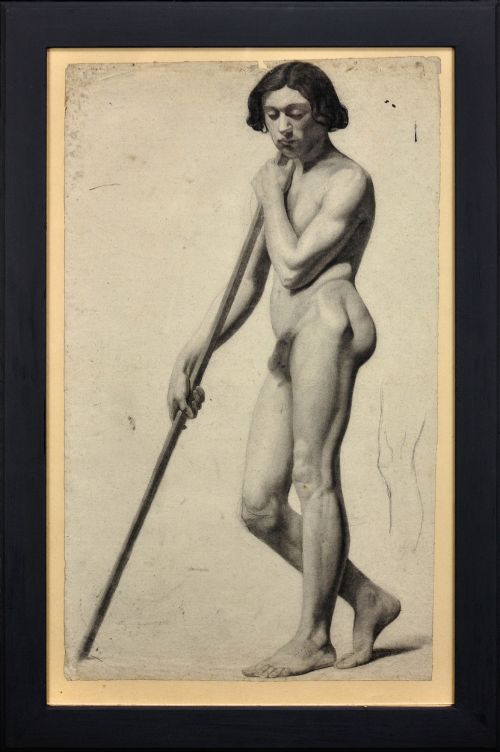

![Pen and Ink Sketch - Female Nudes by William Edward Frost [1810-1877]](https://www.sellingantiques.co.uk/photosnew/dealer_kendallhouse/dealer_kendallhouse_full_1758970795762-8493507346.jpg)


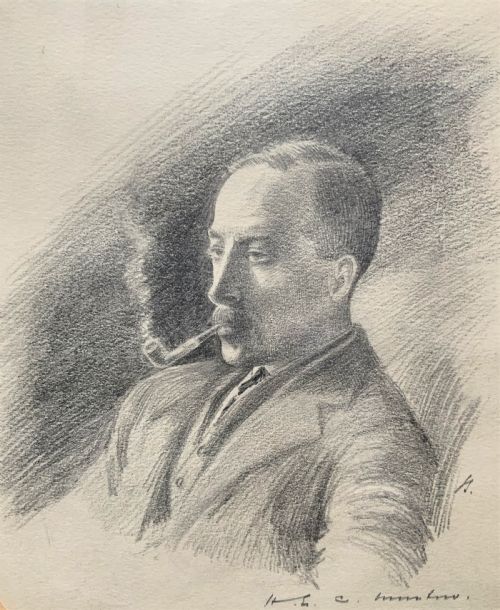


Victorian Academic Drawing
These Victorian academic drawing examples capture rigorous nineteenth-century training through detailed charcoal, graphite, and chalk studies.
Victorian Academic Drawing
A Victorian academic drawing represents the methodical study of the human form, classical sculpture, and portraiture typical of nineteenth-century art training. These works preserve the rigorous discipline demanded of artists mastering proportion, shadow, and anatomy during the period.
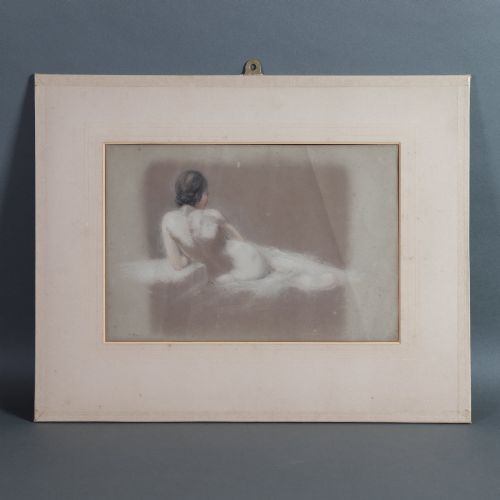
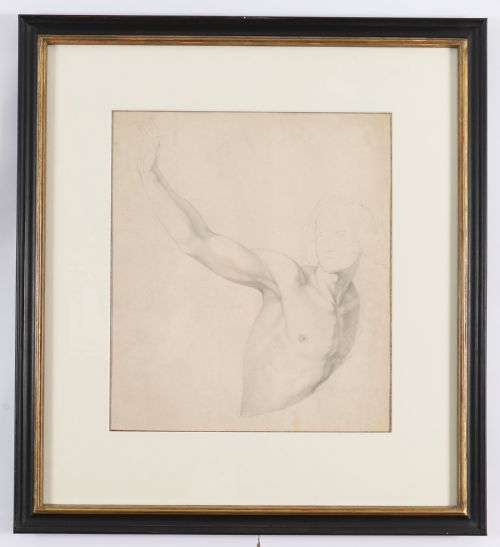
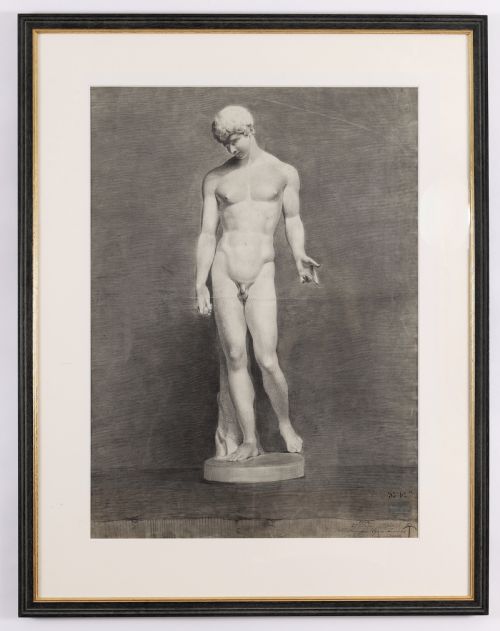
The pieces available here take the form of original framed drawings, figural studies, and portraits executed on paper. Subjects range from male and female nudes to historical figures and classical plaster casts.
Originating across the nineteenth century, particularly around the eighteen-fifties, eighteen-seventies, and eighteen-eighties, these works reflect Neoclassical and Academic Realism traditions. Buyers encounter everything from preliminary pencil sketches to finished grisaille still life studies and multi-media figure works.
Materials and technique
Artists relied primarily on paper supports, frequently utilising toned paper to establish middle tones before building highlights with chalk or white bodycolour. Charcoal and graphite provided the precision necessary for accurate anatomical rendering and subtle tonal graduation.
Techniques combined fine line work with careful smudging and hatching to achieve three-dimensional form on flat surfaces. Pen and ink, watercolour, and mixed media occasionally supplemented the core mediums of pencil and chalk.
Materials across these listings span paper, charcoal, wood, graphite, glass, chalk, watercolour, and toned paper.
Distinctions in quality
Quality rests upon the precision of anatomical structure and the deftness of tonal control across the paper surface. Superior examples demonstrate a confident mastery of light and shadow, particularly when capturing complex musculature or the contours of plaster casts.
The distinction between standard student exercises and works by accomplished masters lies in the fluidity of line and the psychological depth of portraits. Preservation of the original paper, charcoal, and chalk mediums also influences the standing of each piece.
William Etty·Henry Arthur Roberts·William Edward Frost·John Macallan Swan·Theobald Chartran·George Richmond
The Victorian Academic Drawing Glossary
- Academic Realism
- A style of painting and drawing produced under the influence of European academies of art, emphasising precise anatomical accuracy and classical ideals.
- Grisaille
- A painting or drawing executed entirely in shades of grey or neutral grey-green, often used for preparatory studies or to simulate sculpture.
- Plaster Cast
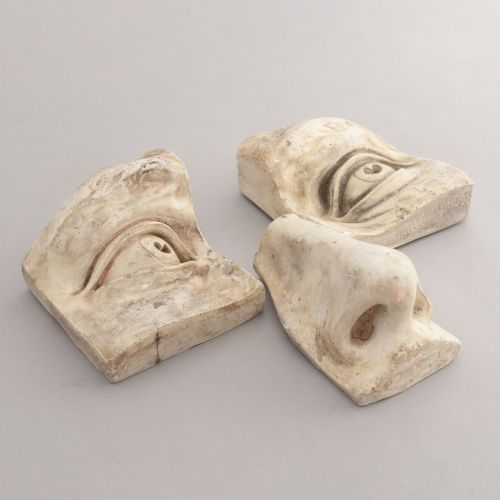
- A copy of a three-dimensional sculpture cast in plaster, utilised extensively in nineteenth-century academies for student drawing practice.
- Toned Paper
- Paper that possesses a light colour rather than pure white, allowing artists to work efficiently with dark and light mediums simultaneously.
- Charcoal
- A lightweight carbon material obtained by slowly burning wood, used to create deep blacks and soft smudged shadows on paper.
Victorian Academic Drawing: Frequently Asked Questions
What is a Victorian academic drawing?
These works are nineteenth-century instructional studies created by artists mastering human anatomy, portraiture, and classical sculpture. They document the rigorous training methods employed in European art academies.
Such pieces range from rapid pencil sketches to finished portraiture on paper, utilising charcoal, chalk, and graphite.
How were these drawings used?
Artists produced these drawings as foundational practice for larger oil paintings, historical compositions, or portrait commissions. Drawing from life and plaster casts formed the core of nineteenth-century art education.
Students and established painters alike used these studies to refine their understanding of shadow, light, and proportion before tackling major works.
How do I live with these drawings?
Framed works on paper require careful placement away from direct sunlight to prevent the fading of graphite, chalk, and toned paper. UV-protective glazing helps preserve the delicate charcoal and ink mediums.
Displaying them in study rooms, libraries, or living spaces complements traditional and contemporary interior schemes alike.
How do I identify the period?
Dating relies on stylistic markers of nineteenth-century academic realism, Neoclassical influences, and nineteenth-century dress or hairstyles in portraits. Signatures, dates, and framing materials often provide further contextual clues.
Paper types and traditional mounting methods characteristic of the eighteen-fifties through the eighteen-eighties also assist in confirming age.