
Victorian 9ct Gold Chain
A victorian 9ct gold chain delivers the warm hue and dependable links characteristic of nineteenth-century metalwork.
Victorian 9ct Gold Chain
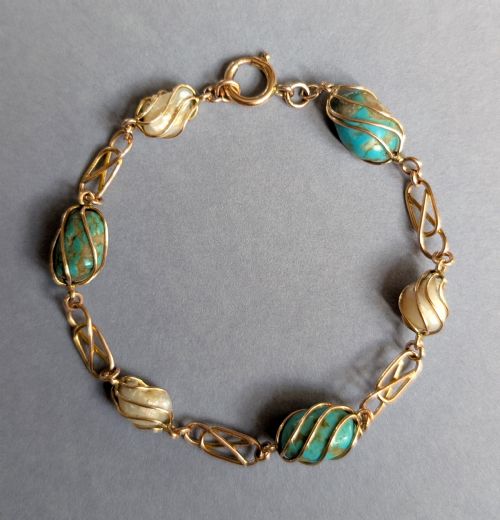
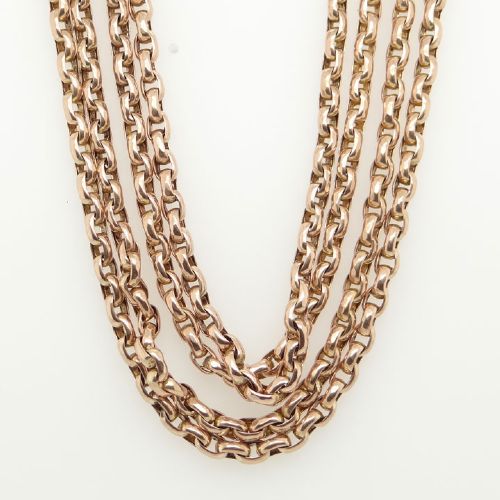
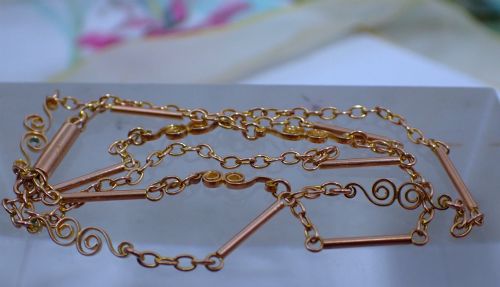
A victorian 9ct gold chain encompasses substantial pocket watch chains, long guard chains, delicate necklaces and heavy charm bracelets fashioned during the nineteenth century and the Edwardian era. The selection spans short neck chains measuring under sixteen inches alongside continuous multi-foot lengths designed to be doubled or tripled around the neck.
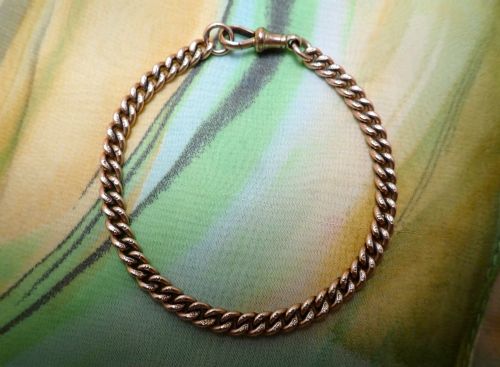
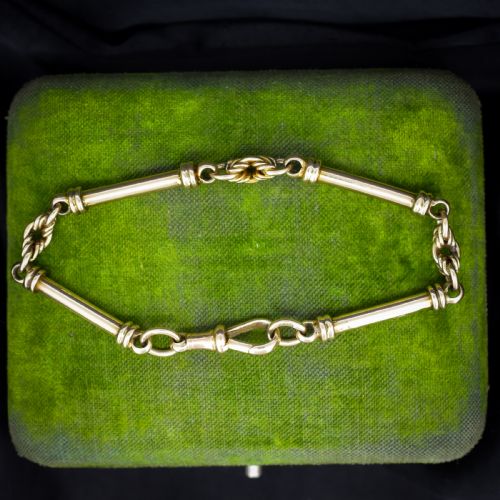
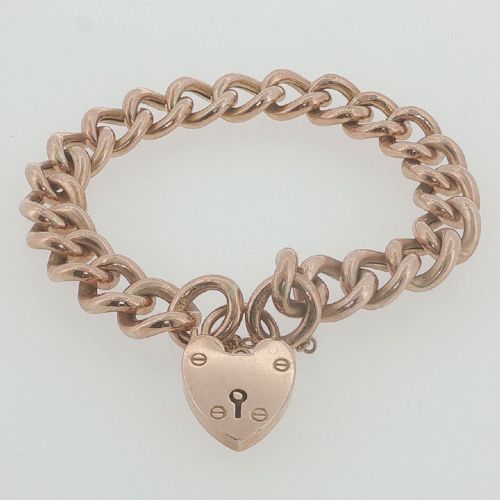
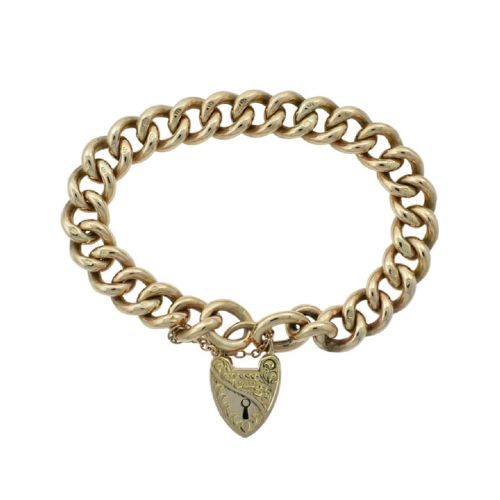
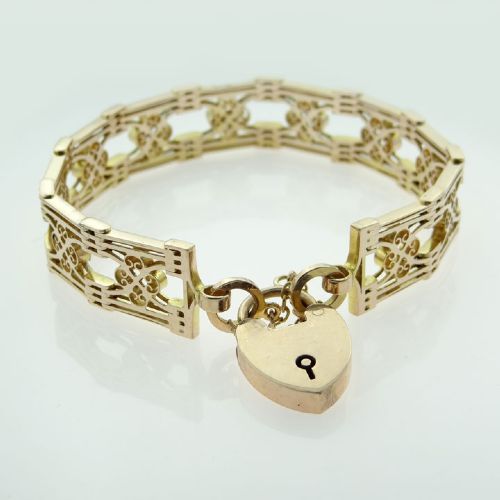
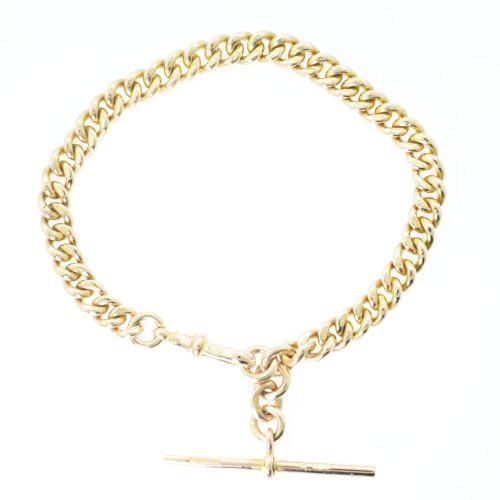
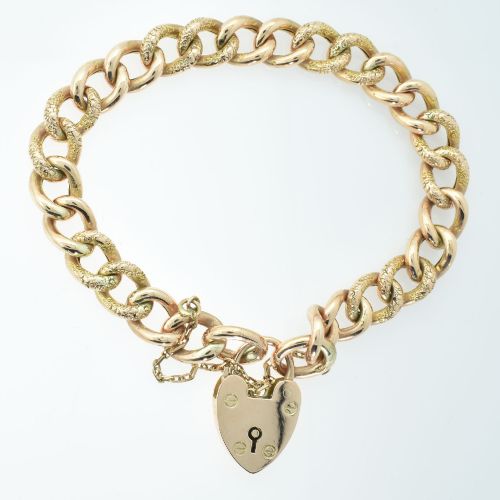
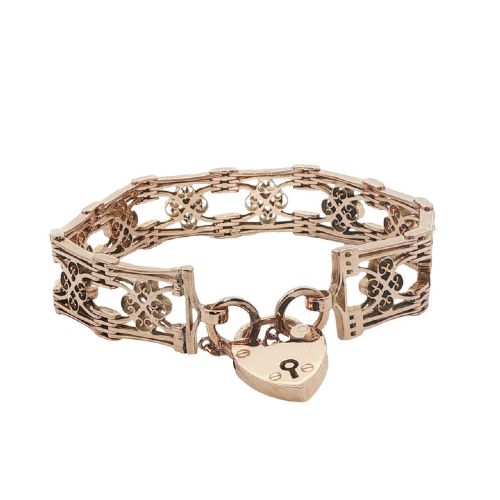
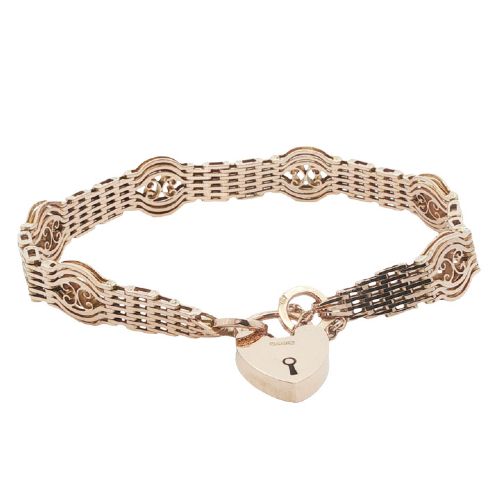
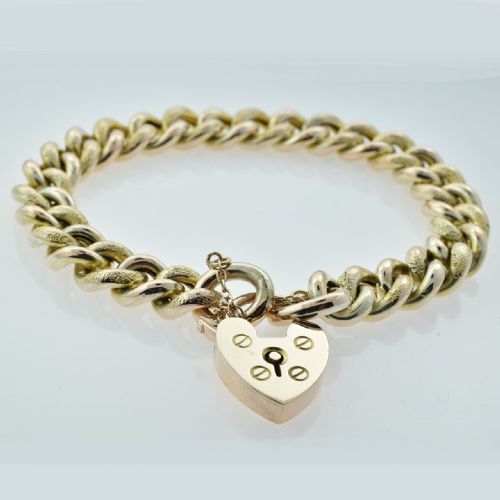
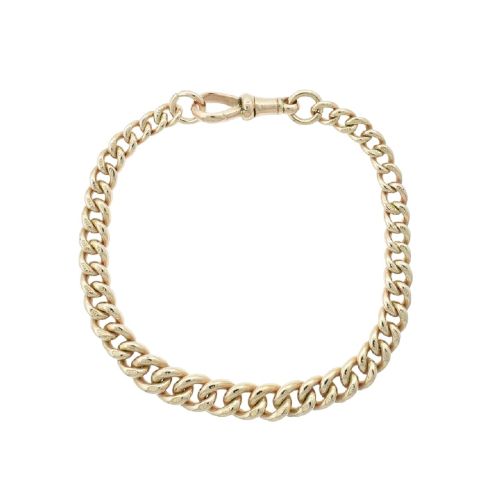
Makers often adapted utilitarian pocket watch attachments into wearable necklaces, incorporating dog clips, swivel clasps and T-bars directly into the design. Common link formations include classic curb patterns, hollow paper clips, decorative trombone links and intricate gate bracelets secured by heart padlocks.
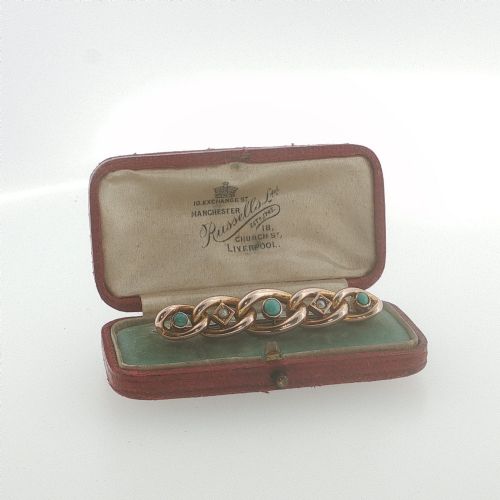
Pieces frequently feature supplementary adornments such as gem-set pendants, turquoise stars, seed pearl crescents or engraved lockets suspended from the primary links. While many examples originate from the Victorian period, related variations extend into the early twentieth century, including Edwardian and nineteen-twenties productions.
Materials and construction
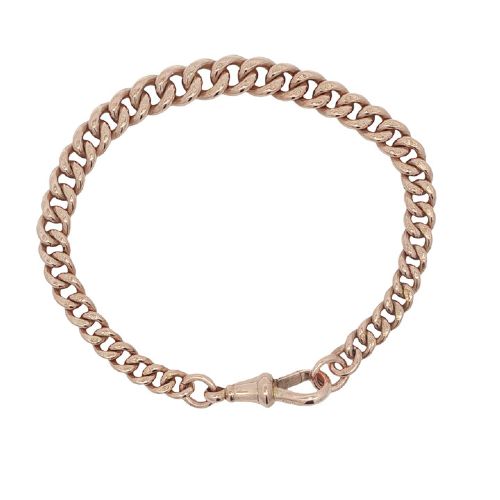
Goldsmiths utilised nine-carat gold in yellow, white and distinct rose hues, occasionally combining two-tone metals within a single piece to create subtle colour contrast. Components were fabricated through wire-drawing, stamping and hand-assembly, linking individually formed hollow or solid links into flexible chains.
Clasps, dog clips and T-bars relied on integrated steel springs and pivoting mechanisms to secure heavy pocket watches or lockets during daily wear. Decorative elements such as surface engraving and starburst motifs were applied by hand using gravers to score geometric patterns into the gold surface.
Listings feature items spanning the Victorian period, Edwardian era, and the nineteen-twenties, incorporating yellow and rose nine-carat gold.
Assessing construction and wear
The standard of a victorian 9ct gold chain depends on the structural integrity of the individual links and the weight of the metal used in its creation. Heavier examples display minimal stretching and maintain crispness in engraved patterns, whereas thinner hollow variants show thinning at points of friction.
Original hardware, including functional dog clips, swivel clasps and matching T-bars, contributes to the integrity of a piece. Alterations or replacements to these components change the original configuration of watch chains and necklaces.
The Victorian 9ct Gold Chain Glossary
- Dog clip
- A spring-loaded swivel clasp commonly found on watch chains and bracelets for attaching pendants or pocket watches.
- T-bar
- A short transverse bar attached to the centre of a pocket watch chain, designed to anchor the chain through a waistcoat buttonhole.
- Guard chain
- An exceptionally long chain worn draped around the neck, originally utilised to secure pocket watches or lorgnettes.
- Curb link
- A type of chain composed of uniform, flattened links that interlock smoothly when laid flat.
- Albert chain
- A pocket watch chain named after Prince Albert, featuring a central drop for a fob or pendant.
Victorian 9ct Gold Chain: Frequently Asked Questions
How do I wear a long guard chain?
Long guard chains measure substantial lengths and are typically doubled around the neck to create a layered appearance. They often terminate in a dog clip, allowing the wearer to suspend lockets or tuck the ends together.
Alternatively, these chains can be worn as a single long strand or wrapped multiple times to function as a heavy bracelet.
What is the difference between an Albert chain and a standard necklace?
An Albert chain was originally engineered for securing pocket watches to clothing, incorporating a T-bar at one end and a swivel clasp or dog clip at the other. These components remain integral parts of the design rather than standard necklace spring rings.
Standard necklaces focus on continuous decorative links meant to encircle the neck without the specific anchoring hardware intended for pocket timepieces.
How can I tell the difference between yellow and rose 9ct gold?
Rose nine-carat gold contains a higher proportion of copper alloy within the metal mixture, imparting a distinct reddish or pinkish hue compared to standard yellow gold. Two-tone examples combine both variations within the same link pattern.
Lighting conditions can influence how these tones appear, but direct comparison against a neutral white background reveals the characteristic warmth of the rose alloy.
What are heart padlock bracelets?
Heart padlock bracelets are gate or curb link bracelets secured by a spring-loaded padlock shaped like a heart. These padlocks often feature hand-engraved surface patterns and sometimes serve a decorative rather than locking function.
They represent a distinct Victorian form frequently paired with safety chains to prevent loss during wear.