


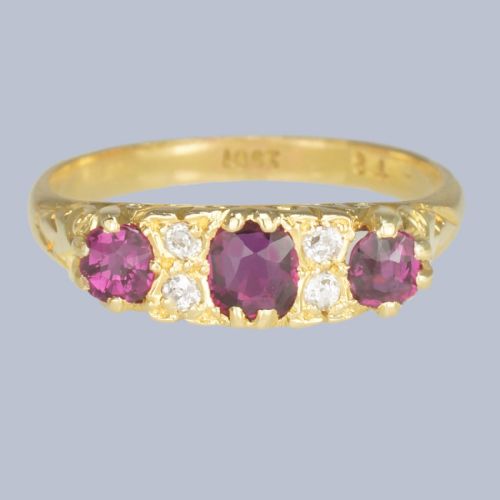
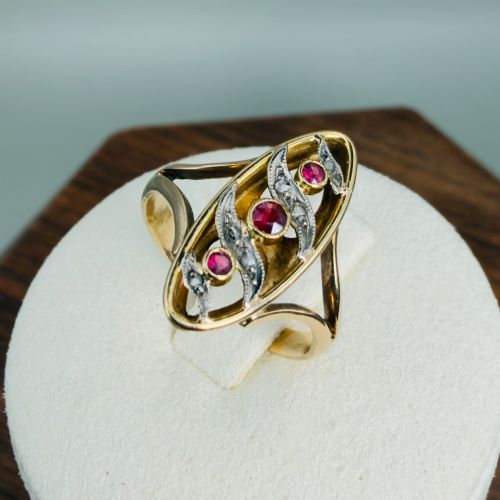
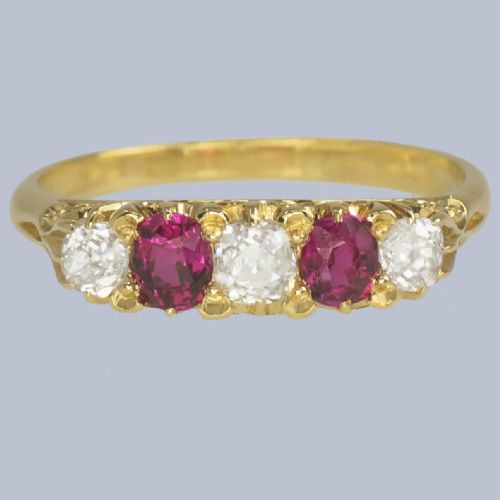
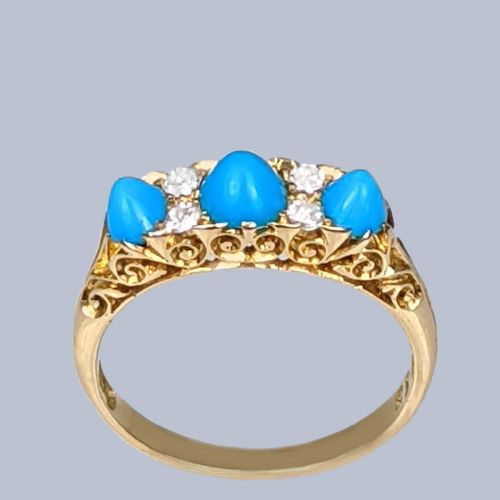
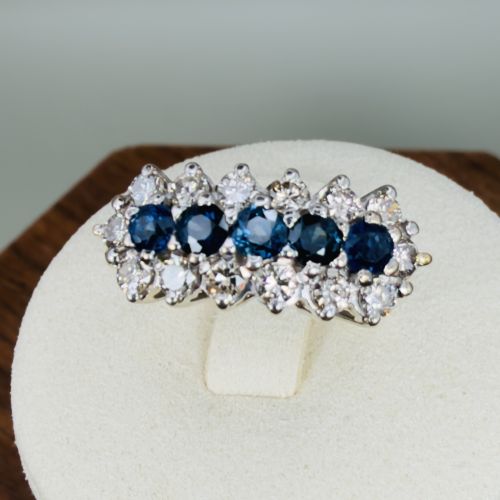
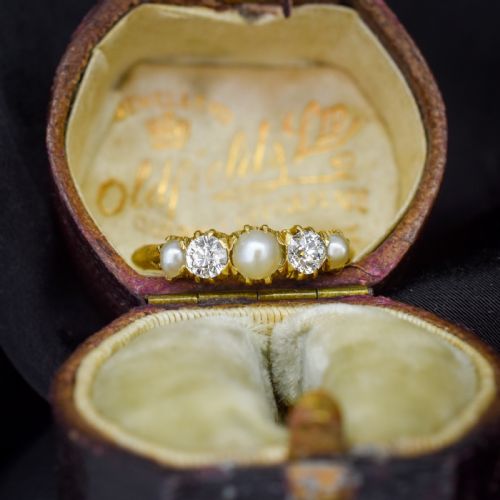
Victorian 18ct Gold Band
A victorian 18ct gold band offers tangible connection to nineteenth-century sentiment and craftsmanship through enduring precious metal and gemstones.
Victorian 18ct Gold Band
The pieces on this page span the late nineteenth century and turn of the twentieth century, appearing predominantly as ring bands, gypsy settings, and multi-stone arrangements.
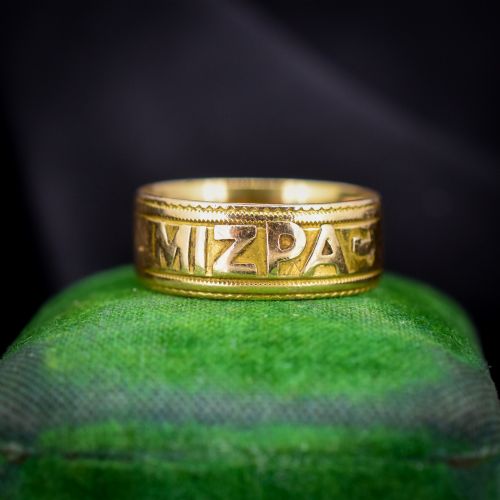
Mizpah bands, buckle designs, and serpent motifs frequently represent the sentimental jewellery produced during this period.
Materials and Techniques
Craftsmen utilised high-purity 18ct yellow and rose gold, combining structural durability with rich colouration.
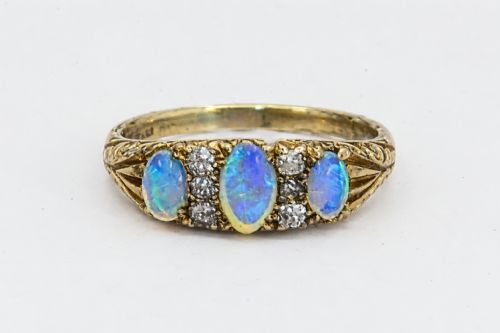
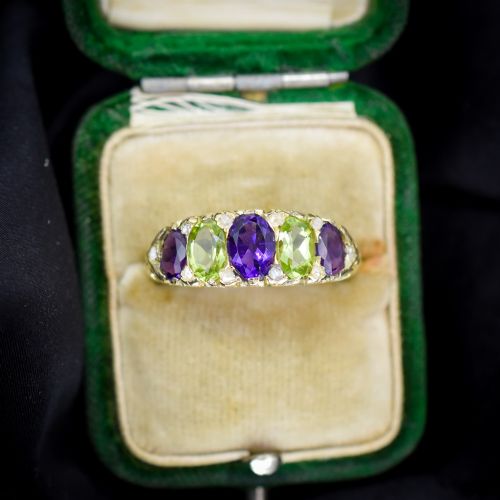
Gemstones including old cut diamonds, sapphires, and pearls were flush-set in gypsy mountings or secured with traditional claw settings.
Hallmarks stamped by regional assay offices such as Birmingham and Chester provide official records of origin and metal standard.
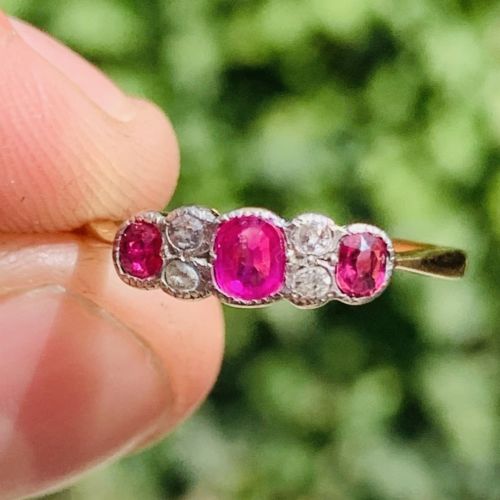
Listings feature 18ct gold combined with diamonds, sapphires, rubies, opals, turquoises, and platinum across the Victorian, Edwardian, and Art Deco periods.
Standards of Execution
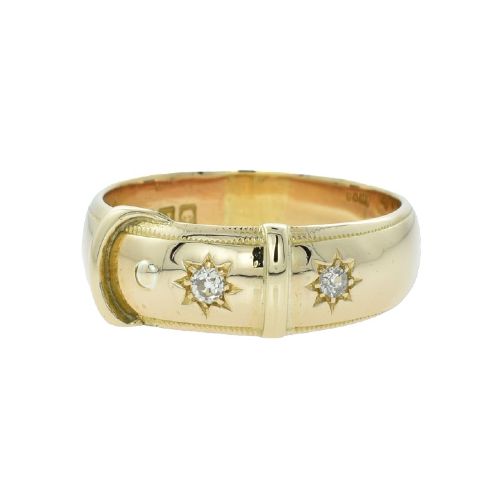
Quality separates pieces by the crispness of chased detailing on ornate bands and the secure flush-mounting of star-set diamonds.
The selection of matched, vibrant gemstones and the retention of clear hallmarks distinguish superior examples from standard production.
Thomas Johnson
The Victorian 18ct Gold Band Glossary
- Gypsy setting
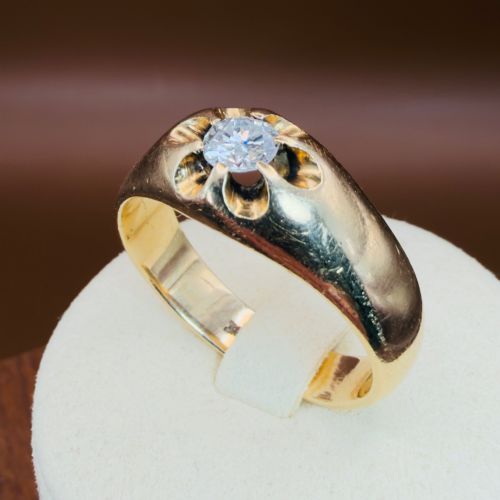
- A mounting style where the gemstone is flush-sunk directly into the metal band so the surface remains smooth. This technique protects the girdle of the stone.
- Old cut diamond
- A hand-faceted diamond shape featuring a smaller table, higher crown, and open culet characteristic of nineteenth-century lapidary work. These stones display distinctive candlelit scintillation.
- Mizpah band
- A sentimental piece inscribed with a biblical Hebrew word denoting an emotional bond between absent friends or lovers. They frequently incorporate interlocking hands or floral motifs.
- Hallmark
- An official stamp applied by an assay office indicating metal purity, location, and date of manufacture. British marks often include a crown and numerical standard.
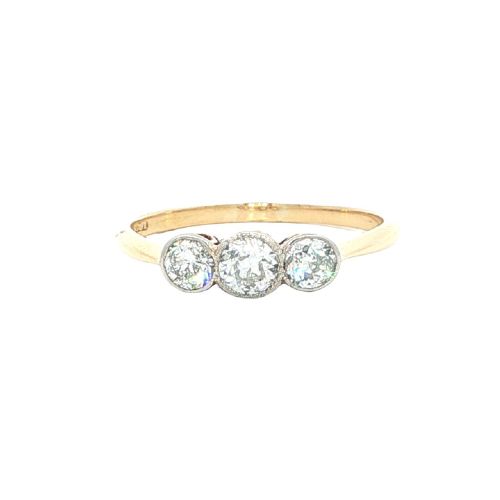
- Trilogy ring
- A jewellery arrangement featuring three principal stones, traditionally symbolising past, present, and future. Diamonds and sapphires are commonly paired in this layout.
Victorian 18ct Gold Band: Frequently Asked Questions
How do I care for my ring?
Clean nineteenth-century gold jewellery gently using warm soapy water and a soft brush, avoiding harsh chemical dips that can damage softer gems like turquoise and opal.
Store antique rings individually in fabric-lined boxes to prevent friction against harder diamonds and precious stones.
Can these rings be resized?
Most solid gold bands can be adjusted by a skilled jeweller, though ornate patterns, engraved shoulders, or continuous channel-set stones limit how much the circumference may change.
Consult a specialist workshop to preserve historical hallmarks and structural integrity during any alteration.
What does gypsy setting mean?
A gypsy setting embeds the gemstone flush into the thick gold band, creating a smooth profile that resists snagging on clothing.
This technique was particularly popular for nineteenth-century men and women seeking durable, everyday jewellery.
How are periods identified?
Assay office stamps, stylistic motifs like serpent coils or buckle closures, and specific gem-cutting styles such as old mine cuts provide reliable chronological markers.
Comparing regional hallmarks against historical registry records confirms the exact decade of production.