


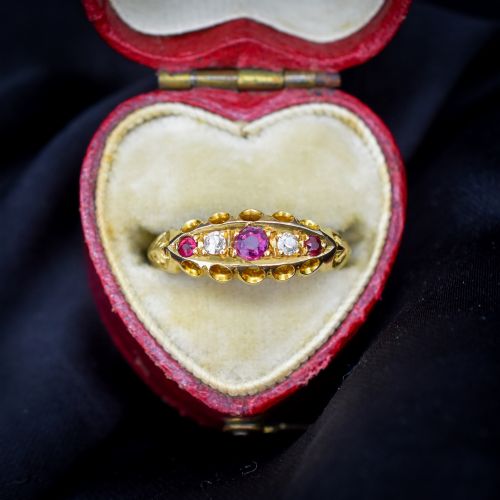
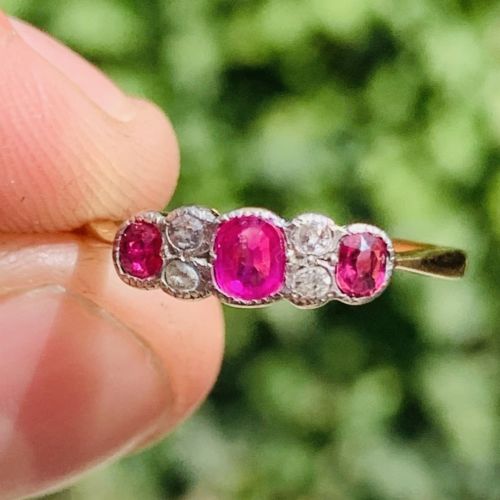
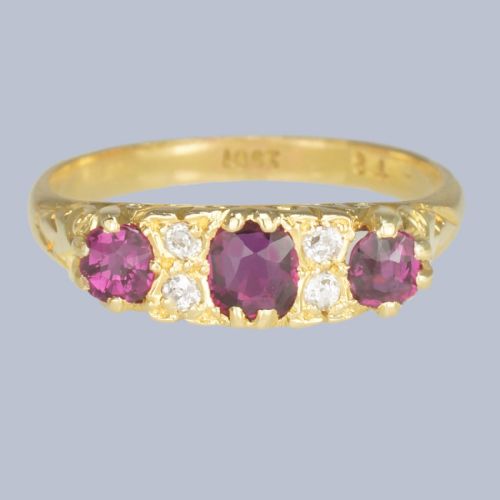
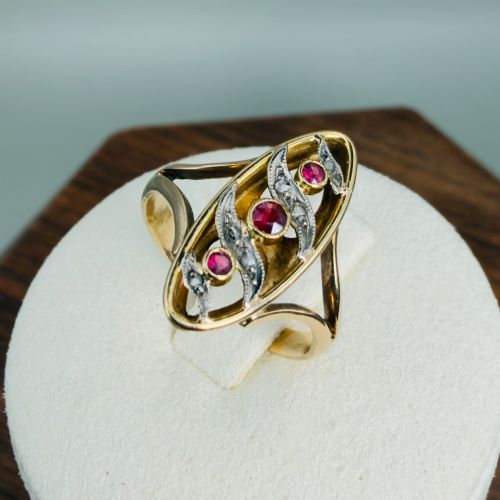
18ct Ruby Diamond Band
An 18ct ruby diamond band brings together rich red rubies and sparkling diamonds set in solid gold, offering a classic combination of colour and durability.
18ct Ruby Diamond Band
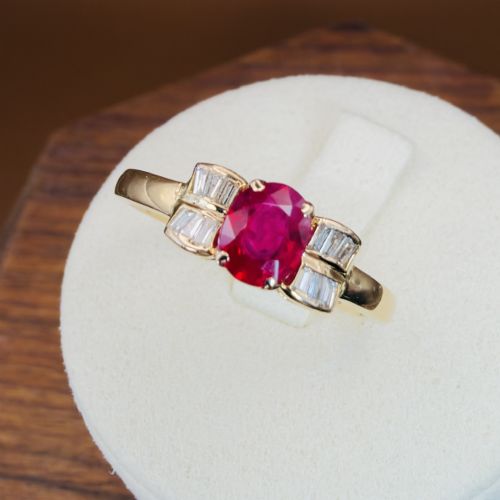
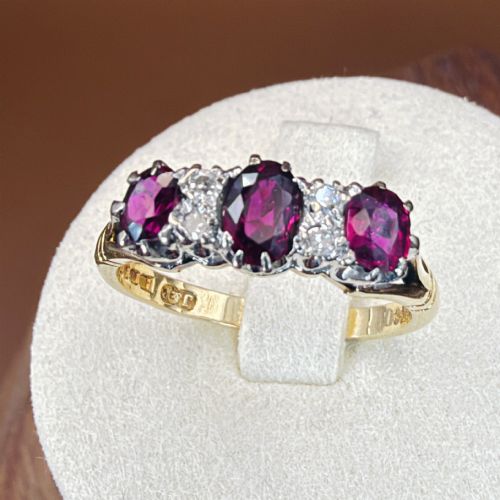
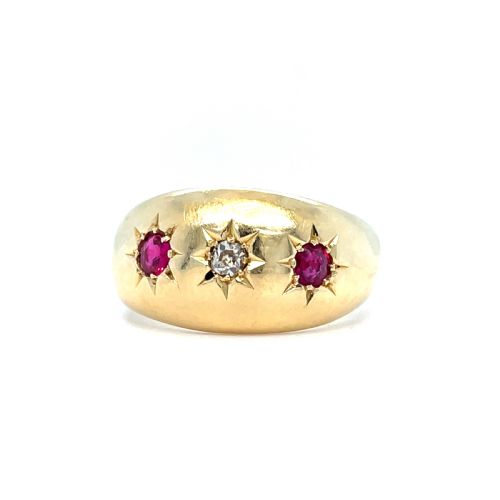
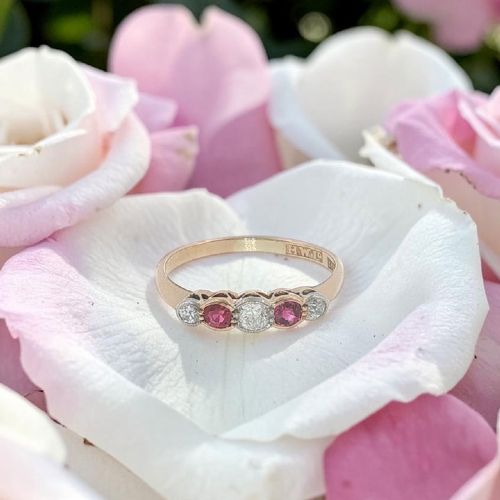
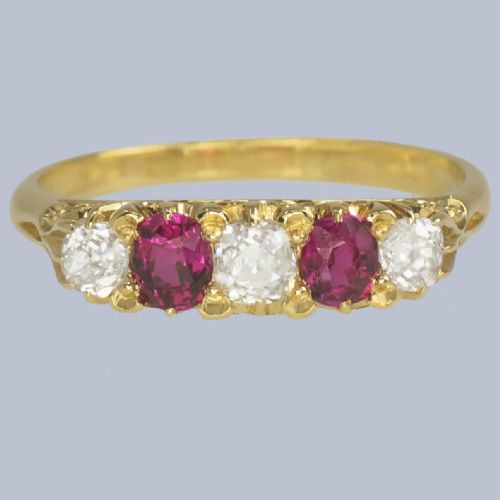
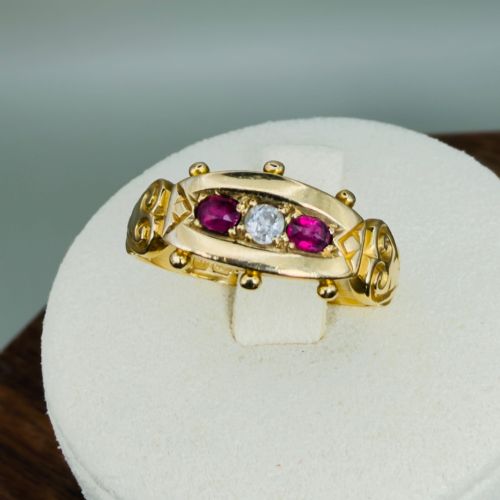
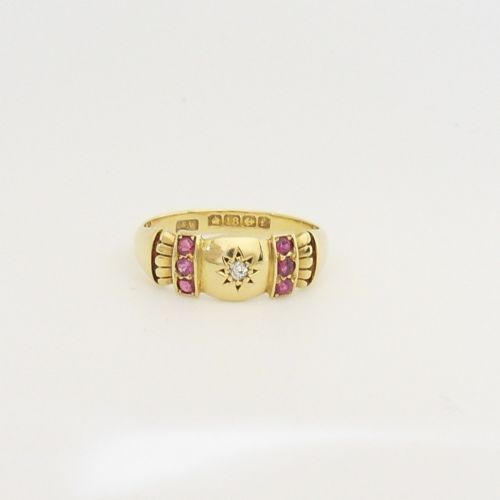
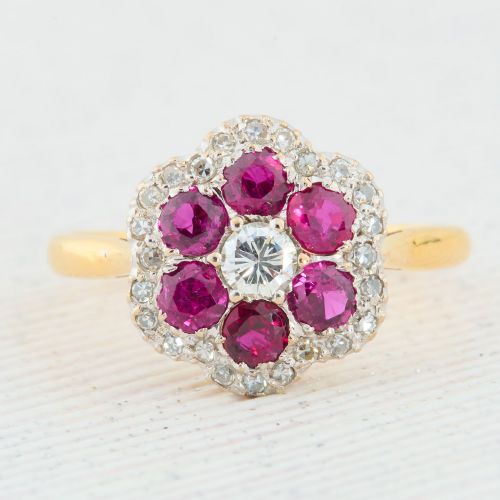
When searching for an 18ct ruby diamond band, buyers encounter pieces spanning from the Victorian and Edwardian eras through to the mid-twentieth century. These rings take various forms, including traditional five stone layouts, cluster designs, starburst gypsy bands and boat rings.
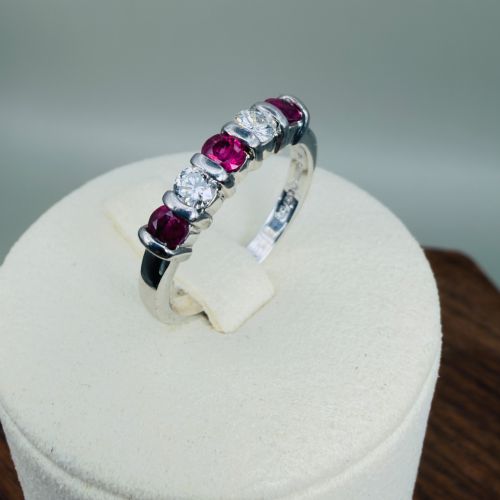
The materials recorded across these pieces consistently feature 18ct yellow gold, 18ct white gold, rose gold and platinum, frequently paired with natural rubies and diamonds. Many items carry hallmarks from assay offices such as Birmingham and Chester, dating the manufacture precisely to the late nineteenth and early twentieth centuries.
Construction and Materials
The foundation of an 18ct ruby diamond band relies on solid 18ct gold, sometimes combined with platinum settings to secure the stones firmly. Goldsmiths utilised techniques such as star settings, gypsy mounting and claw settings to hold the rubies and old cut or baguette diamonds in place.
Makers shaped the precious metal into navette, trilogy and cluster configurations, balancing structural strength with refined aesthetic detail. Hallmarks stamped into the metal indicate the exact year and location of assay.
Listings feature 18ct yellow gold, white gold, rose gold and platinum combined with rubies, diamonds, pearls and garnets across Victorian and Edwardian periods.
Quality Variations
Distinctions in quality among these rings depend upon the depth of colour in the rubies and the cut and clarity of the diamonds. Hand-cut old mine diamonds and well-matched natural rubies elevate the overall execution of the piece.
The weight of the 18ct gold band and the precision of the setting work further differentiate standard productions from finer examples. Preservation of clear hallmarks and crisp metalwork indicates superior original craftsmanship.
The 18ct Ruby Diamond Band Glossary
- Gypsy ring
- A ring style where the stones are flush-set directly into the thick metal band. This technique protects the girdle of the stone and creates a smooth exterior profile.
- Old cut diamond
- A diamond cut by hand before modern machinery, typically featuring a small table, high crown and open culet. These stones exhibit a softer, warmer scintillation under candlelight.
- Navette
- A boat-shaped ring design featuring an elongated pointed oval silhouette. This style places multiple stones along a central axis to cover more of the finger.
- Trilogy ring
- A ring featuring three primary stones set in a row, representing the past, present and future. They frequently combine rubies and diamonds in balanced proportions.
- Hallmark
- An official stamp applied to precious metals indicating the purity, assay office and year of manufacture. British hallmarks provide a reliable method for dating antique jewellery.
18ct Ruby Diamond Band: Frequently Asked Questions
What periods do these rings come from?
These rings originate from multiple distinct eras, most notably the Victorian, Edwardian and Art Deco periods spanning the late nineteenth and early twentieth centuries. Later mid-century examples from the 1950s and 1960s also appear.
Assay marks and stylistic details like star settings or navette shapes help distinguish between a late Victorian piece and an Edwardian creation.
Can I wear an 18ct ruby diamond band daily?
Solid 18ct gold and platinum provide the durability needed for regular wear, while rubies and diamonds score high on the Mohs hardness scale. However, antique settings benefit from gentle treatment and occasional inspection by a jeweller to ensure stones remain secure.
Removing the ring during heavy manual work prevents unnecessary wear to the claws and flush settings.
How do I identify old cut diamonds?
Old cut diamonds display characteristic hand-cut facets, smaller tables and larger culets when viewed closely. Unlike modern brilliant cuts, they were shaped by hand to maximise sparkle under gaslight or candlelight rather than electric illumination.
This gives them a distinct, softer optical quality common in nineteenth-century and Edwardian pieces.