



Victorian 1880s Jewellery
Victorian 1880s jewellery comprises rings, brooches, lockets and pendants that capture the ornate revivalism and precious gemstone settings of the late nineteenth century.

Victorian 1880s Jewellery
Victorian 1880s jewellery encompasses a diverse array of wearable ornaments, from everyday personal pieces to elaborate ceremonial accessories. Buyers searching for victorian 1880s jewellery encounter rings, brooches, pendants, bracelets, necklaces, watch chains and earrings originating from British and continental European workshops.
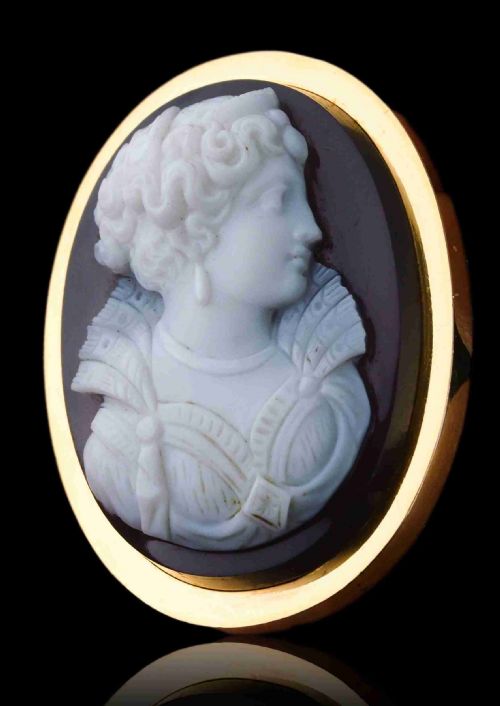
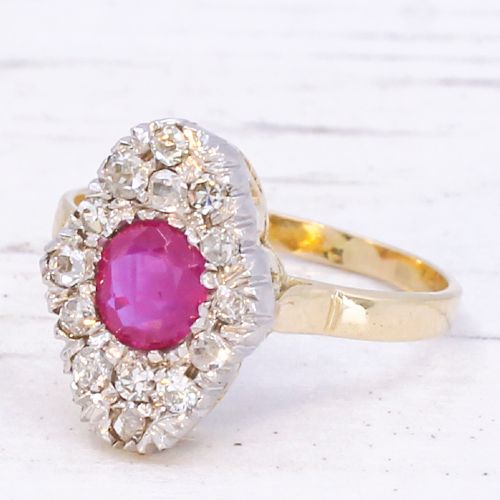
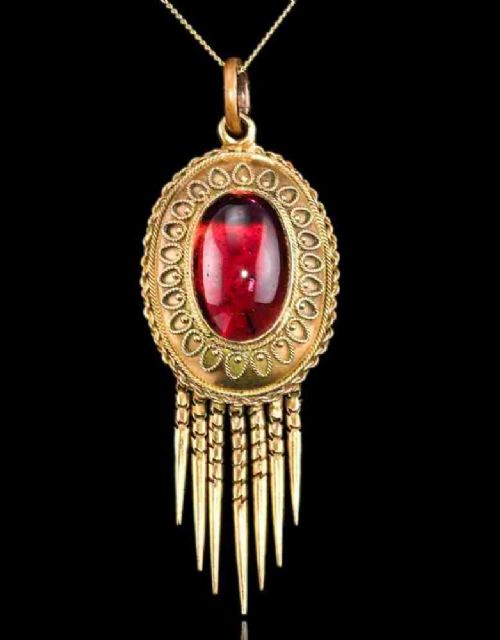
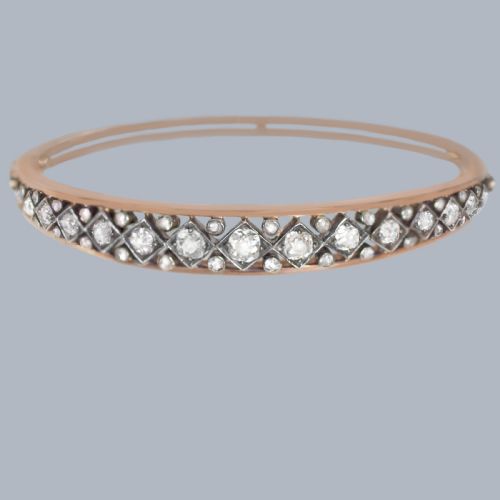
The selection on this page demonstrates specific nineteenth century forms including cluster rings, hinged bangles, convertible pendant brooches and hardstone cameos. Prominent stylistic revivals of the decade manifest through Ottoman and Etruscan design influences applied to precious metals.
Materials and Technique
Goldsmiths of this era utilised varied purities of gold, predominantly ranging from nine to twenty-two carat, alongside sterling and French silver. Silver was frequently employed in cluster settings to enhance the brilliance of old mine cut and rose cut diamonds.
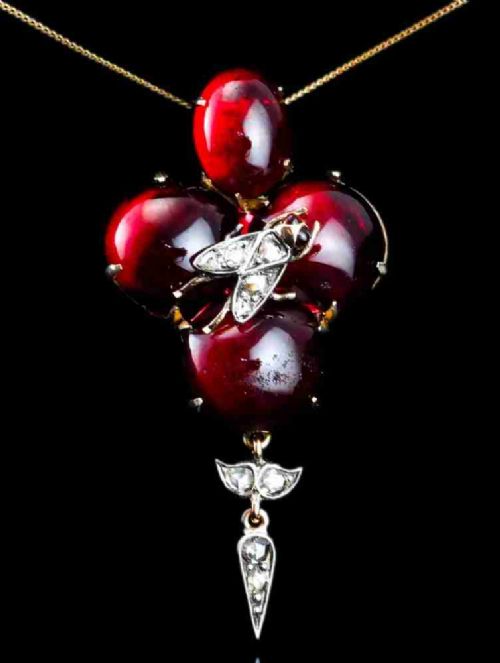
Gemstone selection included rubies, sapphires, garnets, amethysts, turquoise, pearls and hardstone agates. These stones were secured using collet, claw or flush mounting techniques, often paired with hand-carved motifs or enamel work.
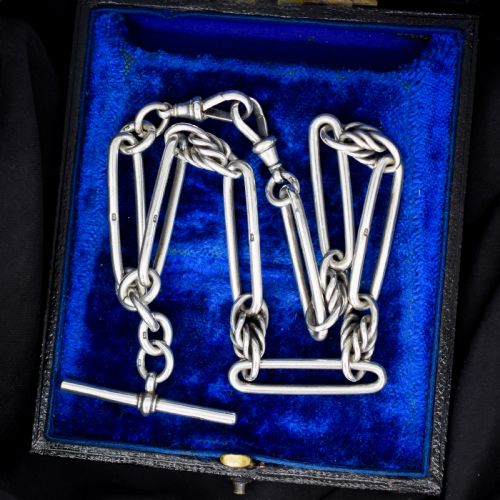
At least one sterling silver trombone love knot watch chain waits here to secure a gentleman's pocket watch.
Standards of Execution
The calibre of victorian 1880s jewellery rests upon the precision of the metalwork and the integration of the chosen gemstones. Superior examples exhibit intricate granulation, filigree or repoussé work executed by skilled hands rather than mass production methods.
Stone selection and matching dictate the upper tier of the market, where natural pearls, unheated rubies and well-matched old cut diamonds are secured with rigorous structural integrity. The survival of convertible elements, such as detachable pendant loops on brooches, also elevates the utility and desirability of a piece.
The Victorian 1880s Jewellery Glossary
- Old mine cut
- A diamond cut characterised by a cushion shape, a high crown, a small table and a deep pavilion, typical of nineteenth century stones.
- Etruscan Revival
- A nineteenth century design style inspired by archaeological discoveries, notable for granulation and applied wirework on gold.
- Cabochon
- A gemstone shaped and polished with a smooth, convex surface rather than faceted edges.
- Hardstone cameo
- A gemstone, such as agate, carved in relief to create a two-layer design where the subject contrasts with the background.
- Collet setting
- A metal collar or band that wraps around the girdle of a gemstone to hold it securely in place.
Victorian 1880s Jewellery: Frequently Asked Questions
What is victorian 1880s jewellery?
Victorian 1880s jewellery encompasses personal ornaments produced during the late nineteenth century. These pieces reflect the aesthetic preferences and manufacturing techniques of the period.
The inventory includes rings, brooches, lockets, and chains fashioned from gold, silver, and various precious gemstones. Revivalist motifs drawn from Ottoman and Etruscan styles frequently appear.
How do I wear antique lockets?
Antique lockets from this decade were designed to house small portraits or mementos close to the heart. They typically suspend from compatible chains or collars.
Modern wearers can hang them from suitable gold or silver chains. Care should be taken with the historic hinge and clasp mechanisms during daily use.
Can brooches be worn as pendants?
Many nineteenth century brooches incorporate integrated loops or hinged bails specifically intended for dual usage. This allowed owners to pin the ornament to clothing or suspend it from a neck chain.
Examining the reverse of a brooch often reveals these hidden attachments. They offer versatile styling options for contemporary collections.
How are these pieces dated?
Dating relies on stylistic markers, hallmarks, maker marks, and occasionally inscribed dates. The materials and construction methods provide further chronological context.
British pieces often feature assay office marks and date letters. Continental European items may utilise different standard marks corresponding to the decade.