



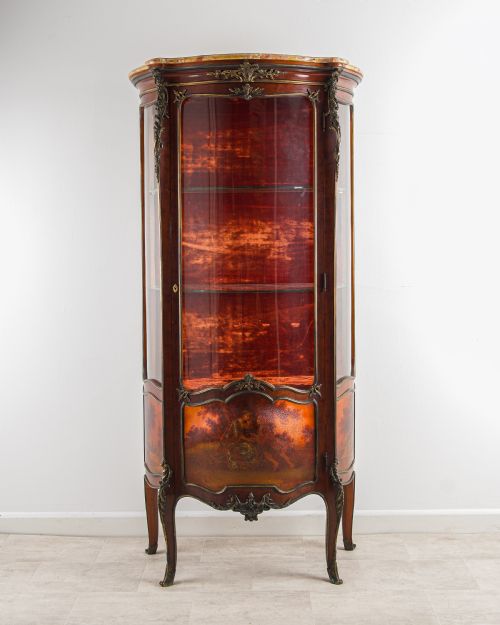


Vernis Martin Curio Cabinet
A vernis martin curio cabinet brings painted pastoral scenes and fine French revival styling into a room, holding precious objects behind glass.
Vernis Martin Curio Cabinet
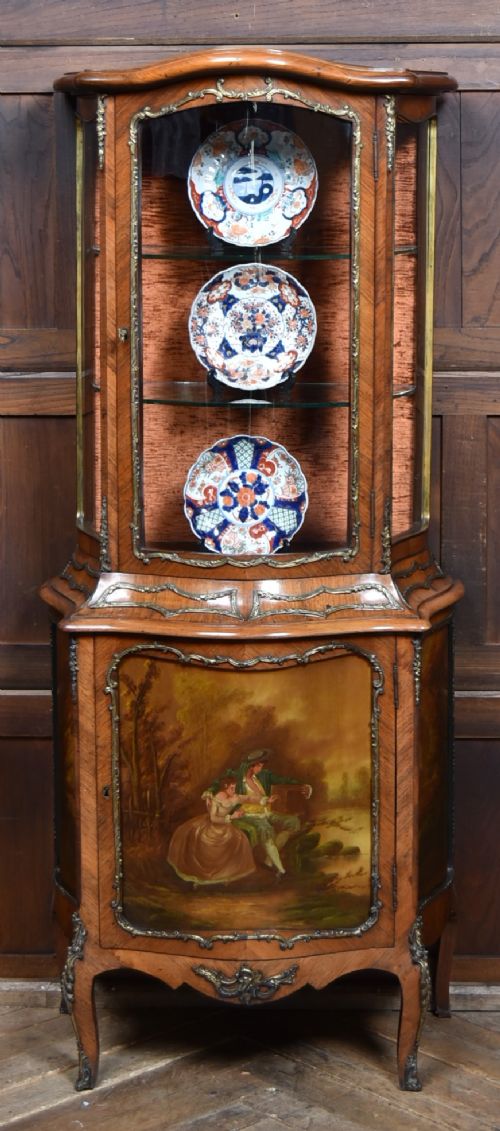
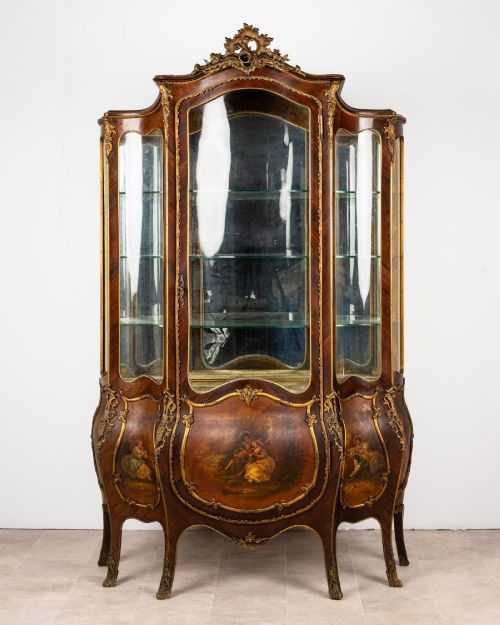
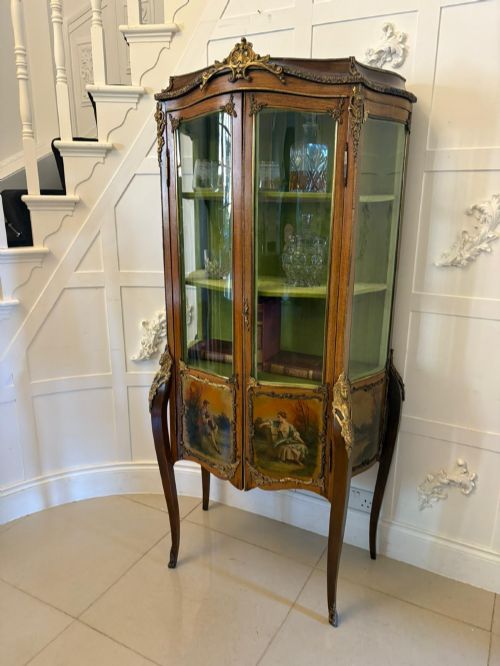
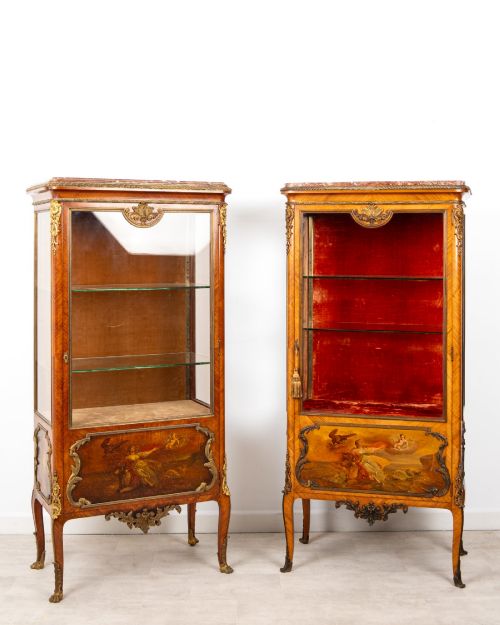
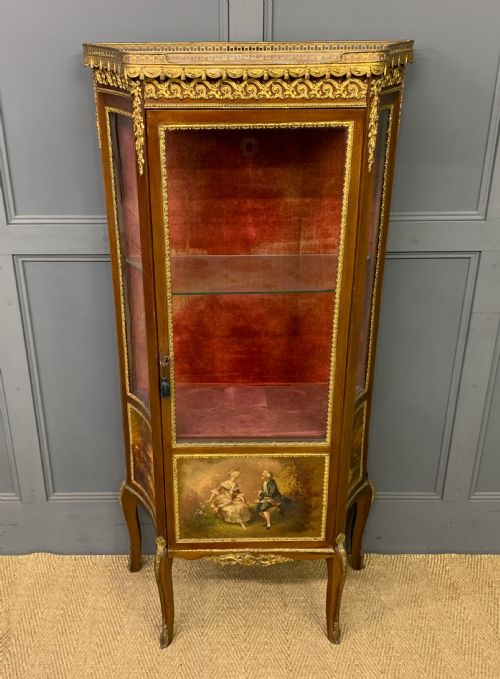
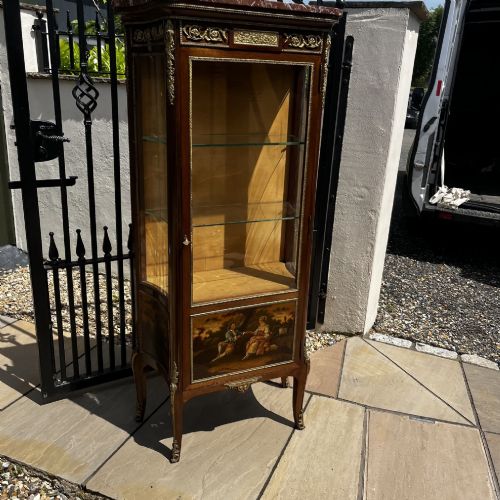
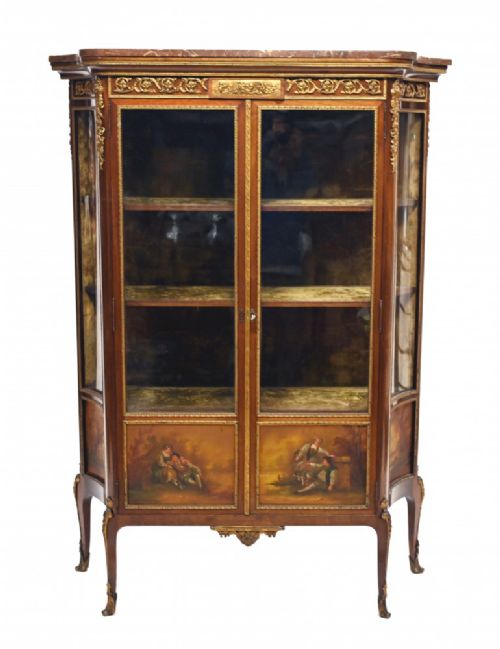
A vernis martin curio cabinet is a display piece designed to show off porcelain, small silver, and curiosities while providing a decorative focal point in a reception room. When searching for a vernis martin curio cabinet, a buyer encounters freestanding vitrines and serpentine display cabinets dating primarily from the nineteenth century and the Edwardian era. These pieces draw heavily on French Rococo Revival and Louis XV and XVI styles, bringing ornate painted panels together with glazed doors and sides.
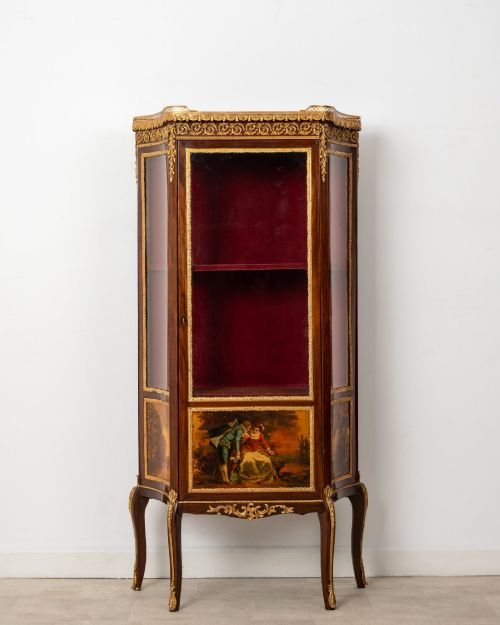
The form typically rests upon slender cabriole legs or short feet, rising to a glazed cabinet body crowned with mounts and occasional marble tops. The defining characteristic across these listings is the inclusion of painted panels executed in imitation of the famous eighteenth-century French lacquer technique. Mahogany and kingwood form the primary carcass woods, providing a dark or figured backdrop for the gilt bronze and ormolu mounts that frame the glass.
How they were made
Cabinetmakers constructed the frames using dense timbers like mahogany and kingwood, often laid as veneers over a sturdy secondary wood to achieve sweeping serpentine and bombe contours. These wooden carcasses received extensive bronze and ormolu mounts, cast and chased before being applied around the glazed door frames and along the legs.
The distinctive painted panels utilised specialised varnish techniques to simulate Oriental lacquer, depicting romantic figures and pastoral landscapes in muted tones beneath a clear protective sheen. Glass panels were fitted into the doors and side panels to allow light to enter the interior, which was frequently lined with fabric or velvet.
Vernis Martin Curio Cabinet Retail Price Guide 2026
Typical asking prices for vernis martin curio cabinet among the pieces listed under this phrase on Sellingantiques today, from the lower quarter to the upper quarter. They describe what is for sale here now, not the wider market.
Cabinet interiors frequently incorporate fabric and velvet linings behind glass doors and side panels, often surmounted by shaped marble tops.
What varies in quality
The standard of the painted panels dictates the overall merit of a vernis martin curio cabinet, separating simple decorative items from those of exhibition quality. Finer cabinets display delicate brushwork and convincing narrative scenes, whereas lesser pieces feature flat, mechanical application.
The crispness of the gilt bronze and ormolu mounts further separates the tiers of manufacture. Heavy, sharply chased bronze mounts firmly integrated into the kingwood or mahogany structure indicate superior workshop production, compared to lighter, loosely fitted brass alternatives.
The Vernis Martin Curio Cabinet Glossary
- Vernis Martin
- A simulated lacquer finish developed in eighteenth-century France by the Martin brothers, utilising successive layers of varnish over painted scenes. This finish became synonymous with decorative French furniture of the nineteenth-century revival periods.
- Ormolu
- Gilt bronze mounts applied to furniture for decorative enrichment and edge protection. The technique involves treating brass or bronze with a gold amalgam.
- Vitrine
- A glass-fronted display cabinet intended for the exhibition of small objects of vertu and porcelain. These cases utilise glass on multiple sides to maximise interior illumination.
- Bombe
- A bulging, swelling contour found on the front and sides of case furniture. This curved profile requires considerable skill in veneer matching.
- Kingwood
- A dense, richly figured Brazilian timber utilised heavily in fine French cabinetmaking. It provides a distinct dark grain pattern beneath polish.
Vernis Martin Curio Cabinet: Frequently Asked Questions
What is a vernis martin curio cabinet?
A vernis martin curio cabinet is a glass-fronted display case featuring painted panels in the eighteenth-century French lacquer style. These pieces were built to showcase precious collections in formal reception rooms.
They combine glazed doors with ornate timber framing, often enhanced by marble tops and gilt bronze mounts.
How do I date a vernis martin cabinet?
Dating relies on examining the timber construction, the style of the ormolu mounts, and the characteristics of the painted panels. Most surviving examples date from the nineteenth century through the Edwardian period during the revival of French taste.
Makers of this era frequently reproduced Louis XV and Louis XVI forms, utilising machinery alongside traditional hand-finishing techniques.
Where should I place a vitrine in my home?
A vitrine sits best in a drawing room, dining room, or hallway where natural light highlights the glass panels and the interior contents. Positioning the cabinet away from direct sunlight protects both the painted panels and the fabric lining.
Freestanding oval and serpentine models work well as standalone focal points against a neutral wall.
How do I care for the painted panels?
Care requires maintaining a stable room temperature and humidity to prevent the wood and varnish layers from cracking. Dusting should occur gently with a dry, soft cloth without the use of chemical polishes.
Direct contact with moisture and abrasive cleaners must be avoided to preserve the integrity of the varnish.